- Home
- Case Studies
- When Safety Became The Priority
Overview
Rinac Engineering Case Study Series
Reliability Beyond Equipment
A newly commissioned seed-storage facility. A fire on the third day. And the customer turned to RINAC for engineering support.
Prasad Seeds Philippines INC.
The Customer Behind the Critical Seed Storage Operation.
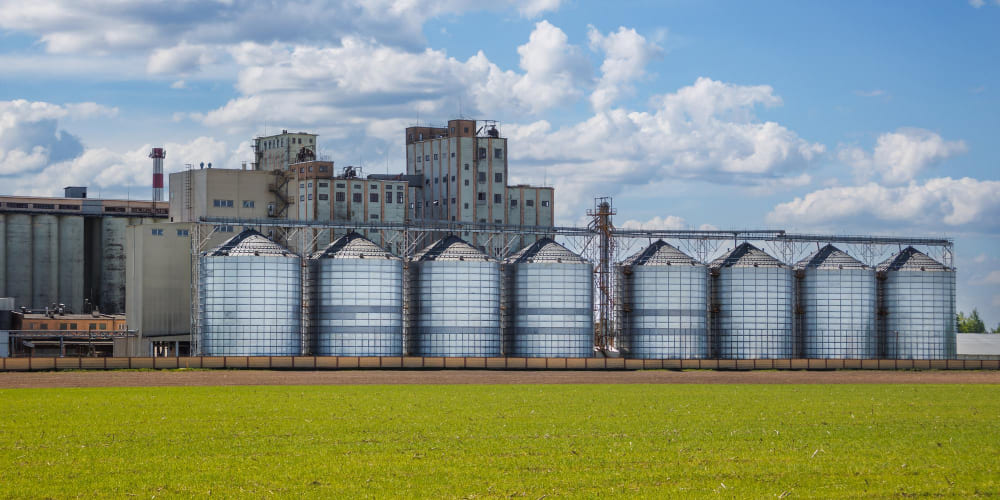
Prasad Seeds is a leading seed production and processing organisation founded in 1994 by Mr. Karumanchi Prasad. The company provides end-to-end seed services to major global seed companies, covering seed production, processing, drying, conditioning, packaging, storage and distribution.
Unlike a conventional seed company that primarily produces and sells seeds, Prasad Seeds operates as a specialised third-party seed processing and supply-chain partner for multiple multinational seed companies. Its role extends across the journey of the seed—from field production and processing through controlled storage, until the finished seed is ready for distribution to farmers.
This makes storage a critical part of its operation. The seed entrusted to Prasad Seeds represents the product and commercial interests of its multinational customers. Maintaining the required temperature and humidity during storage is therefore essential to protecting seed quality and preserving its viability until distribution.
Scale and Capabilities
The Prasad Seeds Group operates approximately 12 seed processing units in and around Hyderabad, with an aggregate processing capacity of around 70,000 tonnes of field crops, including corn.
Over the years, the organisation has expanded its operations beyond India, with a growing international presence including Indonesia, Vietnam, Bangladesh and the Philippines.
Its integrated capabilities span:
Seed Production → Processing → Drying → Conditioning → Packaging → Controlled Storage → Distribution
This integrated model enables Prasad Seeds to serve as an important link between global seed companies and the farming community.
The Philippines Operation
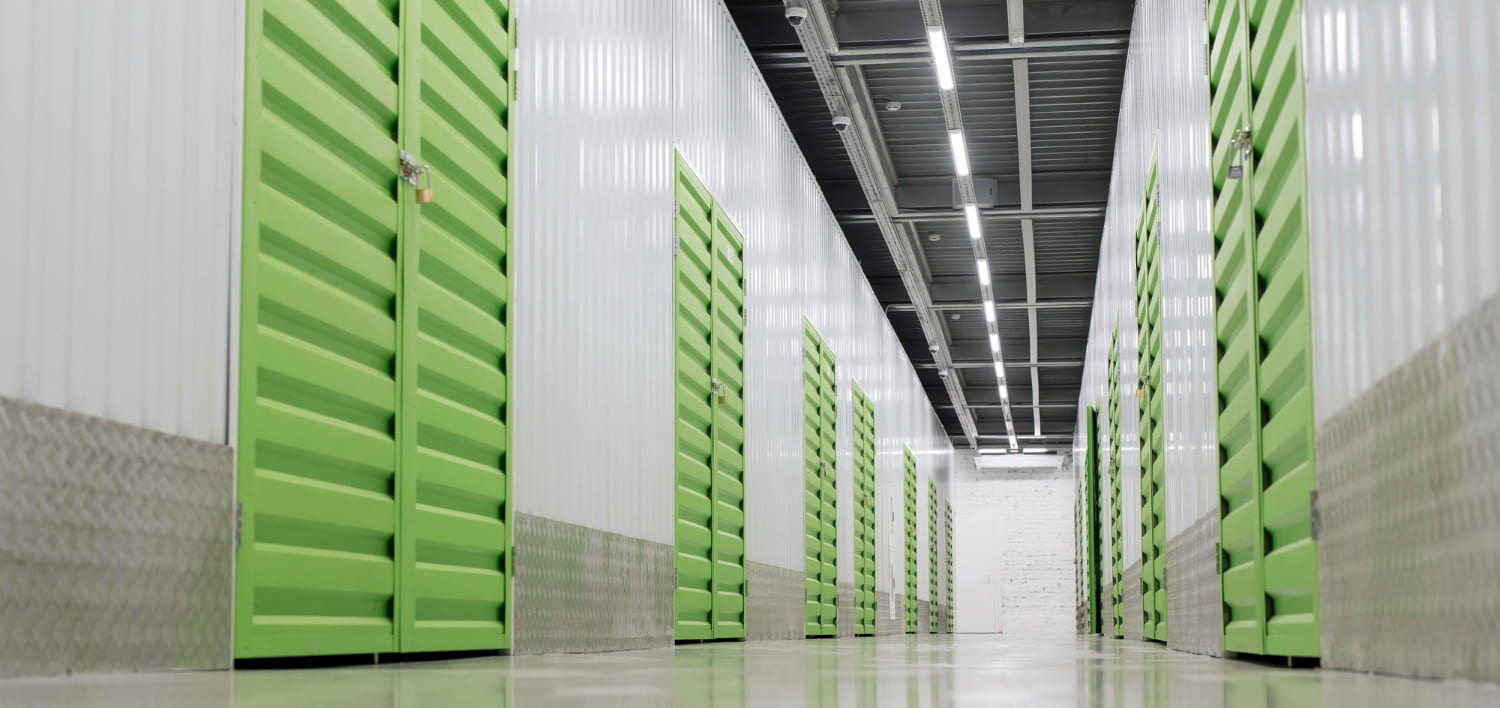
The Philippines facility involved in this case study forms part of Prasad Seeds’ international operations and serves the requirements of third-party seed storage.
The facility therefore carries a responsibility beyond simply maintaining a building at a specified temperature. It is entrusted with valuable seed inventory belonging to customers, including multinational seed companies, until that inventory is ready for distribution to farmers.
For such an operation, refrigeration reliability is not merely an equipment requirement—it is a critical part of protecting the customer’s product, business continuity and ultimately the value of the seed reaching the farmer.
It was against this background that the electrical failure and fire incident occurred only three days after the facility was inaugurated, creating an immediate risk to both the operation and the valuable seed inventory stored within it.
The challenge with seed storage is that it is not simply a matter of maintaining a low temperature. Depending on the seed and storage requirement, the environment typically needs to be maintained at around 10–15°C with 40–45% relative humidity. Conventional cold-storage installations often achieve this by combining a normal refrigeration system with a separate dehumidifier. While this is a familiar approach, it adds another system to the installation, with its associated capital cost, electrical consumption, maintenance and controls.
RINAC’s approach is different. Its seed-storage refrigeration systems are engineered to address temperature and humidity as an integrated requirement, rather than treating dehumidification as a separate function. In suitable applications, this approach can significantly reduce both the investment and operating power compared with a conventional cold-storage system combined with a separate dehumidifier. Based on RINAC’s experience, the potential advantage can be in the range of 30–40% in power and investment, depending on the application and operating conditions.
This is a specialised area of refrigeration engineering. Maintaining the required low temperature while simultaneously achieving low relative humidity requires careful consideration of refrigeration design, evaporator selection, moisture removal, air circulation, defrost, controls and the integrity of the storage envelope. Only a limited number of companies globally have extensive experience in designing and operating such integrated seed-storage systems.
RINAC India is among the few companies with extensive experience in integrated seed-storage refrigeration technology.
Over the past three decades, RINAC has developed and operated more than 40 seed-storage installations, ranging from approximately 1,000 MT to 15,000 MT per installation. This experience has built an understanding that goes beyond the refrigeration equipment itself—how temperature, humidity, insulation, controls and operating conditions must work together to protect the seed throughout its storage life.
Finalising the Seed Storage
Prasad Seeds operates in a highly competitive seed-processing and storage business. As a third-party processor for global seed companies, the ability to offer efficient processing and storage at a competitive cost is an important part of its business proposition. Therefore, when a new facility is planned, capital investment is naturally an important consideration alongside performance and reliability.
In such an environment, there is often a strong temptation to optimise the initial investment. Small savings in individual components or systems can appear attractive during project execution. However, in a critical facility, these decisions can sometimes result in compromises in the overall engineering, protection and long-term reliability of the system.
The Philippines facility was one such example. In an effort to optimise the project investment, the customer sourced the insulated panels locally and procured the refrigeration system from an international MNC, with the installation being carried out by a local installer. RINAC was not involved in the design, supply or installation of this refrigeration system.
But the difference between approaches was not going to be decided by a comparison on paper.The newly completed facility was inaugurated and operations commenced. On the third day, the refrigeration system suffered a serious electrical failure, followed by a fire incident.
The facility was suddenly inoperable and valuable seed inventory was at risk.And at that critical moment, the customer made a call.
They called RINAC.
A New Beginning
For a seed storage facility, commissioning day is supposed to mark the beginning of a long and dependable operating life.
For Prasad Seeds Philippines Inc., the newly completed facility had just begun that journey.
The facility had been acquired and completed with refrigeration equipment from another multinational manufacturer, installed through a local installer. RINAC was not involved in designing, supplying or installing the refrigeration system.
The facility was inaugurated. Operations began. And then, on the third day, something went seriously wrong.
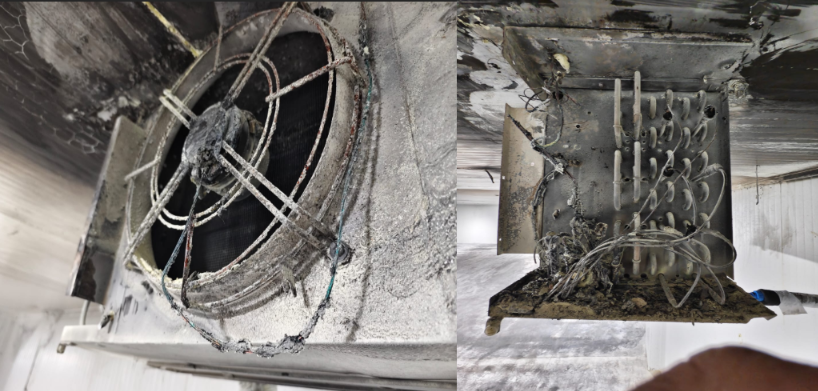
An electrical failure occurred, followed by a fire incident in the refrigeration system. The newly commissioned facility was rendered inoperable. More importantly, valuable seed inventory was suddenly at risk.
This was not a routine equipment breakdown.
The facility served as a third-party seed storage operation for multinational seed companies. Any prolonged interruption could therefore have consequences far beyond the refrigeration equipment itself.
In the middle of this critical situation, the Director of Prasad Seeds made a call.
The call was to RINAC.
Not to the original equipment supplier. Not to the local installer. To RINAC.
Prasad Seeds had been a long-standing RINAC customer. They knew RINAC’s engineering capability. They knew RINAC’s service capability. And, when the situation became critical, they trusted RINAC.
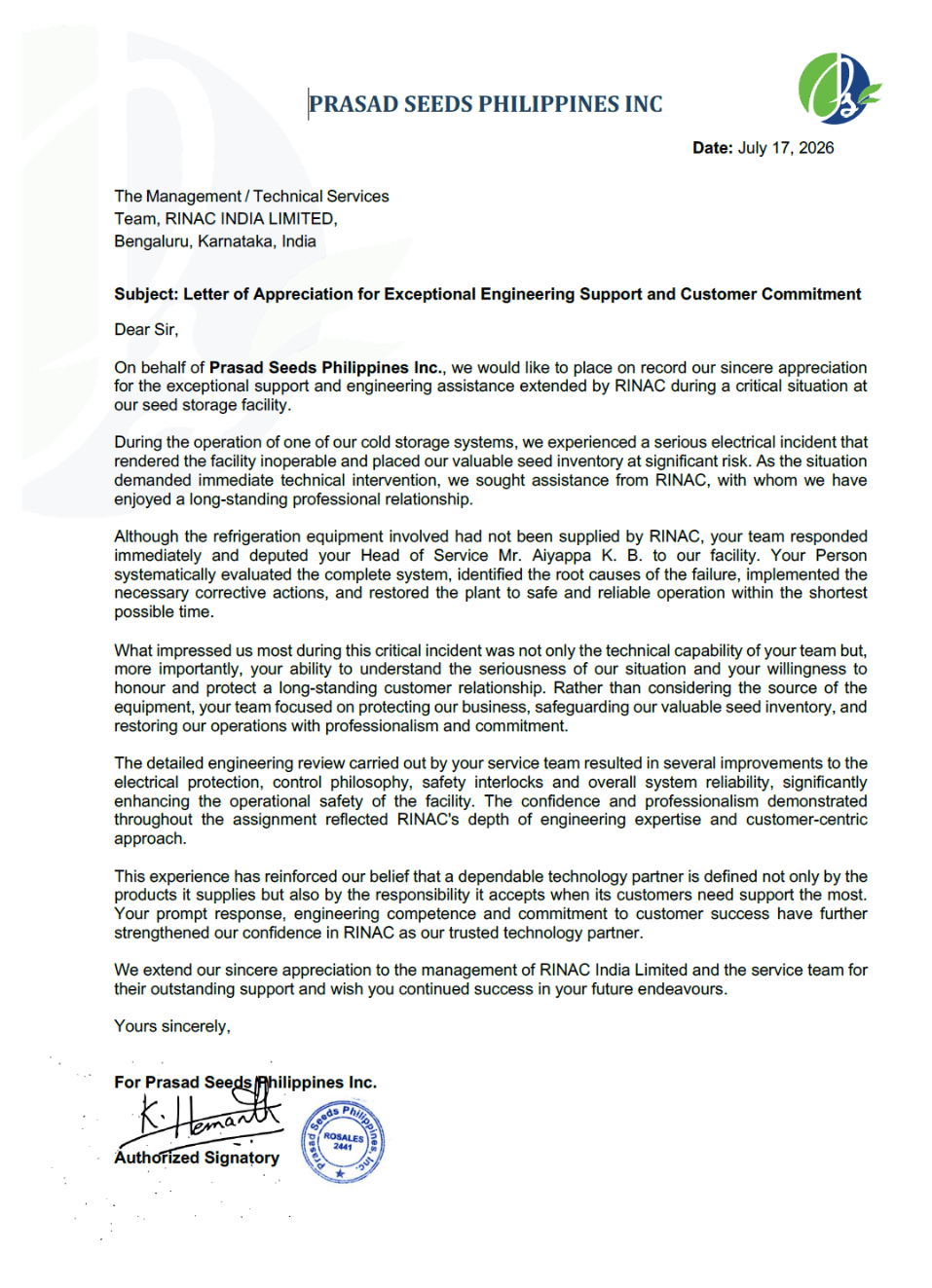
The customer’s appreciation letter confirms that the refrigeration equipment involved had not been supplied by RINAC, yet RINAC responded immediately and deputed its Head of Service, Mr. Aiyappa K. B., to the facility.
The Call
The first requirement was urgent: restore the refrigeration system and bring the facility back into operation with safety provisions
But RINAC approached the assignment as more than an emergency repair. The question was not simply how to restart the system, but why the failure had occurred and what could be done to make the system safer before it was put back into operation.
The objective was not simply to restore operation. It was to restore confidence.
The Engineering Investigation
RINAC’s service team undertook a systematic examination of the complete refrigeration system. The investigation went beyond the immediate failure and reviewed the electrical protection, control philosophy, equipment protection and safety interlocks.
The objective was to identify areas where the protection and control system could be strengthened and to return the facility to safe and reliable operation.
Engineering the Safety Back In
RINAC introduced a series of corrective measures covering multiple layers of system protection.
- Additional short-circuit protection in the control circuit.
- Strengthened incoming electrical protection using digitally adjustable voltage/phase protection.
- Review and revision of compressor contactor and overload protection.
- Additional condenser fan overload protection.
- Revised evaporator fan protection.
- Strengthened defrost protection.
- Additional safety interlocking and revised control logic.
From Components to Control Philosophy
One of the most important engineering interventions was not simply the addition of another protective device. It was making the different functions work together safely.
RINAC introduced additional interlocking between the control systems and coordinated the operation of the compressor, evaporator, RH heater, defrost heater and liquid-line solenoid.
Protection was no longer treated as a collection of individual components. It became a coordinated system of protection.
Protection Is Only the First Line of Defence
RINAC’s approach to reliability goes beyond physical protection. Modern refrigeration systems can also incorporate alerts and IoT-based monitoring, allowing operating parameters to be observed continuously and abnormal behaviour to be identified at an early stage.
For a critical seed storage facility, this creates another layer of confidence.
Protection helps prevent failure. Intelligence helps anticipate failure.
Why This Story Matters
There is another dimension to this incident that makes it particularly significant.
RINAC did not supply the failed refrigeration system.
Yet when its long-standing customer was in distress, RINAC did not draw a line between ‘our equipment’ and ‘someone else’s equipment.’ It responded. It sent its engineering team. It investigated the system. It identified the weaknesses. It implemented corrective measures. And it stayed with the customer until the facility was restored to safe and reliable operation.
Prasad Seeds itself recognised this in its appreciation letter:
“Rather than considering the source of the equipment, your team focused on protecting our business, safeguarding our valuable seed inventory…”
More Than a Service Call
For RINAC, this was not simply about repairing a refrigeration system. It was about understanding what was at stake for the customer.
Seed storage is different from ordinary cold storage. The inventory represents months and sometimes years of breeding, multiplication and commercial effort. In a third-party facility, the responsibility extends further—the facility is entrusted with the inventory of its customers.
When refrigeration fails, the consequences can therefore extend well beyond a compressor or control panel.
The system is protecting an asset that cannot simply be replaced overnight.
That is why safety, reliability, monitoring and engineering response matter.
The Outcome
Following RINAC’s intervention, the refrigeration system was restored and the facility returned to safe operation.
The engineering review resulted in improvements to:
- Electrical Protection
- Equipment Protection
- Safety Interlocking
- Control Philosophy
- System Reliability
The customer subsequently acknowledged that the intervention significantly enhanced the operational safety of the facility and further strengthened its confidence in RINAC as its trusted technology partner.
The Real Test of a Technology Partner
Equipment performance can be demonstrated through specifications. Reliability can be demonstrated through years of operation. But partnership is demonstrated when something goes wrong.
When the newly inaugurated facility experienced a serious electrical incident on its third day, Prasad Seeds did not ask: “Who supplied this equipment?”
They asked: “Who can help us?”
And they called RINAC.
That trust was earned over years. And when the moment came, RINAC chose to honour it.
Engineering Beyond Equipment
- A refrigeration system can be bought.
- A control panel can be replaced.
- A component can be repaired.
But what a customer ultimately needs from a technology partner is something more:
- Engineering capability.
- Safety consciousness.
- Responsiveness.
The willingness to stand by the customer when it matters most.
Customer Commendation
Technical Evidence – Suggested Appendix
For the final designed case study, the following engineering evidence can be included after the main story:
- Before-and-after control panel photographs.
- Electrical protection and overload protection comparison.
- Safety interlocking/control philosophy diagram.
- Details of the additional protection measures implemented.
- IoT/alert architecture, if the system-specific deployment is confirmed.
- Designed Power vs. Actual Power comparison as supporting performance evidence.
Publication note: Before external publication, technical and legal review should confirm the exact wording regarding the original installation, cost considerations, incident root cause, and the system-specific IoT/alert deployment.
RINAC Engineering Case Study Series – Reliability with Consistency