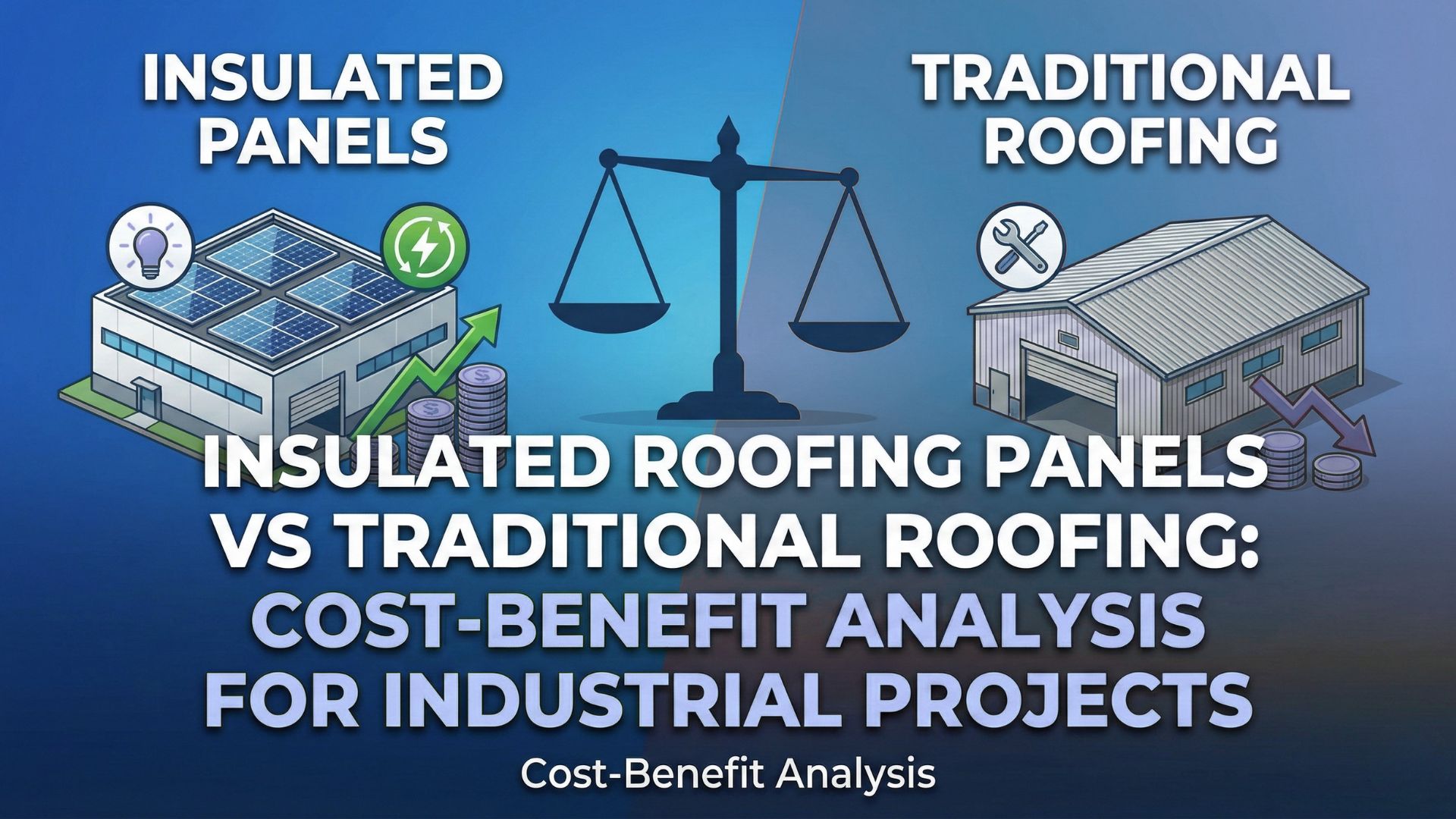
Insulated Roofing Panels vs Traditional Roofing: Cost-Benefit Analysis for Industrial Projects
For industrial buildings in India, the roof is rarely “just a cover.” It is a major driver of internal temperature stability,
worker comfort, condensation risk, and HVAC energy bills. This matters even more because India spans multiple climate zones
(hot-dry, warm-humid, composite, temperate, and cold), and industrial roofs face high solar gain, heavy monsoons, and long operating hours.
In this guide, we compare insulated roofing panels (also called sandwich roof panels) against common
traditional roofing approaches (single-skin metal sheets with add-on insulation, RCC roofs with waterproofing, and built-up roof assemblies).
You will get a practical cost-benefit framework you can apply to warehouses, manufacturing plants, cold chain facilities, and controlled environments.
TL;DR
- Insulated roofing panels usually cost more upfront than single-skin sheet roofing, but can reduce operating costs where
buildings are cooled, temperature-sensitive, or humidity-controlled. - Your “true” decision is not panel price vs sheet price. It is Total Cost of Ownership (initial build + energy + maintenance + replacement + downtime risk).
- In India’s hotter cities, cool roof strategies (high reflectance + high thermal emittance) can reduce cooling needs and peak demand in top-floor spaces.
Consider this as a complementary lever alongside insulation. - If you need fast installation, clean modular construction, and long-term thermal performance, insulated panels are often the most predictable route.
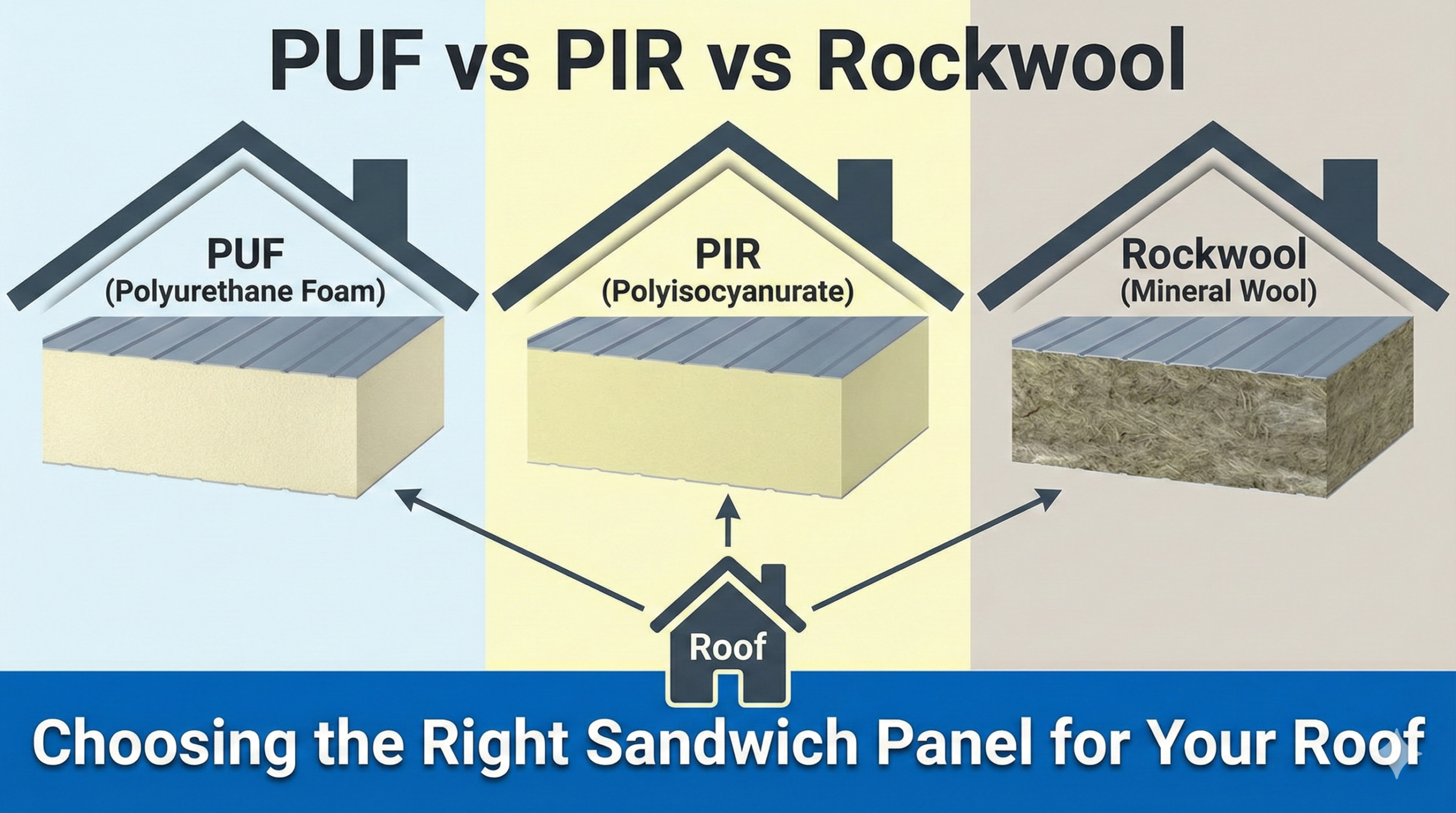
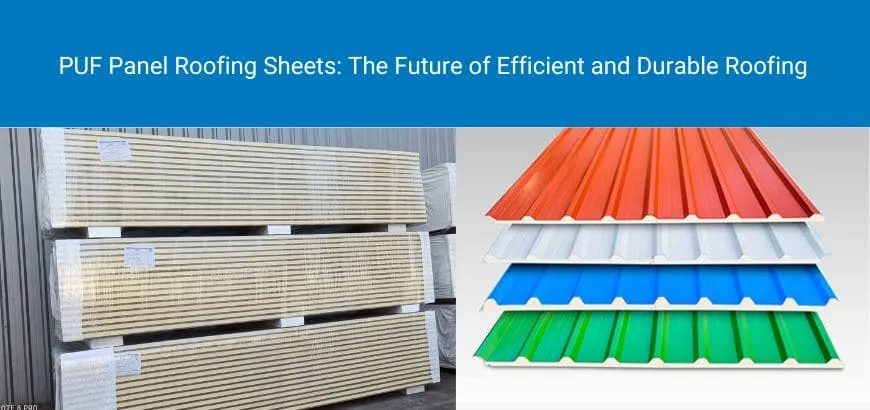
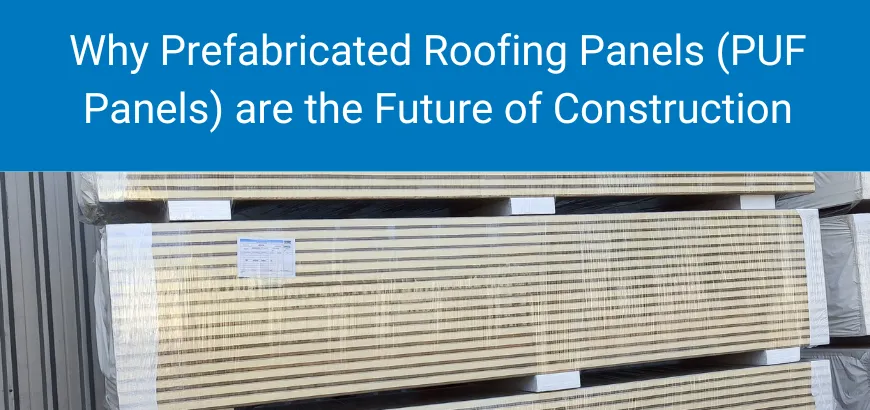
- Rinac’s InstaRoof is a modular insulated roof panel system (PUF/PIR) designed for quick installation,
while CoolTop provides prefabricated insulated roofing panels with broader thickness options and multiple core/facing choices.
Best-fit summary:
- Non-conditioned sheds + heat comfort issues: insulated roof panels + cool roof approach can improve comfort and reduce radiant heat.
- Conditioned factories / process areas: insulated panels often pay back through lower HVAC loads and fewer envelope failures.
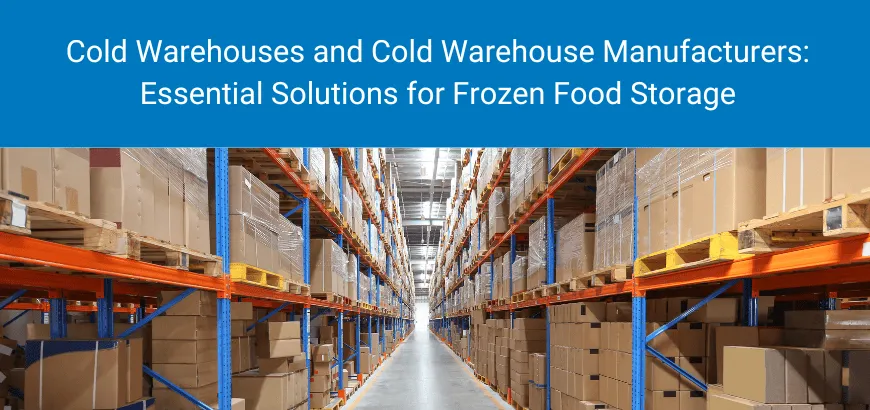
- Cold chain / controlled environments: airtightness and insulation quality become mission-critical; insulated panel systems are typically the default choice.
Key definitions (so you can compare apples to apples)
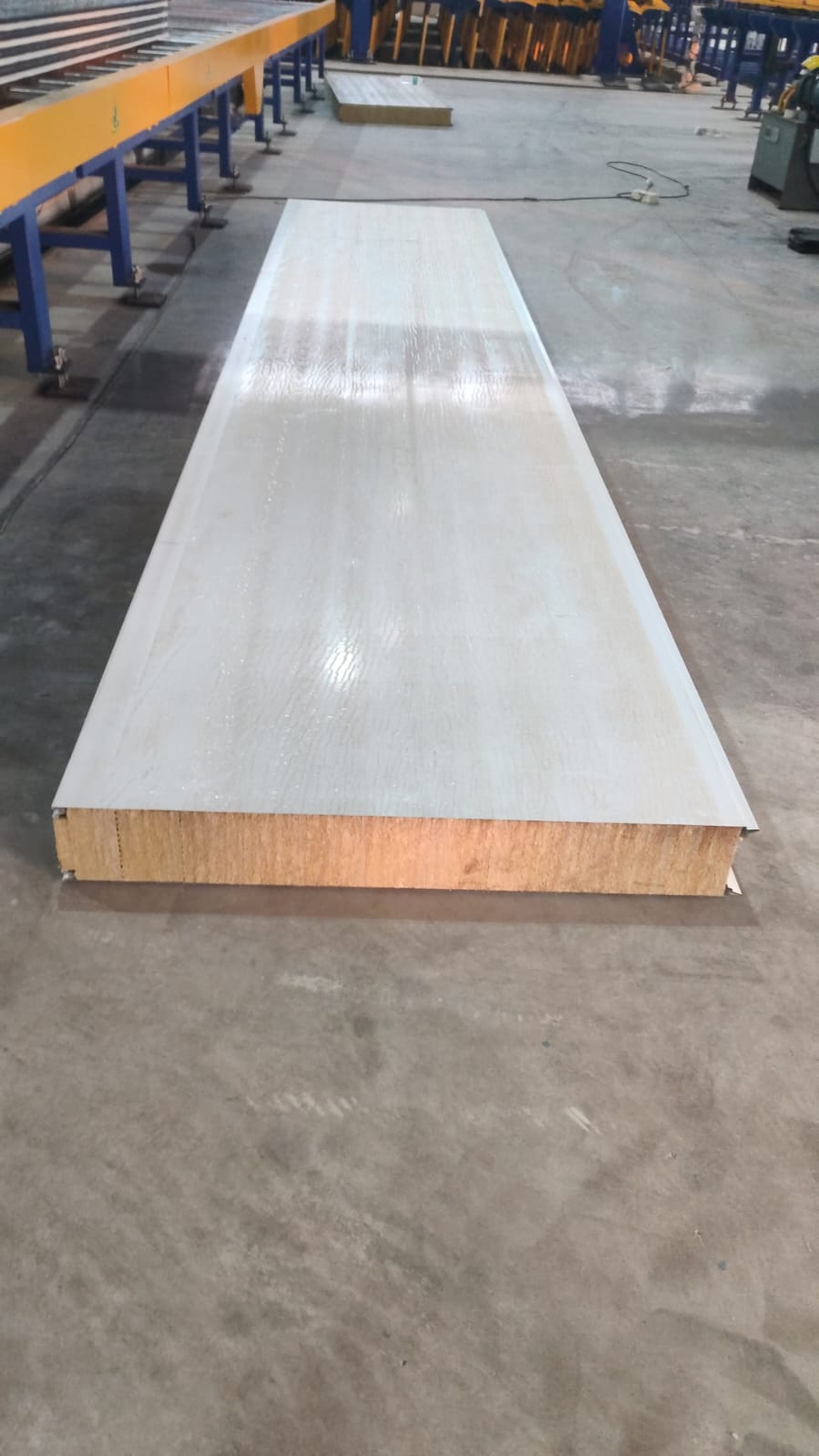
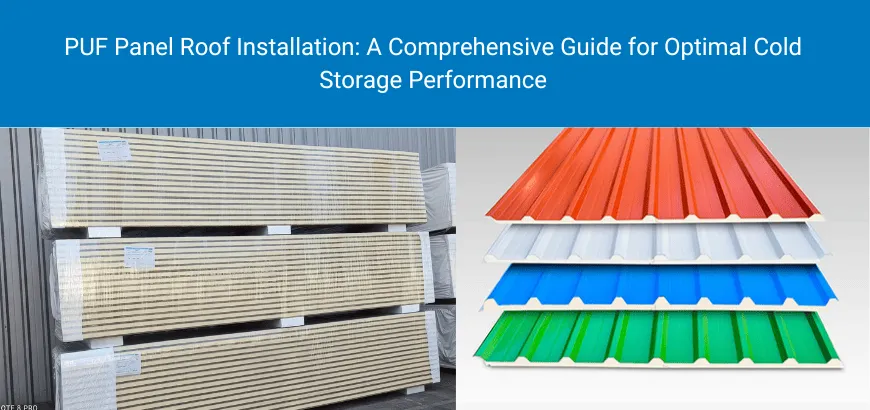
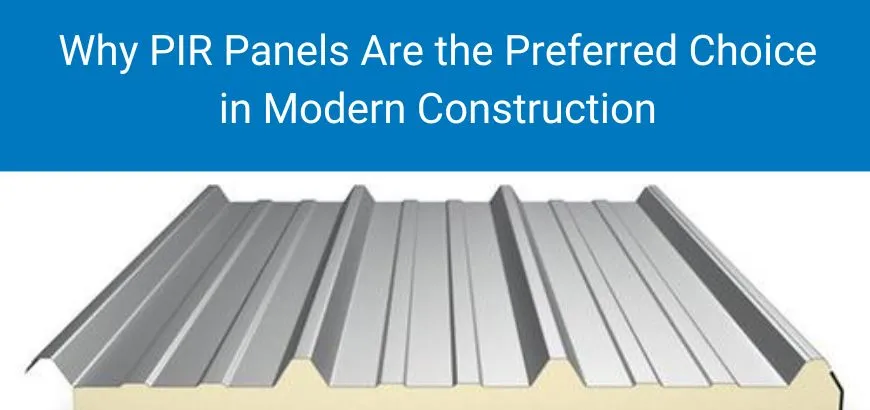
- Sandwich (insulated) roof panel: a factory-made roof element with metal facings bonded to an insulation core (commonly PUF/PIR).
Interlocking joints can help reduce air leakage and thermal bridges. - U-value (thermal transmittance): how much heat passes through a roof assembly. Lower U-value means better insulation performance.
India’s Energy Conservation Building Code (ECBC) uses U-factor / R-value requirements by climate zone and building type. - Cool roof: a roof surface designed to reflect more sunlight and emit heat effectively (high solar reflectance + high thermal emittance),
lowering roof surface temperature and reducing heat transfer into the building. - Total Cost of Ownership (TCO): initial construction + operating energy + maintenance + repairs/replacements + any downtime or quality losses caused by roof performance.
Insulated roofing panels vs traditional roofing: side-by-side comparison
| Criteria | Insulated Roofing Panels (Sandwich Panels) | Traditional Roofing (common industrial types) |
|---|---|---|
| Upfront cost (CAPEX) | Higher material cost, but may reduce secondary layers and simplify build sequence. | Often lower (single-skin metal sheet). RCC/built-up roofs can be high depending on structure and waterproofing. |
| Installation speed | Factory-made panels reduce on-site steps and enable faster enclosure for many projects. | Sheet roofing can be fast, but insulation + liners + sealing often add steps. RCC/built-up roofs are slower and weather-dependent. |
| Thermal performance | High and predictable (core thickness and conductivity drive U-value). | Highly variable: depends on insulation blanket quality, compression, gaps, and workmanship; RCC needs dedicated insulation to perform well. |
| Airtightness & humidity control | Interlocking joints can support better air control when installed and sealed correctly. | Harder to make reliably airtight across large industrial spans with multiple layers and penetrations. |
| Condensation risk | Lower when properly designed (vapor control + continuity), important for warm-humid/coastal locations and cold chain. | Can be higher if insulation is discontinuous, compressed, or gaps form; under-roof blankets can trap moisture if detailing is weak. |
| Maintenance & leak pathways | Fewer layers can mean fewer failure interfaces, but detailing at penetrations remains critical. | More interfaces (sheet + blanket + liner + fasteners + laps + sealants) can create more long-term leak points if not maintained. |
| Retrofit / relocation | Panel systems can support modular changes in certain project types. | RCC/built-up roofs are difficult to dismantle. Sheet systems can be modified but insulation continuity is often compromised in retrofits. |
| Best fit | Conditioned factories, cold chain, clean modular builds, high-heat locations, projects that value speed and performance. | Simple sheds with minimal thermal requirements, or projects where operational cooling is not a major cost driver. |
The cost-benefit model you should actually run (industrial TCO)
A reliable comparison requires modeling costs across the building’s operating life. Use this structure to avoid “lowest bid” traps:
1) Initial build cost (CAPEX)
- Roof system materials: sheets vs panels, insulation layers, liners, fasteners, sealants, trims, gutters.
- Structural implications: purlin spacing, load-bearing requirements, roof slope, wind uplift design, and support framing.
- Construction time: faster enclosure can reduce preliminaries and help production start earlier (time-to-revenue has value).
2) Operating energy (OPEX)
- Cooling energy: roof heat gain often drives peak loads in sun-exposed industrial buildings.
- Humidity control energy: leakage and poor envelope continuity increase latent load, especially in warm-humid/coastal climates.
- Process stability: temperature swings can affect yield/quality in food, pharma, and sensitive manufacturing.
3) Maintenance and repair
- Frequency of leak repairs, sealant maintenance, corrosion risk, and replacement of damaged layers.
- Cost of disruption: repair shutdowns, rework, inventory risk from water ingress.
4) Replacement and residual value
- How often the roof needs major refurbishment or replacement.
- Salvage or reuse possibilities (varies by system and project type).
5) Risk and compliance costs
- Worker heat stress risk and comfort expectations.
- Fire performance requirements (project-specific).
- Energy code alignment: ECBC roof assembly U-value expectations by climate zone and building type.
Practical equation (use in your spreadsheet):
TCO = CAPEX + (Annual Energy Cost × Years) + Maintenance/Repairs + Replacement - Residual Value + Downtime/Risk Costs
Energy and heat gain: why the roof can dominate cooling performance
In hot conditions, roofs absorb solar radiation and radiate heat into the space below. Two complementary strategies reduce this:
(1) insulation (lower U-value) and (2) cool roof surfaces (higher reflectance and thermal emittance).
Cool roof guidance highlights that higher solar reflectance reduces absorbed solar energy, and higher thermal emittance helps a roof release heat.
In practice, this means:
- Insulation reduces the rate of heat flow into the building, improving indoor stability.
- Cool roof finishing reduces roof surface temperatures and can reduce cooling needs and peak demand.
Evidence note: In Indian context, cool roof resources report meaningful reductions in cooling needs in top-floor spaces, and describe how reflectance and emittance work together.
Use cool roof as an additional lever where solar gain is severe, especially on large exposed industrial roofs.
Hidden costs that swing the “best choice” decision
Condensation and moisture
In warm-humid/coastal climates and in facilities with chilled interiors, moisture control is not optional. Condensation can drive corrosion,
mold, insulation performance loss, and product risk. Insulated panel systems can reduce risk when designed with continuity and sealed joints,
but detailing still matters (penetrations, flashing, vapor control, and drainage).
Water ingress and leak complexity
Traditional multi-layer roofs can have multiple interfaces that need long-term upkeep. Each lap, fastener, and sealant line can become a maintenance point.
Industrial roofs also have many penetrations (vents, skylights, cable trays, HVAC supports), so whichever system you choose, invest in disciplined detailing.
Heat stress and productivity
If your facility is not mechanically cooled, roof heat ingress still matters. Worker comfort, equipment performance, and safety can suffer under high roof temperatures.
This is where insulation and cool roof strategies are often justified even without full HVAC.
Time-to-operation
Faster enclosure has a real financial value when the facility must come online quickly (logistics, food processing, seasonal demand, contract manufacturing).
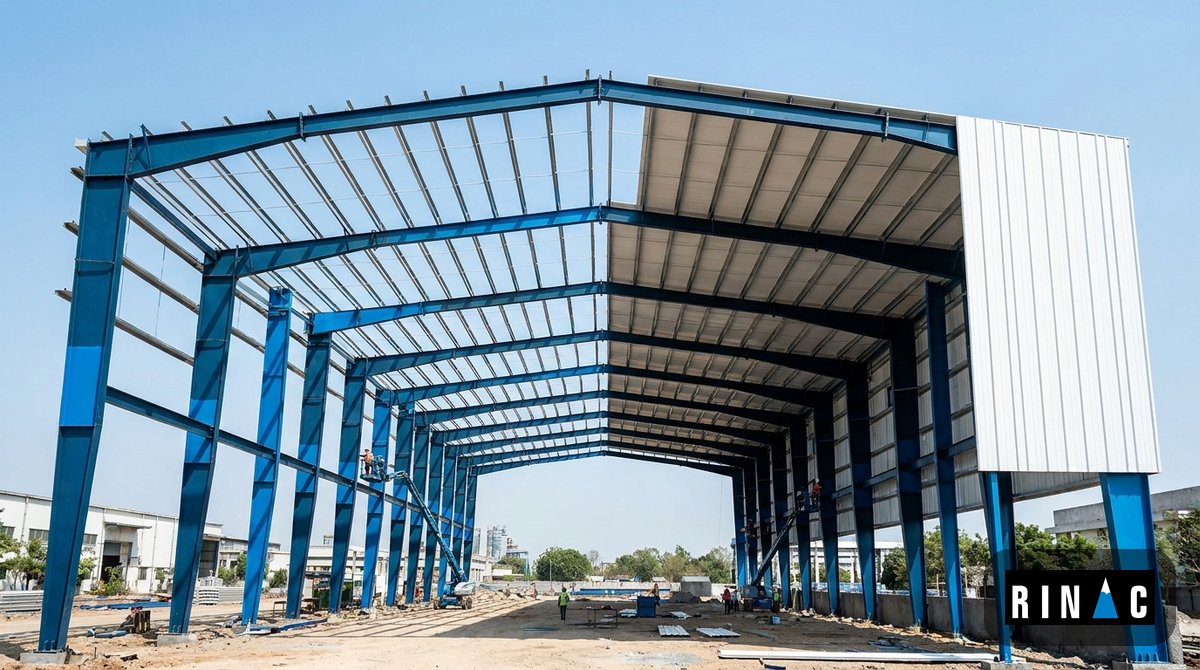
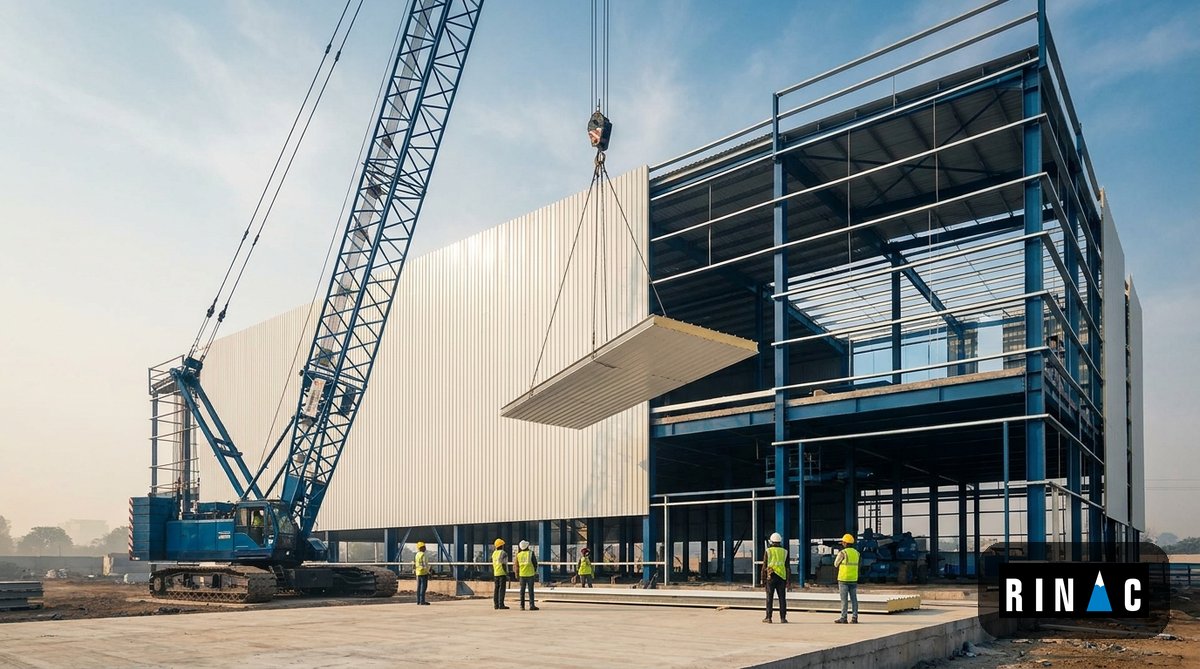
Modular panel systems are designed to accelerate construction and simplify expansion or reconfiguration in many project types.
Rinac insulated roofing options for industrial projects
If you are evaluating insulated roofing panels, Rinac offers two highly relevant options:
InstaRoof and
CoolTop.
Both are designed for industrial use cases, but they fit slightly different decision profiles.
InstaRoof: fast, modular insulated roofing (PUF/PIR)
- Rinac positions InstaRoof as a PUF/PIR roofing solution aimed at improved energy efficiency and reduced life cycle costs.
- Technical specs on the product page highlight 30 mm and 50 mm core options, and note purlin support spacing requirements (useful for structural planning).
- Best-fit: warehouses, manufacturing, agro-based facilities, and projects that want a standardized insulated roof panel format.
Learn more: InstaRoof roofing panels
(and download brochures via Rinac Downloads).
CoolTop: prefabricated insulated roofing panels with broader configuration options
- Rinac describes CoolTop as energy-saving roofing with insulation using prefabricated roofing panels intended to reduce installation time and support comfort.
- The page lists a wide thickness range (50 mm to 200 mm) and multiple material-of-construction options for facings and cores, enabling deeper customization by use case.
- CoolTop is positioned for applications where roof heat ingress is severe, or where controlled environments and specification needs (thickness, facings, fire performance) are key drivers.
Learn more: CoolTop roofing panels.
Quick selection guide (InstaRoof vs CoolTop)
| Decision factor | Choose InstaRoof when… | Choose CoolTop when… |
|---|---|---|
| Standard insulated roof need | You want a modular PUF/PIR insulated roof panel system with clear standard specs. | You need a wider thickness range and configuration flexibility for specific performance targets. |
| Thermal performance requirement | Moderate performance needs (typical warehouses, many manufacturing sheds). | Higher insulation thickness requirements (process stability, controlled environments, severe heat gain). |
| Material/facing options | Standard industrial facing requirements. | You need broader facing/core options aligned to hygiene, corrosion exposure, or fire-performance decisions. |
| Industrial project type | Warehousing, general manufacturing, agro-industrial facilities. | Cold chain, clean modular construction, and projects with tighter specs and operating risk sensitivity. |
Related reading (internal):
RPUF insulated sandwich panels for year-round comfort
and
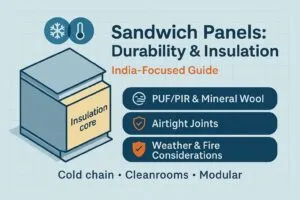
durability and insulation properties of prefabricated sandwich panels.
For a broader view of modular construction with insulated panels (walls/partitions/ceilings plus roofing), see:
Construction with sandwich panels.
Decision checklist for industrial buyers and project teams
Step 1: Identify your operating profile
- Is the space cooled? (hours/day, setpoint, internal heat loads)
- Is humidity controlled? (warm-humid/coastal locations, product sensitivity)
- Is temperature stability tied to quality? (food, pharma, electronics, certain processes)
- Is speed-to-operation a major financial driver?
Step 2: Check performance targets and code context
- Use ECBC as a reference for envelope performance planning. The ECBC user guide describes roof insulation placement options
(above deck, in cavity, or below deck) and highlights that U-factor/R-value needs vary by climate zone and building type. - If you are pursuing energy compliance or green certifications, document roof assembly U-value and continuity early in design.
Step 3: Compare roof systems on TCO, not just CAPEX
- CAPEX: roof materials + structure + installation time
- OPEX: cooling energy + maintenance
- Risk: leaks, condensation, corrosion, downtime, quality loss
Step 4: Use a simple payback calculator (project-specific)
You can estimate payback using this structure:
- Incremental CAPEX = (Insulated panel system cost) – (Traditional roof system cost)
- Annual savings = (Cooling energy reduction value) + (Maintenance reduction) + (Downtime risk reduction value)
- Simple payback = Incremental CAPEX / Annual savings
Important: The “cooling energy reduction value” should come from your HVAC consultant’s load model or a calibrated estimate using local climate, hours of operation,
roof area, internal loads, and target setpoint.
Step 5: Specify details that prevent long-term failures
- Penetration detailing: skylights, vents, pipe stands, cable trays, and HVAC supports
- Drainage: slope, gutters, downpipes, and overflow paths
- Corrosion environment: coastal exposure, chemical plants, high humidity
- Fire performance needs: confirm project-specific fire strategy and material selection
- Joint sealing and continuity: install discipline matters as much as product selection
Ready to evaluate options for your site? Start with a quick discussion:
Contact Rinac.
FAQs
1) Are insulated roofing panels always cheaper over the building’s life?
Not always. They tend to win on TCO when the facility is cooled, humidity-controlled, quality-sensitive, or when faster project completion has high value.
For simple non-conditioned sheds, the payback case can be weaker unless heat comfort and safety are pressing issues.
2) What is the fastest way to estimate ROI for insulated roof panels?
Use a simple payback model: incremental roof CAPEX divided by annual savings (energy + maintenance + avoided downtime). For better accuracy,
use an HVAC load calculation that reflects your operating hours and climate zone.
3) What thickness should I choose?
Thickness depends on your performance target (U-value), climate zone, and whether the space is temperature-controlled.
Rinac’s CoolTop is listed with a broad thickness range (50–200 mm), while InstaRoof includes standard core options suited to many industrial applications.
Validate thickness selection with your energy consultant and code/green-building objectives.
4) Do cool roofs replace the need for insulation?
They are complementary. Cool roofs reduce solar heat absorption and surface temperatures; insulation reduces heat flow into the building.
In many industrial roofs, the strongest results come from combining a reflective roof approach with adequate insulation and airtight detailing.
5) Which Rinac roof solution should I start with for an industrial warehouse?
Start with InstaRoof if you want a modular insulated roof panel format with clear standard specs for typical warehouse needs.
If your project requires thicker insulation, more customization, or tighter controlled-environment specifications, review CoolTop.
6) Where can I download detailed brochures and specifications?
Visit Rinac Downloads to access brochures and technical documents, including CoolTop and other modular construction solutions.
References and further reading
- India ECBC guidance: Energy Conservation Building Code User Guide (roof insulation placement and performance approach).
- Cool roof primers (India): resources describing solar reflectance and thermal emittance and how they reduce heat gain.
- Energy impacts: research and practitioner guidance on cool roofs and reduced cooling needs in top-floor spaces.
- Rinac internal references:
InstaRoof,
CoolTop,
Construction with sandwich panels,
RPUF panels for year-round comfort,
Durability and insulation properties,
Downloads,
Contact.
Next step: get a project-specific recommendation
The best roof system is the one that matches your climate zone, operating profile, and risk tolerance.
If you share your location, roof area, operating hours, and whether the space is cooled, Rinac can help shortlist the right configuration.
Talk to Rinac or download technical brochures from
Rinac Downloads.
Explore related RINAC systems: insulated roofing panels · sandwich panel range. Product data and suitability should be confirmed for the exact project.