TL;DR – Quick Summary
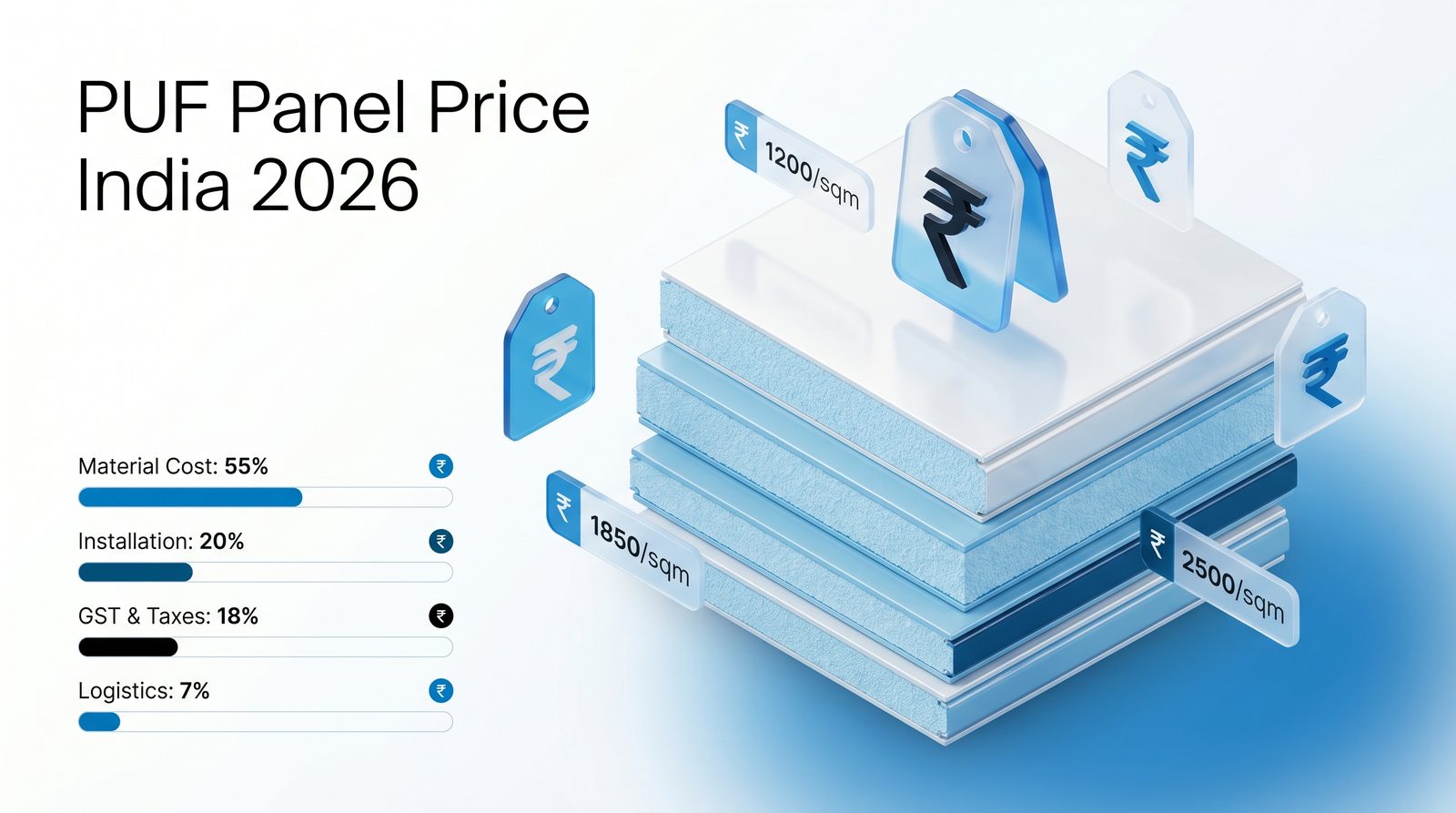
- PUF panel price in India in 2026 ranges from roughly Rs. 100 to Rs. 380 per sq ft, driven mainly by thickness, core density, steel skin, and fire certification.
- For cold storage, budget Rs. 210 to Rs. 310 per sq ft for 80 to 150 mm insulated PUF panels (panel only, ex-works).
- Each additional 10 mm of PUF core adds roughly Rs. 15 to Rs. 25 per sq ft to the panel rate.
- Installed cost of a 50 mm PUF wall panel in industrial sheds typically lands between Rs. 175 and Rs. 240 per sq ft, all-in.
- Buying directly from a reputed manufacturer like Rinac removes 8 to 15 percent dealer markup and unlocks FM 4880 certified Firearmet panels, HPCC construction, and 35 to 50 percent cold chain subsidies.
PUF Panel Price in India at a Glance (2026)
If you are evaluating a cold storage project, an industrial shed, a pharma clean room, or a portable cabin, the first question that usually comes up is the same one: what is the PUF panel price going to be? In India, that single question hides at least six different pricing levers, which is why two manufacturers can quote rates that differ by 40 percent for what looks like the same specification on paper.
Rinac India Limited has delivered more than 10,000 cold chain and modular construction projects over 30-plus years, across 23 countries and clients including ITC, Britannia, Tata, Reliance, Nestle, Biocon and Flipkart. That track record is the lens we will use to walk you through every factor that influences puf panel price per sq ft in India for 2026, so you can compare quotations like an engineer rather than a commodity buyer. For a primer on panel types, our guide on PUF panels and how they work is a useful companion read.
Rs. 100 to Rs. 380 / sq ft
Typical 2026 PUF sandwich panel rate range across thickness, density and skin grades in India
Typical 2026 PUF sandwich panel rate range across thickness, density and skin grades in India
Quick PUF panel rates by thickness (indicative, 2026)
| Panel thickness | Typical application | PUF panel price (Rs./sq ft) | PUF panel price (Rs./sq m) |
|---|---|---|---|
| 30 mm | Partitions, portable cabins, dry rooms | Rs. 100 to Rs. 140 | Rs. 1,075 to Rs. 1,510 |
| 40 mm | Industrial sheds, AC rooms, poultry | Rs. 125 to Rs. 170 | Rs. 1,345 to Rs. 1,830 |
| 50 mm | Chiller rooms, AC buildings, clean rooms | Rs. 140 to Rs. 200 | Rs. 1,510 to Rs. 2,155 |
| 60 mm | Chillers (+2 to +8 deg C), pharma store | Rs. 160 to Rs. 220 | Rs. 1,720 to Rs. 2,370 |
| 80 mm | Cold rooms (0 to -5 deg C), ripening | Rs. 200 to Rs. 260 | Rs. 2,155 to Rs. 2,800 |
| 100 mm | Freezer rooms (-18 deg C), dairy | Rs. 230 to Rs. 300 | Rs. 2,475 to Rs. 3,230 |
| 120 mm | Deep freeze (-20 to -25 deg C), seafood | Rs. 260 to Rs. 335 | Rs. 2,800 to Rs. 3,605 |
| 150 mm | Blast freezer (-35 to -40 deg C), IQF | Rs. 300 to Rs. 380 | Rs. 3,230 to Rs. 4,090 |
These are ex-works panel-only rates. The ranges reflect variations in core density (38 vs 42 vs 45 kg/m3), steel skin thickness (0.45 vs 0.50 vs 0.60 mm), surface metallurgy (pre-painted galvanized iron versus stainless steel 304), and fire certification (non-rated versus FM 4880 Class 1). Installation, accessories, transport and GST are separate line items, covered further down.
Quick rule of thumb: A reliable PUF sandwich panel for Indian cold chain projects starts around Rs. 200 per sq ft for 80 mm and climbs in steps of roughly Rs. 15 to 25 for every 10 mm of extra core. If someone is quoting dramatically below that band, ask for the density and steel skin specification in writing before you compare.
What Drives PUF Panel Cost: The Six Levers Every Buyer Should Understand
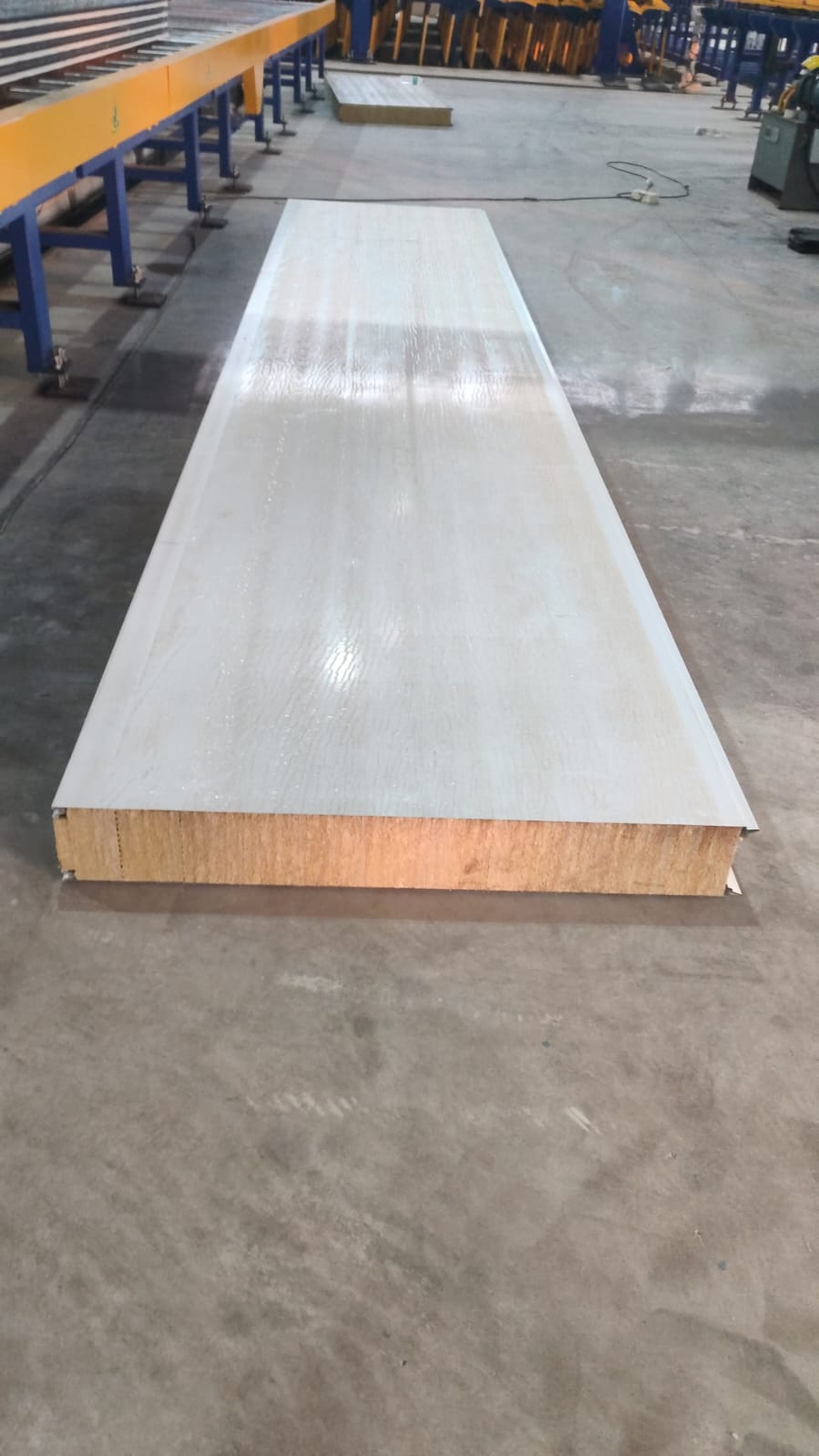
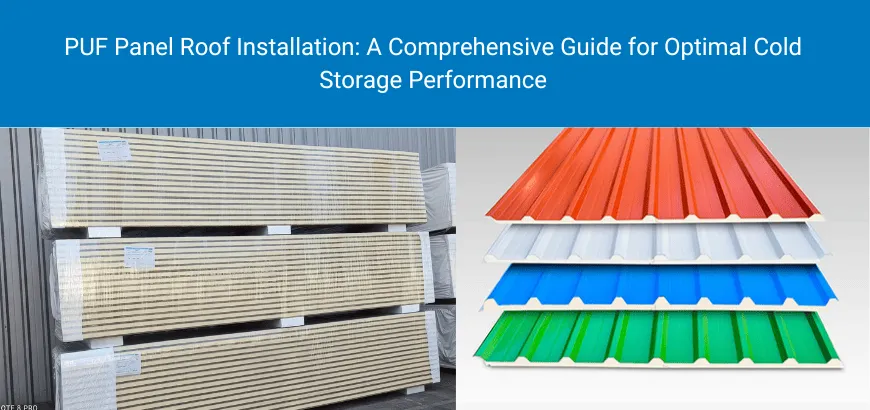
A puf sandwich panel is a layered assembly: two thin pre-coated steel sheets bonded to a rigid polyurethane foam core, edge-profiled with a tongue-and-groove or cam-lock joint. Every one of those layers is a price lever. Understanding these six levers is the difference between getting apples-to-apples quotations and being stuck in a race to the bottom.
1. Core thickness — the biggest single lever on puf panel rates
Thickness is the most obvious driver of puf panel rates because every additional millimetre of foam means more raw material and more chemistry. In the Indian market, adding 10 mm to a panel typically adds Rs. 15 to Rs. 25 per sq ft. But thickness is not just a cost line, it is a thermal engineering decision. A 60 mm PUF panel delivers a U-value of around 0.38 W/m2K, while a 150 mm panel drops that to approximately 0.14 W/m2K. For a deep freeze room running at -25 deg C in a 40 deg C Indian summer, the wrong thickness can add 25 to 40 percent to your electricity bill for the life of the asset.
2. Core density — the silent margin eater
Indian cold chain projects commonly see three density points: 38, 40 and 42 kg/m3, with 45 kg/m3 used for structural applications and premium clean rooms. Higher density means more isocyanate and polyol per cubic metre, and therefore a price bump of 5 to 8 percent per step up. Quality PUF panels for cold storage applications should be tested at 40 to 42 kg/m3. Anything below 36 kg/m3 tends to shrink and deform over five to seven years, which is why Rinac treats density as a non-negotiable and not a negotiable. Our deep-dive on sandwich panel durability and insulation walks through the chemistry.
3. Steel skin metallurgy and thickness
The two facer sheets bonded to the PUF core control both the finish and the structural strength of the insulated puf panel. Typical configurations used in India include 0.45 mm pre-painted galvanized iron (PPGI) for budget applications, 0.50 mm PPGI for standard cold rooms, and 0.60 mm PPGI or stainless steel 304 for pharma, dairy and food-contact zones. Upgrading from 0.45 mm to 0.60 mm steel, or switching from PPGI to SS 304, can push puf panel sheet price up by 20 to 50 percent, but it protects against corrosion in high-humidity rooms, wash-down areas and coastal climates.
4. Fire rating and certifications
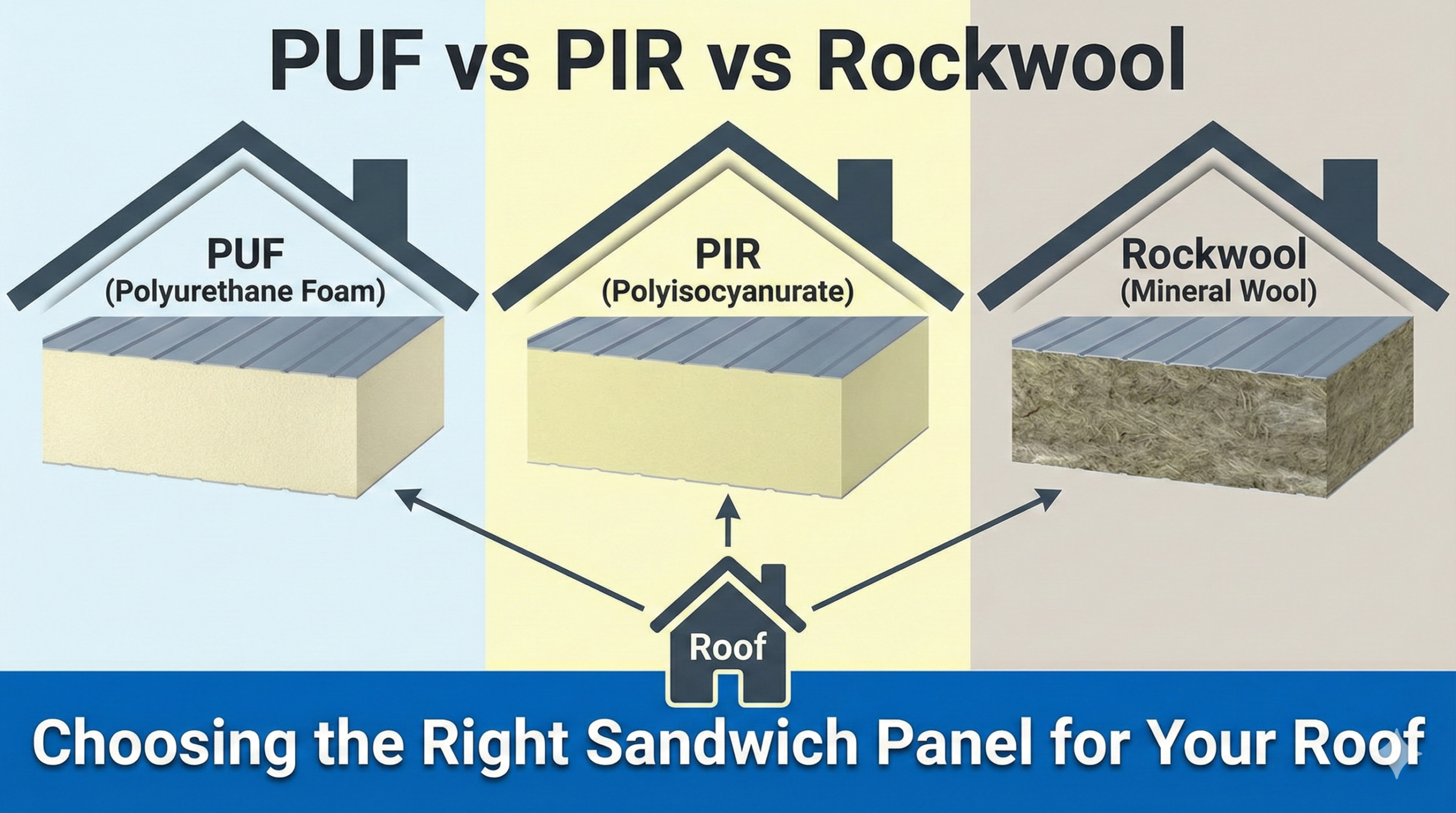
Standard PUF is combustible; modified formulations such as RPUF and PIR improve fire behaviour significantly. Non-rated PUF remains the cheapest, while FM Global 4880 Class 1 approved panels (such as Rinac’s patented Firearmet range) typically command a 15 to 30 percent premium. For clients in pharma, data centres, EPC exports and insured warehouses, that premium is usually non-negotiable because FM 4880 is a condition for property insurance and a tender-qualifier. Our note on PUF vs PIR vs Rockwool panels compares these fire behaviours side by side.
5. Panel profile, joint system and accessories
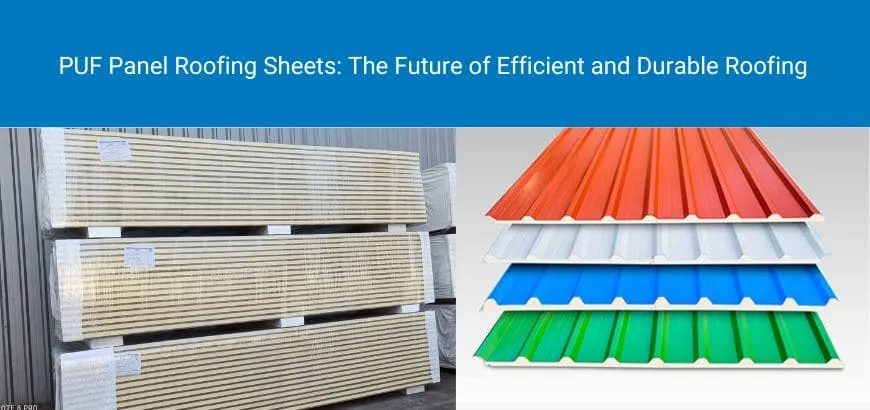
A plain puf wall panel is one price. A cam-locked panel for cold rooms, with groove-and-tongue joints, is another. A trapezoidal puf panel roof designed for rainfall loading is yet another. Cam-locks, coving, door frames, T-sections, flashing, sealants and PVC strip curtains typically add 8 to 12 percent to the basic panel cost, but they are what turns a stack of sheets into a functioning cold chain asset. On trapezoidal roofs, the puff sheet roofing price per sq ft is usually 6 to 10 percent higher than the equivalent-thickness wall panel because of the roll-forming process.
6. Order quantity, logistics and GST
Order size influences rate dramatically. A 2,000 sq ft order for a single cabin typically pays 10 to 15 percent more per sq ft than a 50,000 sq ft cold storage project, because fixed costs (mould change-over, cutting, paperwork) are spread across fewer units. Logistics from Bangalore or Murbad to remote North-East sites can add another Rs. 10 to Rs. 25 per sq ft. And GST at 18 percent is almost always quoted extra. Ask every vendor whether the rate is ex-works, FOR-site, or installed, and whether GST is included, before you compare two quotations.
PUF panel price in India is the sum of six stacked cost levers, not a single number.
PUF Panel Cost by Application: From Cold Storage to Portable Cabins
The puf panel price you should budget for depends heavily on end-use. A cabin used for a remote site office behaves nothing like a blast freezer for seafood. Here is how the numbers usually land for the five most common application buckets in India.
Cold storage and cold rooms
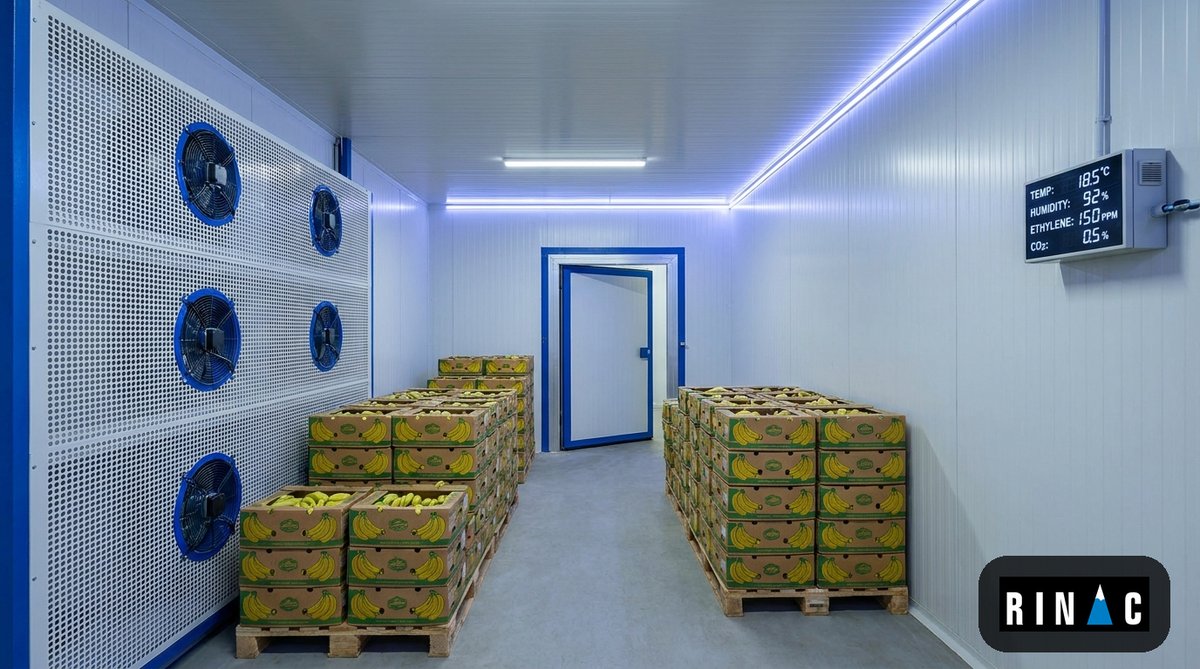
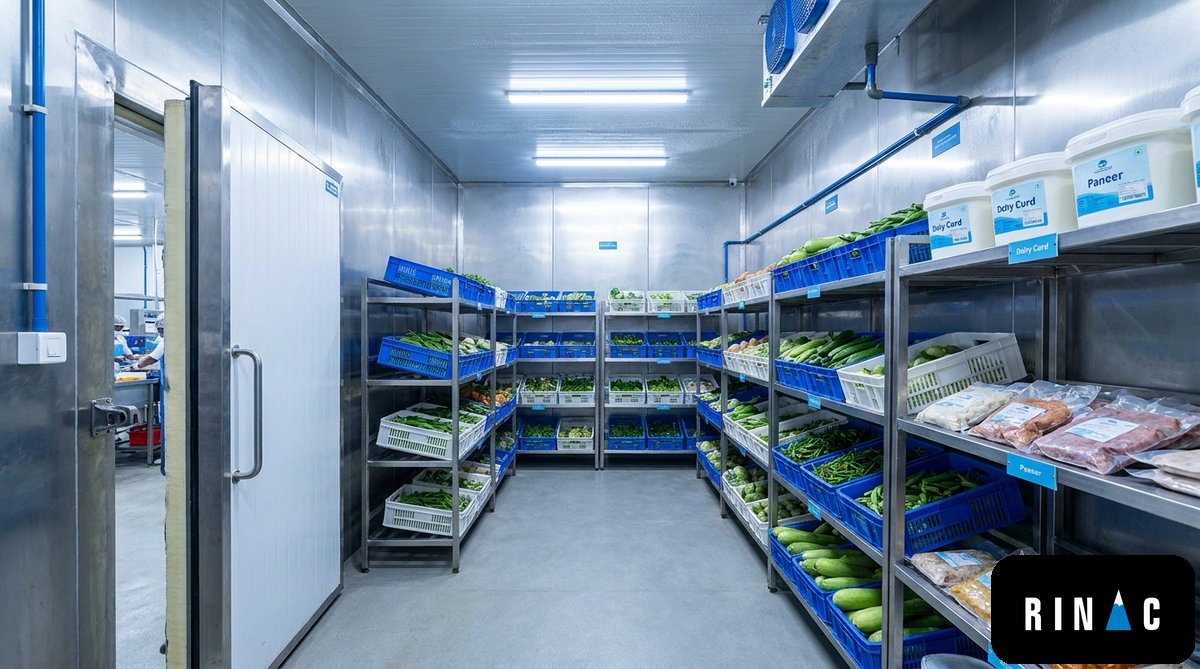
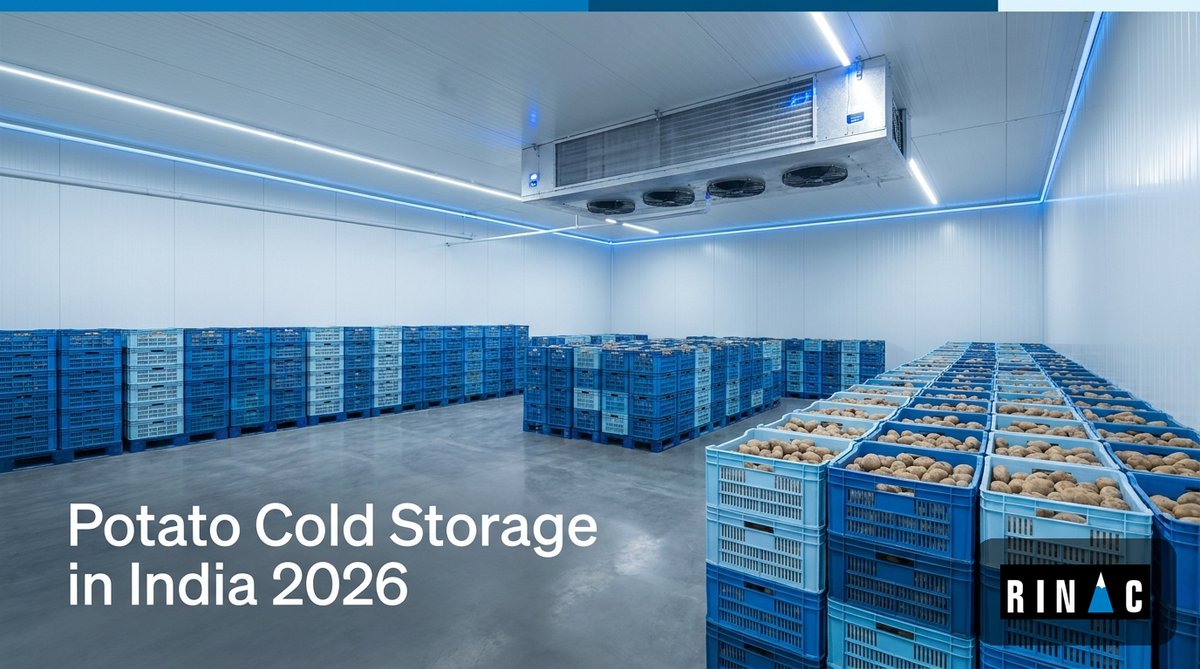
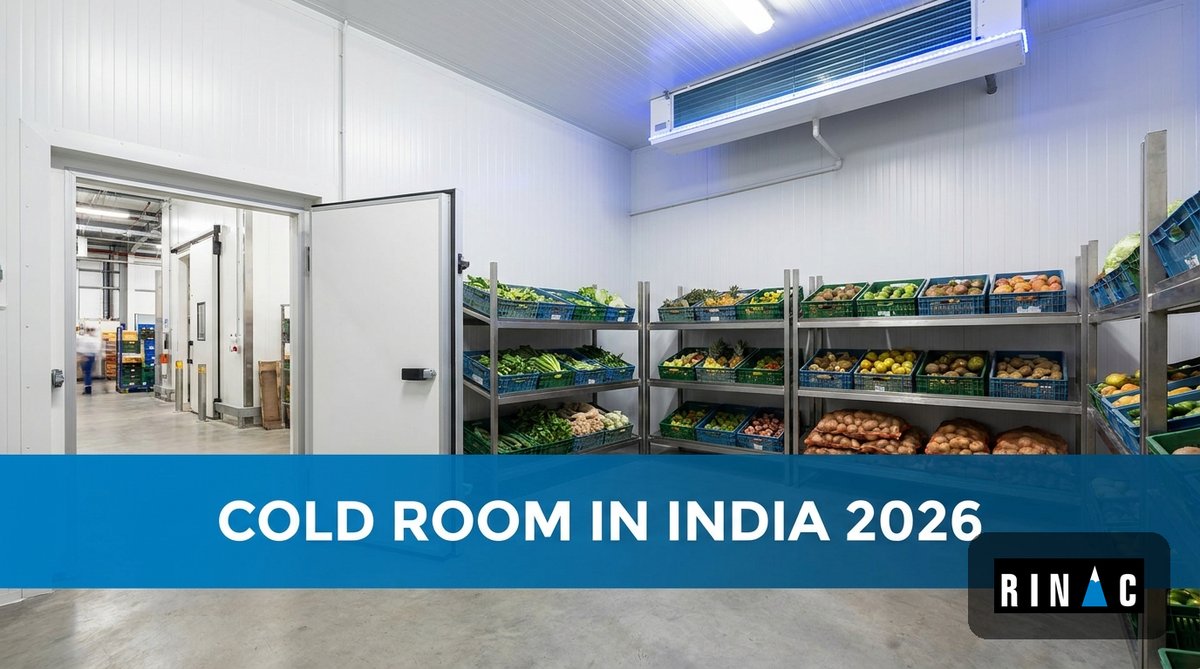
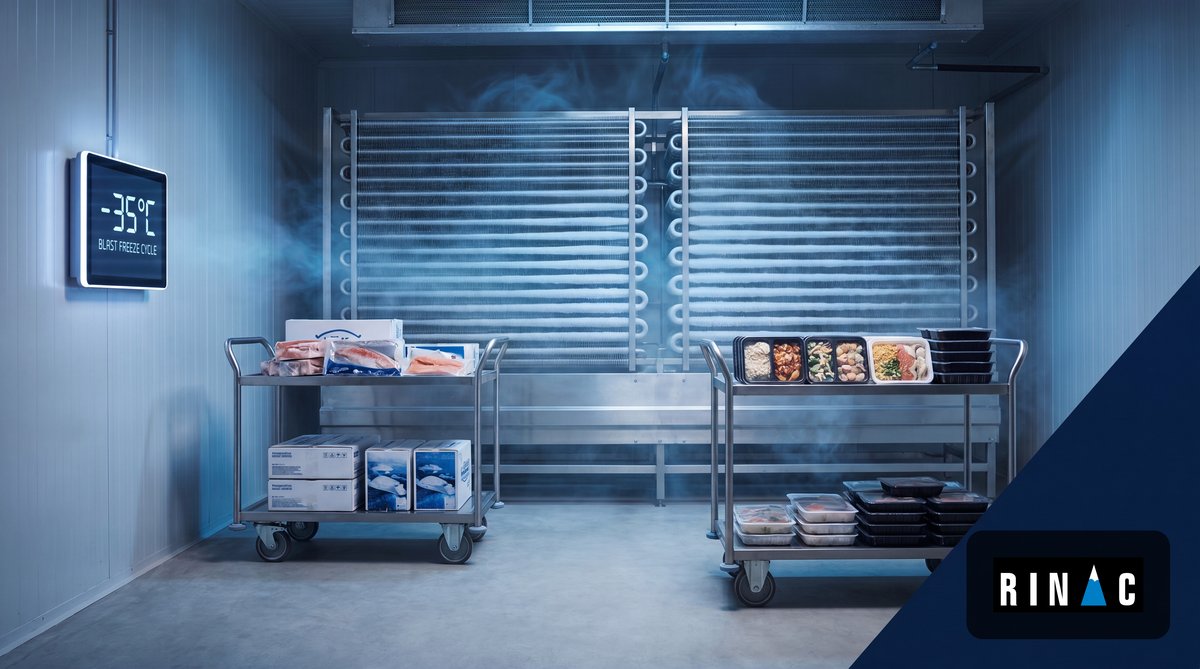
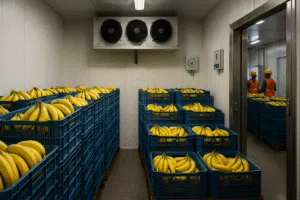
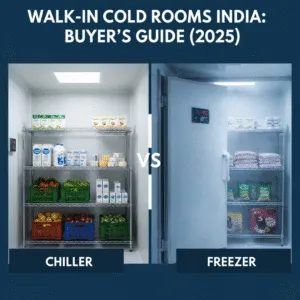
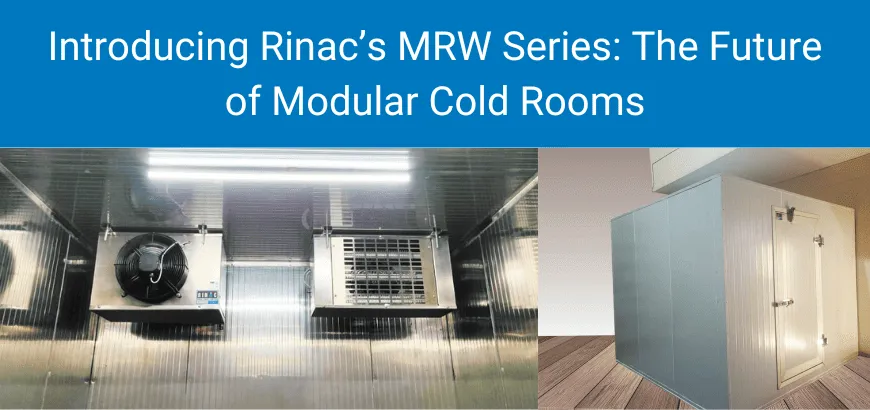
For chillers at +2 to +8 deg C, most Indian projects specify 60 to 80 mm PUF panels with 40 kg/m3 density and 0.50 mm PPGI skins, landing in the Rs. 160 to Rs. 260 per sq ft band. For freezer rooms at -18 deg C, 100 mm panels are the sweet spot, at Rs. 230 to Rs. 300. Blast freezers at -35 deg C or below use 150 mm panels with higher density cores, pushing rates to Rs. 300 to Rs. 380 per sq ft. The PUF panels are just one part of the total cold room cost: refrigeration, vapour barriers, flooring, doors and controls together typically make up 55 to 65 percent of the total project cost. Rinac’s modular cold rooms and MRW Series are engineered around these benchmarks.
Pharma clean rooms and GMP facilities
Pharma applications demand tighter tolerances, higher density foam (42 to 45 kg/m3), anti-microbial coating on skins and HPL/GI hygiene finishes. The resulting insulated puf panel cost typically runs 15 to 25 percent higher than standard cold room equivalents, with 60 mm panels pricing at Rs. 190 to Rs. 260 per sq ft. Compliance with WHO-GMP and FDA guidance is usually a hard requirement.
Industrial sheds, warehouses and PEBs
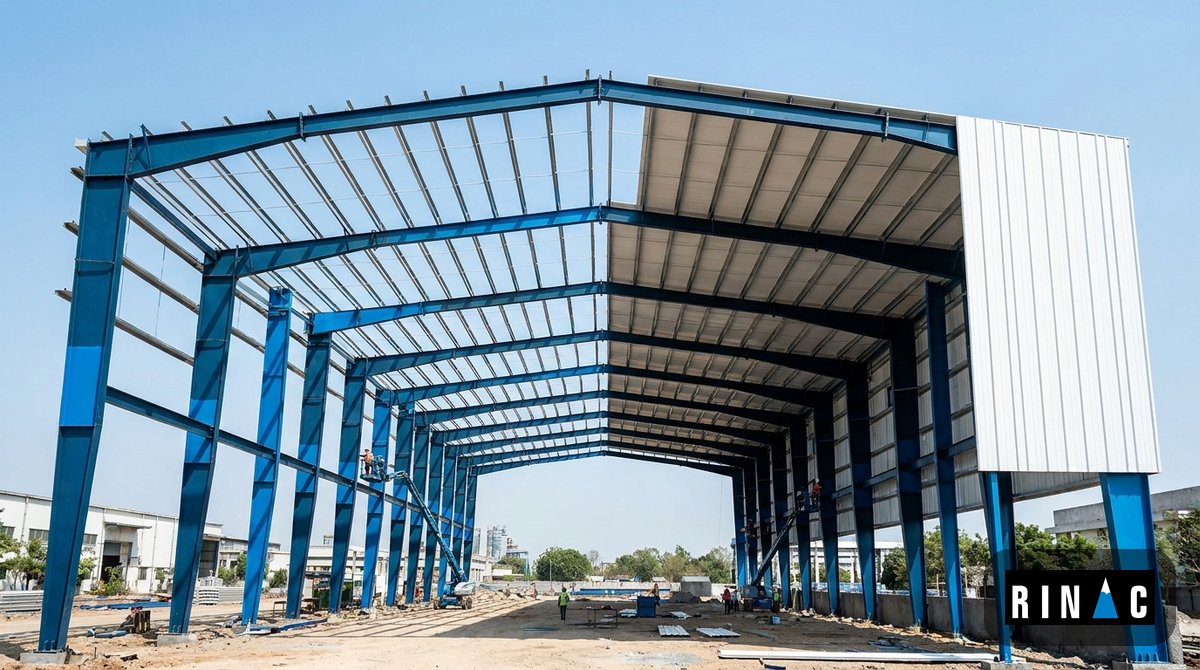
For non-cooled industrial sheds and large warehouses, the driver is roof insulation more than wall insulation, because heat ingress through the roof governs internal comfort and HVAC load. 40 to 50 mm trapezoidal PUF roof panels typically price at Rs. 130 to Rs. 200 per sq ft for the puf panel roof element, with lighter 30 to 40 mm partitions for internal walls. Rinac’s prefabricated buildings use these configurations as standard.
Portable cabins and prefab houses
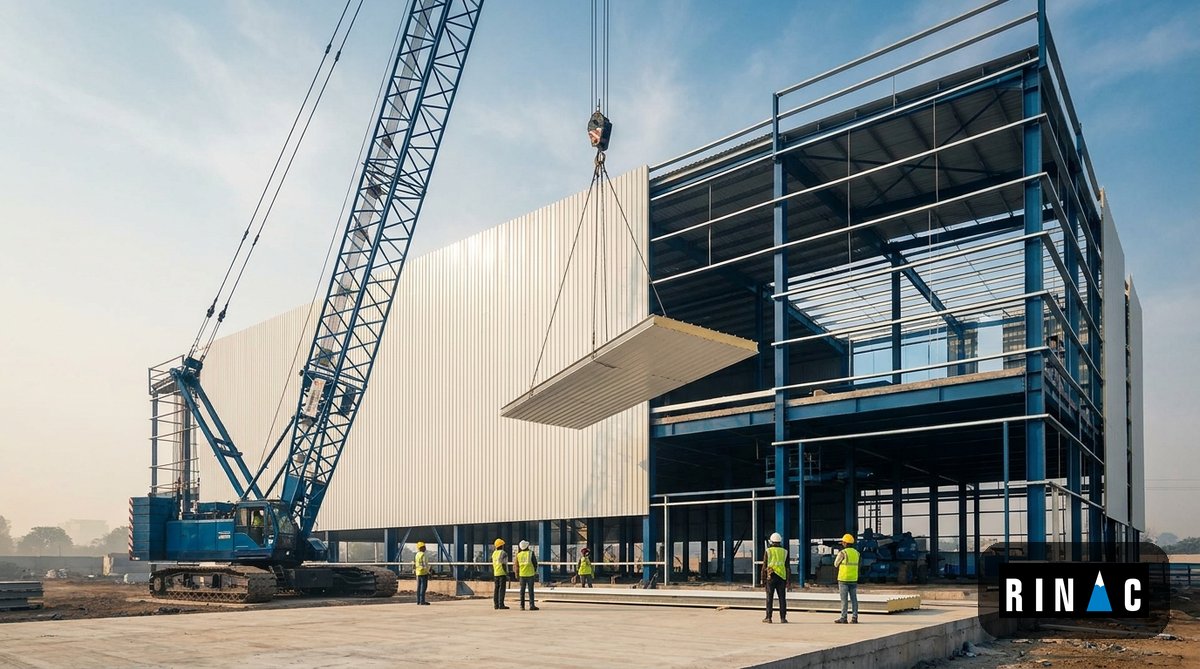
Site offices, guard rooms, worker accommodation and prefab houses usually specify 30 to 50 mm panels for walls and 40 to 50 mm for roofs. Expect all-in puf panel price per sq ft of Rs. 110 to Rs. 180 for walls and Rs. 140 to Rs. 210 for the roof. Modular construction cuts project timelines by 50 to 70 percent against conventional masonry, a key reason Indian infrastructure and mining projects have shifted so decisively in this direction.
Data centres and hyperscale sites
Data centre applications almost always specify FM 4880 Class 1 panels (such as Firearmet PUF or Rockwool alternatives). Panel rates here start around Rs. 280 per sq ft for 80 mm and move up from there. Rinac’s R-Wool stonewool panels for data centres article is a useful reference for hyperscale spec writing.
Installed Cost vs Panel-Only Cost: What Most Buyers Miss
The most common costing mistake we see at Rinac is buyers comparing ex-works puf panel sheet rates without normalising for what gets added between the factory gate and a functioning room. Panel-only cost is, at best, 55 to 70 percent of the installed cost. The rest is made up of accessories, installation, freight and site services.
Typical installed cost breakdown for a 1,000 sq ft cold room
| Line item | Share of panel package | Rs. / sq ft (indicative) |
|---|---|---|
| 100 mm PUF panels (ex-works) | 60 to 65 percent | Rs. 260 |
| Cam-locks, coving, flashing, sealant | 8 to 12 percent | Rs. 30 |
| Cold room doors, viewports, PVC curtains | 5 to 8 percent | Rs. 25 |
| Transport to site (average India) | 3 to 7 percent | Rs. 15 |
| Erection and supervision | 10 to 15 percent | Rs. 40 |
| GST @ 18 percent | Applied on top | Rs. 67 |
| Installed, taxes-paid total | 100 percent | Rs. 437 / sq ft |
That is just the insulated envelope. Add the refrigeration package, PU flooring, vapour seal, lighting and controls, and a full-stack cold room ends up at Rs. 1,000 to Rs. 1,800 per sq ft for walk-in sizes. Our 2026 cold storage investment calculator drills deeper into full-facility numbers.
Watch out for the “installation free” trap. Quotations that bundle installation into the panel rate sometimes quietly drop foam density from 40 kg/m3 to 36 or switch PPGI skins from 0.50 mm to 0.40 mm to absorb the labour cost. Ask for a split quote: panel (with density and skin spec) separately from accessories and erection.
PUF Panel Price vs Alternatives: PIR, EPS, Rockwool and Traditional Construction
PUF is the dominant choice for cold chain in India because it hits the sweet spot between thermal performance, weight and cost. But it is not the only option, and for certain fire-sensitive projects or budget-driven storage rooms, alternatives can make commercial sense. Here is how the apples-to-apples puf panel cost picture looks against its main competitors for a 100 mm wall panel, 40 kg/m3 core, 0.50 mm PPGI skins, all-India average.
| Panel type | Thermal conductivity (k, W/mK) | Typical price (Rs./sq ft, 100 mm) | Fire behaviour |
|---|---|---|---|
| PUF (polyurethane foam) | 0.022 to 0.024 | Rs. 230 to 300 | Class B (combustible) |
| PIR (polyisocyanurate) | 0.022 | Rs. 270 to 360 | Class B-s1 / FM 4880 eligible |
| Rockwool (mineral wool) | 0.036 to 0.040 | Rs. 320 to 420 | Non-combustible (A1/A2) |
| EPS (expanded polystyrene) | 0.034 to 0.038 | Rs. 160 to 210 | Class E (very combustible) |
PUF delivers roughly 40 percent better insulation than EPS at similar thickness and about 30 percent better than rockwool, which is why cold chain buyers in India lean PUF by default. Rockwool wins where fire behaviour is the driving requirement (data centres, insurer-graded warehouses). Our insulated roofing vs traditional roofing cost-benefit analysis extends this comparison to total cost of ownership.
How to Reduce PUF Panel Cost Without Compromising Quality
There is a right way and a wrong way to bring puf panel rates down on a project. Cutting foam density or steel gauge is the wrong way. These levers save 3 to 6 percent up front and cost you 20 to 40 percent more in energy, repair and downtime over the panel life. Here are five right-way savings our customers use.
- Buy factory-direct. Dealers and distributors typically add 8 to 15 percent markup for storage and financing. For orders above 10,000 sq ft, buying direct from a manufacturer like Rinac almost always clears that margin.
- Consolidate wall and roof orders. Ordering walls and puf panel roof sheets separately triggers two production runs and two deliveries. Combining them usually unlocks 3 to 5 percent pricing on the combined scope.
- Right-size thickness by zone. Many buyers default to 100 mm everywhere for a cold room. In practice, 80 mm panels often work for ante-rooms and 60 mm for dry dispatch corridors. Zone-specific thickness can trim 6 to 10 percent off the insulated envelope cost.
- Time large orders around steel commodity dips. PPGI and SS 304 are commodity-linked; indexing a large purchase order to a 60-day steel price window can save 2 to 4 percent.
- Use government subsidies. India’s PM Kisan SAMPADA, MIDH and National Cold Chain Grid schemes offer 35 to 50 percent capital subsidy for eligible cold chain infrastructure. Our 2026 cold chain subsidies guide has the eligibility matrix and application workflow.
Rinac case in point: On a 25,000 sq ft multicommodity cold storage project in Maharashtra, zone-specific thickness optimisation plus a consolidated wall-and-roof package trimmed the panel envelope budget by Rs. 18.5 lakh, without any change to thermal performance.
Red Flags: Why the Cheapest PUF Panel Price Often Costs More in the End
If you are looking at three quotations and one is 20 percent below the others for the “same” specification, something is being left out. The most common cost-cuts buyers do not spot:
- Density dropped from 40 to 32 to 36 kg/m3, which saves 4 to 6 percent but reduces mechanical strength and long-term R-value.
- Steel skin reduced from 0.50 mm to 0.40 mm, which saves 6 to 8 percent but fails in wash-down and coastal environments.
- Non-CFC blowing agent quietly swapped for a cheaper variant, which shifts thermal conductivity from 0.022 to 0.028 W/mK.
- No batch test certificates, no FM 4880 or equivalent fire evidence, no warranty beyond 12 months. Quality PUF panels should come with at least 10 to 15 years of performance warranty and documented test reports.
- Missing edge protection and vapour seal, leading to foam ingress of moisture and panel bowing within two to three years.
Rinac panels come with validated density reports, FM 4880 Class 1 Firearmet fire certification on the rated range, ISO-compliant manufacturing at our Bangalore and Murbad facilities, and HPCC patented construction for load-bearing modular builds. We would rather lose a price-only tender than supply a panel that fails in year three.
“A puf panel is not a commodity, it is an engineering system. If you buy the system right, you pay once; if you buy on price alone, you pay three times — once in cap-ex, again in energy, and a third time in rework.” – Rinac Engineering, 30+ years of cold chain delivery.
Frequently Asked Questions About PUF Panel Price in India
Get an Engineered PUF Panel Quote, Not a Commodity Quote
Rinac has designed, built and serviced more than 10,000 cold chain and modular construction projects across 23 countries since 1994, working with partners like ITC, Britannia, Tata, Reliance, Nestle, Biocon and Flipkart. Our PUF panels are engineered for Indian conditions, manufactured at two state-of-the-art facilities in Bangalore and Murbad, certified to ISO, FSSAI, HACCP, GMP, IGBC and WHO-GMP standards, and backed by 14 branch offices and a 1800-4252252 after-sales service desk. We are solution architects, not just suppliers, and we will quote thickness, density, skin grade and accessories line-by-line so your puf panel price decision is an engineered one, not a commodity bet.
Prices and ranges in this guide are indicative all-India averages for 2026 and should be confirmed with a site-specific quotation. For live rates, call our enquiry line on 1800-4191166 or write to enquiry@rinac.com.
Explore related RINAC systems: PUF panel systems · sandwich panel range. Product data and suitability should be confirmed for the exact project.