TL;DR
- Multicommodity storage lets one warehouse handle many SKU classes (dry, chilled, frozen, hazardous, agri, pharma) under a single roof, and the right pallet racking system is what makes it work at scale
- India’s industrial racking market is valued at USD 682.3 million in 2026 and projected to hit USD 1.24 billion by 2033 (CAGR 8.9%), driven by quick commerce, cold chain and WDRA-regulated storage
- The 8 most used racking systems in India are selective, drive-in, push-back, pallet flow, mobile, cantilever, mezzanine and shuttle; each fits a specific SKU count, turnover pattern and temperature condition
- Quick commerce hubs now dedicate up to 60% of floor space to chilled racks, making multi-zone (ambient + chilled + frozen) pallet racking storage system design a core competency
- Heavy duty racks for storage typically carry 800 to 3,500 kg per pallet position, must meet IS 15061, SEMA and seismic zone codes, and for food must comply with FSSAI Schedule 4 and WDRA norms
- Racking is eligible under PMKSY, MIDH and MOFPI cold chain subsidies when integrated with cold rooms, giving up to 35 to 50% capital support
- Rinac’s StorEdge and Constructor racking brands are built into turnkey cold chain projects backed by 30+ years of engineering and 10,000+ delivered projects across 23 countries
Introduction: Why Multicommodity Storage and Racking Is a 2026 Priority
Indian warehousing has quietly flipped a switch. Facility operators are no longer asked to store one commodity under one roof. Food processors want dry staples, chilled dairy and frozen seafood in a single hub. 3PLs serving quick commerce need ambient FMCG, chilled dairy and frozen ice cream picked from the same dock. Agri businesses expect their cold storage to hold potatoes at 2°C and spices at 20°C without cross contamination. The only way this works commercially is a purpose-built pallet racking system that treats multicommodity storage as a design problem, not an afterthought.
The numbers support the shift. According to Persistence Market Research, India’s industrial racking market is already a USD 682.3 million business in 2026 and is on track for USD 1.24 billion by 2033 at a CAGR of 8.9%. The cold chain logistics market is projected to hit USD 24.85 billion in 2026 and nearly USD 33 billion by 2031. Much of that capacity will be multicommodity. This guide lays out how to plan, select, install and comply with a warehouse pallet racking system that earns its keep in Indian conditions, and how Rinac India, with 30+ years and 10,000+ delivered projects, approaches the problem.
USD 1.24 Billion
India industrial racking market size by 2033
India industrial racking market size by 2033
Multicommodity Storage 101: What It Actually Means
Multicommodity storage is a warehouse or cold storage facility designed to hold two or more distinct commodity classes concurrently, without compromising safety, traceability or storage conditions for any of them. Typical multicommodity footprints include:
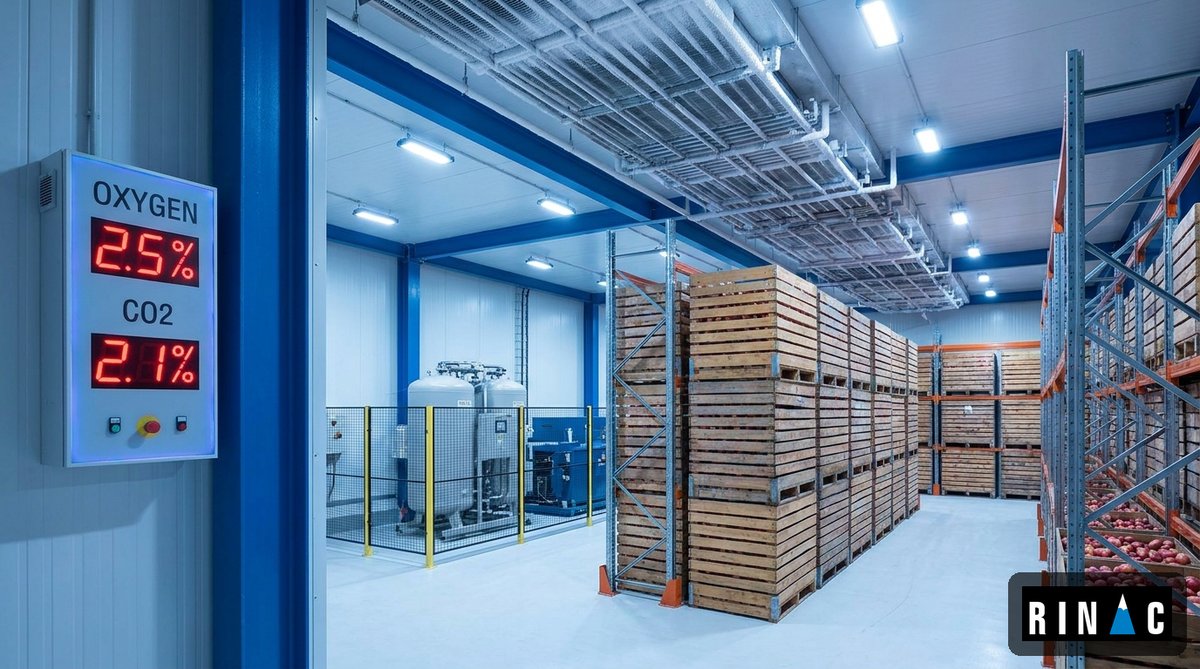
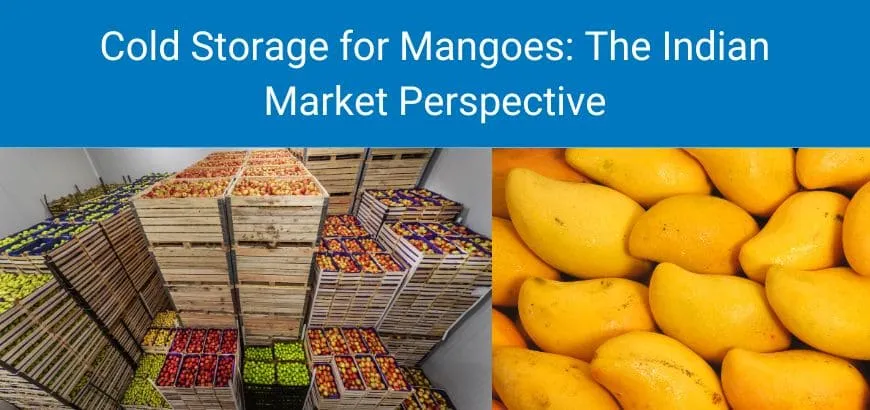
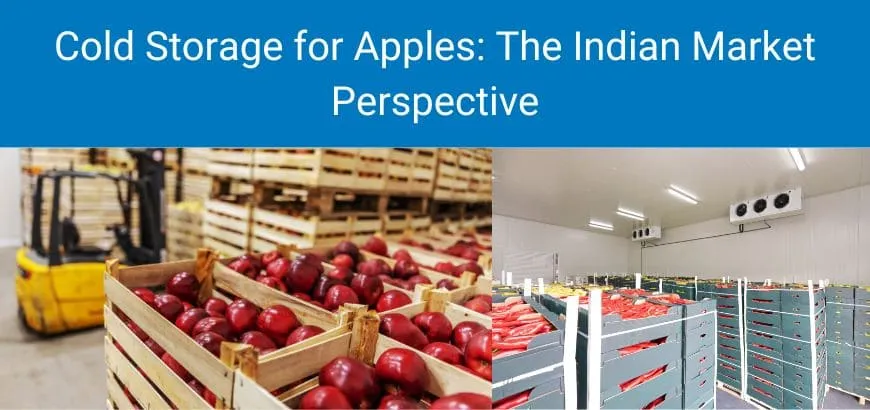
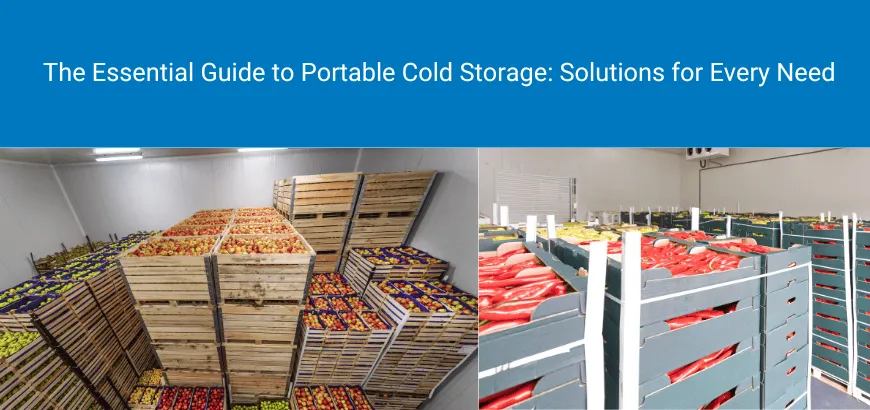
- Agri and horticulture hubs storing apples at 0 to 2°C, potatoes at 2 to 4°C, spices at ambient and seed stock in low humidity chambers
- Food processing cold chains combining dry ingredients, chilled dairy, frozen meat, IQF vegetables and finished ready-to-eat SKUs
- Pharma and biologics warehouses holding 2 to 8°C vaccines, 15 to 25°C controlled room temperature APIs and deep-frozen biologics in one facility
- Quick commerce dark stores shipping ambient FMCG, chilled dairy and frozen ice cream from the same dock to hyperlocal riders
- WDRA-registered public warehouses issuing negotiable warehouse receipts against a mixed inventory of regulated agricultural and non-agricultural commodities
India’s Warehousing Development and Regulatory Authority (WDRA) has progressively expanded the list of commodities eligible for regulated storage under the Warehousing (Development and Regulation) Act, 2007. That expansion, combined with FSSAI Schedule 4 norms for storage and warehouse facilities, has pushed operators to build flexible, compliant, multicommodity layouts from day one rather than bolt them on later.
Engineering principle: A multicommodity facility is only as good as its weakest zone. If the frozen chamber is world class but the chilled racks block airflow or the ambient dry zone leaks heat into the chilled one, the whole building underperforms. The warehouse storage racks manufacturers you choose must design for the weakest link.
The 8 Pallet Racking System Types Every Indian Operator Should Know
A multicommodity facility almost never uses a single rack type across the entire footprint. The right storage racking system depends on SKU count, pallet turnover, picking method and temperature. These are the eight pallet racking system families Rinac specifies most often for Indian projects.
1. Selective Pallet Racking System
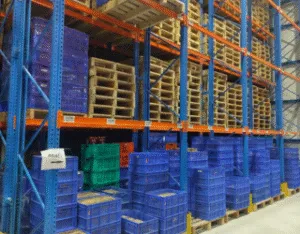
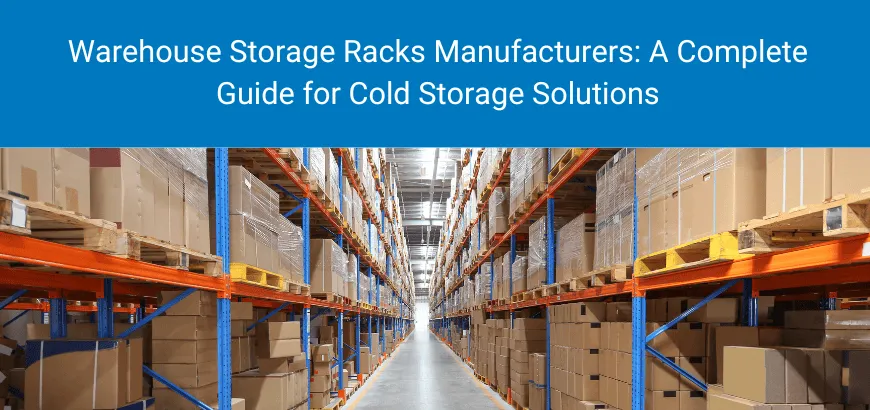
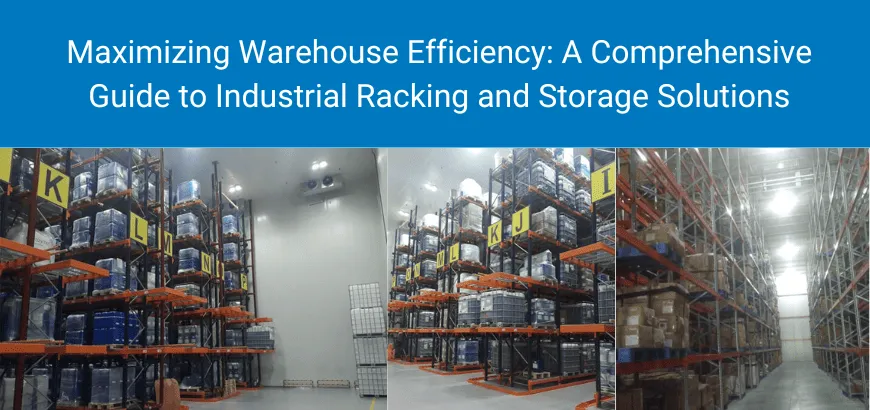
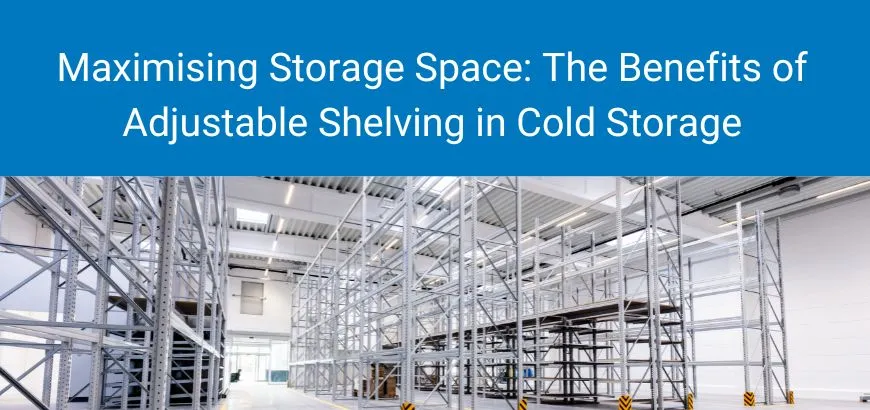
Selective racking is the default starting point for most Indian warehouses. It gives 100% direct access to every pallet, is easy to reconfigure and is the most economical racking storage system to install. It works beautifully for multicommodity warehouses with high SKU counts and moderate turnover, such as FMCG distribution centres and agri multicommodity hubs. The downside is density: aisles consume a lot of floor area.
2. Drive-In and Drive-Through Racking
Drive-in racks let forklifts enter the rack structure to deposit and retrieve pallets. They achieve 75 to 85% volumetric utilisation but store homogeneous SKUs only, because access is LIFO. Drive-in is ideal for frozen fish blocks, potato bags or single-SKU dairy cartons held at constant temperature. They are a favourite in cold rooms where every cubic metre of chilled volume is expensive to condition.
3. Push-Back Pallet Racking Storage System
Push-back systems store 2 to 6 pallets deep on inclined rails with free-rolling carts. Loading pushes older pallets back, retrieval lets them roll forward. Access remains from the front aisle, giving LIFO rotation with high density. Push-back is a sweet spot for chilled dairy, chocolate, or beverages where 2 to 6 pallets per SKU is common and dedicated drive-in lanes would be wasteful. A well tuned pallet storage racking system of this type can triple the footprint productivity of a selective layout.
4. Pallet Flow (Gravity) Racking
Pallet flow works on gravity rollers with FIFO rotation. It is used where shelf life matters most: IQF vegetables, fresh meat, seafood and dated pharma. A pallet flow lane can be 10 to 20 pallets deep, making it extremely space efficient for fast-moving SKUs. The capital cost is higher, but the throughput and FIFO discipline pay off in food safety audits.
5. Mobile Pallet Racking System
Mobile racking mounts selective racks on motorised bases that slide on floor rails. Only one aisle opens at a time, so floor utilisation jumps from roughly 40% to 80 to 90%. It combines full selectivity with near-drive-in density. Mobile racks are the go-to answer for refrigerated storage of pharma, vaccines and high-value frozen food where every cubic metre of cold volume costs real money in compressor kWh.
6. Cantilever Racking
Cantilever racks store long, awkward loads: steel bars, pipes, lumber, laminates, long frozen fish boxes. They are a must for multicommodity sites that include industrial and project-cargo SKUs alongside consumer goods.
7. Mezzanine Racks and Multi-Tier Shelving
Mezzanines use vertical height for slow-moving small items and piece-picking, typical in e-commerce fulfilment and pharma APIs. They let you stack 2 to 3 working levels inside the same building envelope without structural expansion.
8. Shuttle and Semi-Automated Racking
Shuttle systems deploy a motorised carrier inside drive-in channels. They hit up to 90% cube utilisation, work reliably down to -30°C, and cut forklift travel inside the cold zone to almost zero. For large IQF, seafood and ready meals operations, shuttle racking is the bridge between manual warehousing and full ASRS for India.
Rinac reference chart: 8 pallet racking systems for multicommodity Indian warehouses.
Designing Multi-Temperature Zones Under One Roof
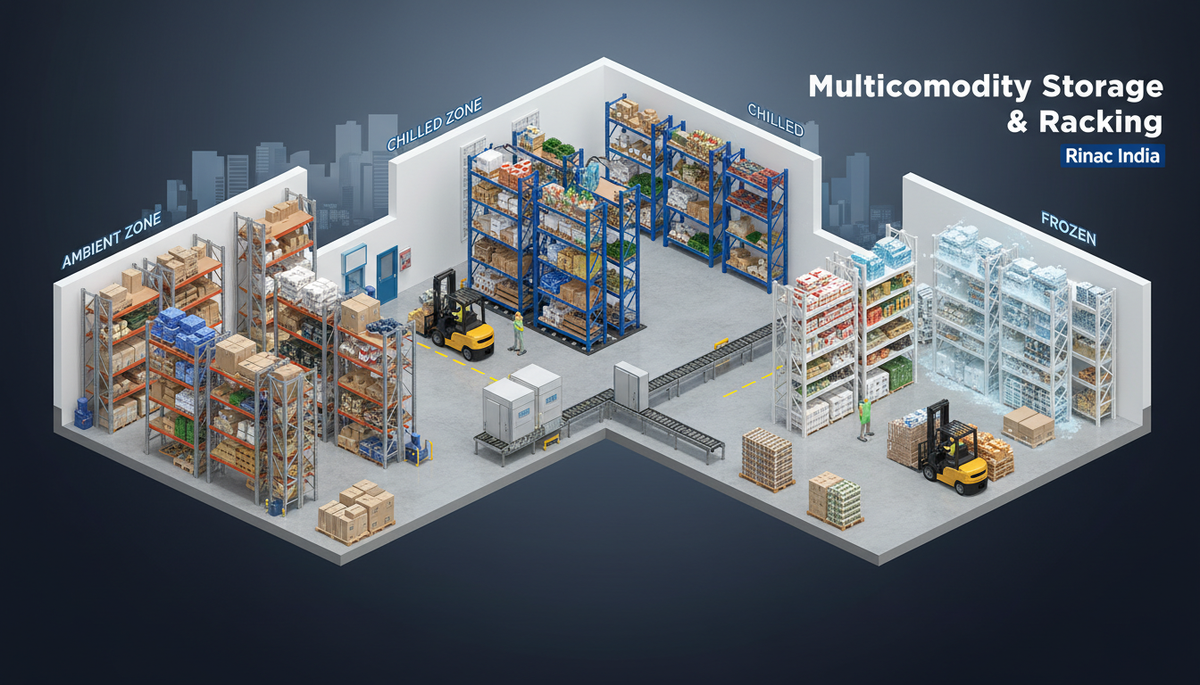
A true multicommodity facility usually separates the internal volume into four temperature bands:
| Zone | Temperature Band | Typical SKUs | Recommended Racking |
|---|---|---|---|
| Ambient | 15 to 30°C | FMCG, dry staples, packaging, non-perishables | Selective, mezzanine, cantilever |
| Cool / CRT | 15 to 25°C controlled | Chocolates, pharma CRT, spices, seeds | Selective, mobile, push-back |
| Chilled | 2 to 8°C | Dairy, fruits, vegetables, vaccines, ready meals | Mobile, pallet flow, push-back |
| Frozen | -18 to -25°C | Meat, seafood, IQF vegetables, ice cream | Drive-in, shuttle, pallet flow |
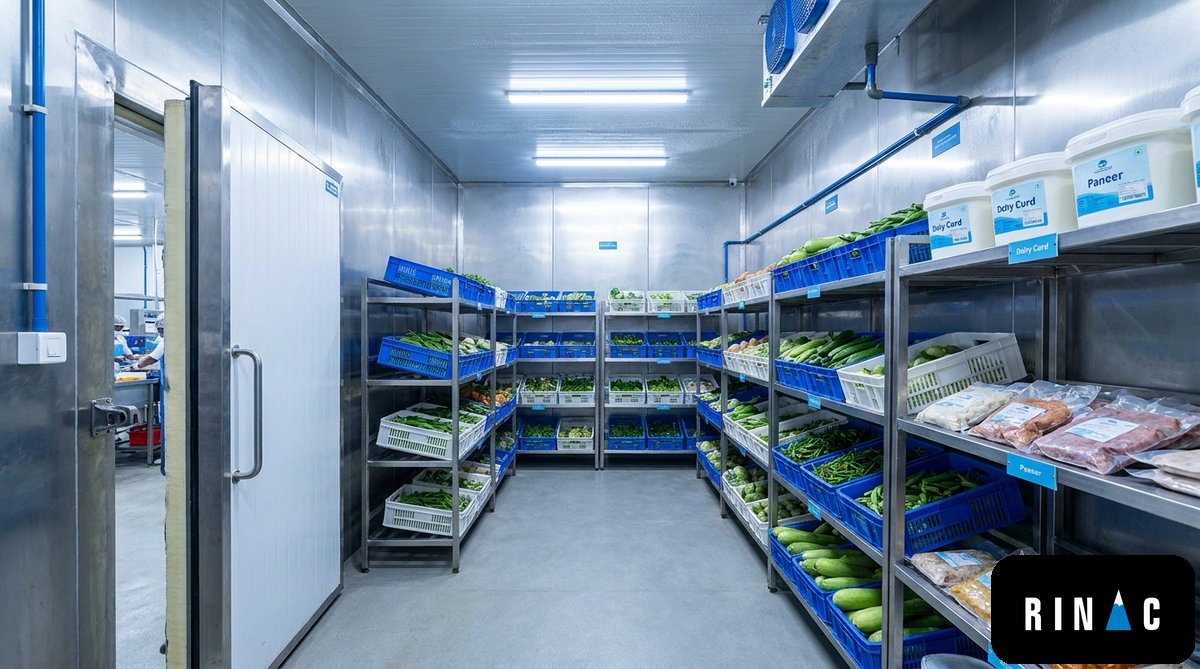
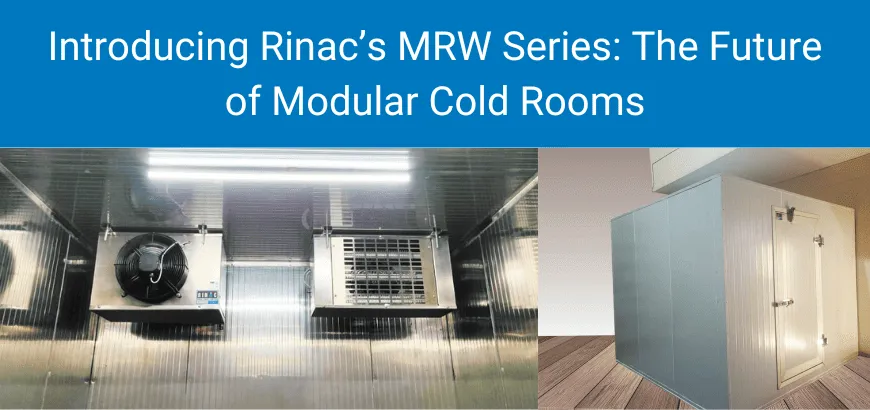
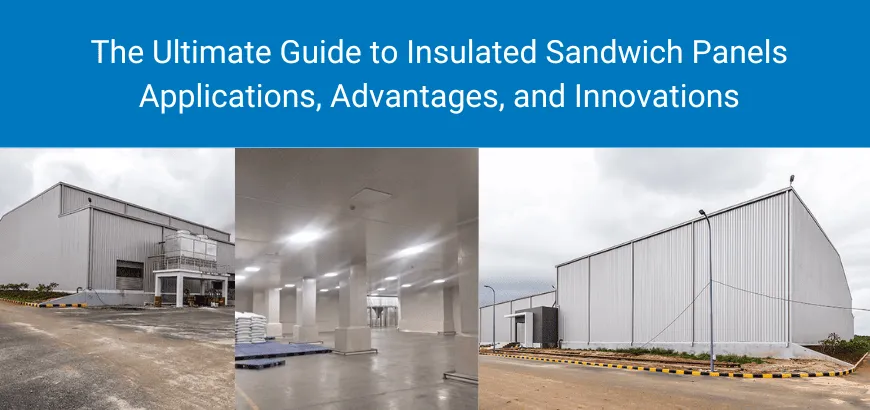
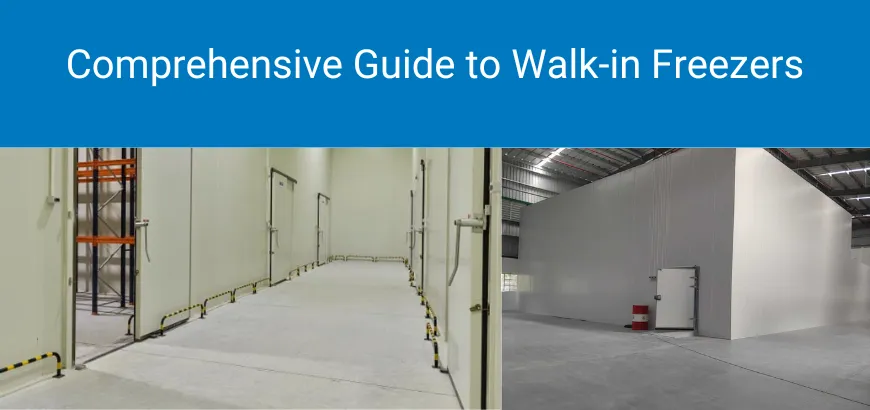
Quick commerce has accelerated this blueprint. Industry reports note that new dark-store hubs now dedicate up to 60% of floor space to chilled racks, with single docks shipping -20°C and +4°C cargo on the same run. That forces the warehouse pallet racking system to be not just temperature-tolerant but also flexible, so a chilled bay can be converted into a frozen bay in months, not years. Rinac’s cold rooms and MRW series walk-in cold rooms are engineered as zone-ready envelopes that accept any of the 8 racking types described above.
Choosing the Right Pallet Racking System: A Decision Framework
There is no universal answer. Rinac’s engineering teams use four variables to specify the right pallet racking storage system for each zone of a multicommodity facility.
- SKU count vs pallets per SKU: High SKU count with few pallets per SKU favours selective or mobile racking. Low SKU count with many pallets per SKU favours drive-in, pallet flow or shuttle.
- Throughput (pallets moved per hour): Fast-moving frozen operations with more than 40 pallets per hour favour pallet flow or shuttle for throughput. Slow-moving archival pharma favours mobile racks.
- Rotation policy (FIFO vs LIFO): Food and pharma almost always need FIFO, which rules out drive-in for dated stock. Pallet flow or selective with location logic is the answer.
- Building constraints: Clear height, floor flatness (FM2 vs FM3), seismic zone and ambient conditions determine whether narrow-aisle, very-narrow-aisle or shuttle solutions are feasible.
Rinac design rule of thumb: For most Indian multicommodity facilities with 300 to 1,200 SKUs, a 60/30/10 split (selective / mobile or push-back / drive-in or shuttle) delivers the best balance of density, flexibility and capital cost.
Compliance Standards for Heavy Duty Industrial Storage Racks in India
Racking is a structural system. Failures are catastrophic. India has layered guidance that any serious operator should insist on in tender documents:
- IS 15061 for adjustable pallet racking design, materials and permissible load tolerances
- SEMA and FEM 10.2.08 (European codes widely adopted for installation, inspection, damage tolerance)
- IS 1893 seismic design for racks installed in seismic zones III, IV and V (most of India)
- WDRA Warehousing (D&R) Act compliance for any public warehouse issuing negotiable receipts
- FSSAI Schedule 4 hygiene, pest-control and storage norms for food warehouses
- WHO-GMP and Schedule M for pharma racking (traceability, cleanability, calibrated monitoring)
- NFPA 13 / IS 15105 for sprinkler integration in high-bay and in-rack applications
Rinac projects are certified to ISO, FSSAI, HACCP, GMP, IGBC and WHO-GMP as standard. Safe working load plates, protection guards, annual damage inspections and post-earthquake re-certification protocols are baked into every StorEdge and Constructor racking handover.
Heavy Duty Racks for Storage: Capacity, Materials and Cost
Indian industrial buyers usually benchmark their heavy duty industrial storage racks against four numbers.
| Parameter | Typical Range | Notes |
|---|---|---|
| Load per pallet position | 800 to 3,500 kg | Standard Indian pallets are 1000 x 1200 mm; loads above 2,000 kg need heavier uprights |
| Upright height | 6 to 14 m | VNA and shuttle systems go 12 m+, needing FM2/FM3 floors |
| Steel grade | E250 to E350 cold-rolled | Powder-coated for ambient; hot-dip galvanised for chilled and frozen |
| Indicative price (selective) | Rs 3,500 to 7,500 per pallet position | Mobile, pallet flow and shuttle can be 2x to 5x higher but 1.5 to 2x denser |
Capital cost looks high until you factor in density. A mobile racking storage system that doubles capacity on the same footprint typically pays back in 18 to 36 months on real estate and refrigeration energy savings, especially in metro cold chain hubs. Rinac budget proposals always present racking as part of the overall cold storage business guide economics, not as a standalone line item.
Subsidy note: Racking integrated with cold storage is eligible under PMKSY, MIDH and MOFPI schemes. Grants can cover 35 to 50% of project cost. See Rinac’s detailed breakdown of cold chain subsidies.
Integrating Racking With Cold Chain, WMS and Automation
A modern racking storage system is not just steel. The cold chain industry is moving to connected racks that plug into the warehouse management system (WMS), refrigeration controls and IoT dashboards. Rinac typically delivers:
- Barcode and RFID-ready beam labelling for every pallet location
- Temperature and humidity sensors embedded inside chilled and frozen racks, feeding a single dashboard
- Digital twin of the rack layout for WMS, enabling directed put-away and FIFO picking
- Shuttle and crane controls integrated with ERP via standard APIs
- Predictive maintenance alerts for upright damage, beam deflection and seismic events
For very high density, Rinac designs modern storage rack systems that evolve from manual selective pallet racking today into shuttle or crane-based ASRS tomorrow, without replacing the primary structure. That kind of future-proofing is the real cost savings in a 15 to 20 year asset.
How Rinac StorEdge and Constructor Solve Multicommodity Racking
Rinac’s racking business sits inside a larger cold chain and modular construction practice that has delivered 10,000+ projects across 23 countries for clients including ITC, Britannia, Tata, Reliance, Nestle, Biocon, Flipkart and Haldiram’s. That vantage point shapes how we specify racks.
- StorEdge: Industrial storage and racking systems covering selective, drive-in, push-back, pallet flow, cantilever and mezzanine configurations, engineered in India
- Constructor: Racking and storage solutions for automation-ready, high-density and mobile configurations, deployed in chilled and frozen zones down to -30°C
- End-to-end delivery: Design, structural calculation, HPCC construction, insulated envelope, refrigeration, racking, WMS and after-sales service, all from one contract
- Manufacturing depth: Two in-house factories in Bangalore and Murbad (Maharashtra) give strict quality control and nine-week typical lead times
- Pan-India coverage: 14 branch offices so installation and AMC service are never far from site
Rinac is a Solution Architect and Builder for cold chain and clean modular construction. We design multicommodity warehouses the same way we design a turnkey cold storage warehouse: from the commodity out, not the steel in.
Frequently Asked Questions
Ready to Design Your Multicommodity Racking?
Whether you are planning a 2,000 pallet agri-horticulture hub, a 15,000 pallet quick commerce cold chain or a WDRA-registered multicommodity warehouse, getting the pallet racking system right is the single biggest lever on density, energy and safety. Rinac’s engineering team can benchmark your SKU mix against 30+ years of delivered projects and propose a configuration tuned for your building, commodities and budget.
Rinac India Limited is a Solution Architect and Builder for cold chain infrastructure and clean modular construction. 30+ years, 10,000+ projects, 23 countries, 14 Indian branch offices, two in-house manufacturing units, and certifications spanning ISO, FSSAI, HACCP, GMP, IGBC and WHO-GMP.