TL;DR – Quick Summary
- A blast chiller rapidly pulls cooked or fresh food from around 70°C down to a +3°C core in roughly 90 minutes, moving product through the bacterial “danger zone” far faster than a normal refrigerator and locking in quality, weight and shelf life.
- Blast chiller temperature for chilling is a +3°C core (soft/hard chill), while dual-mode blast chiller-freezer units shock-freeze to a −18°C core — the key line that separates a blast chiller from a blast freezer.
- In India, blast chillers are workhorses for bakeries, ready-meal and QSR kitchens, dairy and ice-cream, meat, poultry & seafood processors, and pharma cook-chill lines.
- Indicative blast chiller cost in India runs from a few lakh rupees for a reach-in commercial unit to several tens of lakhs for industrial roll-in and tunnel systems; rapid cooling equipment is eligible for MoFPI cold-chain grants of 35–50%.
- Rinac engineers, manufactures, installs and services blast chillers and blast freezers end-to-end — backed by 30+ years, 10,000+ projects and ISO / FSSAI / HACCP / GMP-aligned design.
Quick note: This guide is for general information and education only. It is not a substitute for professional engineering, food-safety, legal or regulatory advice. Prices, subsidy rates and regulations change — always verify current figures directly with FSSAI, MoFPI, NHB or your state agency, and consult a qualified engineer before investing. A detailed disclaimer appears at the end of this article.
What Is a Blast Chiller? (And Why Indian Food Businesses Need One)
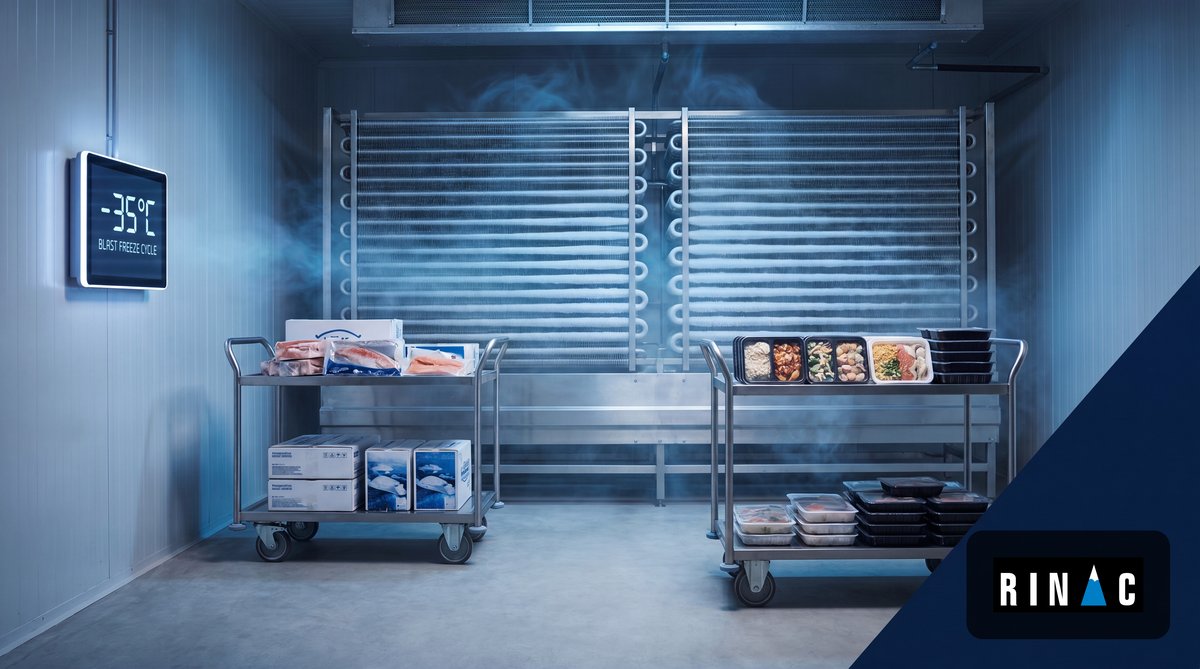
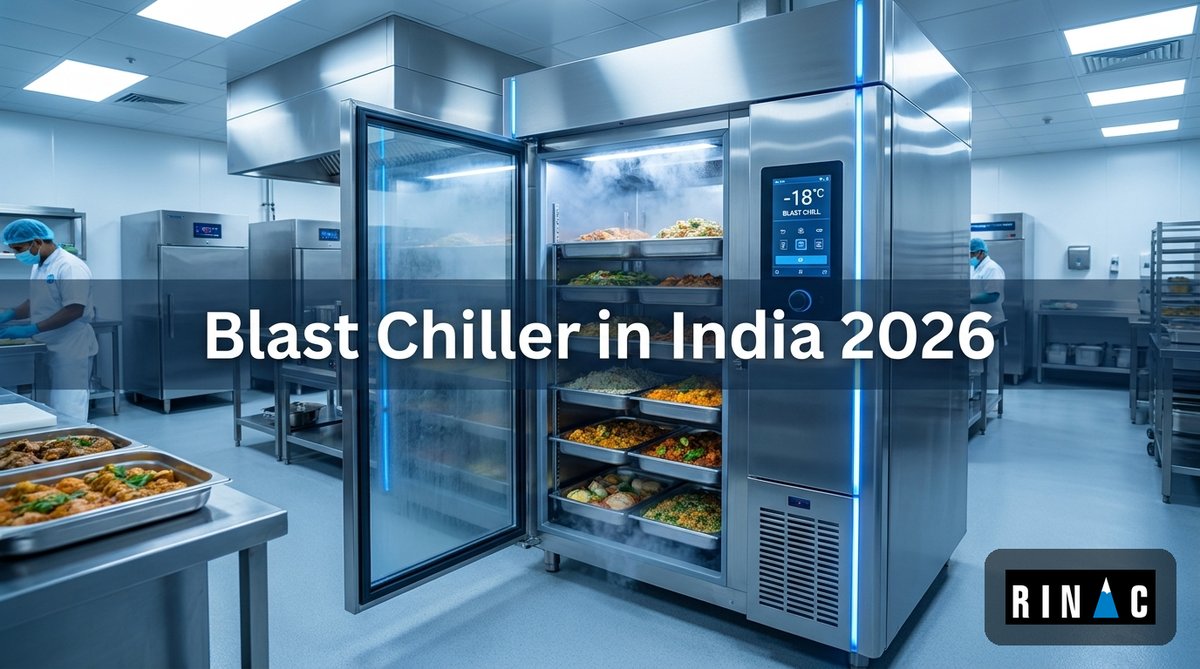
A blast chiller is a high-power refrigeration cabinet or chamber engineered to remove heat from food dramatically faster than a standard cold room or refrigerator. Instead of letting a hot tray of cooked biryani, sauce, cake sponge or blanched vegetables cool slowly on a rack — where it can sit for hours in the temperature range bacteria love — a blast chiller drives the food’s core temperature from about 70°C down to +3°C within roughly 90 minutes, in line with widely used cook-chill food-safety guidance [1]. That single capability is why blast chillers have moved from a “nice to have” in premium kitchens to core infrastructure for Indian food processors, caterers, dairies and pharma manufacturers.
The reason speed matters is microbiology. Bacteria multiply fastest in the so-called danger zone, roughly +8°C to +68°C, so the longer food lingers there the higher the microbial load and spoilage risk [2]. Conventional cooling can leave food in that band for two to four hours. A blast chiller compresses that window, protecting food safety while preserving texture, colour, moisture and nutritional value. For a business, the payoff is longer shelf life, less shrinkage and weight loss, safer batch cooking, and the ability to plan production ahead of demand rather than cooking to order.
70°C → 3°C in ~90 min
The cook-chill benchmark a blast chiller is built to hit
The cook-chill benchmark a blast chiller is built to hit
As solution architects and builders of cold chain infrastructure, Rinac positions the blast chiller as one link in a continuous cold chain — sitting between the kitchen or processing line and downstream cold room storage, blast freezing and refrigerated transport. Get the rapid-cooling step right and everything downstream is safer and more efficient.
Blast Chiller Temperature and How Blast Chilling Works
The defining number for any blast chiller is the target core temperature, not the air temperature. In chilling mode, the goal is a +3°C food core; in a combined blast chiller-freezer, the machine can switch to a −18°C core for shock freezing. Operators usually choose between two chill cycles:
- Soft chill — a gentler cycle (chamber air around 0°C) used for delicate items such as cream cakes, mousses and fish, avoiding surface freezing or crust damage.
- Hard chill — a more aggressive cycle (chamber air well below 0°C) for dense, high-mass products such as joints of meat, thick curries or large sauce batches, where you need maximum heat extraction to hit the 90-minute target.
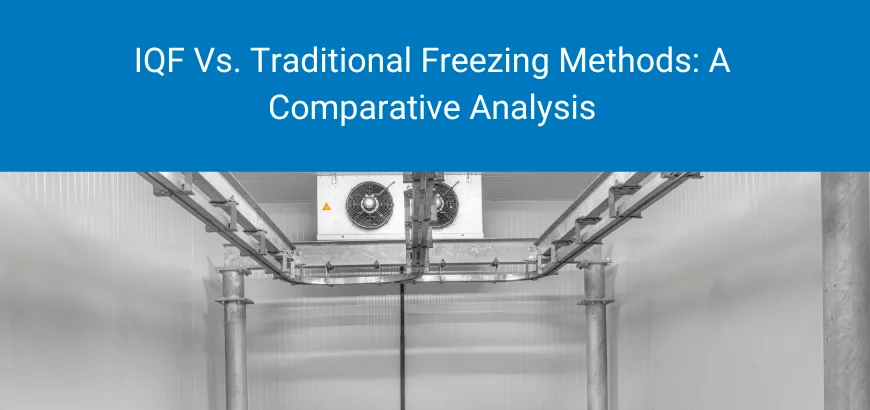
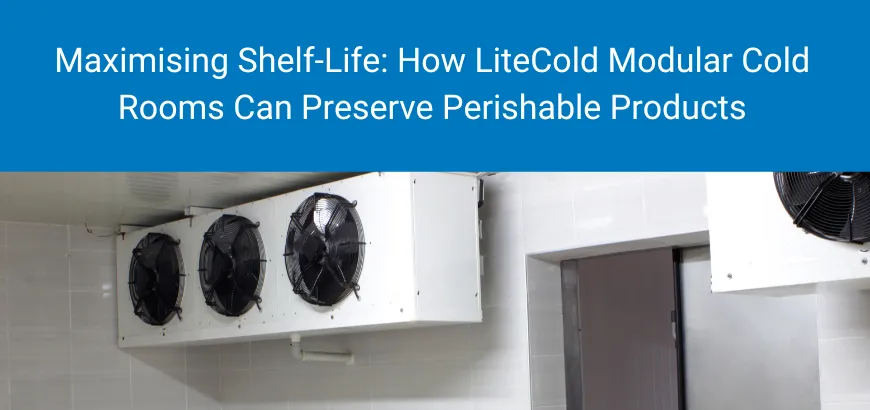
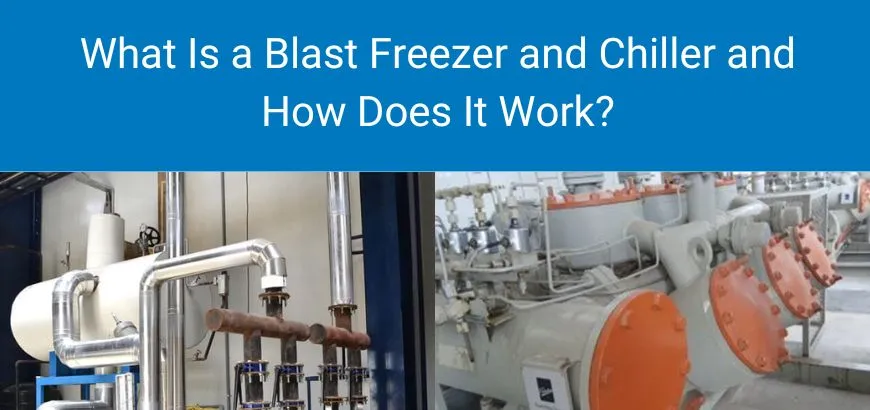
Under the hood, blast chilling is an exercise in refrigeration engineering. High-velocity, evenly distributed cold air is forced across every tray so heat is stripped from the product surface and, by conduction, from the core. The refrigeration system — compressor, evaporator, condenser and controls — is sized for a large, fast heat load rather than the steady holding load of a cold room. A core-temperature probe inserted into the thickest item lets the controller end the cycle on measured core temperature, not just a timer, which is exactly what auditors want to see. This is the same engineering discipline Rinac applies across its refrigeration systems and IQF freezing lines.
Engineer’s note: air temperature tells you what the machine is doing; core temperature tells you whether the food is safe. Always specify and log to the core probe, not the display air reading.
Blast Chiller vs Blast Freezer: The Key Differences
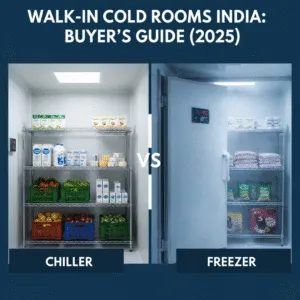
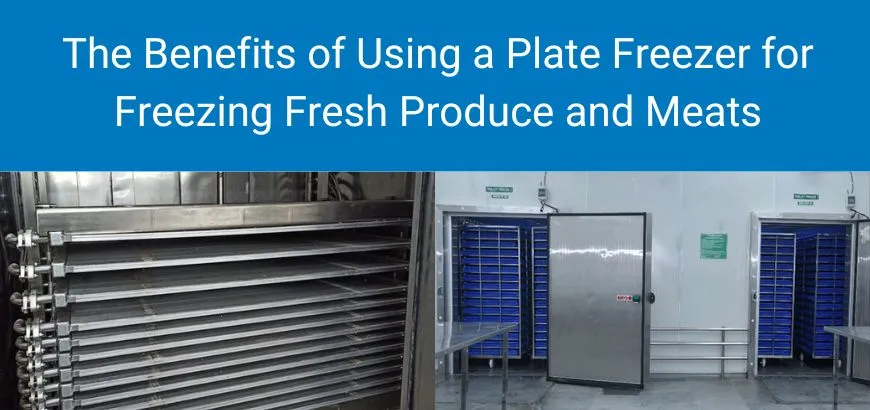
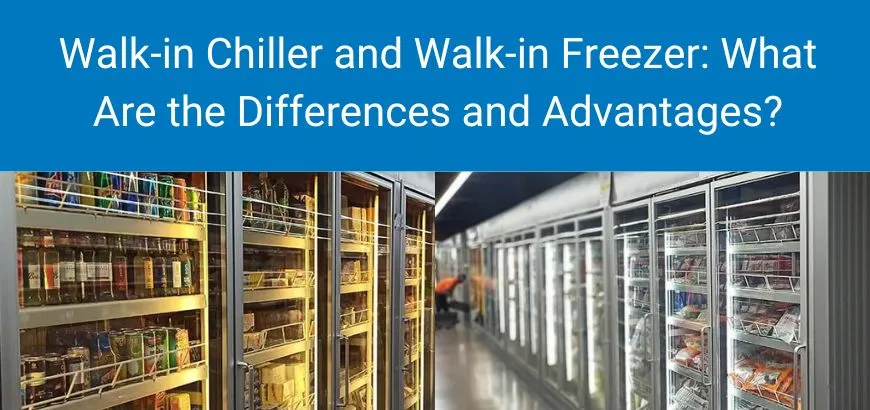
“Blast chiller” and “blast freezer” are often used loosely, but the distinction is important when you specify equipment. A blast chiller rapidly cools food to a +3°C core to keep it fresh and safe for short-term use and cook-chill workflows. A blast freezer keeps going, driving the core down to −18°C or colder to freeze the product for long-term storage. Many modern units are dual-mode “blast chiller freezer” cabinets that do both, which is why the blast freezer vs blast chiller question so often comes up when buyers compare equipment. If your priority is long-term frozen stock, read our dedicated blast freezer buyer’s guide; for a broader comparison of positive- and negative-temperature rooms, see walk-in chillers vs walk-in freezers.
| Parameter | Blast Chiller | Blast Freezer |
|---|---|---|
| Target food core temperature | +3°C | −18°C or colder |
| Primary purpose | Rapid cooling, cook-chill, freshness | Rapid freezing for long-term storage |
| Typical hold after cycle | 0–4°C chiller / cold room | −18 to −25°C freezer store |
| Best for | Bakery, ready meals, dairy, catering | Seafood, meat, IQF, frozen ready meals |
Types of Blast Chillers: Reach-in, Roll-in and Industrial Tunnel
Blast chillers scale from compact cabinets to full production lines. Choosing the right format is mainly a question of batch size, throughput and how product is loaded.
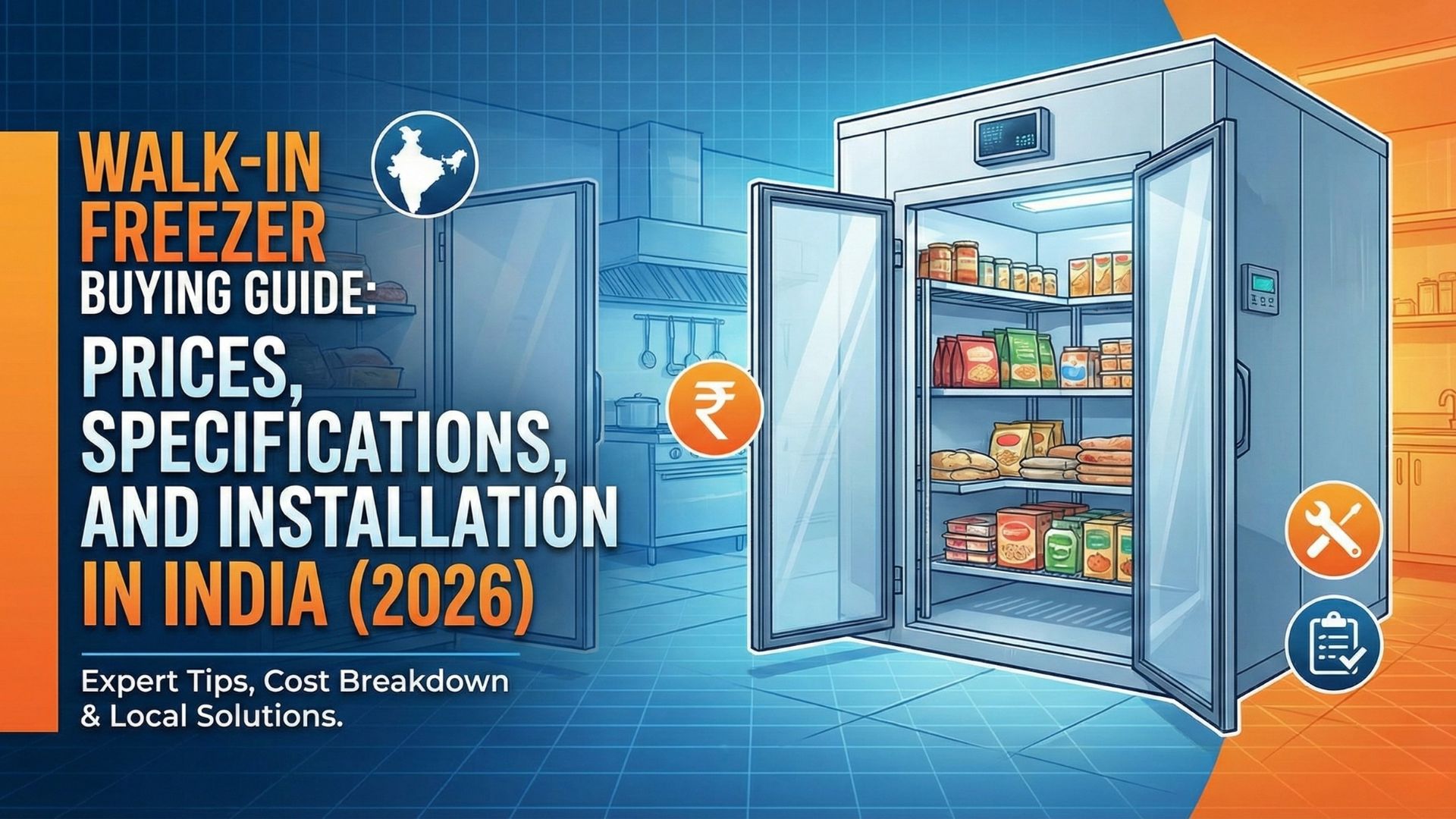
- Reach-in commercial blast chiller — a cabinet holding a handful of GN pans or trays, ideal for restaurants, hotels, patisseries and pilot kitchens. This is the entry point for most first-time buyers.
- Roll-in / trolley blast chiller — product is wheeled in on a rack or trolley, suited to mid-size bakeries, central kitchens and QSR commissaries handling larger batches.
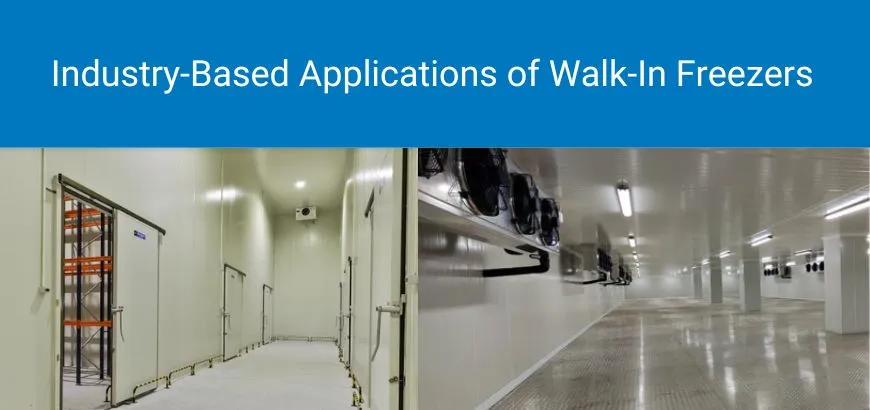
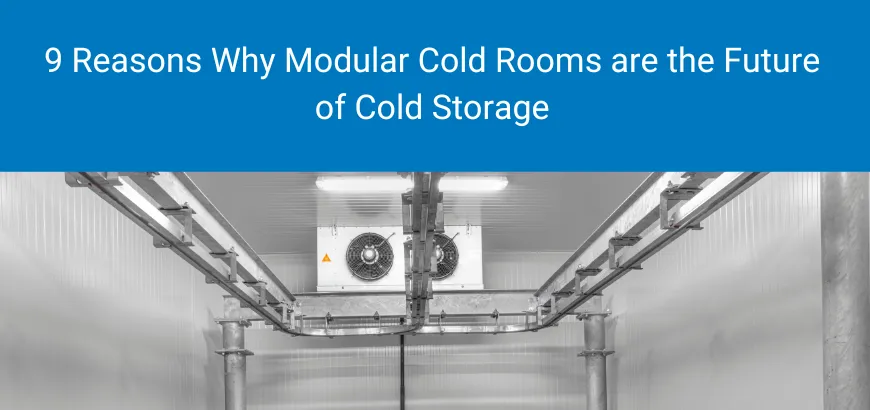
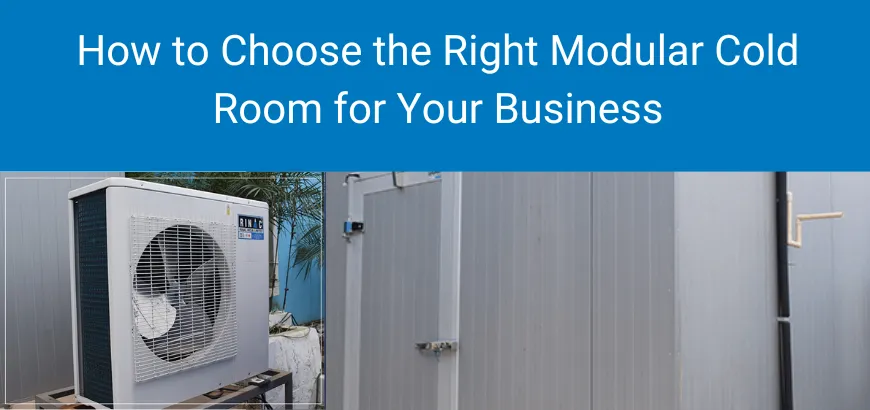
- Industrial blast chiller room — a walk-in chamber (often modular panel construction) that chills whole trolleys or pallets, used by food processors, dairies and caterers running high volumes.
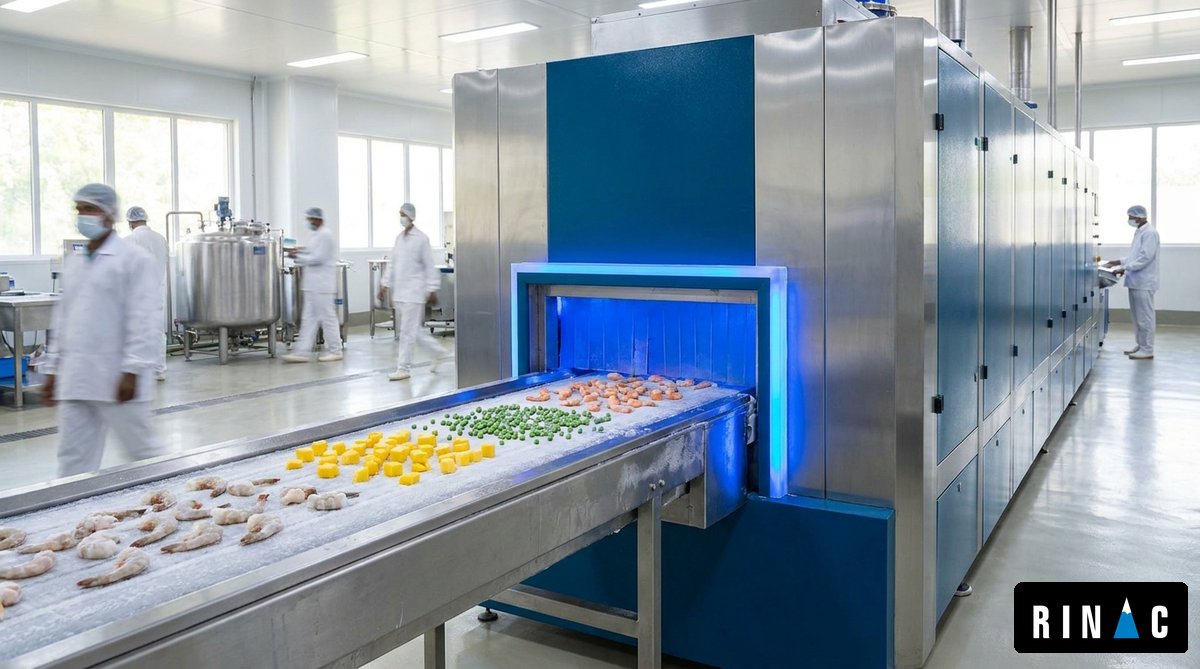
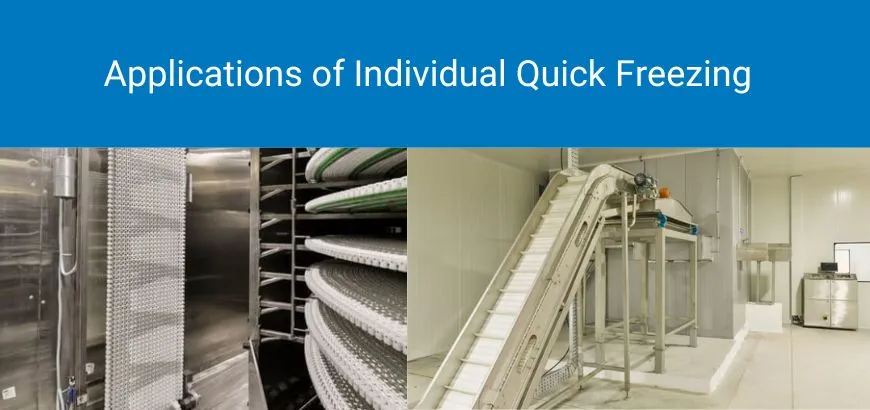
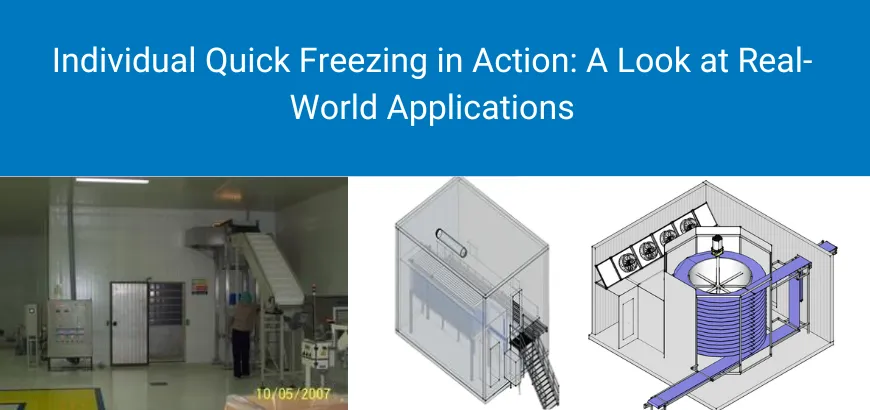
- Continuous tunnel / spiral systems — for very high throughput, product moves on a belt through a tunnel. This is the same family of technology used in individual quick freezing, and is often integrated into a turnkey food processing line.
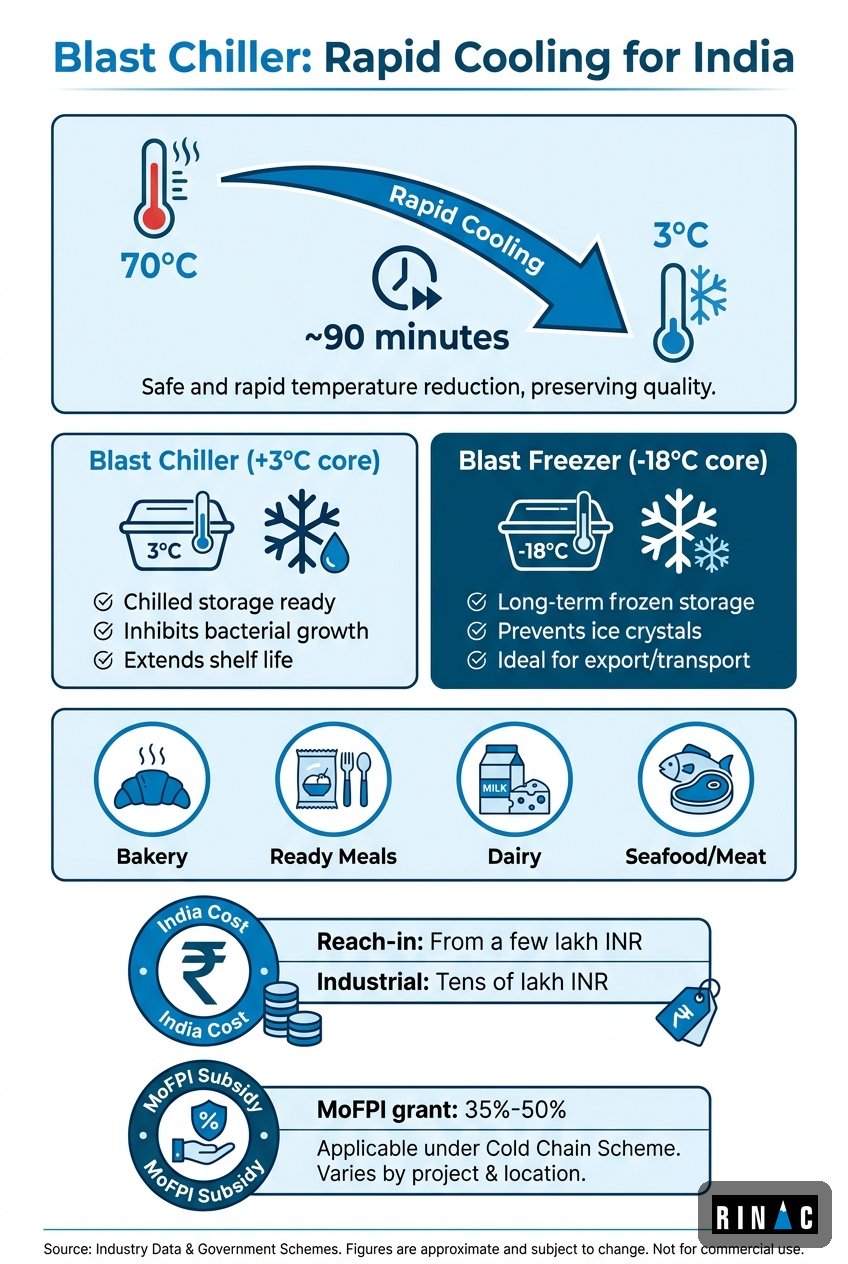
Blast chiller at a glance: temperature targets, chiller vs freezer, applications and Indian cost context.
Blast Chiller Applications Across Indian Industries
A commercial or industrial blast chiller earns its keep wherever hot food must be cooled fast, or fresh product must be pulled to a safe core quickly. The main Indian use cases:
- Bakery & patisserie — setting cakes, mousses, laminated dough and cream fillings without surface drying, and stabilising products for decoration and distribution.
- Ready meals, QSR & central kitchens — cook-chill production lets a central kitchen cook in bulk, chill safely and dispatch to outlets, underpinning India’s fast-growing packaged and ready-to-eat food segment.
- Dairy & ice cream — rapid cooling of cooked dairy preparations, khoa, paneer and mixes complements bulk milk cooling; see our dairy cold chain guide.
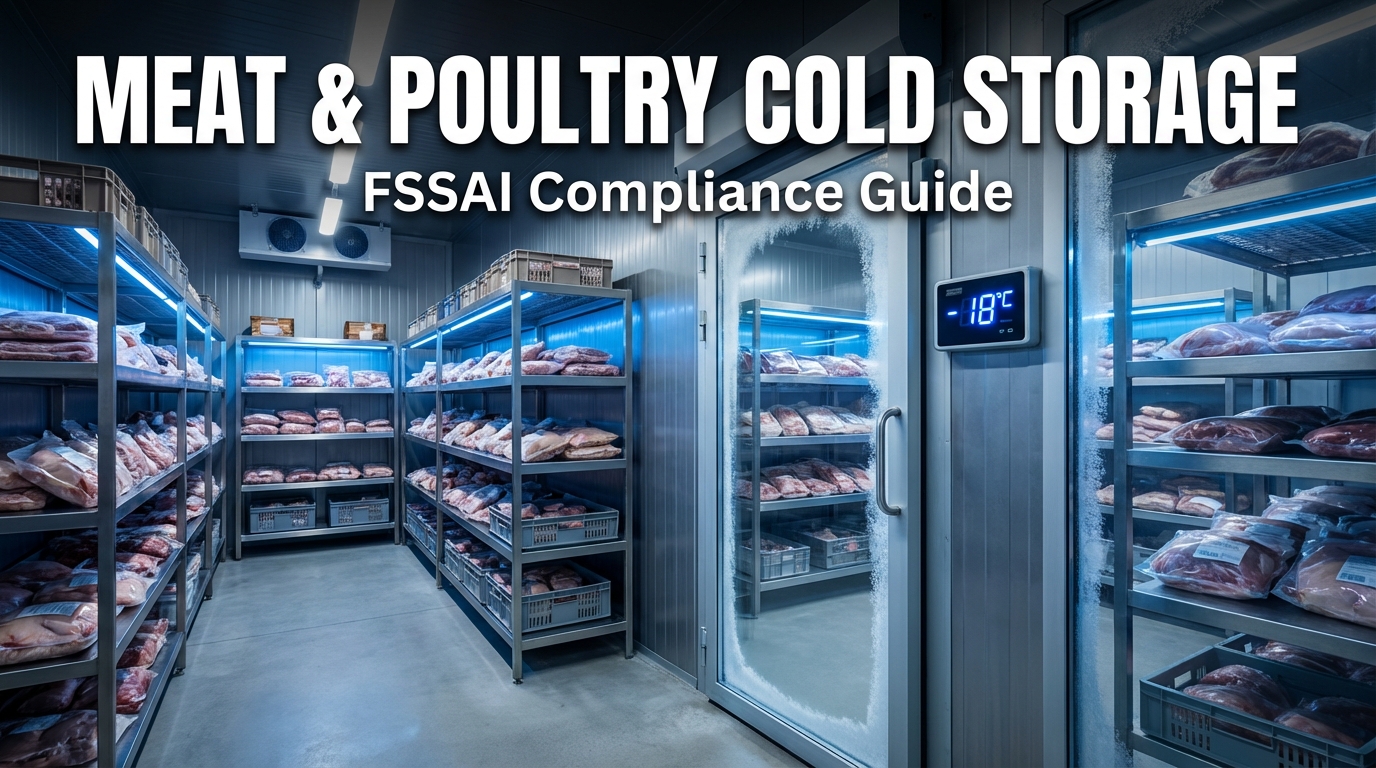
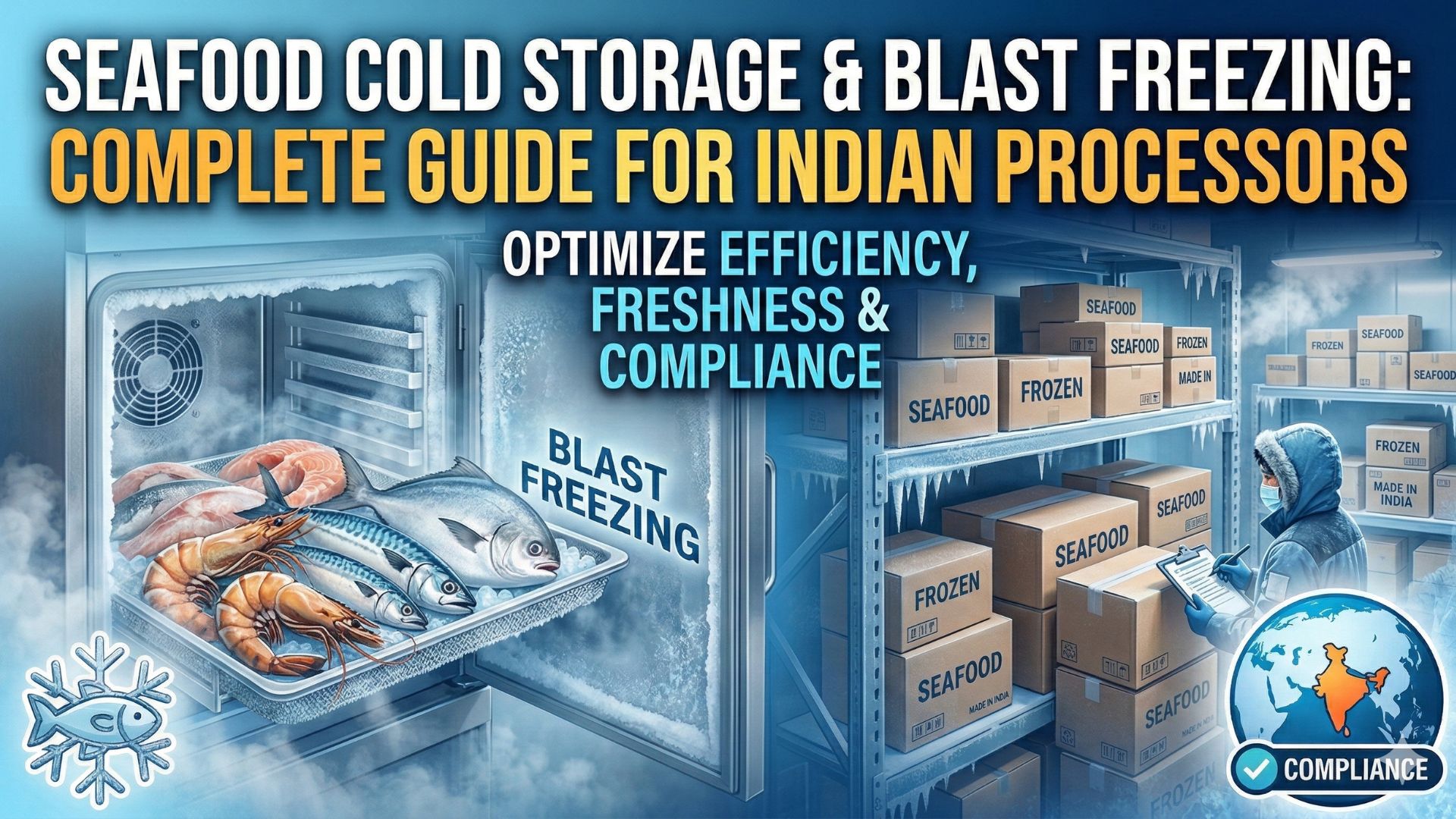
- Meat, poultry & seafood — fast chilling controls microbial growth on high-risk proteins before storage or onward blast freezing for seafood; pair with disciplined FSSAI compliance practices.
- Pharmaceutical & nutraceutical — controlled, validated rapid cooling steps in cook-chill and formulation processes where WHO-GMP discipline applies.
Why this matters now: India loses an estimated 4–8% of grains and 5–15% of fruits and vegetables after harvest [9], with total post-harvest losses valued at roughly ₹1.53 lakh crore a year in the NABCONS study commissioned by MoFPI [8]. Rapid cooling at the start of the chain is one of the highest-leverage ways to cut that waste.
Blast Chiller Cost in India (2026): Price Ranges and ROI
The honest answer on blast chiller cost is that it depends on format, capacity, refrigerant, controls and whether you need a standalone cabinet or an integrated room. As a broad orientation for the Indian market in 2026: a reach-in commercial blast chiller typically starts in the low single-digit lakhs of rupees; roll-in and larger commercial units run higher; and industrial blast chiller rooms or tunnel systems for processors can reach several tens of lakhs or more depending on throughput. Because published list prices vary widely and change often, always treat these as indicative and get a formal, application-specific quotation. Marketplace listings such as IndiaMART show the wide spread of price points for blast chillers and shock freezers in India.
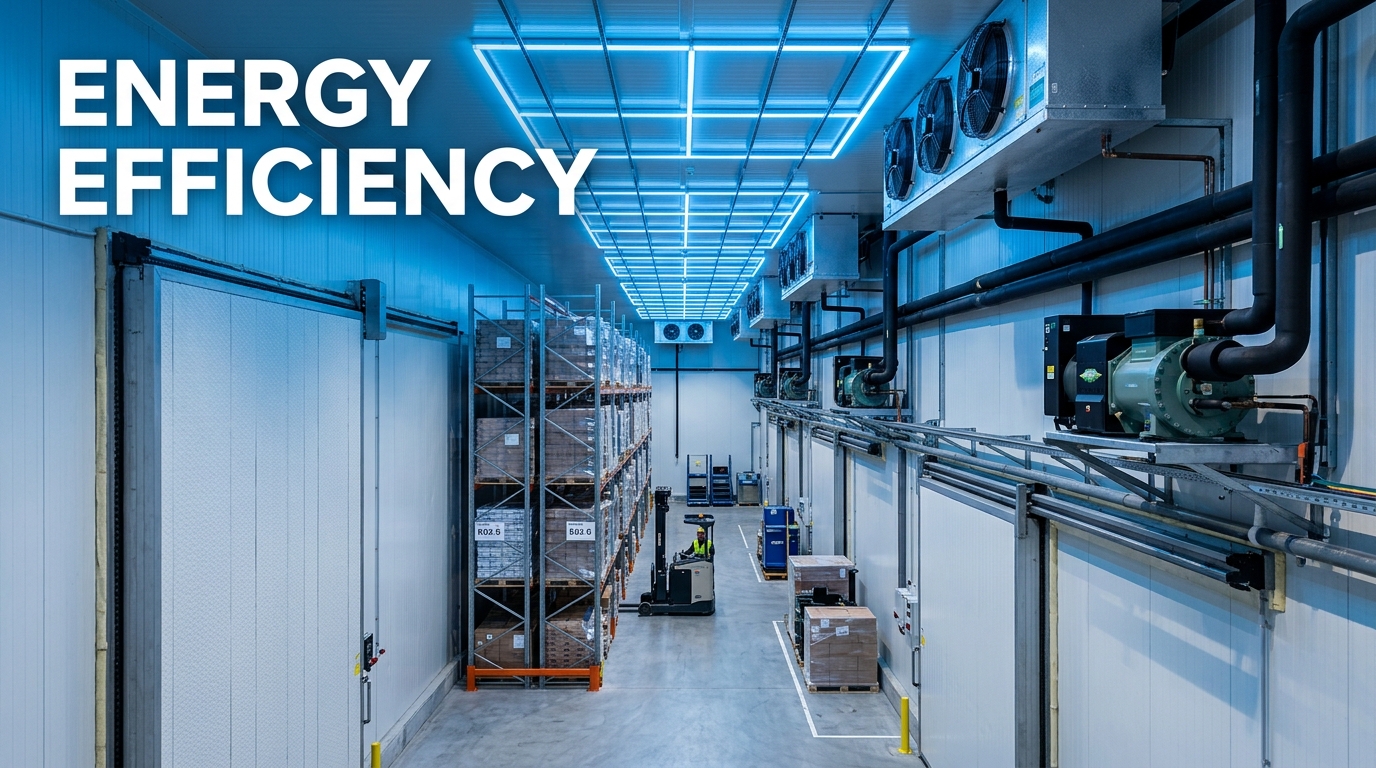
Beyond capital cost, factor in operating expense — energy is the biggest lever. A right-sized system, high-efficiency compressors and good insulation materially reduce running cost; our guide to cold storage energy efficiency explains the same principles that apply to rapid-cooling equipment. For a structured way to model total investment, the cold storage cost calculator is a useful companion.
Caution on price shopping: the cheapest cabinet is rarely the lowest total cost of ownership. Undersized refrigeration that cannot actually hit a +3°C core in 90 minutes fails audits and defeats the purpose. Specify to a verified core-temperature performance target, not just cabinet volume or sticker price.
On return on investment, the business case usually comes from three places: reduced product waste and weight loss, longer shelf life that opens up wider distribution, and the labour and planning efficiency of batch cook-chill production. For many food businesses, cutting spoilage on high-value product pays back the equipment faster than the energy bill suggests.
Indian Market Context: Cold Chain Growth, Losses and Subsidies
Blast chillers sit inside one of India’s fastest-growing infrastructure stories. The Indian cold chain market was valued at about ₹2,535.87 billion in 2025 and is projected to reach roughly ₹6,190.91 billion by 2034, a CAGR of around 10.43% [4]. Yet the National Centre for Cold-Chain Development (NCCD) points to a storage shortfall of roughly 35 million tonnes, with more than 60% of existing capacity outdated or single-commodity [5]. That gap — combined with the post-harvest losses noted above — is exactly why government schemes actively co-fund rapid-cooling and freezing equipment.
35%–50%
MoFPI Integrated Cold Chain grant-in-aid on eligible project cost
MoFPI Integrated Cold Chain grant-in-aid on eligible project cost
Under the Ministry of Food Processing Industries’ Integrated Cold Chain and Value Addition Infrastructure (ICCVAI) scheme — part of the Pradhan Mantri Kisan SAMPADA Yojana — grant-in-aid for storage infrastructure is 35% of project cost in general areas and 50% in North-East, hill and difficult areas, up to a maximum of ₹10 crore, and the eligible component list explicitly includes blast freezing and rapid-cooling equipment, IQF, pre-cooling, CA storage and reefer vans [6]. PM Kisan SAMPADA Yojana itself has been continued with a ₹4,600 crore allocation up to March 2026 [7]. State horticulture missions, MIDH and NHB add further avenues. For a step-by-step walkthrough, see our guide to cold chain subsidies in 2026 and how to access 35–50% grants.
Compliance & Standards: HACCP, FSSAI, ISO and GMP
For a regulated food or pharma operation, a blast chiller is not just equipment — it is often a documented critical control point. Under HACCP, rapid cooling is a recognised control step, and typical cooling rules require food to move from about 57°C to 21°C within two hours and down to 5°C within a total of six hours, with blast chilling used precisely to meet and beat those limits [3]. In India this sits alongside FSSAI licensing and hygiene requirements, ISO food-safety management, WHO-GMP for pharmaceutical processes, and IGBC green-building considerations for the facility itself.
Practically, that means your blast chiller should log core temperature against time for every cycle, use a calibrated core probe, and integrate into your wider food-safety records. Building that discipline in from day one makes audits far smoother; our overview of food-safety compliance for cold storage operators covers the documentation habits that inspectors look for. Rinac’s certifications span ISO, FSSAI, HACCP, GMP, IGBC and WHO-GMP, and its systems are designed with this audit trail in mind.
How to Choose the Right Blast Chiller: A Buyer’s Checklist
Before you sign off on any blast chiller machine, work through the fundamentals:
- Size to your real batch load — specify capacity by the mass of the hottest, densest batch you must chill in one cycle, not by cabinet volume alone.
- Verify the performance target — insist on a stated ability to reach a +3°C core within 90 minutes for your specific product, ideally demonstrated or guaranteed.
- Match chill modes to product — confirm soft and hard chill (and freeze mode if you need a blast chiller freezer) suit your menu or product mix.
- Refrigeration & refrigerant — check compressor sizing, efficiency and refrigerant choice for compliance, running cost and future-proofing.
- Controls & data — core probe, cycle logging, HACCP-friendly records and, ideally, remote monitoring.
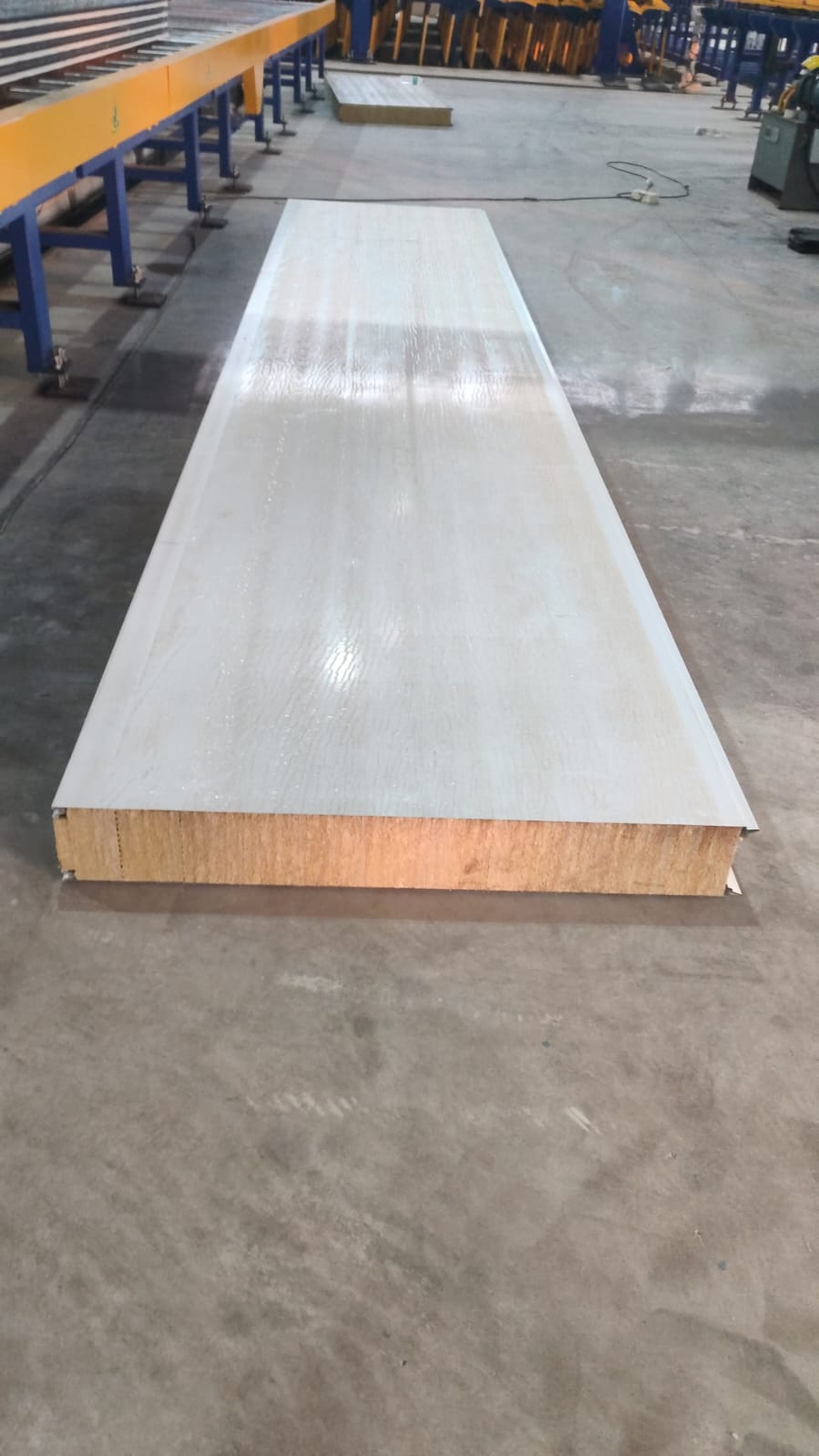
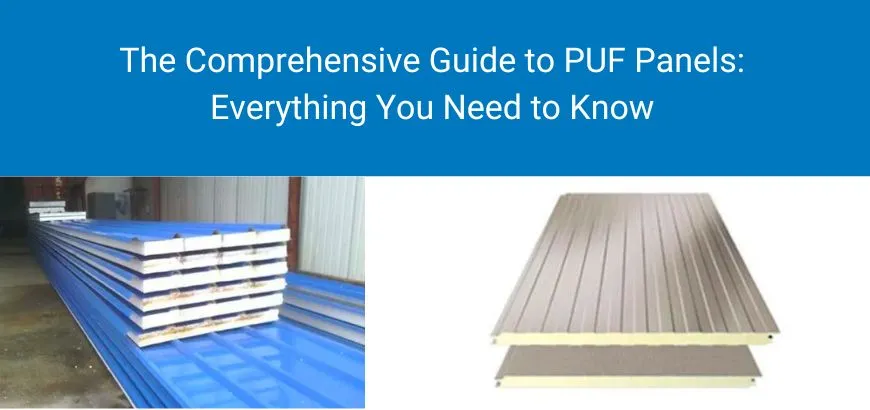
- Construction & hygiene — stainless interiors, easy-clean design and, for rooms, quality insulated panels.
- Service & after-sales — pan-India support, spares availability and preventive maintenance matter more over the equipment’s life than the initial discount.
As solution architects and builders, Rinac approaches a blast chiller as part of a whole system — from the kitchen or processing line through rapid cooling, storage and transport — drawing on 30+ years, 10,000+ projects across 23 countries, two manufacturing facilities and 14 branch offices with dedicated after-sales support. Rinac’s blast chillers and freezers are engineered, built and serviced end-to-end.
Frequently Asked Questions
Disclaimer: This article is provided for general informational and educational purposes only and does not constitute professional engineering, food-safety, legal, financial or regulatory advice. Temperature targets, equipment prices, subsidy rates, scheme eligibility and regulations change over time and vary by product, state and application. All figures and claims are drawn from the public sources cited below as of the publication date. Nothing here should be relied upon in isolation — verify current requirements directly with FSSAI, MoFPI, NHB and your relevant state authorities, and engage a qualified engineer for project-specific design, sizing, ROI and compliance. For a formal, application-specific Rinac consultation, please visit rinac.com/contact-us.
Call Our Enquiry Line: 1800-4191166
Sources & References
- Electrolux Professional — What is blast chilling? (70°C to 3°C in ~90 minutes), 2025.
- Worldchefs — What is a Blast Chiller? (bacterial danger zone), 2024.
- HACCP Requirements for Blast Chilling: A Food Safety Guide (cooling time/temperature rules), 2024.
- IMARC Group — India Cold Chain Market Size & Outlook (market value and CAGR), 2025.
- Invest India / NCCD — Cold Chain Infrastructure in India (storage shortfall), 2024.
- Ministry of Food Processing Industries — Integrated Cold Chain Scheme (35%/50% grant-in-aid, eligible components), 2025.
- MoFPI — PM Kisan SAMPADA Yojana (allocation to March 2026), 2025.
- NABCONS / MoFPI — Crop-wise Post-Harvest Losses of Agri Produce in India, 2022 (OGD Platform India), 2022.
- Down To Earth — Post-harvest losses as told to Parliament (4–8% grains, 5–15% fruits & vegetables), 2024.
- Wikipedia — Blast chilling (definition and process), 2025.