TL;DR – Quick Summary
- A cold room is an insulated, refrigerated enclosure that holds a precise temperature for storing perishable food, pharmaceuticals, dairy, seafood and flowers. It is the most versatile building block of India’s cold chain.
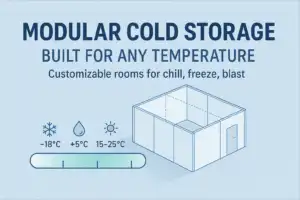
- Cold rooms split into two broad families: chiller cold rooms (roughly +2°C to +8°C) and freezer cold rooms (down to −18°C to −25°C). Most are built as modular, walk-in units from insulated sandwich panels.
- Indicative 2026 pricing for a turnkey modular walk-in cold room in India starts from roughly ₹3.5–6 lakh for a small chiller and scales with volume, temperature, panel thickness and refrigeration design.
- Government schemes (PM Kisan SAMPADA cold chain component, MIDH/NHB) offer 35% to 50% capital subsidy, which materially changes project economics.
- Rinac is a 30+ year solution architect with 10,000+ projects delivered — designing, manufacturing and installing cold rooms certified to FSSAI, HACCP, ISO, GMP and WHO-GMP standards.
Disclaimer: This guide is for informational purposes only and is not a substitute for professional engineering, legal or regulatory consultation. Prices, subsidy rates and regulations change frequently — verify current figures directly with FSSAI, MoFPI, NHB and your state horticulture or food-processing department before acting. All external figures are sourced from public references as of the publication date and cited inline.
Introduction: Why the Cold Room Is India’s Most Versatile Cold-Chain Asset
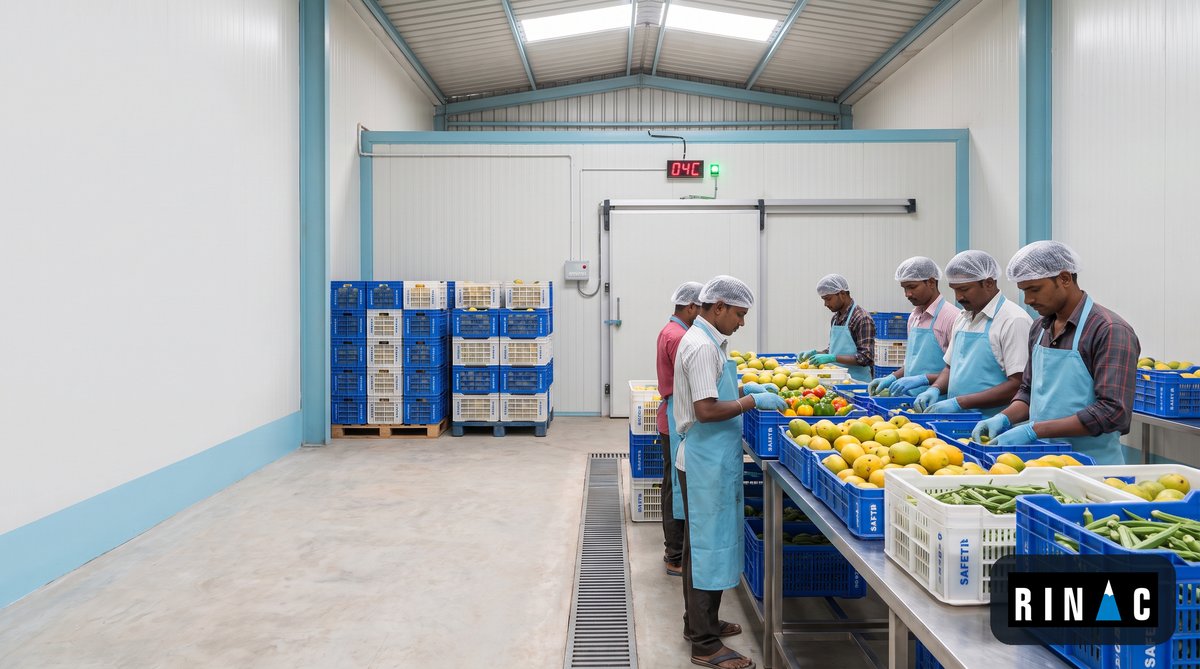
Walk into any modern dairy, pharmacy distribution hub, seafood plant or fruit pack-house in India and you will find a cold room at its heart. It is the single piece of infrastructure that decides whether a tomato reaches the consumer fresh, whether a vaccine retains its potency, and whether a processor meets FSSAI compliance. As India’s perishables economy expands, the humble cold room has become the workhorse of the entire cold chain — flexible enough to chill mangoes at +13°C or deep-freeze prawns at −25°C, and modular enough to be installed in weeks rather than months.
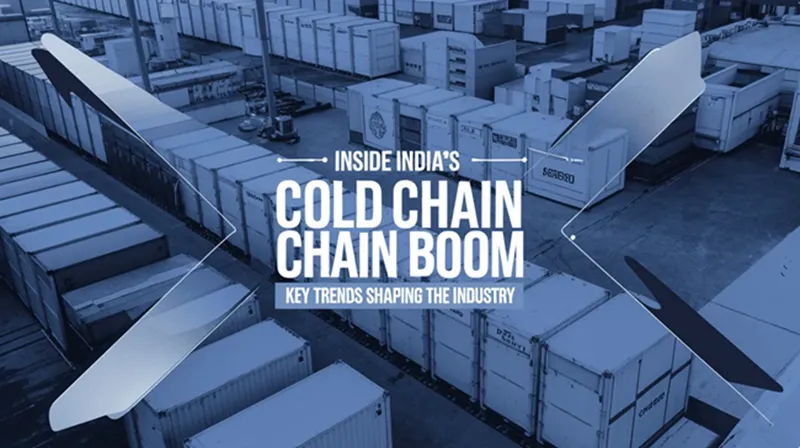
The numbers explain the urgency. India’s cold chain logistics market is projected to reach roughly USD 24.85 billion in 2026 [1], while the broader Indian cold chain market was valued at about ₹2,535.87 billion in 2025 and is forecast to climb to ₹6,190.91 billion by 2034 at a 10.43% CAGR [2]. Yet capacity remains unevenly distributed and short of demand. For any business evaluating its first — or fiftieth — cold room, understanding the engineering, the temperatures, the panels, the price drivers and the subsidies is the difference between a profitable asset and an expensive mistake. This guide, written from the perspective of a team that has delivered over 10,000 projects across 23 countries, walks through all of it.
As solution architects and builders rather than box-sellers, Rinac approaches every cold room as a system: insulation, refrigeration, controls, airflow and compliance designed together. If you are weighing a larger facility, our companion cold storage warehouse guide covers building-scale design, while this article focuses on the room itself.
What Is a Cold Room? And Is a Cold Room the Same as a Freezer?
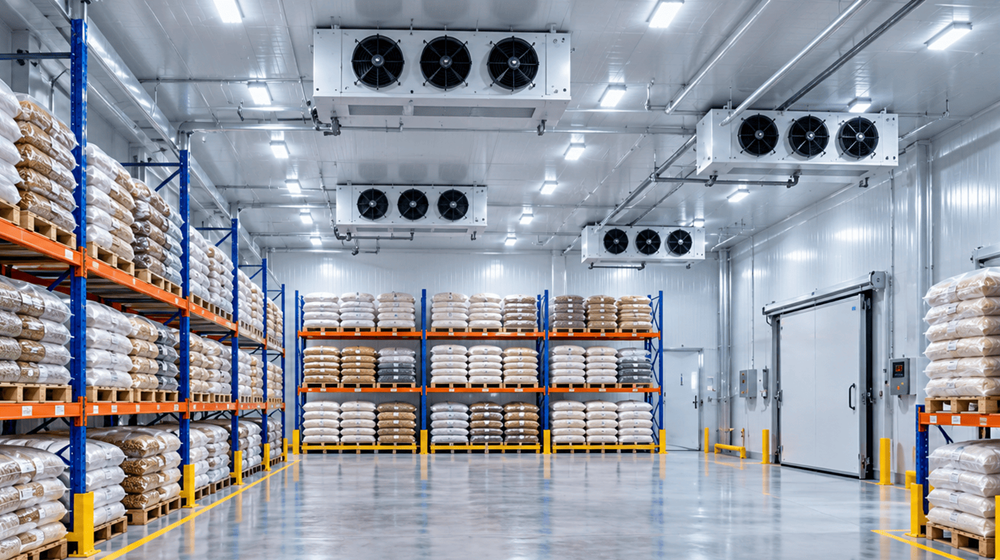
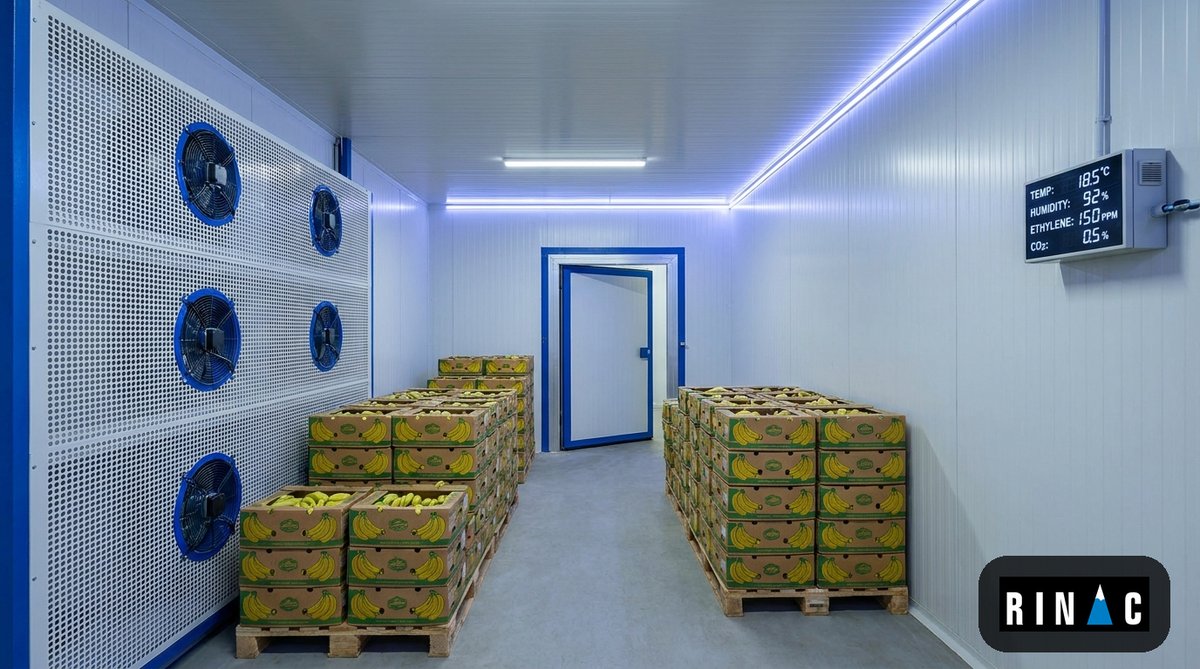
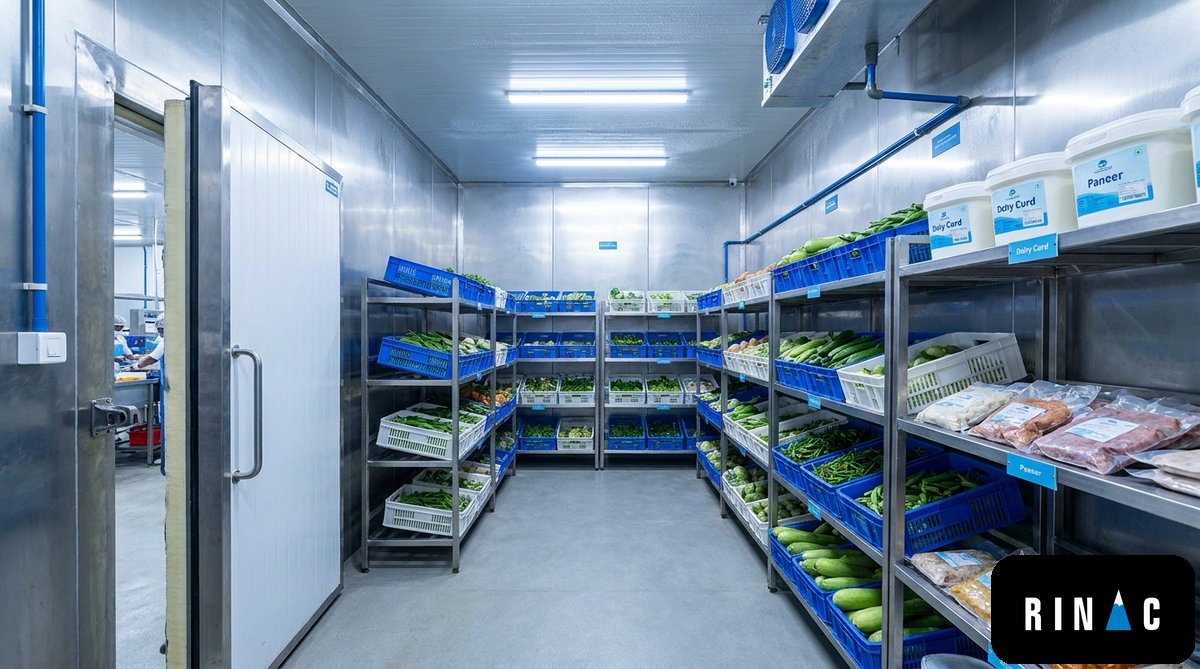
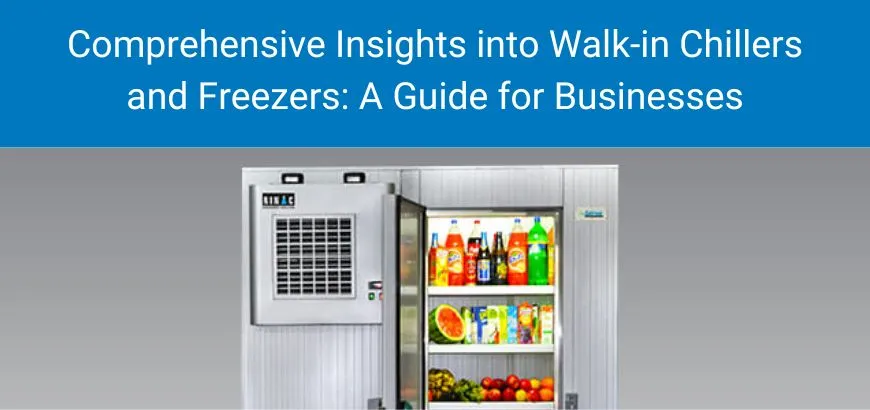
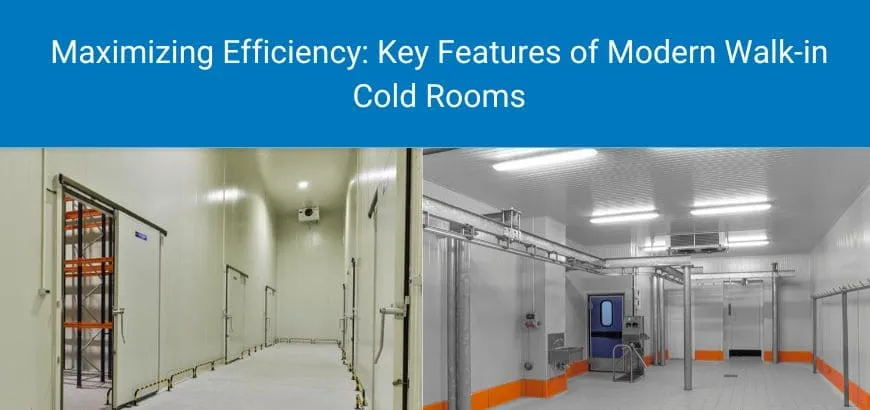
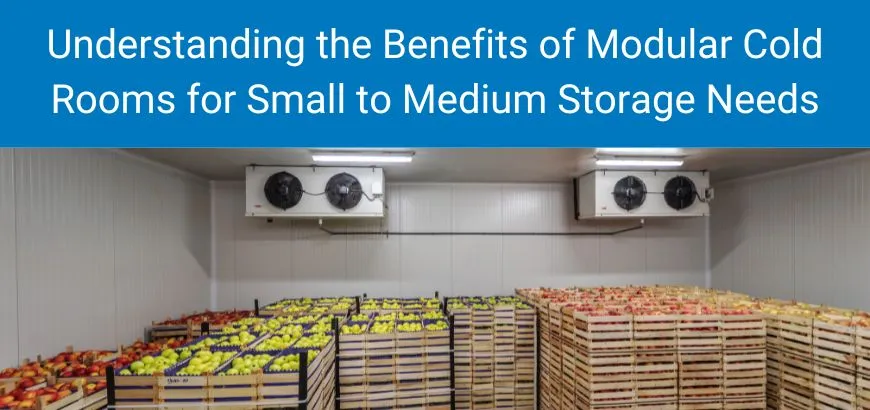
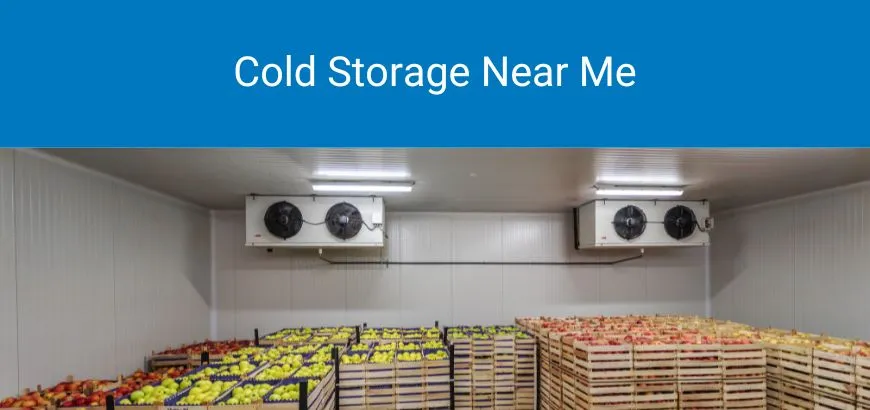
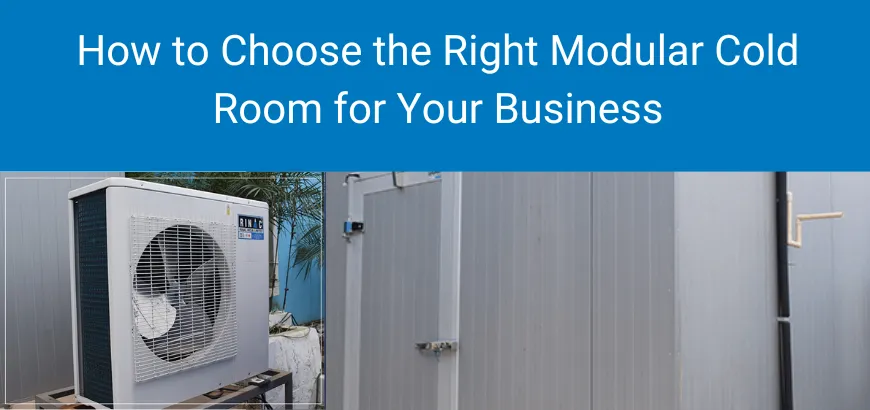
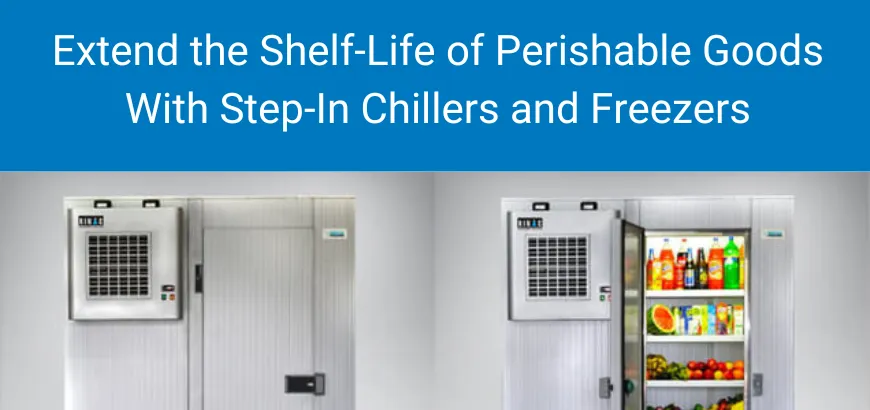
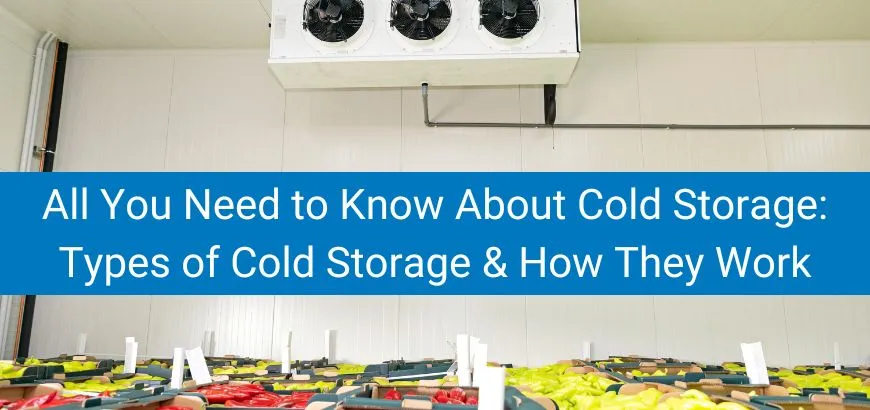
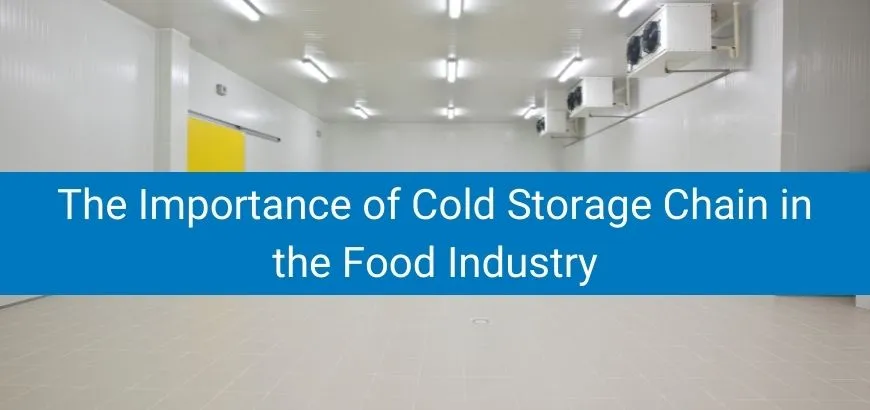
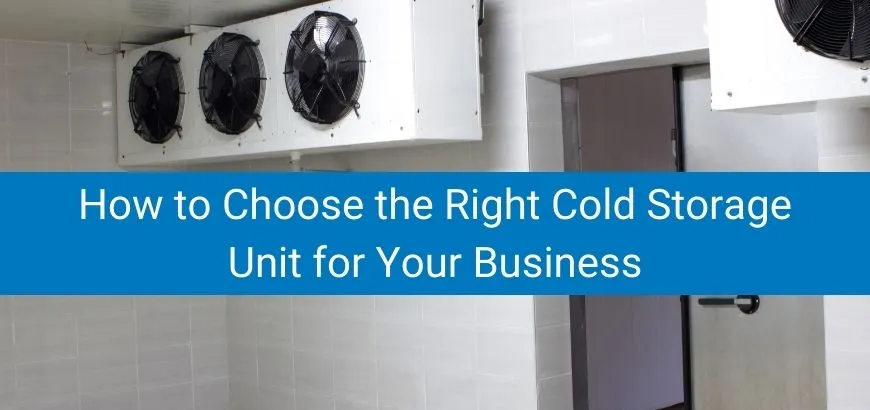
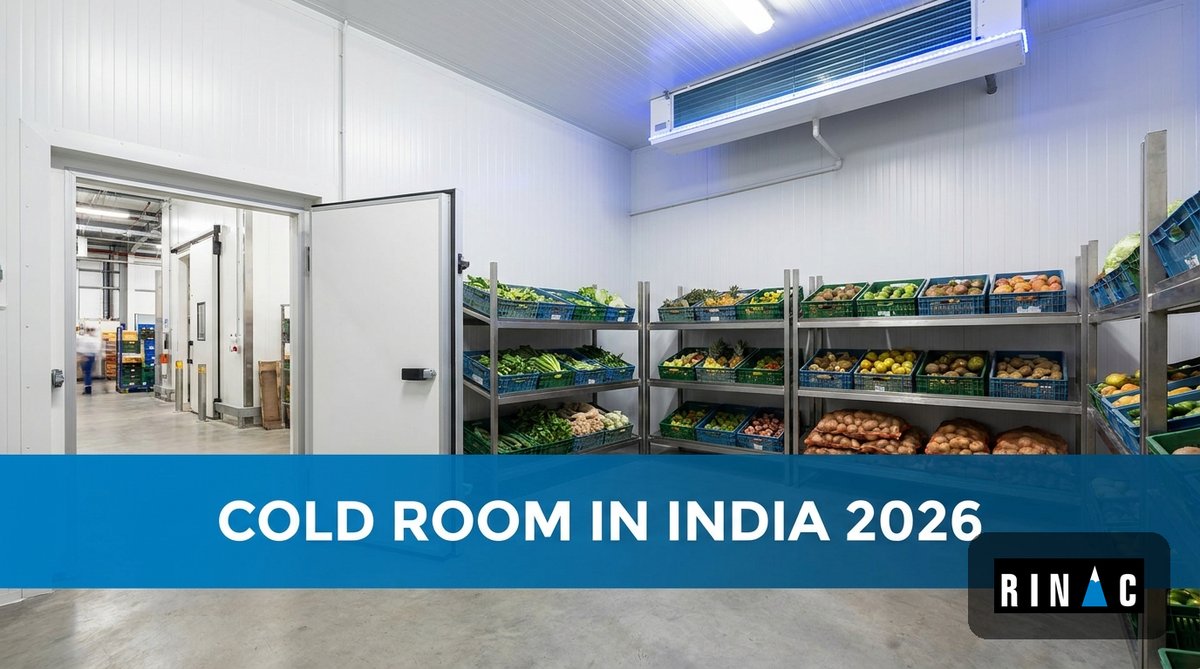
A cold room is a thermally insulated, sealed enclosure fitted with a refrigeration system that actively removes heat to maintain a set temperature, regardless of the ambient conditions outside. Unlike a domestic refrigerator, a cold room is a walk-in space — people, pallets and forklifts move inside it. The structure is almost always built from prefabricated insulated panels for cold room construction, joined to form floor, walls and ceiling, with a refrigeration unit (condensing unit plus evaporator) doing the cooling work.
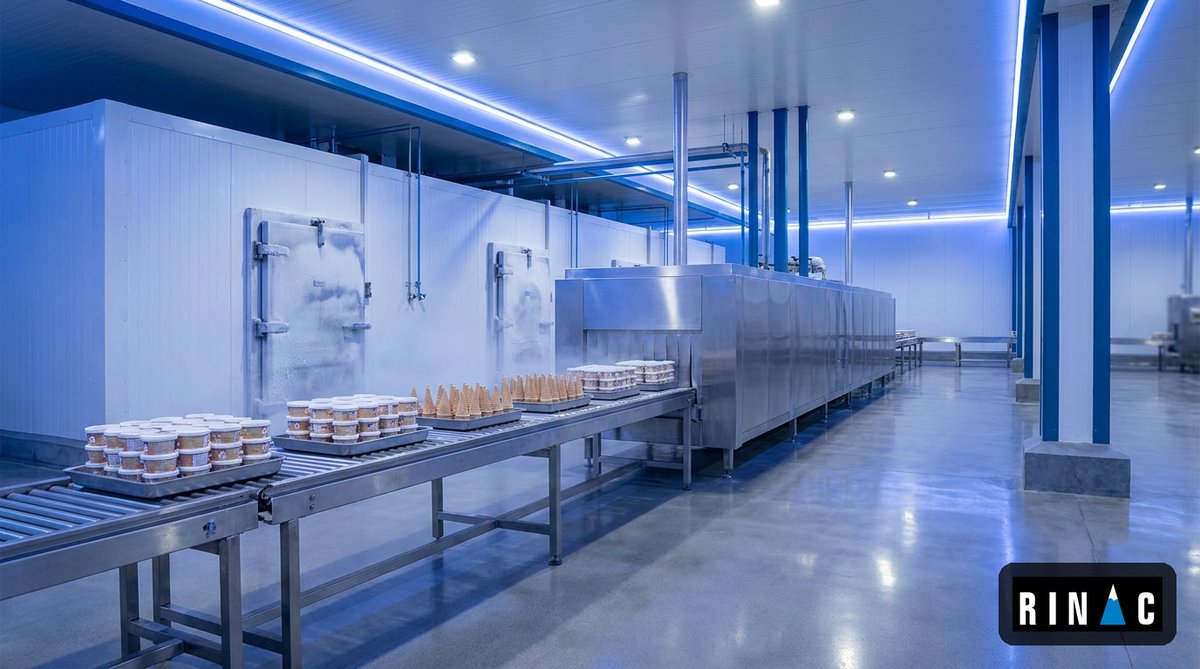
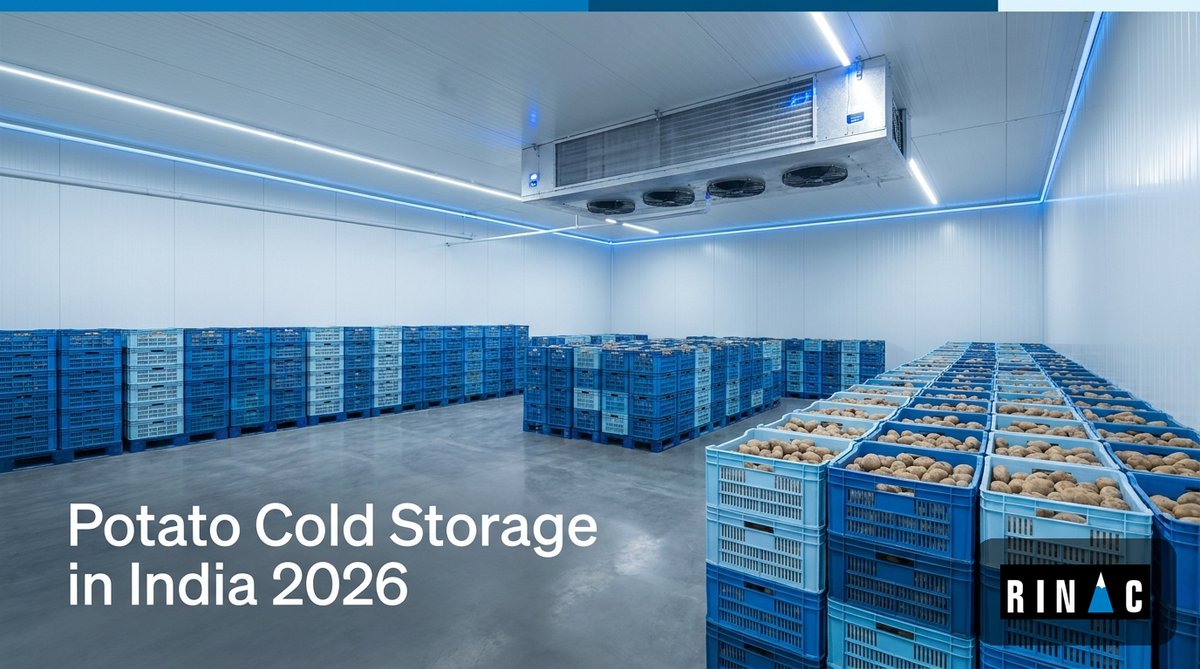
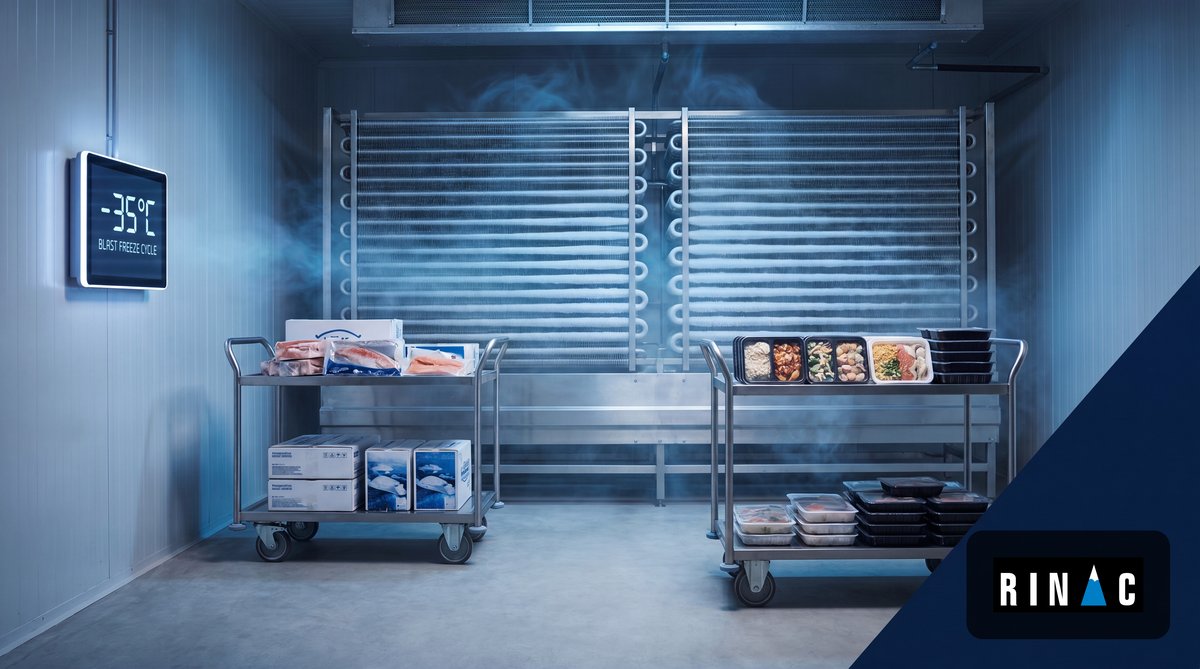
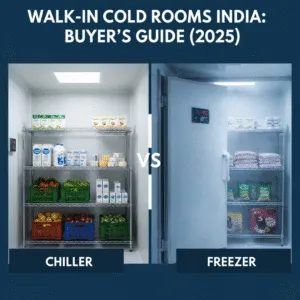
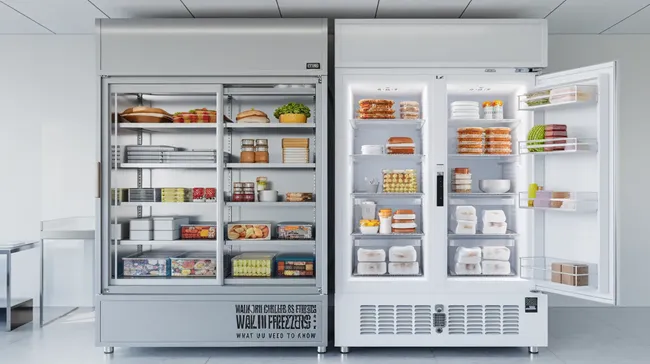
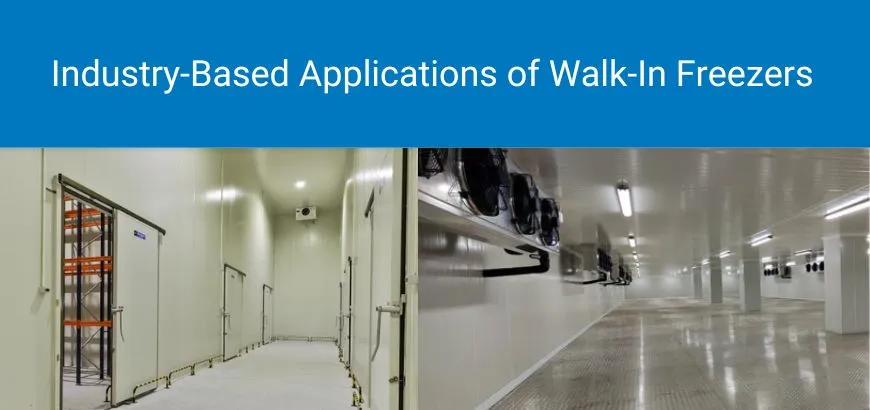
So is a cold room the same as a freezer? Not exactly. The terms describe the same physical concept at different temperatures. A chiller cold room (often just called a cold room or cold storage room) holds positive temperatures, typically +2°C to +8°C, for fresh produce, dairy, pharmaceuticals and beverages. A cold room freezer holds sub-zero temperatures, −18°C and below, for frozen meat, seafood, ice cream and ready meals. The same modular panel system can build either — what changes is panel thickness, refrigeration capacity and door/floor design. Many facilities run both side by side as a combined cold room storage suite.
Engineering note: The biggest performance differences between two cold rooms of identical size usually come down to insulation quality, vapour sealing and refrigeration sizing — not the badge on the compressor. Get these three right and operating costs fall for the life of the asset.
Types of Cold Rooms: Walk-In, Modular, Chiller & Freezer Configurations
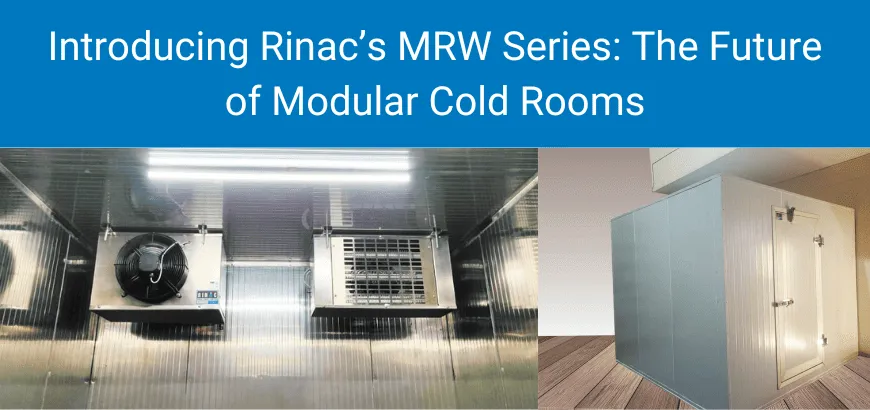
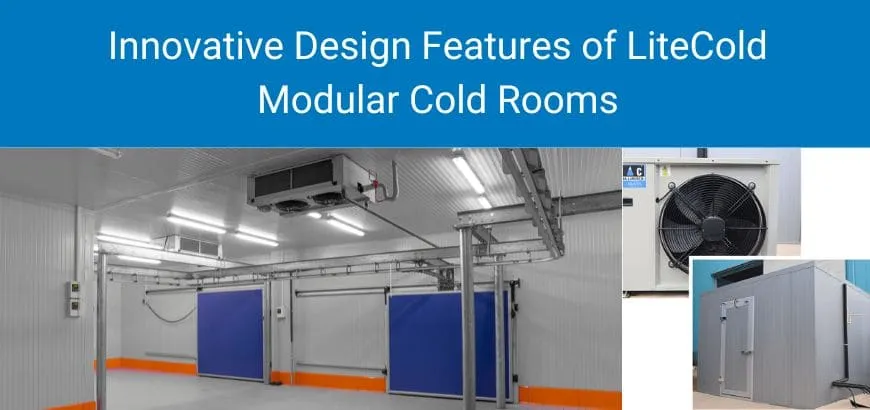
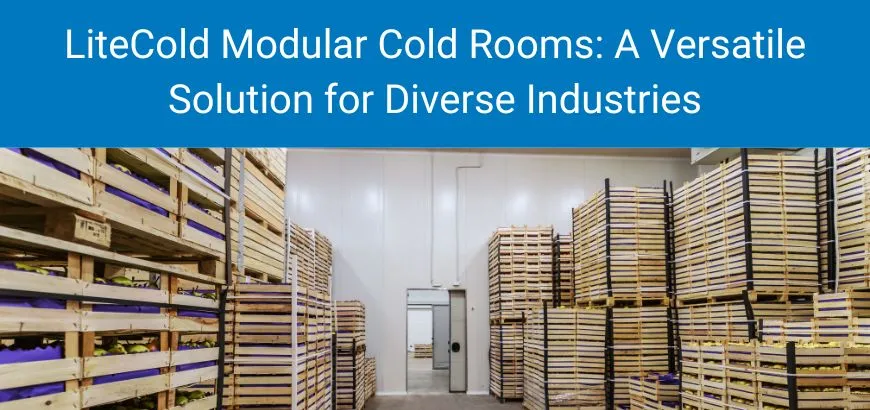
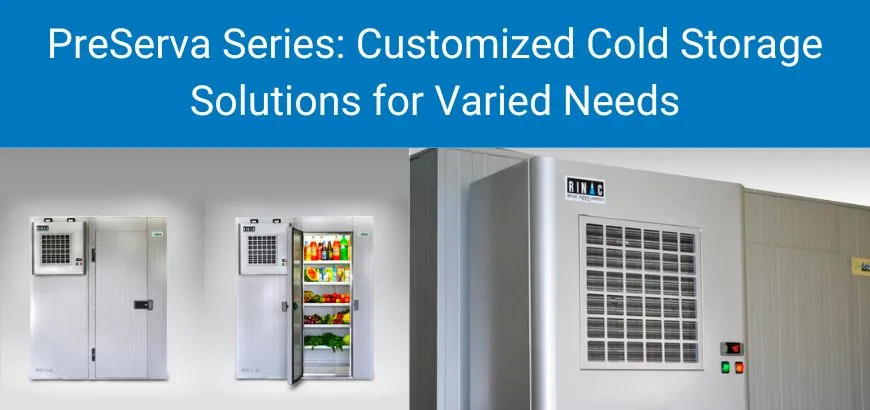
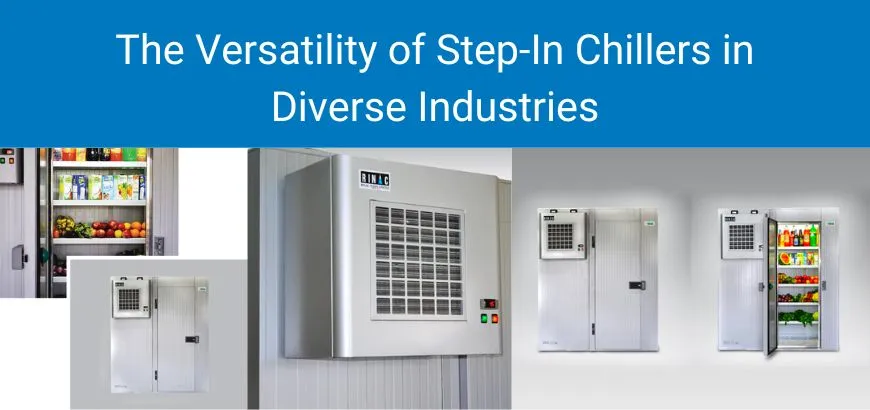
Most cold rooms installed in India today are modular cold rooms — built from standardised, interlocking insulated panels that can be assembled, expanded or relocated. This modularity is why a walk in cold room can be commissioned in a fraction of the time of a brick-and-mortar chamber, and why capacity can be scaled as a business grows. Rinac’s cold rooms and MRW Series walk-in cold rooms are engineered around this principle, with the LiteCold modular range built specifically for fast, versatile deployment.
The main configurations you will evaluate:
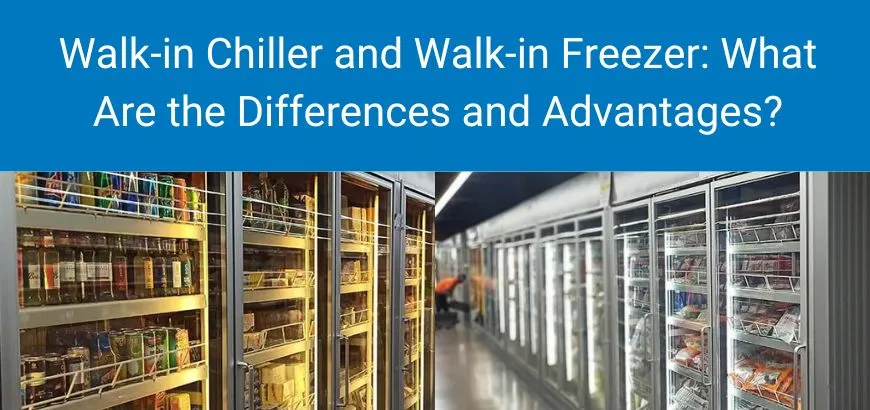
- Walk-in chiller cold rooms — positive temperature storage for fruits, vegetables, dairy, flowers and pharma. See our walk-in chillers vs walk-in freezers guide for a deeper comparison.
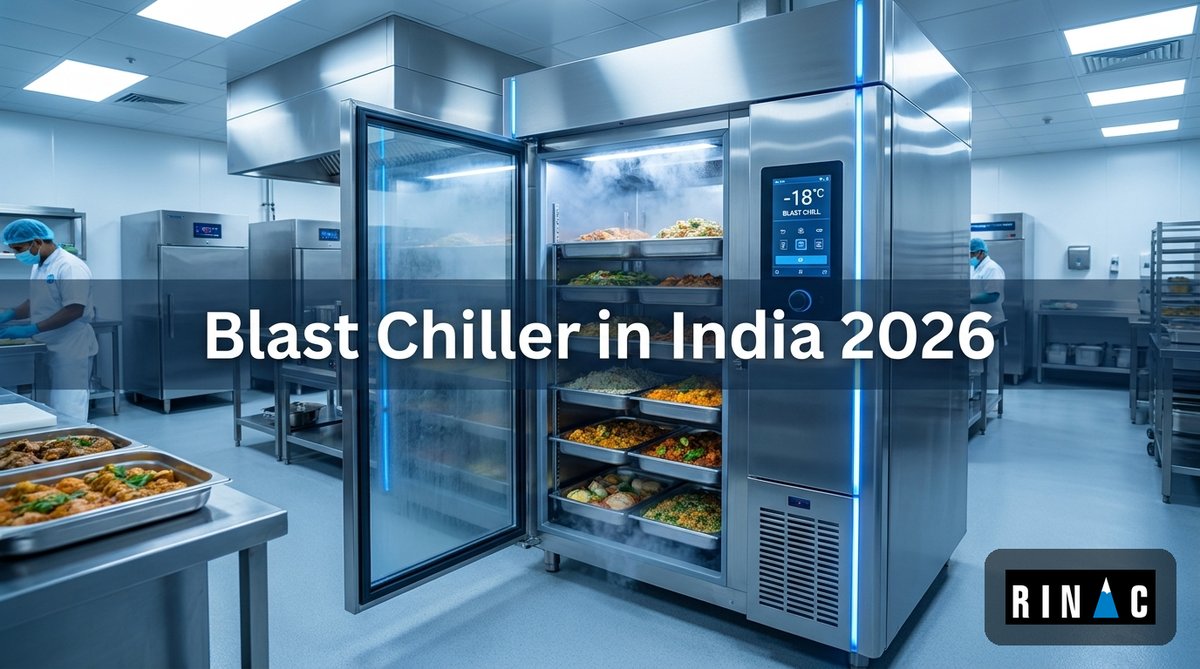
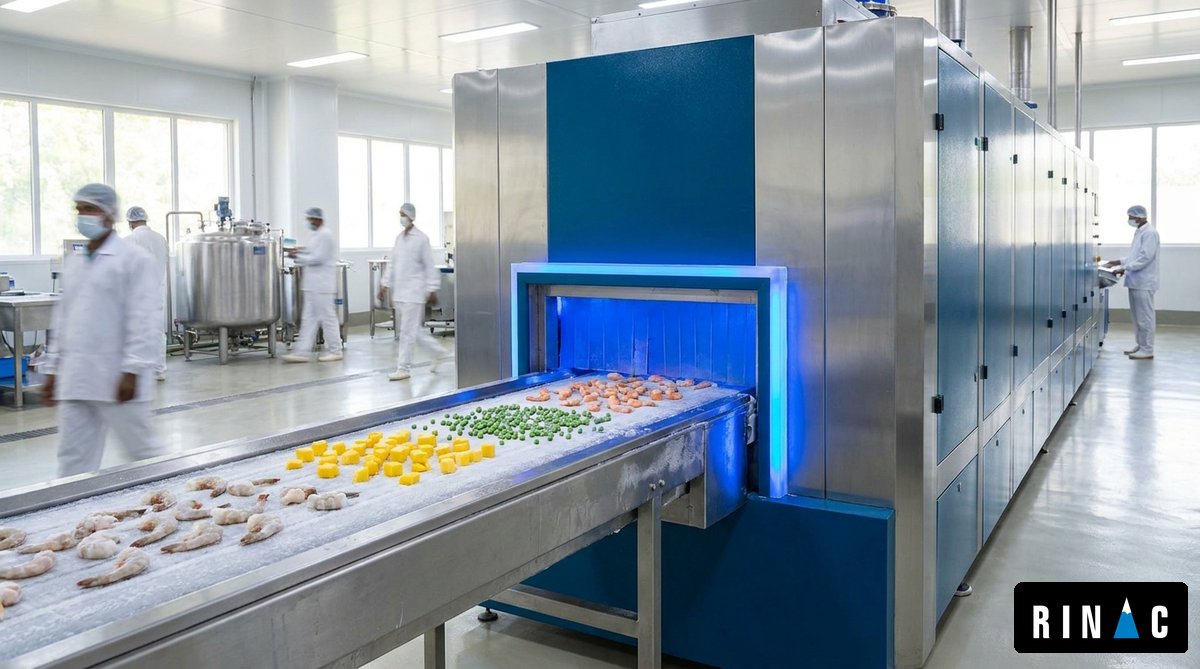
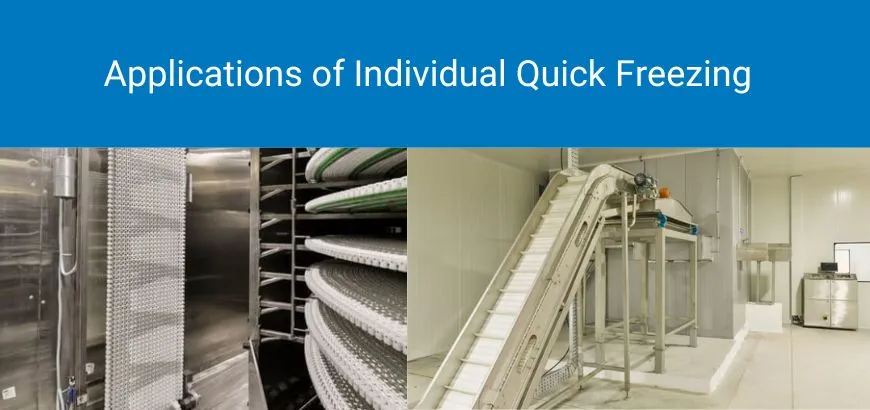
- Walk-in freezer cold rooms — sub-zero storage for frozen and blast-frozen products. Often paired with a blast chiller or blast freezer for rapid temperature pull-down before long-term holding.
- Pre-cooling rooms — high-capacity rooms that remove field heat from freshly harvested produce quickly, extending shelf life. Explore pre-cooling rooms.
- High- and low-humidity cold rooms — engineered relative humidity for commodities such as leafy greens, onions or seeds. See high-RH and low-RH cold storage.
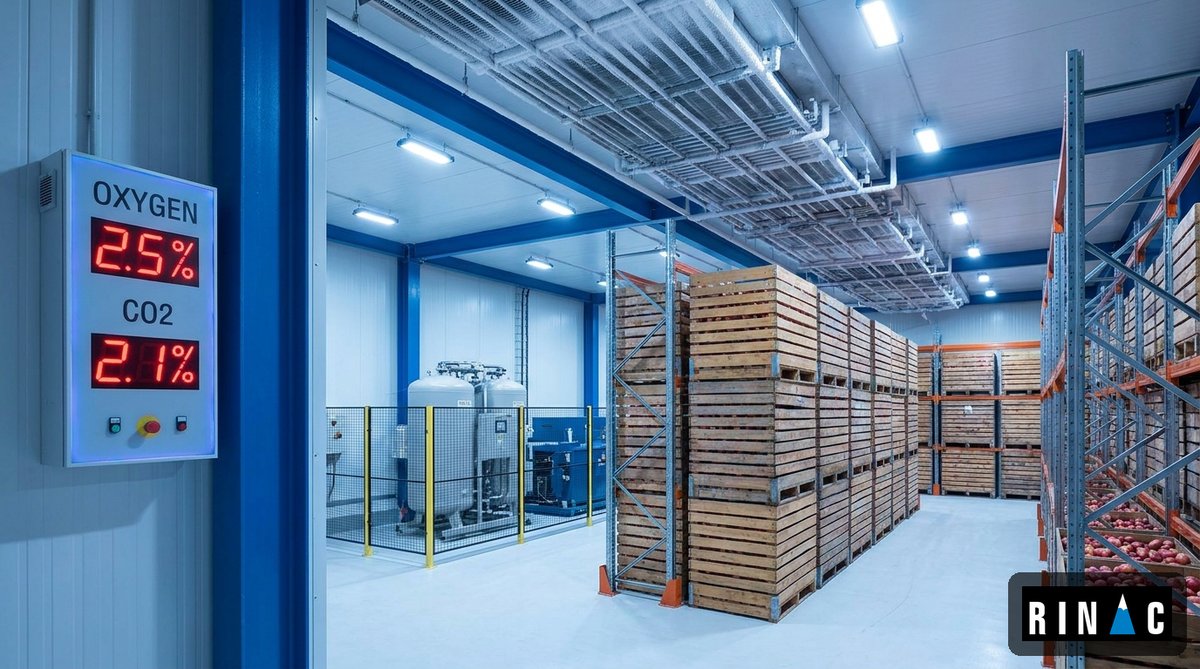
- Ripening and CA/MA chambers — specialised rooms with gas and atmosphere control. Our controlled atmosphere storage guide explains where these earn their premium.
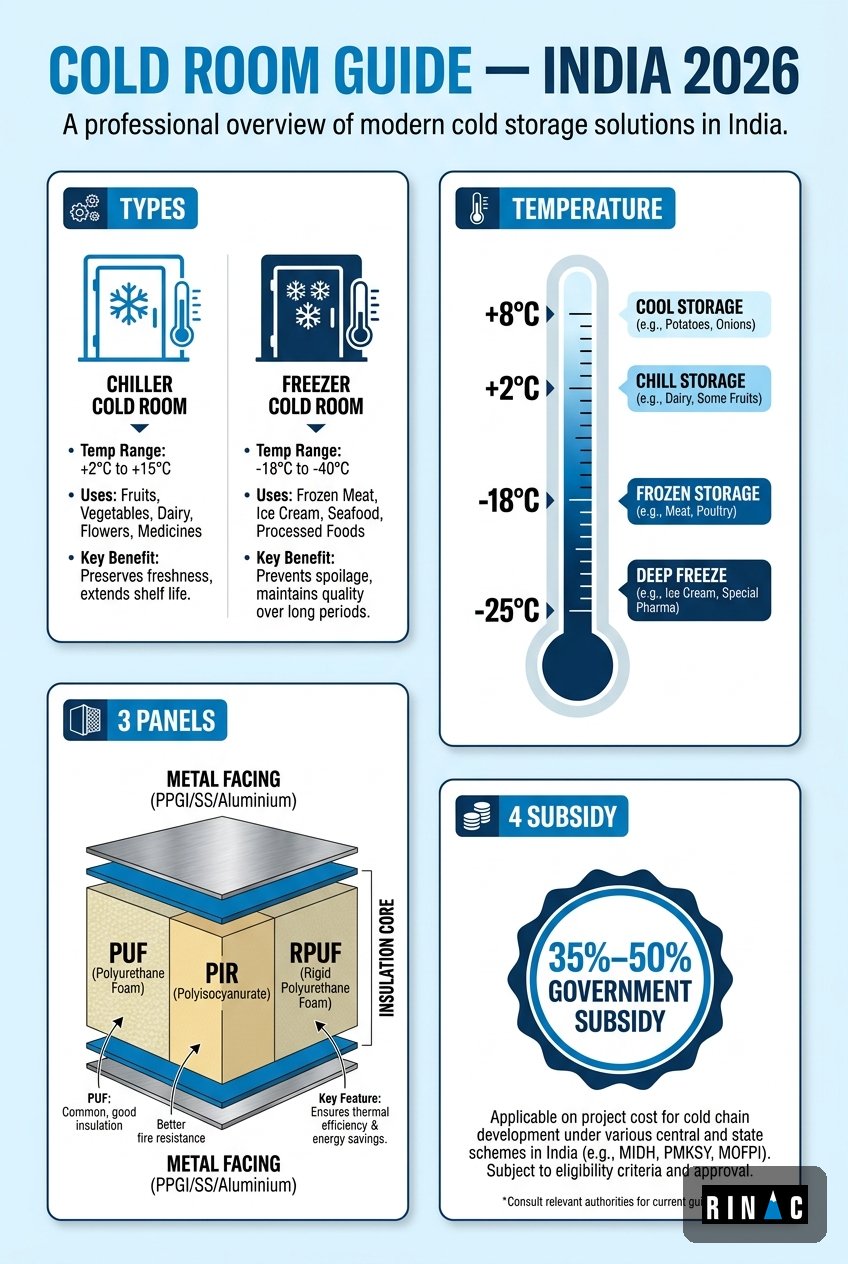
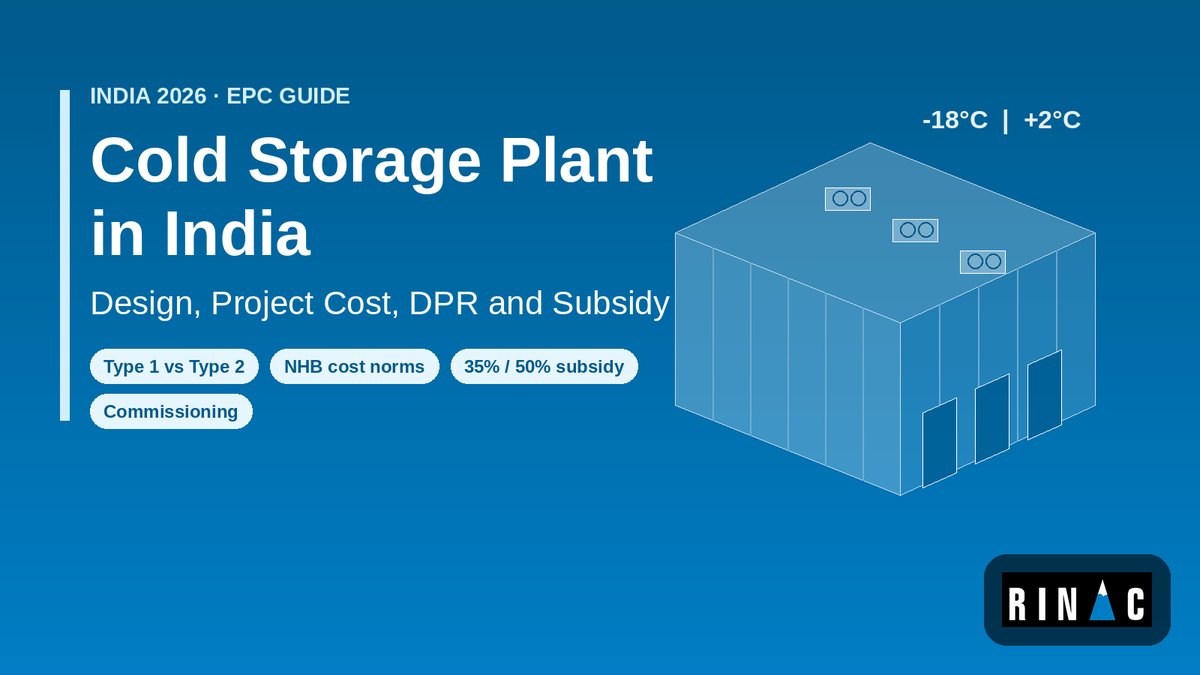
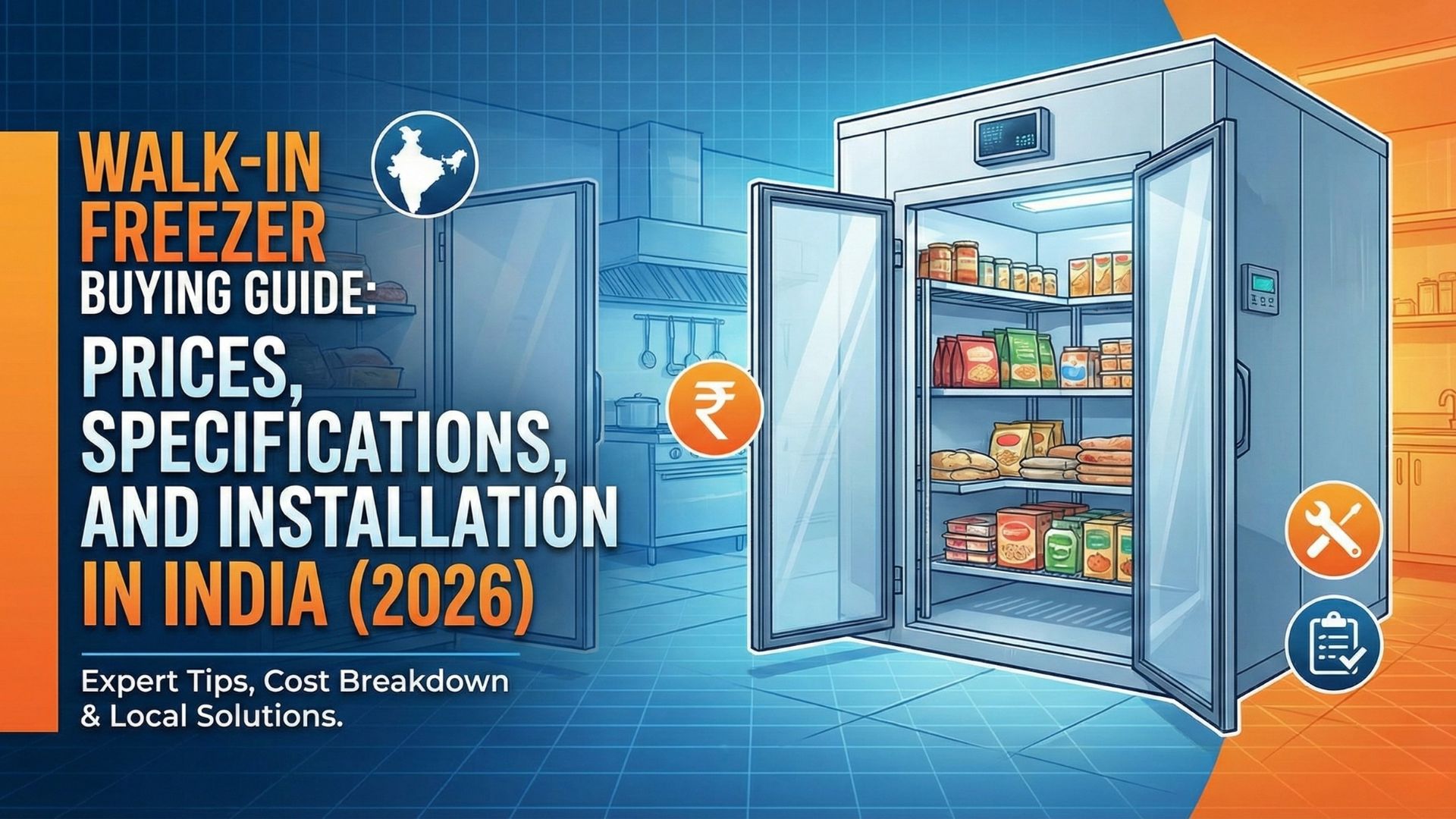
Cold room types, temperature ranges, panels and price drivers at a glance.
Cold Room Temperature Ranges by Application (Celsius)
Setting the correct cold room temperature is the single most important operational decision, because each commodity has a band where quality, shelf life and compliance are optimised. Indian operators should treat the values below as engineering starting points and confirm exact set-points against FSSAI guidance and product specifications.
| Application | Typical Temperature | Room Type |
|---|---|---|
| Fresh fruits & vegetables (general) | +2°C to +8°C | Chiller cold room |
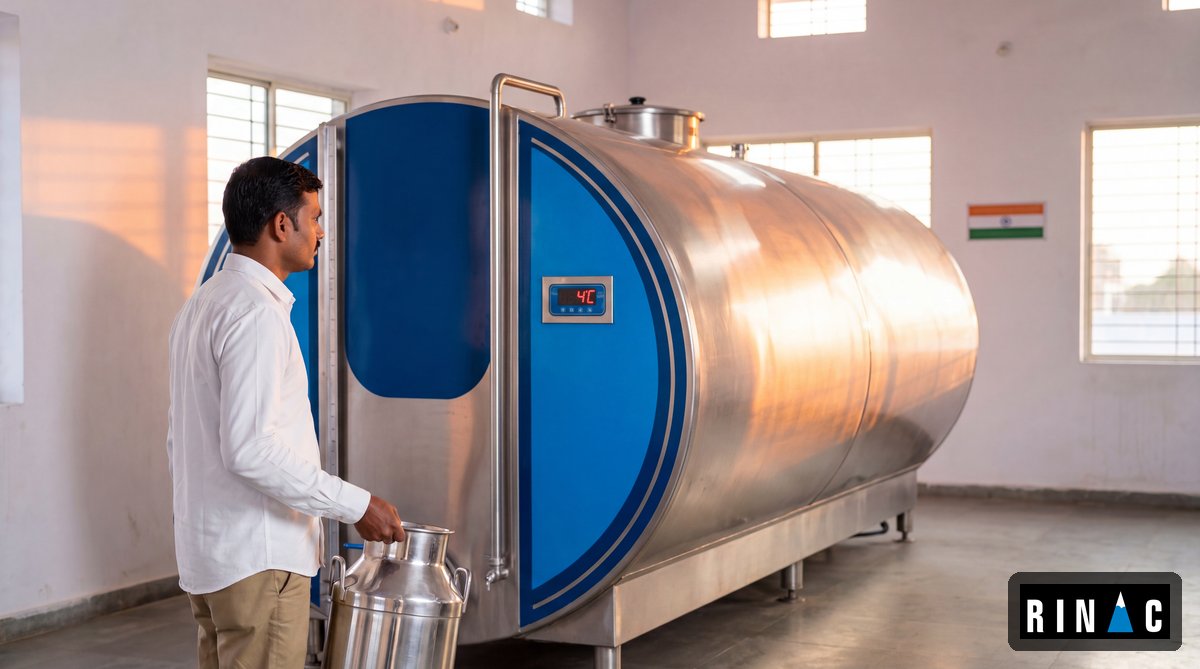
| Dairy & milk products | +2°C to +4°C | Chiller cold room |
| Pharmaceuticals & vaccines | +2°C to +8°C [8] | Walk in cold room for vaccine |
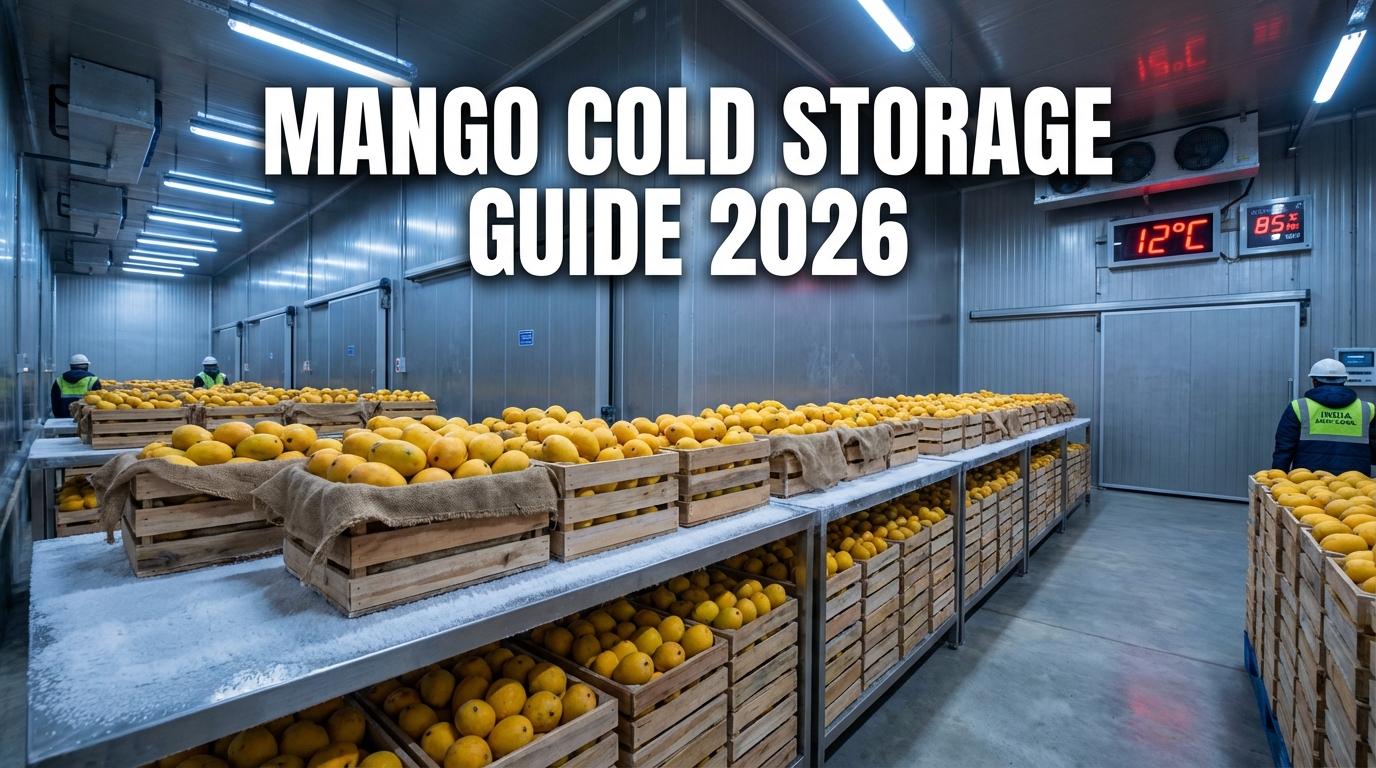
| Mangoes & tropical fruit | +10°C to +13°C | Chiller / ripening |
| Frozen meat, seafood, ready meals | −18°C to −25°C | Freezer cold room |
| Ice cream & deep-frozen | −22°C to −30°C | Freezer cold room |
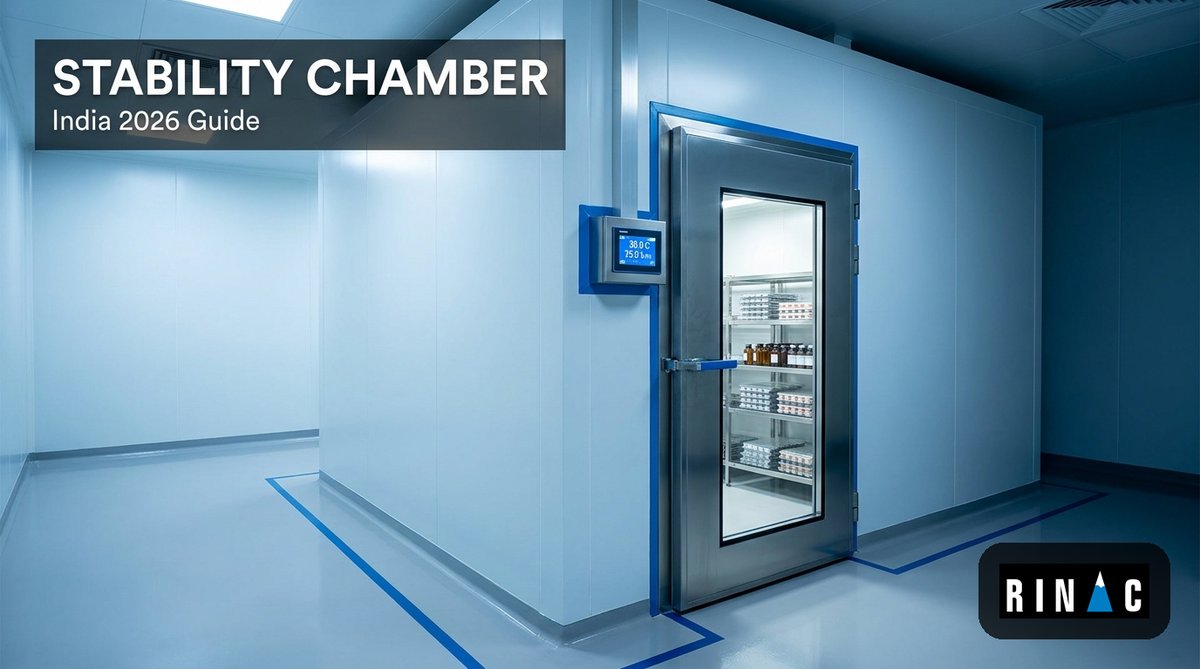
Caution: A walk in cold room for vaccine or any pharmaceutical product must hold the WHO-recommended 2°C to 8°C band continuously, with validated monitoring and alarms [8]. Both freezing and heat excursions can silently destroy efficacy, so redundancy and data logging are non-negotiable for hospital and distribution cold rooms.
Cold Room Panels: The Thermal Building Block
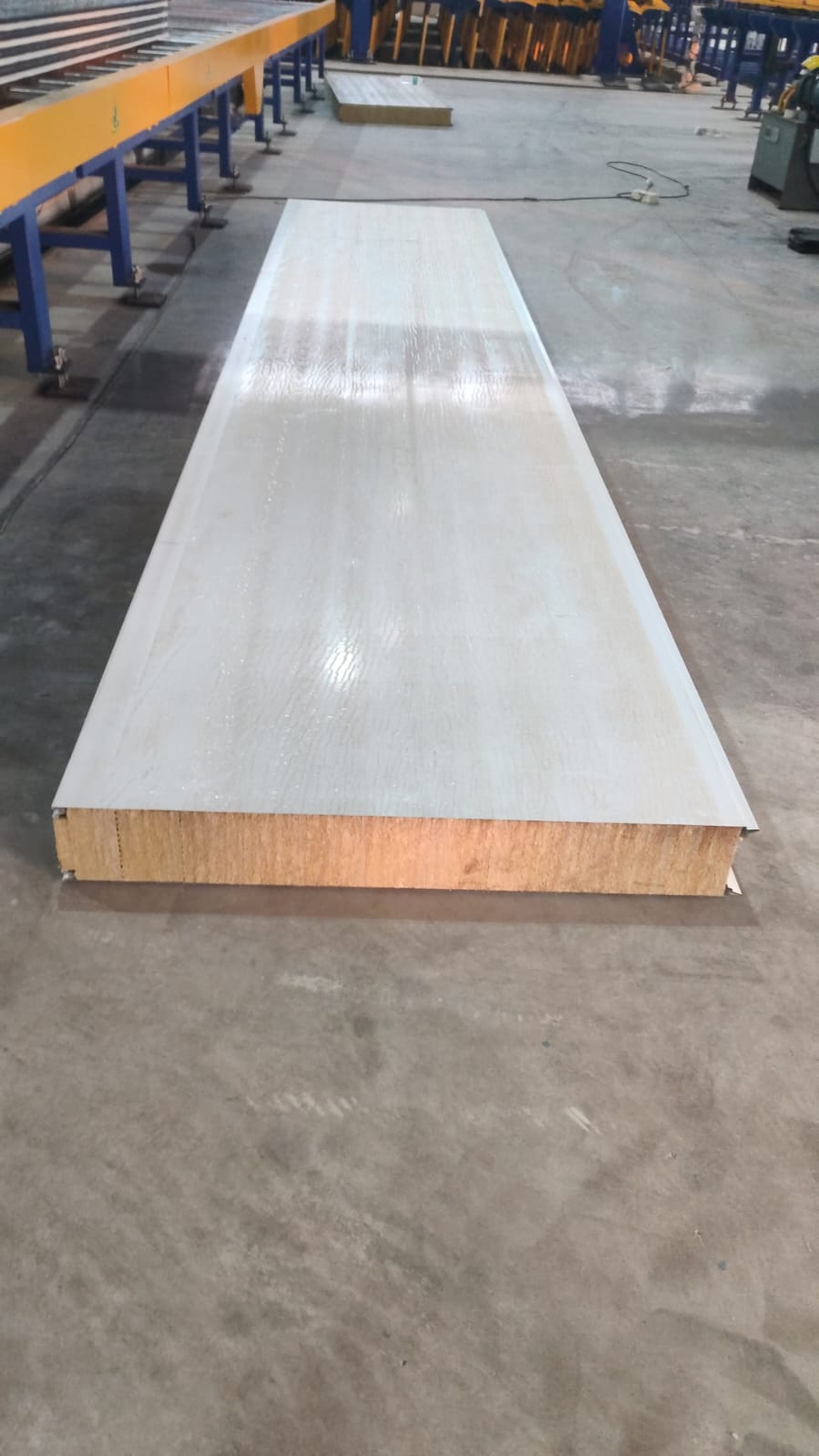
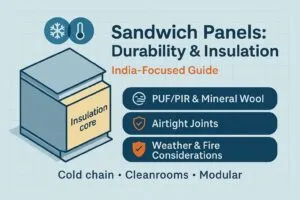
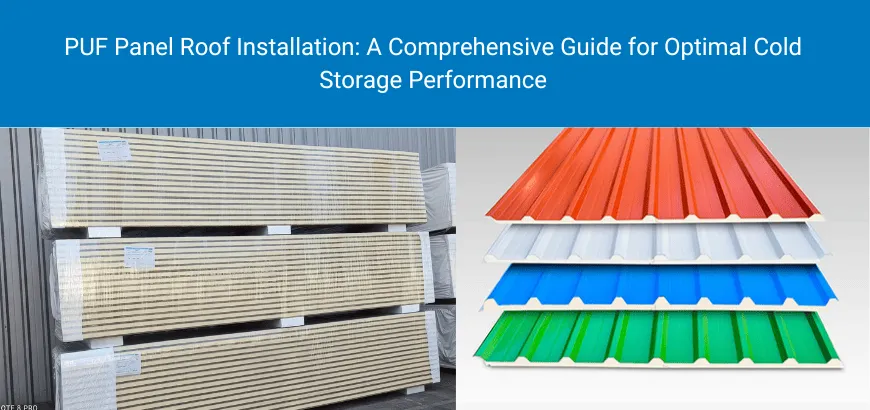
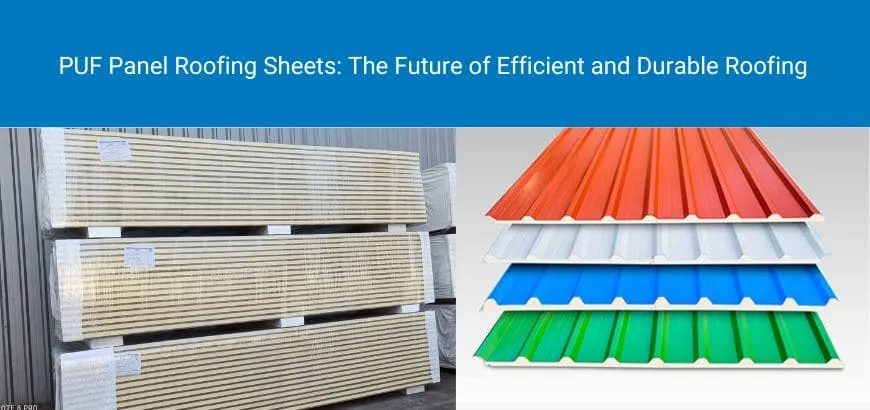
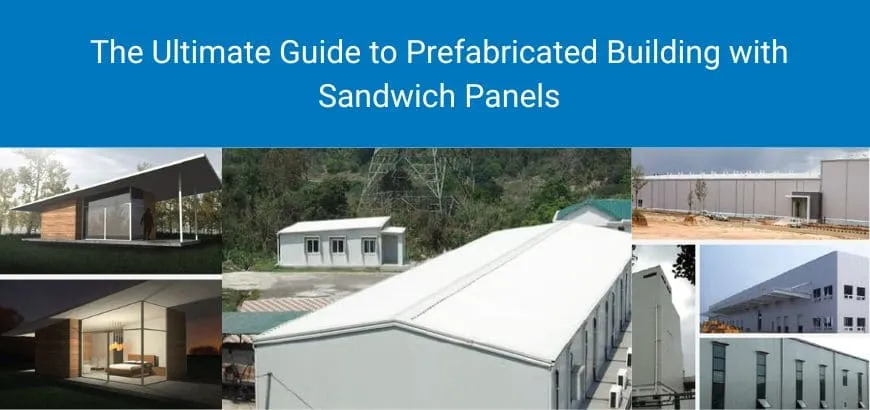
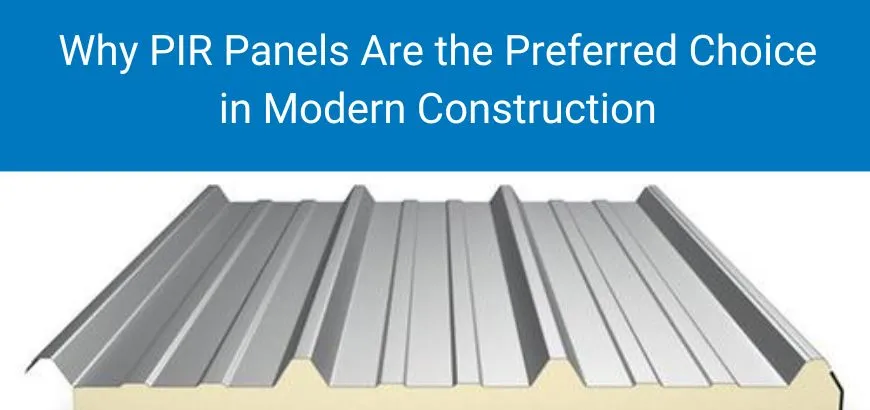
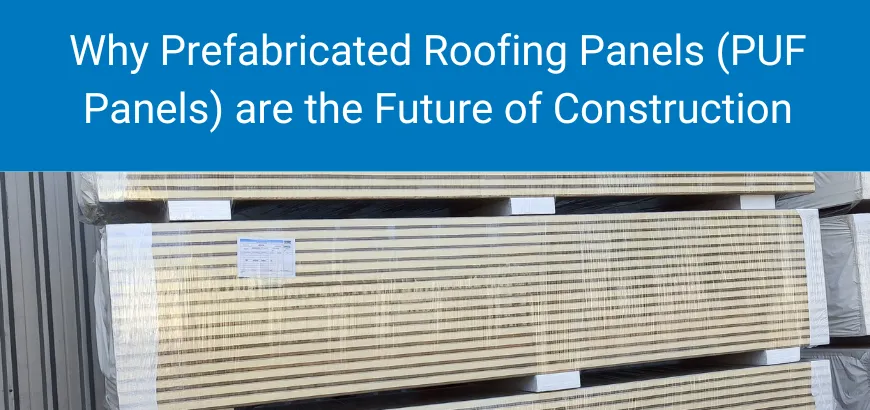
The performance of every cold room rests on its cold room panels — the insulated sandwich panels that form the envelope. A panel is two metal skins bonded to an insulating core; the core material and thickness determine how well the room holds temperature and how little energy it consumes. The common choices in India are:
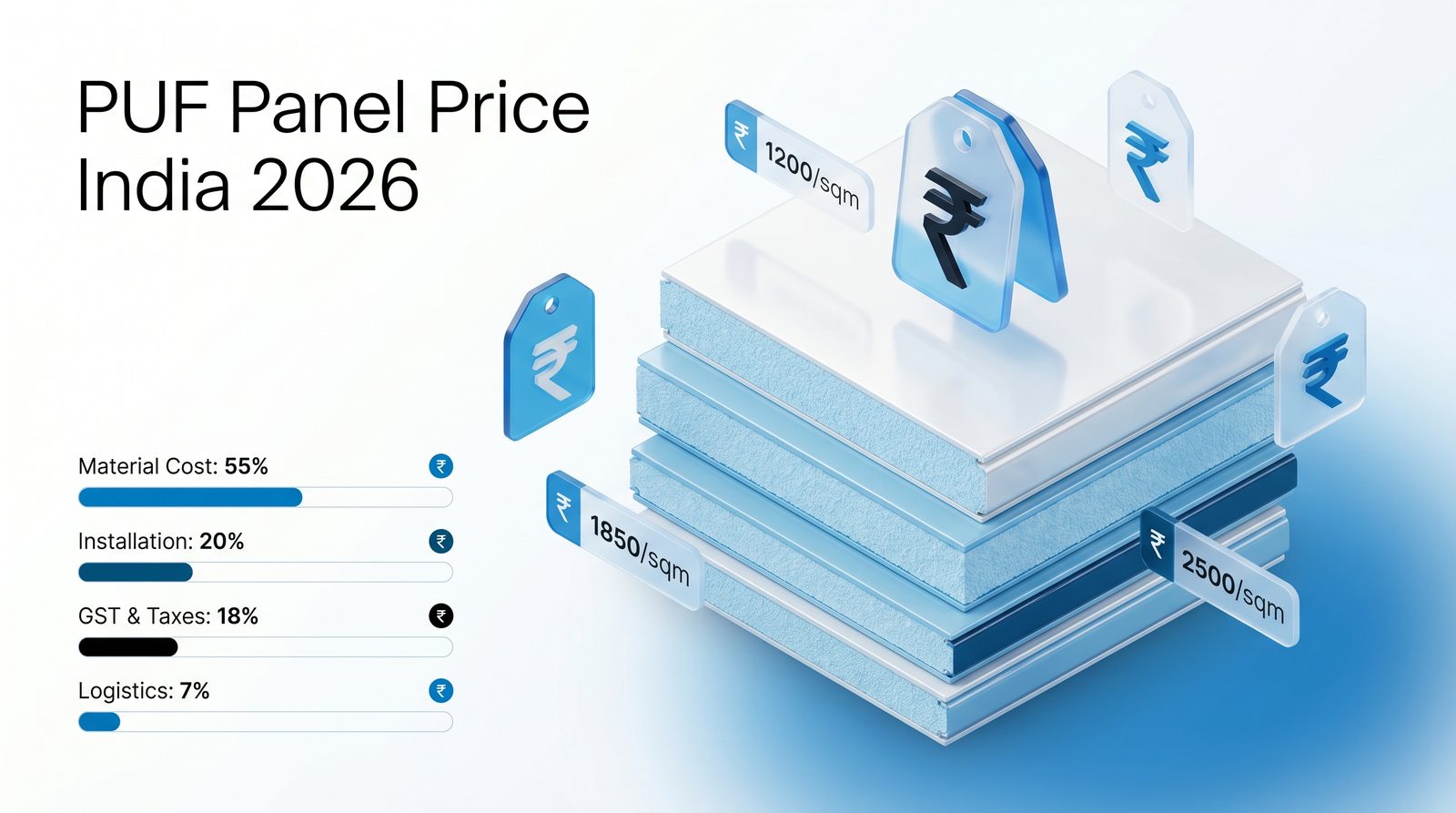
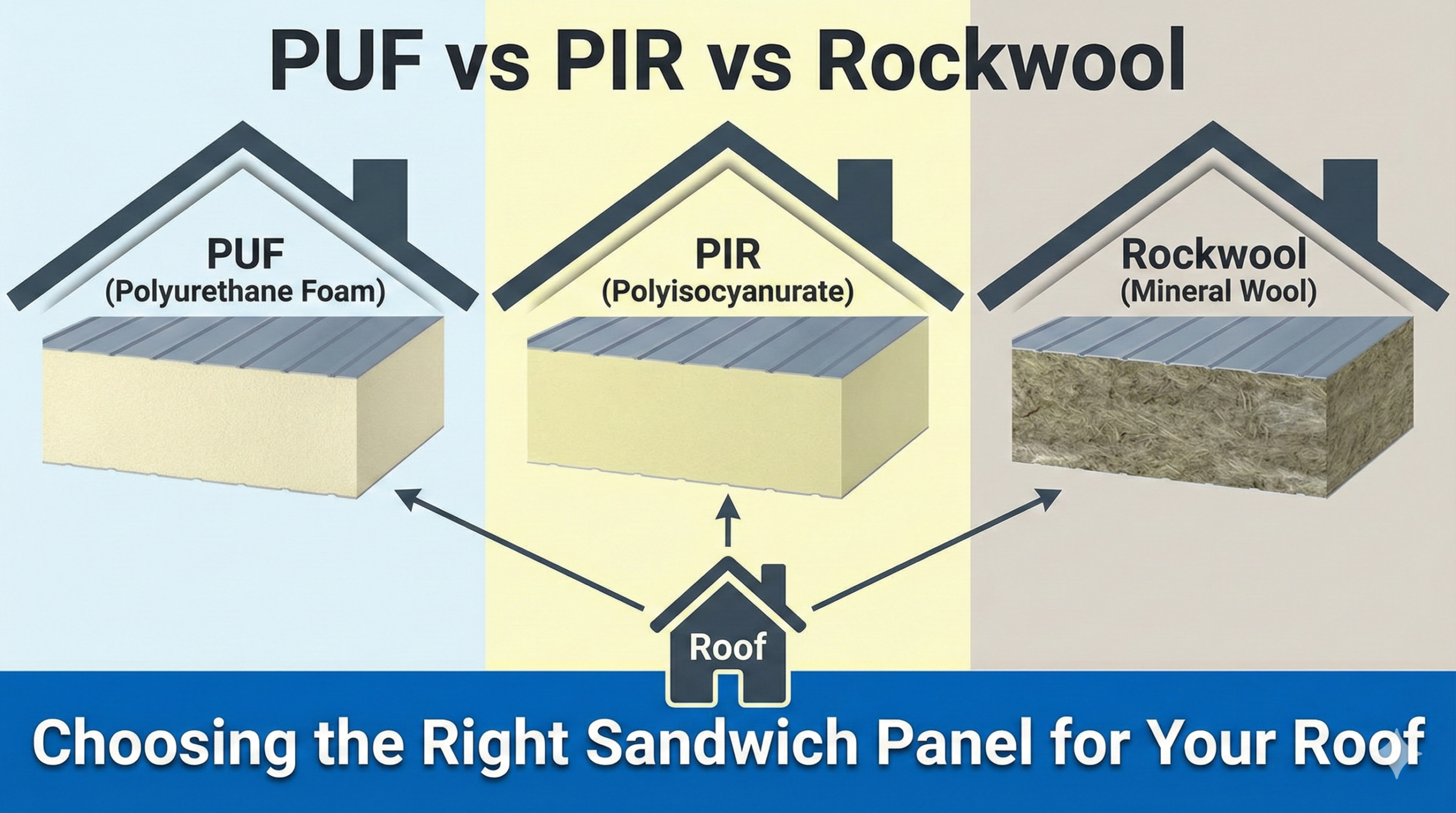
- PUF (polyurethane foam) — the workhorse insulation for most chiller and freezer cold rooms, offering excellent thermal resistance at competitive cost. See our PUF panel price guide.
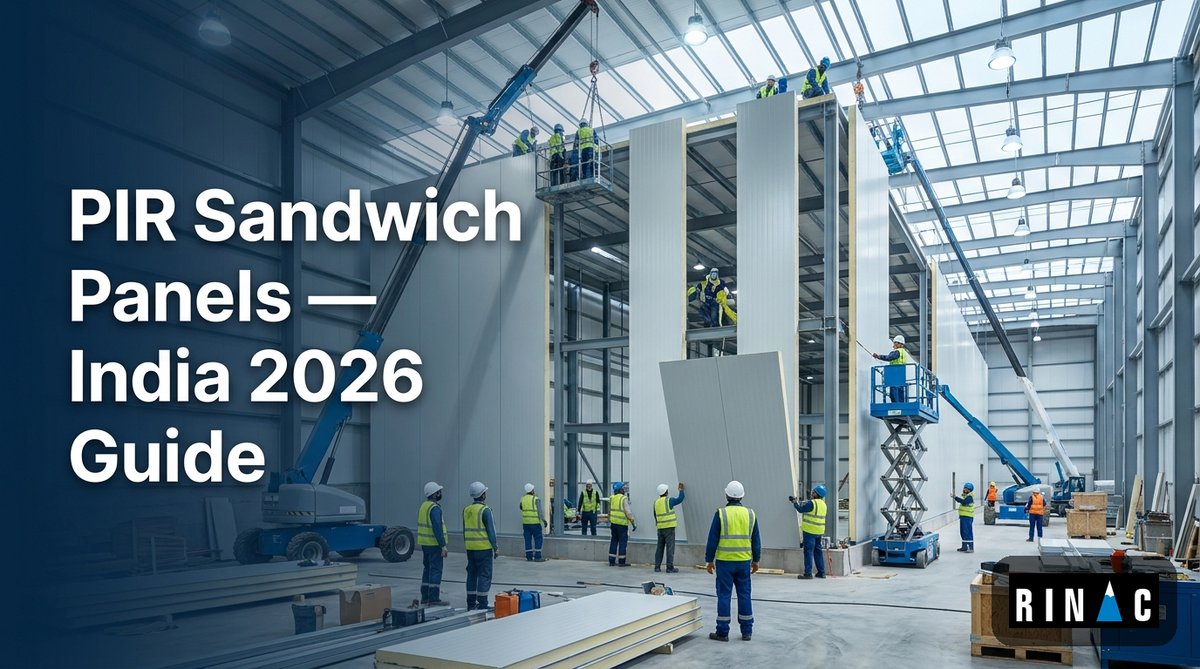
- PIR (polyisocyanurate) — improved fire performance and thermal stability, increasingly specified for food and pharma facilities.
- RPUF and rockwool — selected where fire rating is critical. Rinac’s Firearmet FM-approved fire-rated panels address the most demanding safety requirements.
Panel thickness scales with the temperature target: roughly 60–80 mm is common for chiller rooms, while freezer rooms typically use 100–150 mm to control heat ingress and prevent condensation. If you want the full material trade-off, our PUF vs PIR vs rockwool comparison and the structural insulated panels guide go deeper. Rinac manufactures its own panels at two facilities in Bangalore and Murbad, which is how quality and lead time stay under control.
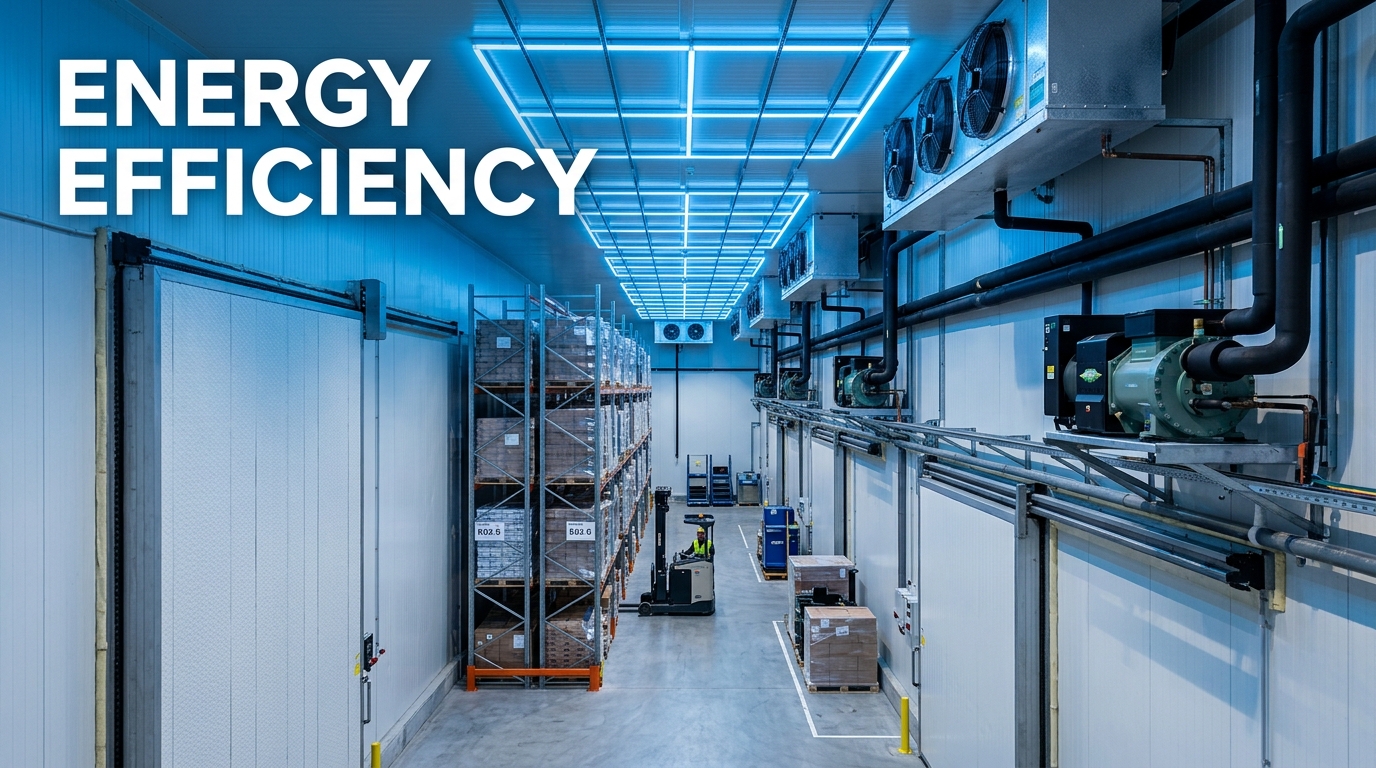
Sustainability win: Correctly specified panels are not just an upfront cost — they are the cheapest energy-saving device in the building. Thicker, well-sealed insulation reduces refrigeration load every hour of every year. Our cold storage energy efficiency guide shows how design choices can cut operating costs by up to 30%.
Cold Room Price in India 2026: What Drives the Cost
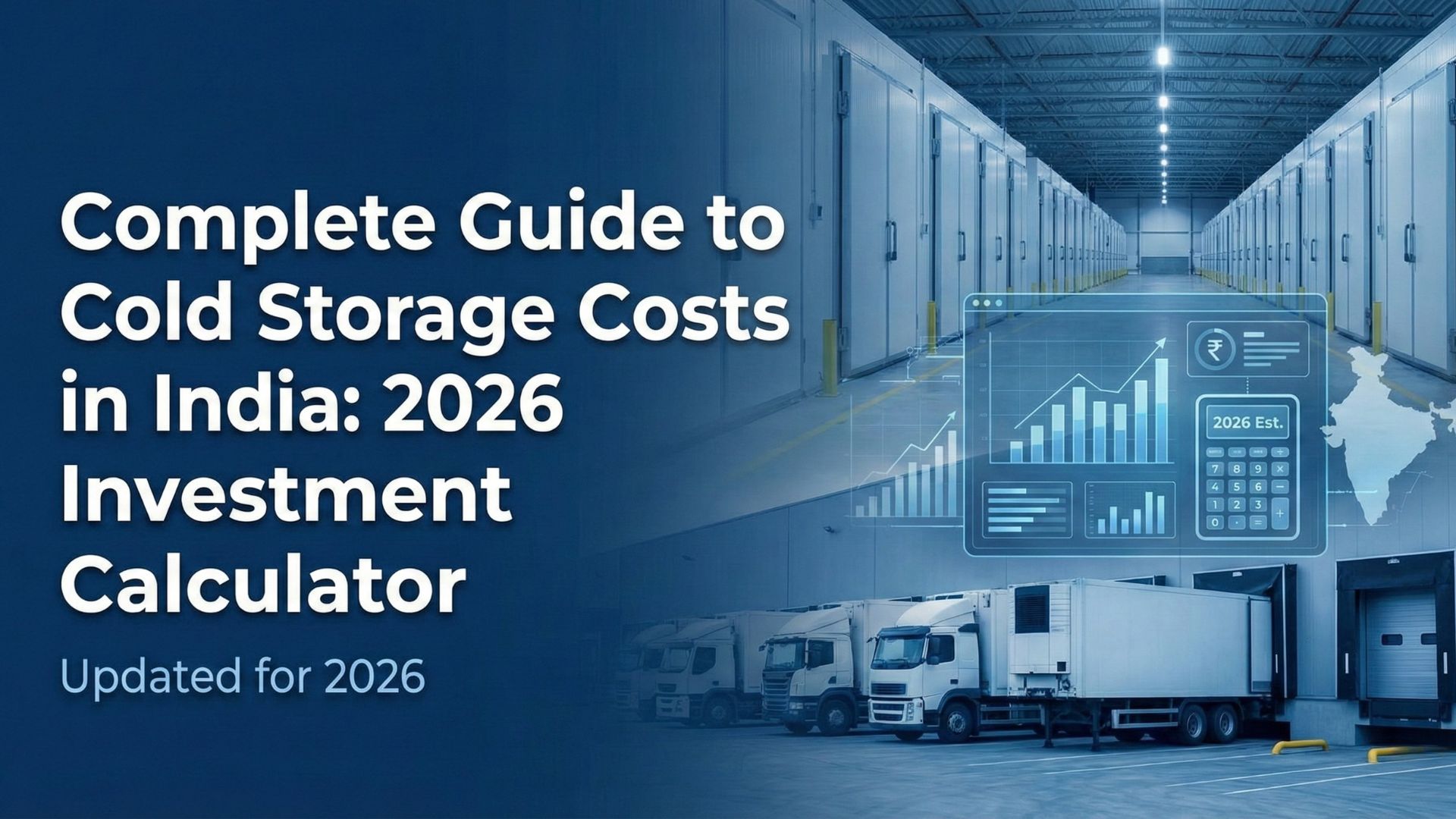
There is no single cold room price, because a cold room is engineered to a brief rather than sold off a shelf. That said, buyers want a starting frame of reference, so the indicative ranges below reflect typical turnkey modular installations in India for 2026. Treat them as planning estimates only — the true cost of a cold room depends on volume, temperature, panel thickness, refrigeration redundancy, flooring, racking and site conditions. For a building-level breakdown, see our cold storage cost calculator.
| Cold Room Type & Indicative Size | Indicative 2026 Price Range (INR) |
|---|---|
| Small walk-in chiller (approx. 10×10 ft) | ₹3.5 lakh to ₹6 lakh |
| Medium walk-in freezer room | ₹8 lakh to ₹18 lakh |
| Multi-chamber cold room suite | ₹20 lakh and above |
35%–50%
Government capital subsidy available on eligible cold-chain projects
Government capital subsidy available on eligible cold-chain projects
The biggest single lever on net cost is subsidy. As detailed in the next section, eligible projects can recover 35% to 50% of capital cost, which can turn a marginal investment into a strongly positive one. The five factors that move the base price most are: room volume, target temperature, panel thickness and core, refrigeration design and redundancy, and ancillaries such as flooring, doors, racking and controls.
Indian Market Context: Capacity Gap, Demand & Government Schemes
India’s cold-chain story is one of large demand meeting uneven supply. As of early 2024 the country had roughly 8,600 cold storages with a cumulative capacity of about 39.42 million tonnes [3], yet much of that is concentrated in a few states and skewed towards potato storage. The National Centre for Cold-Chain Development (NCCD) and World Bank assessments point to a shortfall of roughly 30–35 million tonnes of additional capacity needed to close the gap [4]. That mismatch is exactly why distributed, modular cold rooms close to production and consumption centres are so valuable.
The cost of the gap is measured in wasted produce. Post-harvest losses in India run to about 4–8% for grains and 5–15% for fruits and vegetables, as reported to Parliament in August 2024 [5], with the total value of losses estimated by a Ministry of Food Processing Industries study in the order of ₹1.5 lakh crore annually [6]. Every well-placed cold room chips away at that loss.
The government has responded with substantial capital support. Under the PM Kisan SAMPADA Yojana Integrated Cold Chain & Value Addition scheme, the grant is 35% of eligible project cost in general areas and 50% in difficult areas and for SC/ST, FPO and SHG promoters [7]. Under the Mission for Integrated Development of Horticulture (MIDH) and the National Horticulture Board (NHB), a credit-linked back-ended subsidy of 35% (general) to 50% (North-East, hilly and scheduled areas) supports cold storage and CA storage projects [9]. Additional support is available through NABARD and the Agriculture Infrastructure Fund. We unpack eligibility and application steps in our dedicated cold chain subsidies guide.
With 14 branch offices across India and pan-India service coverage, Rinac helps clients align cold room design with the documentation that subsidy schemes require — from capacity sizing to compliance evidence — so the grant is realistic rather than theoretical.
Compliance & Standards: FSSAI, HACCP, ISO, WHO-GMP & IGBC
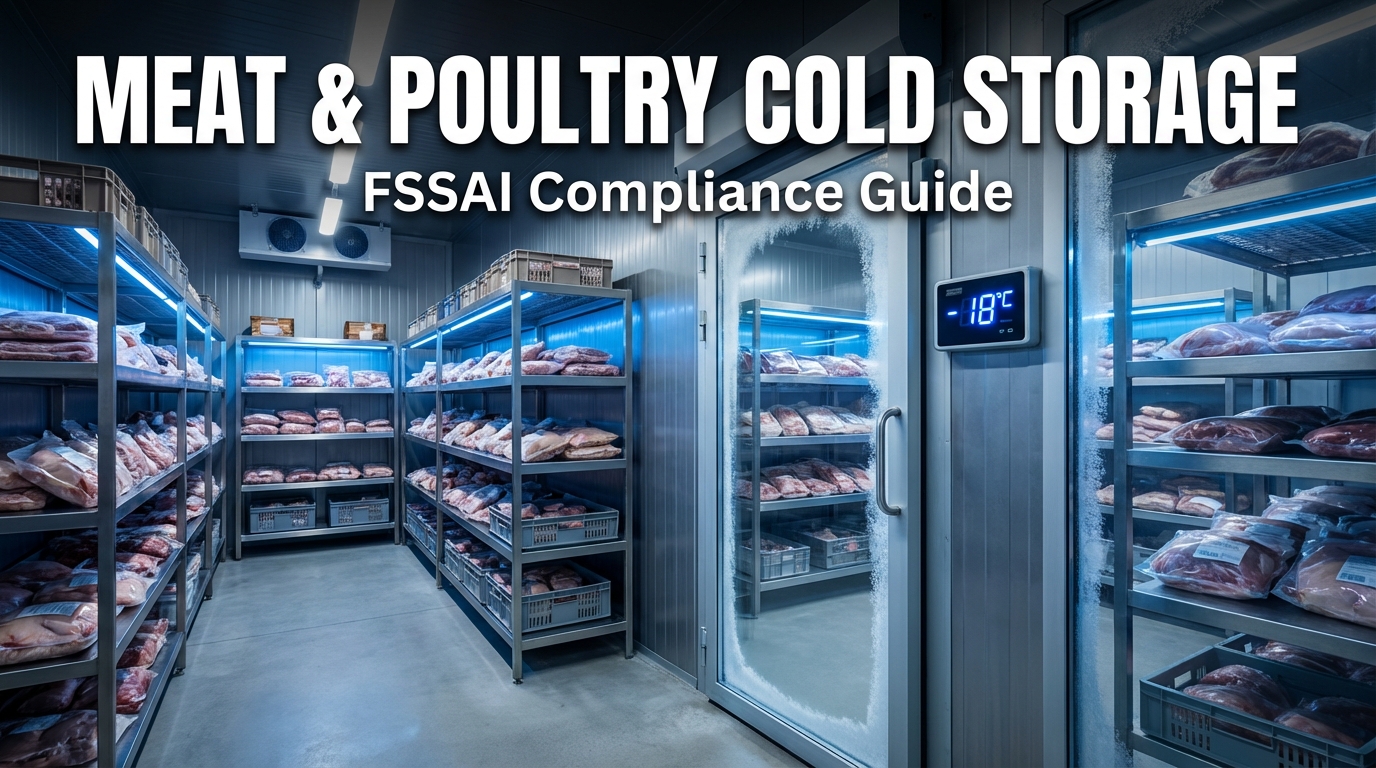
A cold room is only as good as its compliance posture. For food businesses, FSSAI licensing and HACCP-based food-safety management govern temperature control, hygiene and traceability. Our guides on meat and poultry FSSAI compliance and food-safety compliance for cold storage detail the operational requirements. For pharmaceutical and vaccine rooms, WHO-GMP and GMP standards demand validated temperature mapping, continuous monitoring and qualified design — the kind of discipline covered in our pharmaceutical cold storage outlook.
Rinac builds to international standards — ISO, FSSAI, HACCP, GMP, WHO-GMP and IGBC green-building criteria — which matters because a non-compliant cold room is a commercial liability, not just an engineering one. Certification also smooths subsidy approvals and customer audits. This is where partnering with an experienced solution architect pays off: compliance is designed in from day one rather than retrofitted.
How to Choose a Cold Room Manufacturer: A Practical Roadmap
Searching for cold room manufacturers returns a long list of suppliers, but the right partner is defined by capability across the whole project, not just panel price. Use this roadmap when evaluating options:
- In-house manufacturing. Manufacturers who make their own panels and refrigeration assemblies control quality and lead time. Rinac operates two manufacturing units in Bangalore and Murbad.
- End-to-end scope. Look for design, engineering, manufacturing, installation and after-sales under one roof — a single accountable partner avoids finger-pointing between vendors. Rinac’s after-sales service spans the country.
- Track record and references. Decades of delivery and recognisable clients reduce execution risk. Rinac has delivered 10,000+ projects over 30+ years for clients including ITC, Britannia, Tata, Nestle and Biocon.
- Certifications and compliance support. Confirm ISO, FSSAI, HACCP and GMP capability, plus help with subsidy paperwork.
- Refrigeration and controls depth. Energy-efficient refrigeration with proper controls and monitoring protects your product and your power bill. See our refrigeration systems.
- Service footprint. A pan-India network with local engineers means faster response when a room needs attention.
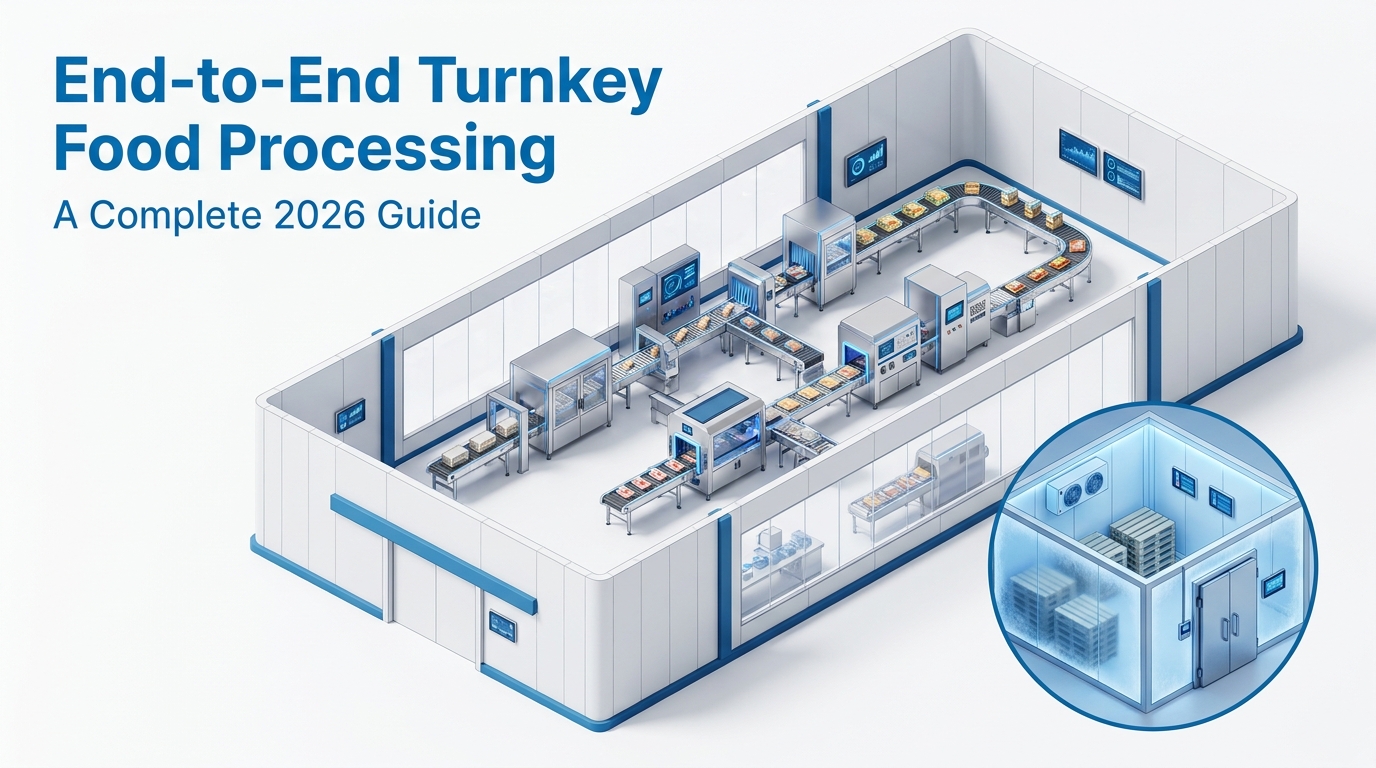
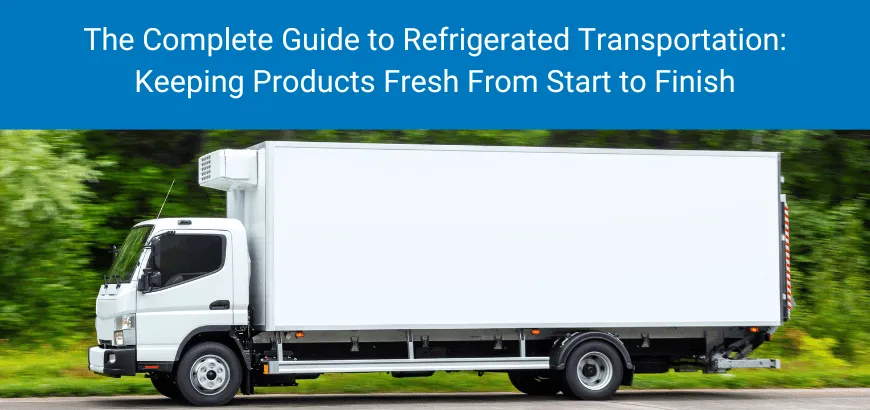
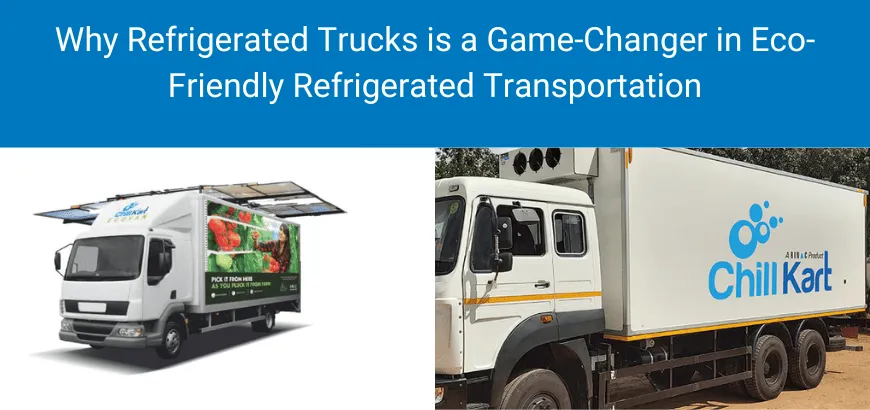
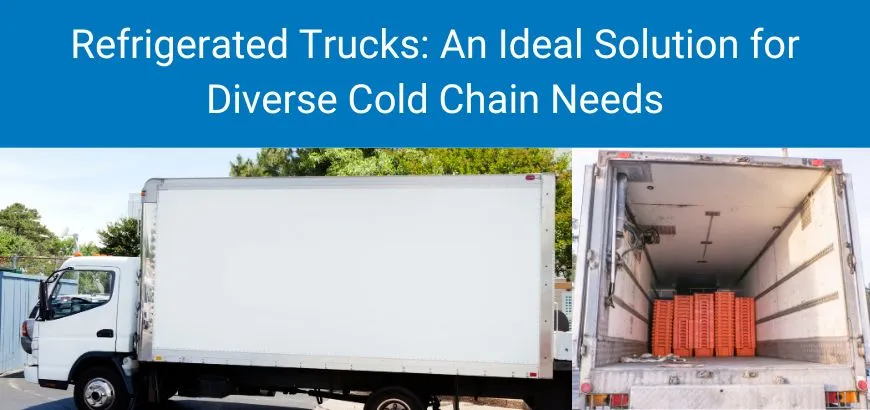
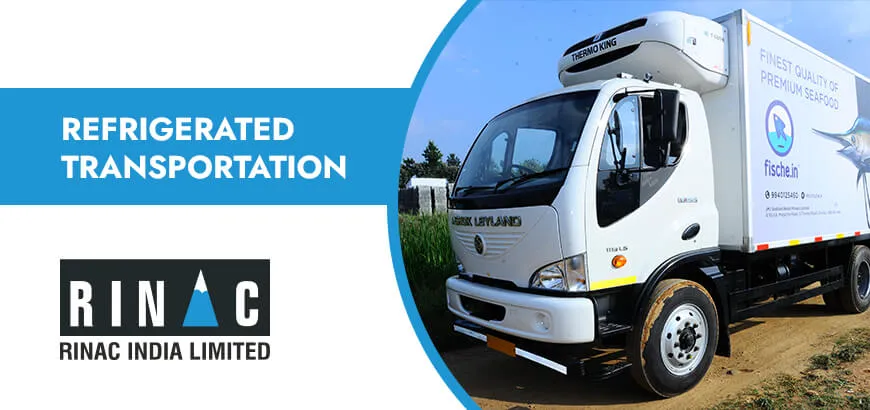
If you are still mapping the bigger picture — from cold rooms to refrigerated transport and full processing lines — our overviews of refrigerated transportation, turnkey food processing and the broader cold chain logistics transformation in India connect the dots.
Frequently Asked Questions
Important disclaimer: The information in this guide — including prices, temperature ranges, subsidy rates and regulatory references — is provided for general educational purposes only and reflects public sources as of the publication date. It is not professional engineering, legal, financial or regulatory advice. Prices and subsidies change and vary by region, scheme and project; regulations are updated periodically. Verify all figures directly with FSSAI, MoFPI, NHB and the relevant state agencies before making any investment decision. For project-specific design, capacity sizing, ROI modelling and compliance, obtain a formal Rinac consultation via rinac.com/contact-us.
Call Our Enquiry Line: 1800-4191166
Sources & References
- Mordor Intelligence — India Cold Chain Logistics Market Size & Share Analysis (2026–2031). Accessed June 2026.
- IMARC Group — India Cold Chain Market Size, Share & Outlook to 2034. Accessed June 2026.
- Agri Times — India’s cold storage facilities & capacity (NCCD data). 2024.
- IIR / NCCD — India cold storage capacity growth and gap. 24 February 2026.
- Down To Earth — Post-harvest losses, as told to Parliament. 6 August 2024.
- ICRIER — Reducing Post-Harvest Losses in Indian Agriculture (Policy Brief).
- PMKSY Cold Chain Scheme — Objectives & Components (Guidelines, May 2025).
- PATH — The vaccine cold chain (WHO 2°C–8°C storage).
- NCCD (Government of India) — Cold-chain Assistance / MIDH subsidy framework.
Published by Rinac India Limited — Solution Architects and Builders of cold chain infrastructure. Figures cited are from public sources as of June 2026 and should be independently verified.