TL;DR – Quick Summary
- Cold chain monitoring is the continuous, documented measurement of temperature (and often humidity) at every point a temperature-sensitive product is stored, handled or moved. In pharma it is a licence condition, not a nice-to-have.
- With revised Schedule M enforcement having begun on 1 January 2026, Indian drug manufacturers are expected to evidence qualified storage areas and mapped, alarmed temperature control during state inspections.
- A systematic review of vaccine cold chain studies found 14% to 35% of refrigerators or shipments exposed to freezing temperatures, with 35.3% of transport legs in developing countries affected. Freezing, not heat, is the most under-detected failure.
- Sensors cannot fix a leaking envelope. Temperature mapping under WHO TRS 961 Annex 9 routinely exposes panel joint gaps, poor air throw and single-point-of-failure refrigeration long before a data logger alarms.
- India still carries a gap of roughly 3.2 million metric tonnes of cold storage and about 52,826 reefer vehicles, and MoFPI grant-in-aid of 35% to 50% of eligible project cost remains available for integrated cold chain projects.
Please read first. This guide is published for general information and engineering education. It is not a substitute for professional regulatory, legal or engineering consultation. Regulations, subsidy rates and scheme deadlines change, so verify current requirements directly with CDSCO, your State Drugs Controller, FSSAI, MoFPI, NHB or the relevant state agency before committing capital. All figures cited are drawn from public sources as of the publication date and are linked in the Sources and References section.
Why Cold Chain Monitoring Now Decides Whether Indian Pharma Product Survives the Journey
Cold chain monitoring is the discipline of continuously measuring, recording and acting on temperature data across every stage a temperature-sensitive product passes through, from the manufacturing cold room to the last-mile refrigerator. For Indian pharmaceutical manufacturers, that discipline has shifted from an internal quality practice to a documented regulatory obligation, and the stakes have risen with the value of what is being stored. India’s domestic pharmaceutical market was valued at roughly Rs. 5.30 lakh crore (about US$ 60 billion) in FY26, with drugs and pharmaceuticals exports at approximately Rs. 2.73 lakh crore (about US$ 31 billion) [1]. A growing share of that value now sits in biologics, vaccines, insulin analogues and specialty injectables that live or die between 2°C and 8°C.
The scale of the exposure is easy to underestimate. Analysts tracking Indian pharmaceutical logistics report more than 3,500 cold chain operators in the country, of which only an estimated 8% to 10% meet WHO Good Distribution Practice standards, with compliant infrastructure concentrated in metros and manufacturing hubs while Tier 2, Tier 3 and rural corridors remain thinly served [2]. In practice this means a consignment can leave a validated, mapped, alarmed warehouse in Bengaluru and spend its riskiest hours in a vehicle or a distributor’s chiller where nobody is watching the temperature at all.
Over three decades and more than 10,000 projects across 23 countries, we have commissioned pharmaceutical cold rooms for clients that include Biocon, and a pattern repeats often enough to be worth stating plainly: the facilities that fail audits are rarely the ones with the cheapest sensors. They are the ones where nobody mapped the room, nobody defined what happens when an alarm fires at 2 a.m., and nobody asked whether the refrigeration plant could hold setpoint on a 45°C afternoon in Vijayawada. This guide covers all three gaps, and connects them to what the Indian regulator now expects.
What Cold Chain Monitoring Actually Covers, Band by Band
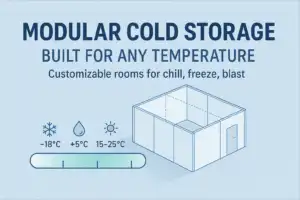
Before specifying equipment, define the bands you are defending. Drug storage temperature requirements are set by the product’s marketing authorisation and pharmacopoeial storage statement, and the monitoring design follows from them. WHO model guidance for the storage and transport of time and temperature sensitive pharmaceutical products sets out the standard nomenclature [3]. The table below summarises how the bands typically translate into engineering and monitoring decisions in Indian facilities.
| Storage band | Typical range | Common product examples | Dominant monitoring risk |
|---|---|---|---|
| Cold / chilled | +2°C to +8°C | Vaccines, insulin, biologics, diagnostic kits | Accidental freezing near evaporator air throw; door-opening spikes |
| Cool | +8°C to +15°C | Certain APIs, suppositories, selected excipients | Drift during monsoon humidity swings |
| Controlled room temperature | +20°C to +25°C, excursions permitted per label | Most oral solid dosage forms | Summer ambient in uninsulated warehouses; roof heat gain |
| Frozen | -25°C to -15°C (commonly -20°C nominal) | Certain vaccines, biological intermediates, reference standards | Defrost-cycle overshoot masked by slow-logging sensors |
| Ultra-low temperature | -80°C to -60°C | mRNA platforms, cell and gene therapy material | Power interruption; no thermal buffer once the door opens |
The most common design error we encounter in Indian pharmaceutical cold storage is treating +2°C to +8°C as a single number rather than a band with two failure walls. A room tuned aggressively to hold +4°C average frequently drives sub-zero air directly onto the first pallet row in front of the evaporator. The average looks perfect on the report. The product froze.
The Freezing Problem Most Cold Chain Monitoring Systems Miss
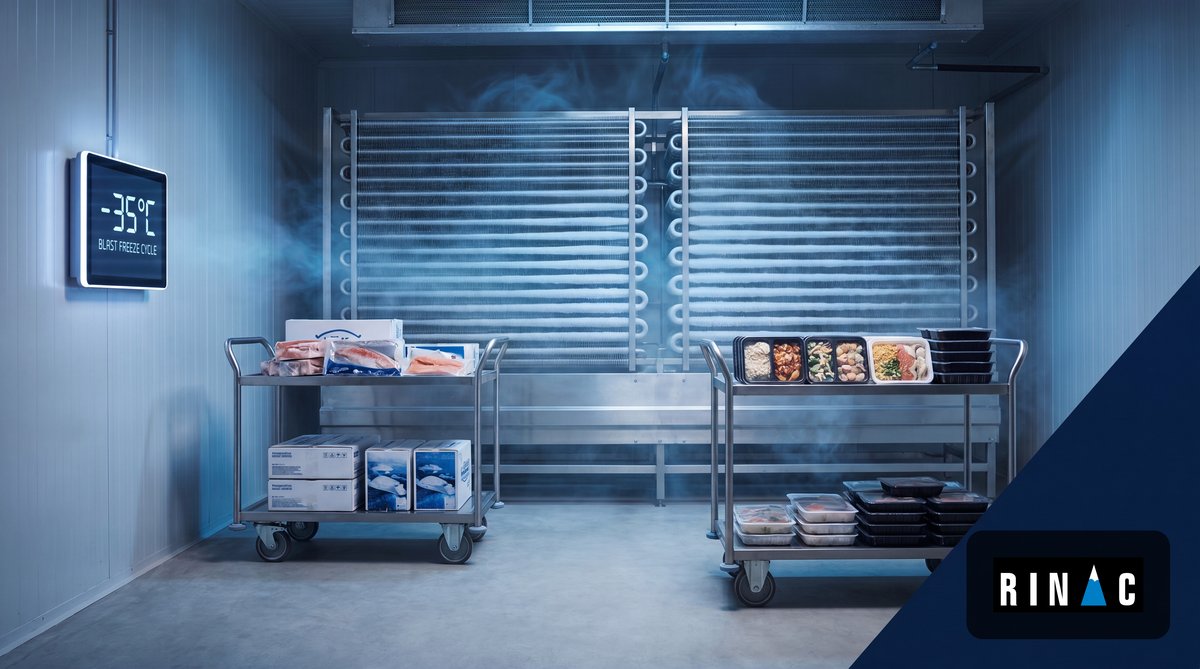
Heat excursions get the attention because they are intuitive: power fails, the room warms, somebody notices. Freezing is quieter and, by the evidence, more common. A systematic literature review of vaccine cold chain temperature studies found that between 14% and 35% of refrigerators or transport shipments were exposed to freezing temperatures, and that during transport the occurrence of freezing was 16.7% in developed countries against 35.3% in developing countries [4]. For freeze-sensitive products such as adsorbed vaccines and many biologics, a single undetected freezing event can destroy potency with no visible change to the vial.
35.3%
of transport legs in developing countries recorded exposure to freezing temperatures in a systematic review of vaccine cold chain studies
of transport legs in developing countries recorded exposure to freezing temperatures in a systematic review of vaccine cold chain studies
This has three direct implications for how you configure cold chain temperature monitoring. First, alarm limits must be two-sided, with a low-side limit that triggers before 0°C, not at it. Second, logging interval matters more than sensor accuracy in most real failures, because a fifteen-minute interval can step straight over a defrost overshoot or a brief blast of sub-zero discharge air. Third, sensor placement has to include the worst location, not the convenient one. India’s national immunisation programme illustrates what disciplined practice looks like at scale: the Electronic Vaccine Intelligence Network records temperature at roughly ten-minute intervals with server updates about hourly, and raises SMS and email alerts to named technicians when a breach occurs [5].
Indian Market Context: Schedule M, Infrastructure Gaps and Government Support
The regulatory clock has already turned. The Drugs Controller General of India confirmed that revised Schedule M norms would be enforced from 1 January 2026 for units that had applied for extension, and CDSCO has directed state authorities to begin inspections at those units [6]. Micro, small and medium units with turnover up to Rs. 250 crore had received an extension only to 31 December 2025. For anyone still treating qualified, mapped and alarmed storage as a next-year project, the runway has closed.
The physical infrastructure is still catching up with the regulation. The all-India cold chain infrastructure assessment prepared for the National Centre for Cold-chain Development identified a shortfall of roughly 3.2 million metric tonnes of cold storage capacity alongside gaps of about 70,000 pack-houses and 52,826 reefer vehicles [7]. That assessment was framed around horticulture, but the reefer and pack-house shortfall is exactly the transport layer that pharmaceutical consignments share once they leave the plant gate. Our guide to how technology is transforming cold chain logistics in India goes deeper into that handover risk.
On the public funding side, the Ministry of Food Processing Industries continues to offer grant-in-aid under the Scheme for Integrated Cold Chain and Value Addition Infrastructure at 35% of eligible project cost in general areas and 50% in difficult areas, including the North-Eastern states, Uttarakhand, Himachal Pradesh, Jammu and Kashmir, Ladakh, ITDP areas and islands [8]. The Union Cabinet approved an additional outlay of Rs. 1,920 crore for PM Kisan SAMPADA Yojana, taking the total to Rs. 6,520 crore for the 15th Finance Commission cycle [9]. Pharmaceutical storage projects generally fall outside MoFPI eligibility, which is food-processing led, but many Indian groups run adjacent food, nutraceutical and agri operations that do qualify, and the National Horticulture Board and state horticulture missions run parallel subsidy routes. We have mapped the routes in detail in our breakdown of cold chain subsidies and how to access 35% to 50% government grants.
Verify before you budget. Subsidy percentages, eligible cost heads, application windows and difficult-area definitions are revised periodically, and eligibility for pharmaceutical versus food-processing assets differs sharply. Confirm current terms on the MoFPI SAMPADA portal, with the National Horticulture Board, or with your state nodal agency before building a grant assumption into a project financial model.
Compliance and Standards: What Auditors Expect From a Cold Chain Monitoring System
A cold chain monitoring system is audited as a quality system, not as a set of gadgets. Across revised Schedule M, WHO-GMP and WHO Good Distribution Practice expectations, the same evidence trail is requested again and again. Rinac facilities are engineered and delivered against ISO, FSSAI, HACCP, GMP, WHO-GMP and IGBC frameworks, and the checklist below reflects what inspectors consistently ask to see.
The documentation an inspector will ask for
- Qualification records. Design, installation, operational and performance qualification for the storage area, including the acceptance criteria you set and the deviations you closed.
- Temperature mapping reports. Summer and winter studies, with hot and cold spot identification and the rationale for permanent sensor placement that follows from them.
- Calibration certificates. Traceable calibration for every monitoring sensor and for the mapping loggers used in the study, with defined recalibration intervals.
- Alarm configuration and escalation SOP. Limits, delay settings, who is called, within what time, and what they are authorised to do at 2 a.m. on a Sunday.
- Excursion investigation records. Every breach, the product impact assessment, the disposition decision and the CAPA, closed out and signed.
- Data integrity controls. Audit trails, access control and backup for the monitoring records, in line with ALCOA+ expectations.
- Preventive maintenance and AMC evidence. Refrigeration servicing, door seal checks, defrost verification and standby power testing.
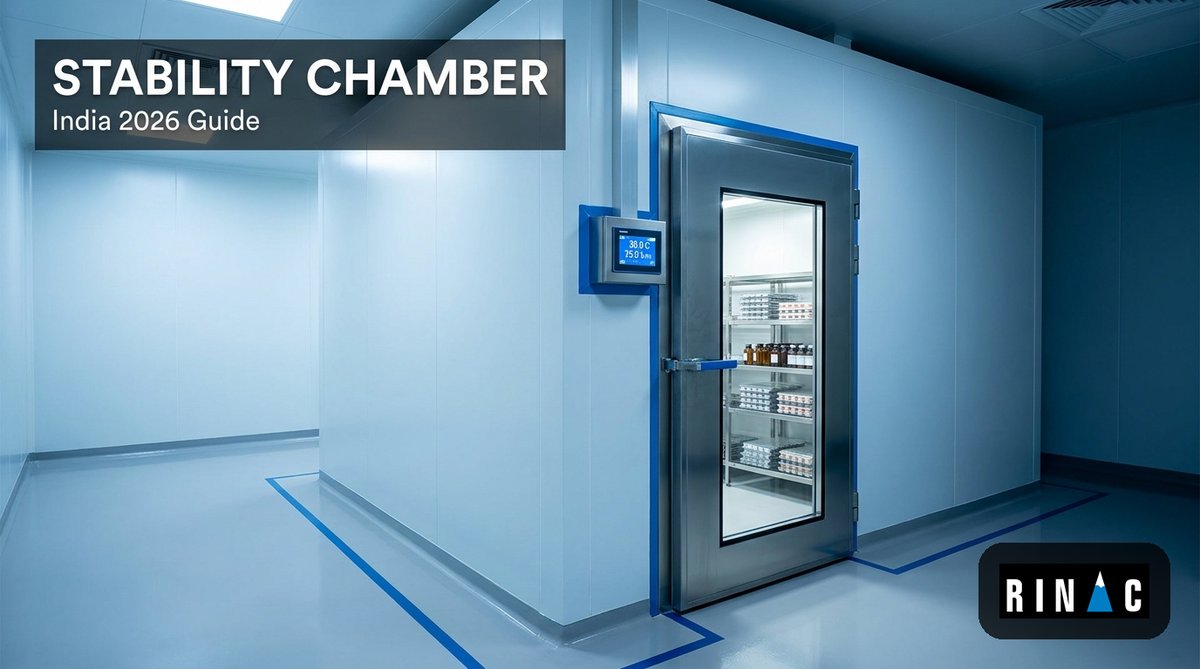
The point that surprises many teams is that most of this list is about the room and its plant, not about the sensor. A pharmaceutical cold chain stands on qualified infrastructure, and monitoring is the instrument that proves the infrastructure is doing its job. Facilities running adjacent controlled environments should read our companion guides on stability chambers and ICH storage conditions and on clean room classification and Schedule M design, since the qualification logic is shared.
Temperature Mapping: The Step Most Facilities Get Wrong
WHO guidance is explicit that the purpose of a mapping study is to document and control temperature distribution within a storage area, and that mapping should be carried out before use as part of installation and operational qualification, with periodic repetition for established facilities [10]. In Indian practice, four mistakes recur.
1. Mapping an empty room and calling it done
An empty room has no thermal mass and almost no airflow obstruction. Racking, pallets and stock change air distribution materially. Map empty to establish the envelope, then map loaded to establish reality, and define your maximum load pattern as a controlled condition.
2. Mapping only in one season
Ambient conditions in India swing from single-digit winter mornings in the north to sustained 45°C-plus summer afternoons across large parts of the country, with monsoon humidity layered on top. A study run only in February tells you very little about May. Summer and winter studies are the defensible minimum.
3. Skipping the open-door and power-failure challenges
The two events most likely to cause a real excursion are a held-open door during despatch and a grid outage before the DG set picks up load. Both belong in the mapping protocol as deliberate challenge tests, with recovery time recorded as an acceptance criterion.
4. Placing permanent sensors where cabling was easy
The mapping study exists to tell you where the hot and cold spots are. Permanent monitoring sensors then go at those spots, plus a representative location for routine trending. If the permanent sensor positions were decided before the mapping report was written, the study was decorative.
Cold Chain Monitoring at a Glance
Temperature bands: cold +2°C to +8°C, cool +8°C to +15°C, controlled room temperature +20°C to +25°C, frozen -25°C to -15°C, ultra-low -80°C to -60°C.
The mapping sequence: define bands, assess the envelope, map empty and loaded across seasons, place permanent sensors at the mapped hot and cold spots, then document the system.
The under-detected risk: 35.3% of transport legs in developing countries recorded exposure to freezing temperatures in a systematic review of vaccine cold chain studies.
India context: a cold storage capacity gap of roughly 3.2 million metric tonnes, and MoFPI grant-in-aid of 35% to 50% of eligible cost for integrated cold chain projects.
Specifying Cold Chain Monitoring Equipment for Indian Conditions
Equipment selection should follow from the risk profile, not from a vendor demo. Four questions settle most specifications.
Does it keep working when the network does not? Connectivity in industrial estates and along transport corridors is uneven. Devices that log locally and sync later preserve the record; devices that only stream lose exactly the data you need after an outage. This is the single most valuable specification line in an Indian deployment.
Does the alarm reach a human who can act? An alarm that lands in an unattended inbox is an audit finding waiting to happen. Escalation must run through channels people actually watch, with a defined second and third contact, and with a tested response time that the facility can meet at night and on holidays.
Is the data record defensible? Time-stamped, tamper-evident, access-controlled and backed up, with an audit trail. If temperature data can be edited or a logger can be reset without trace, the record will not survive scrutiny.
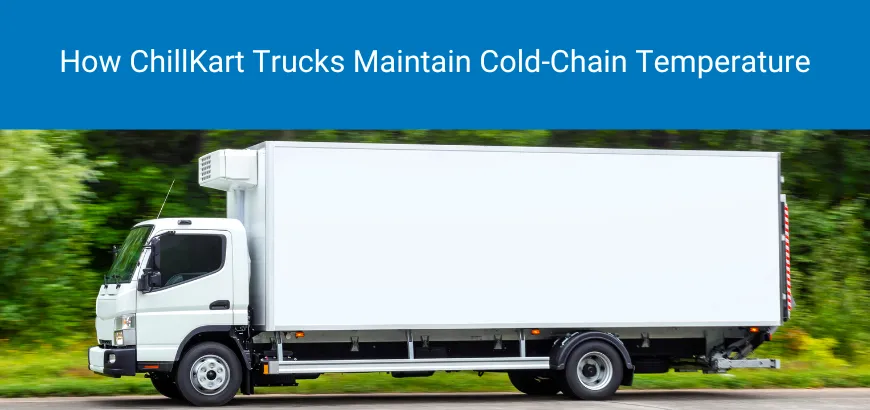
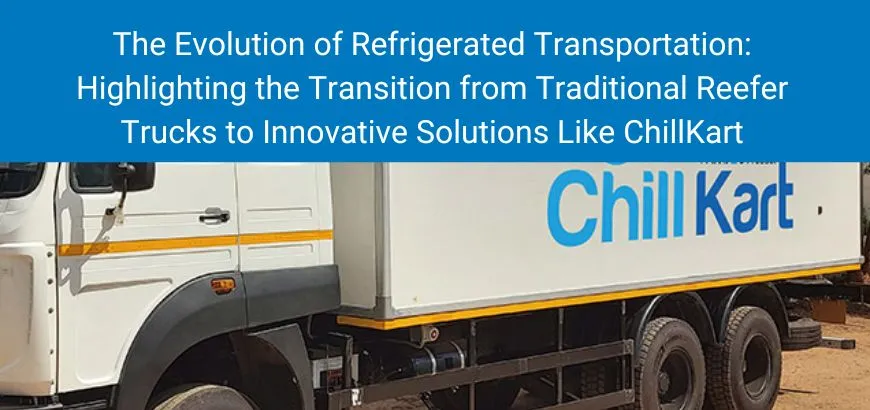
Does it cover transport as well as storage? The warehouse is usually the best-instrumented link in the cold chain in pharmaceutical industry operations, and the vehicle is usually the worst. Reefer bodies and insulated containers need their own loggers and their own excursion procedure. Our reefer container buyer’s guide covers specification and pre-cooling practice for that leg, and Rinac’s refrigerated transportation range, including ChillKart, is built for Indian route conditions.
The Room Comes First: Monitoring Cannot Rescue a Badly Built Store
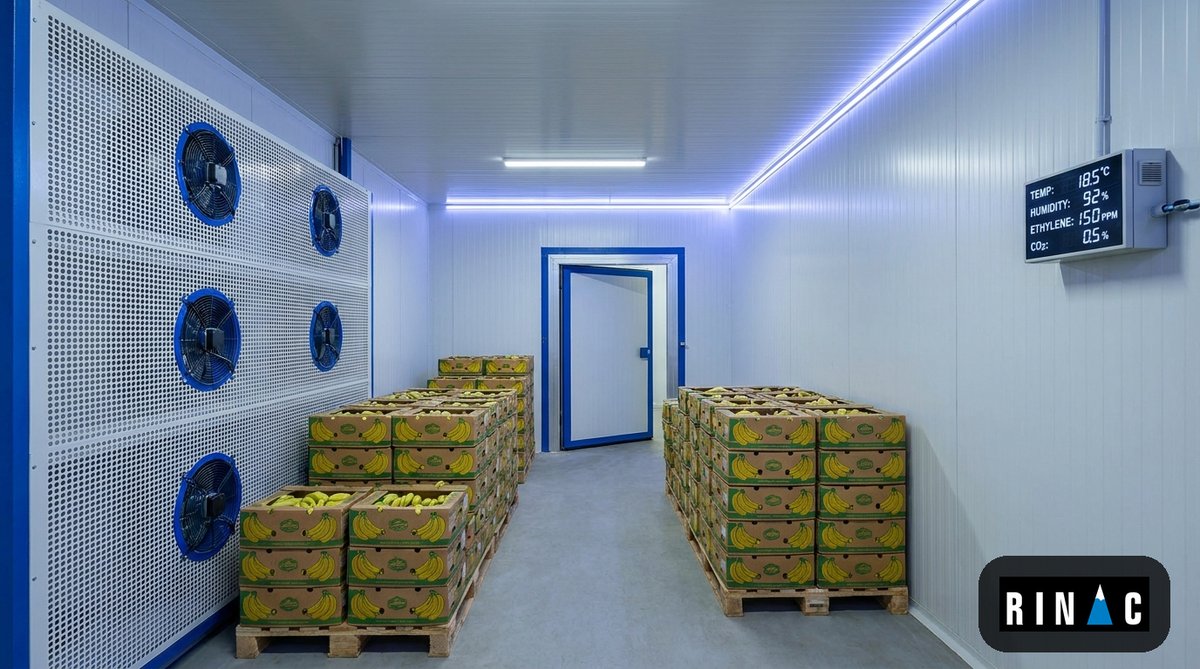
Every ranking guide on cold chain monitoring treats the problem as a sensor and software question. In our experience commissioning temperature controlled warehouse and cold room projects across India, the monitoring system usually works fine. What fails is the envelope, the airflow or the plant behind it. Four engineering decisions determine whether a room can actually hold its band.
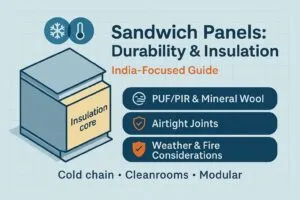
- Insulation and joint integrity. Panel thickness sized for the band and for local ambient, with cam-locked joints, sealed penetrations and a continuous vapour barrier. Thermal bridging at floor and corner junctions is a classic source of a permanent warm spot that no sensor placement can fix.
- Air distribution, not just cooling capacity. Evaporator selection and throw pattern decide whether the far corner of the room sees the same air as the pallet under the unit. Aggressive discharge air aimed at the first rack row is how freezing damage happens in a nominally +2°C to +8°C store.
- Redundancy proportionate to product value. For high-value medicine cold storage, N+1 refrigeration, automatic changeover and standby power are not luxuries. The right question is how long the room holds band with the plant down, and whether that exceeds your worst realistic outage.
- Door discipline and airlocks. Strip curtains, air curtains, interlocks and despatch staging areas reduce infiltration load far more cheaply than adding compressor capacity later.
As solution architects and builders rather than equipment suppliers, we design the envelope, the refrigeration and the monitoring layer as one system. A mapping study that produces a clean report on a room engineered in isolation is the most expensive kind of false comfort.
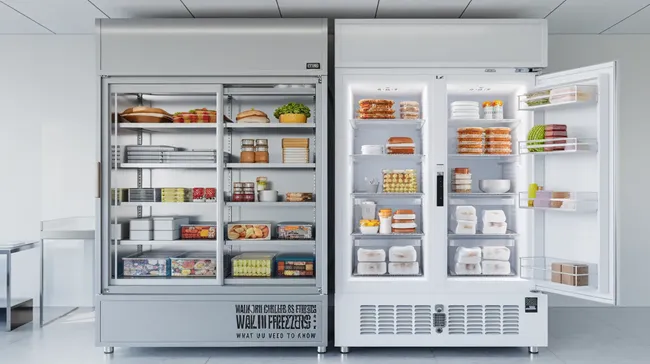
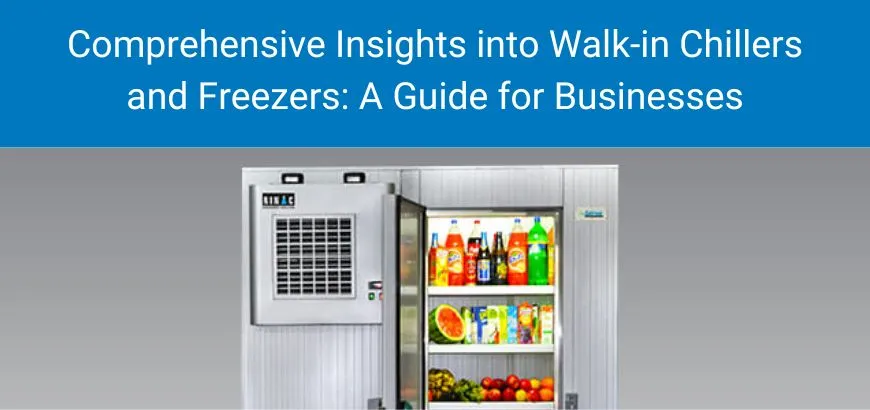
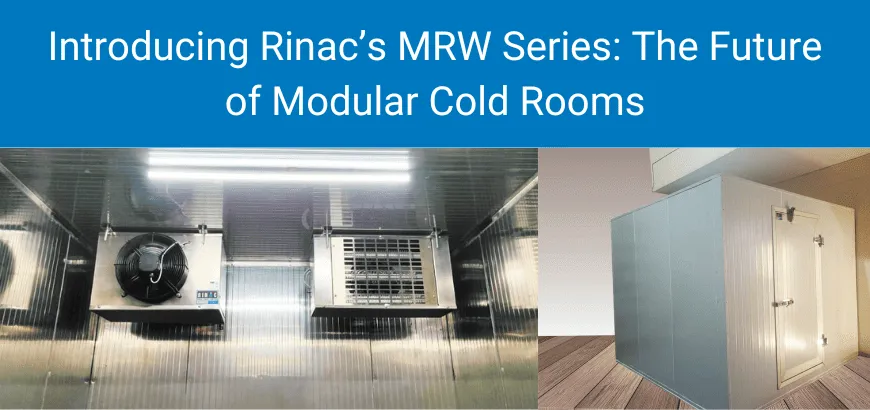
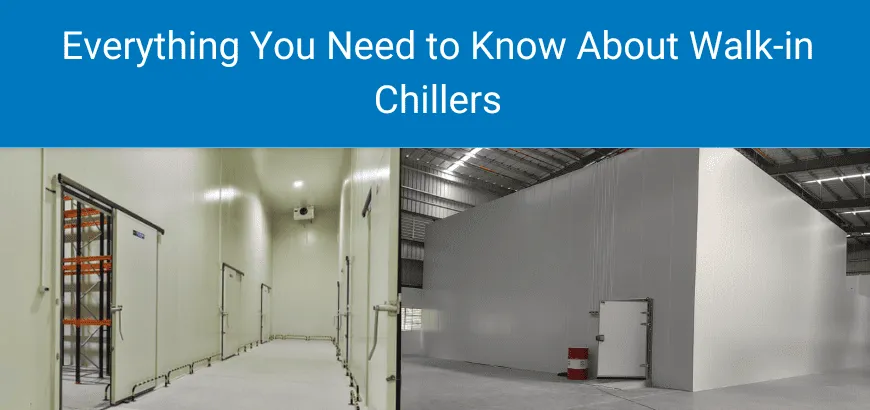
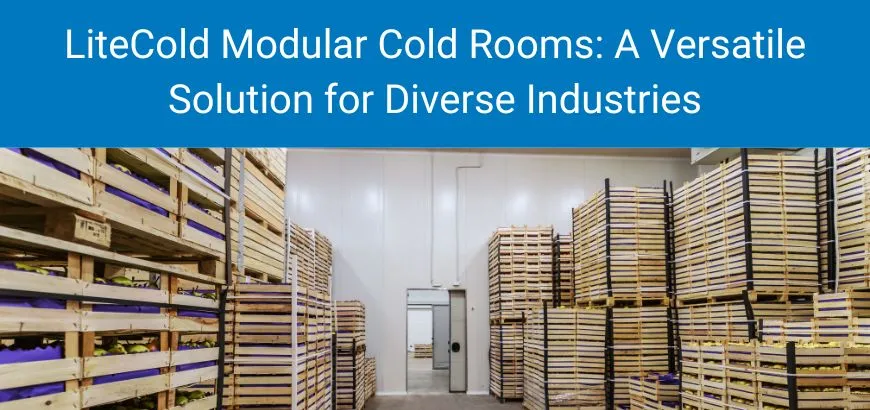
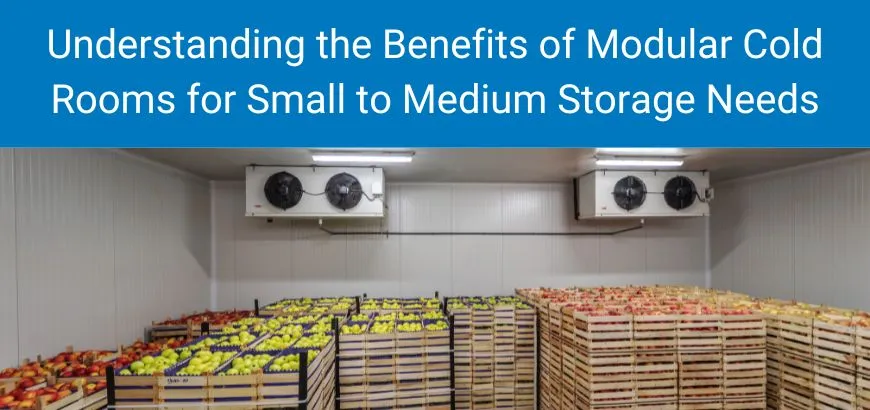
Facilities specifying new capacity will find the sizing and configuration logic in our cold room buyer’s guide and walk-in chiller guide, while the sector outlook sits in our analysis of pharmaceutical cold storage in India. Rinac’s cold rooms, MRW Series modular walk-in cold rooms and refrigeration systems are manufactured at our Bangalore and Murbad units and installed and serviced through 14 branch offices nationwide.
The Economics: What a Single Excursion Actually Costs
Monitoring investment is almost always justified by the value of product at risk rather than by energy savings, but the arithmetic is rarely written down. The illustration below is a worked example with stated assumptions, not a market price quotation, and every facility should substitute its own numbers.
| Assumption (illustrative) | Value used | Notes |
|---|---|---|
| Cold room holding value | Rs. 2 crore of finished biologics | Replace with your own average stock-at-risk |
| Share of stock affected by one undetected freezing event | 10% (one rack row in the evaporator air path) | Loss concentrated at the cold spot the mapping study would have found |
| Direct product write-off | Rs. 20 lakh | Before investigation cost, supply disruption or regulatory consequence |
| Non-product consequences | Not quantified here | Batch investigation, customer supply failure, audit observation, market action |
Against that exposure, the recurring cost of a mapping study, calibrated sensors and a maintained alarm chain is small. The harder saving to see is energy: rooms with poor envelope integrity run their plant harder to hold band, and monitoring data is the cheapest diagnostic you have for spotting it. Our analysis of cold storage energy efficiency sets out where that consumption usually hides, and the investment framework in our cold storage cost guide helps structure the capital case.
A Practical Implementation Roadmap
For a facility starting from partial or paper-based records, the sequence below moves fastest with least rework.
- Week 1 to 2, define the bands. List every product, its labelled storage condition and its freeze sensitivity. This is the specification for everything that follows.
- Week 2 to 4, assess the envelope. Physical survey of panels, joints, doors, penetrations, floor insulation, evaporator positions and standby power. Fix defects before mapping, not after.
- Week 4 to 8, map. Empty and loaded studies with calibrated loggers, including door-open and power-failure challenges, in the season that represents your worst case, with the second season scheduled.
- Week 8 to 10, instrument. Permanent sensors at mapped hot and cold spots, two-sided alarms with a low limit above 0°C for chilled rooms, and escalation routed to named people.
- Week 10 to 12, write the system down. Qualification protocols and reports, calibration schedule, alarm SOP, excursion investigation template and data integrity controls.
- Ongoing. Preventive maintenance, annual calibration, periodic re-mapping, and a quarterly review of every excursion and its CAPA closure.
A facility that completes this sequence gains more than an audit file. Mapped rooms with tuned setpoints and sealed envelopes typically run their refrigeration plant less hard, which shows up on the electricity bill every month after the certificate is filed.
Frequently Asked Questions About Cold Chain Monitoring
Where Rinac Fits
Rinac India Limited has spent more than 30 years as solution architects and builders of cold chain infrastructure, delivering over 10,000 projects across 23 countries for more than 6,000 clients, including ITC, Britannia, Tata, Nestle and Biocon. We design and manufacture the envelope and the refrigeration, install it through 14 branch offices across India, and support it with dedicated after-sales service, working to ISO, FSSAI, HACCP, GMP, WHO-GMP and IGBC frameworks. If you are preparing for a Schedule M inspection, planning a new pharmaceutical cold storage block, or trying to work out why one corner of an existing room will not hold band, a site assessment is the right place to start. Learn more about our engineering team or speak to us directly through our consultation desk.
Important disclaimer. This article is provided for informational and educational purposes only and does not constitute professional engineering, legal, financial or regulatory advice. It is not a substitute for a formal design review, a qualification protocol prepared for your facility, or guidance from a qualified regulatory consultant. Statutory requirements, subsidy rates, scheme deadlines and enforcement practice change over time and vary by state and by licence category, so verify current positions directly with CDSCO, your State Drugs Controller, FSSAI, MoFPI, the National Horticulture Board or the relevant state agency before acting. All statistics, scheme details and regulatory references in this article are drawn from the public sources listed below as of the publication date, and readers should consult those sources for the current position. Product selection, room sizing, refrigeration capacity, redundancy strategy and return on investment depend entirely on facility-specific conditions. For a project-specific assessment, request a formal consultation at rinac.com/contact-us.
Sources and References
- India Brand Equity Foundation, Indian Pharmaceuticals Industry Report. Domestic market and export values, FY26. Accessed September 2026.
- Mordor Intelligence, India Pharmaceutical Logistics Market Report. Cold chain operator count and WHO-GDP compliance share. Accessed September 2026.
- World Health Organization, TRS 961 Annex 9 Supplement 7: Qualification of temperature-controlled storage areas, 2011 series. Accessed September 2026.
- Matthias D.M. et al., Freezing temperatures in the vaccine cold chain: a systematic literature review, Vaccine, 2007. Accessed September 2026.
- National Health Portal of India, Ministry of Health and Family Welfare, Electronic Vaccine Intelligence Network (eVIN). Temperature logging interval and alert mechanism. Accessed September 2026.
- Business Standard, CDSCO asks state units to start inspections under Schedule M norms, November 2025. Accessed September 2026.
- National Centre for Cold-chain Development and NABCONS, All India Cold-chain Infrastructure Capacity: Assessment of Status and Gap. Accessed September 2026.
- Ministry of Food Processing Industries, Scheme for Integrated Cold Chain and Value Addition Infrastructure. Grant-in-aid rates of 35% and 50%. Accessed September 2026.
- Press Information Bureau, Government of India, Integrated Cold Chain and Value Addition Infrastructure press note, PM Kisan SAMPADA Yojana outlay. Accessed September 2026.
- World Health Organization, TRS 961 Annex 9 Supplement 8: Temperature mapping of storage areas, 2011 series. Accessed September 2026.