TL;DR – Quick Summary
- A tube ice machine freezes potable water inside vertical tubes and harvests hollow cylinders of hard, slow-melting ice, which makes it the right choice for fish transport, beverage service, concrete cooling and chemical dosing.
- Capacity is quoted in tonnes per 24 hours. Indian buyers typically start at 1 to 5 TPD for a landing centre or beverage depot, and move to 10 to 30 TPD for a processing cluster or commercial ice plant.
- Price is driven far less by the ice generator than by the refrigeration package, the condenser choice and the water treatment train. Budget the plant, not the machine.
- Government support is real. The Integrated Cold Chain component of PM Kisan SAMPADA offers 35 to 50 percent grant-in-aid, and PMMSY funds ice plants for the fisheries sector at 40 to 60 percent of project cost, subject to state norms.
- Ice that touches food is a food article. It must be made from potable water under FSSAI hygiene requirements, which puts water treatment and plant hygiene inside the compliance boundary, not outside it.
Why Tube Ice Deserves a Serious Engineering Decision
Ask most Indian buyers how they chose their tube ice machine and the answer is usually a quote comparison. That is understandable, and it is also the most expensive shortcut in the category. A tube ice machine is not a standalone appliance. It is the visible part of a refrigeration plant whose condenser selection, water quality and electrical design will decide your cost per tonne of ice for the next fifteen years. Two tube ice machine installations with identical nameplate capacity can differ by 30 percent or more in running cost because of decisions taken in a single afternoon of plant room layout.
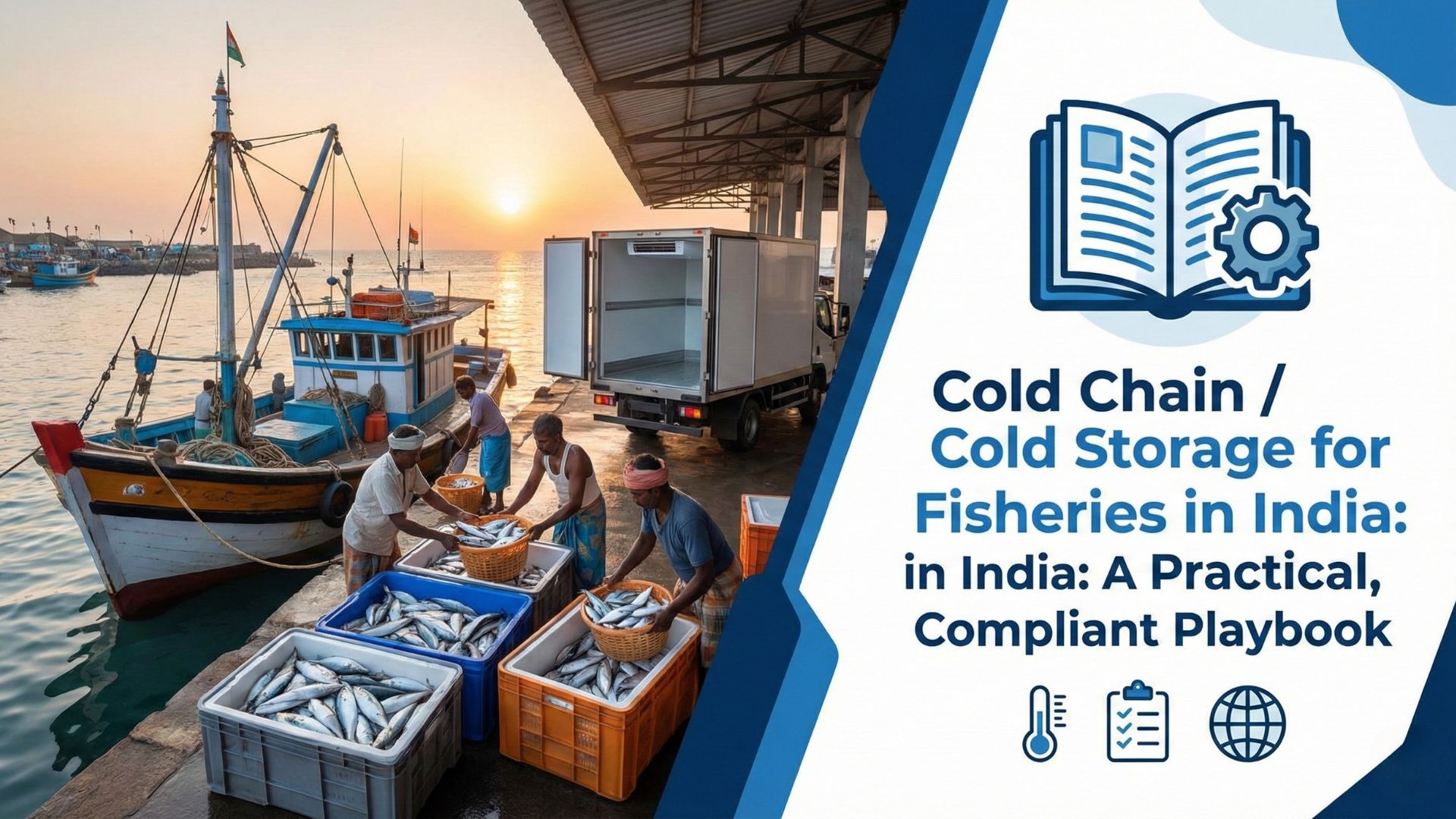
That gap matters more in India than almost anywhere else, because demand is rising against a cold chain that has not kept pace. The National Centre for Cold-chain Development has assessed a national shortfall of roughly 3.2 million MT of cold storage alongside gaps of more than 69,000 pack houses and around 50,000 reefer vehicles [1]. Cold storage capacity itself is projected to grow at only about 2.2 percent a year to roughly 440 LMT by 2031 [2]. Where fixed cold storage is thin, ice does the work instead, and a tube ice machine is often the most practical way to create that capacity close to the point of need. It is the cheapest, most portable form of refrigeration available to a fisherman, a mandi trader or a transporter, and it remains the first line of preservation across most of India’s perishable supply chain.
Over 30 years and more than 10,000 projects, Rinac has designed refrigeration plants for fisheries, dairy, food processing and pharma across 23 countries. This guide sets out how we size, cost and specify a tube ice machine installation for Indian conditions, so you can evaluate any proposal on engineering merit rather than on the headline number.
Disclaimer: This article is published for general information and engineering education. It is not a substitute for professional engineering, legal or regulatory advice. Subsidy rates, scheme guidelines, unit-cost norms and regulations change frequently and vary by state. Verify every figure directly with FSSAI, MoFPI, the Department of Fisheries, NHB or your state agency before committing capital. All external figures cited here are drawn from the public sources listed at the end of this article, current as of the publication date.
What a Tube Ice Machine Is and How It Makes Ice
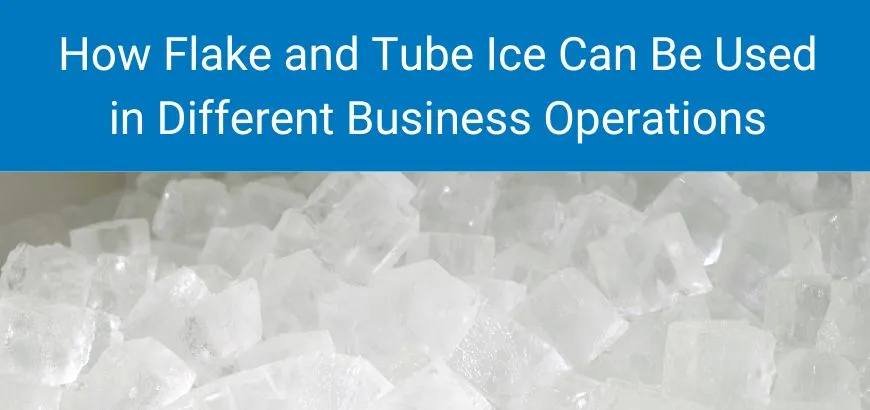
A tube ice machine uses a vertical shell-and-tube ice generator. Water is circulated down the inside wall of a bank of stainless steel tubes while refrigerant evaporates in the shell surrounding them. Ice builds inward from the tube wall until the required wall thickness is reached. The machine then runs a short hot gas defrost that releases the ice, which slides down and is cut by a rotating cutter into cylinders, typically 22 to 35 mm in diameter with a hollow centre.
Three characteristics follow from that geometry and they explain every application decision downstream. First, because the ice forms slowly and at a controlled thickness, it is dense, clear and hard. Second, the hollow centre gives a high surface area to mass ratio, so a tube dissolves and cools quickly while the cylinder itself holds its shape under load. Third, the ice is dry and free flowing, which means it augers, conveys and bags without bridging. An ice tube machine therefore produces a product that survives handling and road transport far better than softer formats.
A complete tube ice making machine installation is more than the generator. It includes the compressor pack and condenser, the water circulation pump and distributor, the cutter and drive, the hot gas defrost circuit, a storage bin or cold room, and the water treatment upstream. In Indian tube ice machine projects the storage and reclaim section is often where design attention is thinnest, and where operators later discover that ice made at night has fused into a block by morning.
Engineering note: harvest cycle time is the real capacity lever. A tube ice generator running an 18 to 25 minute cycle in Bengaluru will run appreciably longer in coastal Gujarat in May if the condenser was selected for an optimistic ambient. Always ask what design ambient a quoted capacity assumes.
Tube Ice vs Flake Ice vs Block Ice: Matching Format to Application
The most common error we see is specifying a format because it is what the neighbouring plant installed. Each format has a defensible use case, and the honest answer is that many operations need two.
| Factor | Tube Ice | Flake Ice | Block Ice |
|---|---|---|---|
| Form | Hollow cylinder, 22 to 35 mm | Thin dry flake, 1.5 to 2.5 mm | Cast block, 12 to 150 kg |
| Density and melt rate | Hard and slow melting, travels well | Fast cooling, melts quickly | Slowest melting, needs crushing |
| Contact with product | Point contact, minimal bruising, good for boxed and bagged despatch | Full surface contact, gentlest chilling of whole fish on deck and at landing | Poor until crushed, crushing adds labour |
| Best fit in India | Fish despatch and long haul, beverage and HoReCa, concrete cooling, chemical and pharma dosing, retail bagged ice | Harbour and on-board chilling, processing halls, bakery and meat mixing | Traditional harbour supply, long storage where handling is manual |
| Handling | Free flowing, augers and bags cleanly | Free flowing but compacts under its own weight in deep bins | Manual handling, crusher required |
A practical rule from our project experience: use flake where ice touches raw product during processing, and use tube where ice has to travel, be sold by weight, or sit in a box for hours. A seafood exporter often runs both, flake inside the hall and a tube ice machine for despatch. If your requirement sits on the processing side, our flake ice machine buyer’s guide for India covers that selection in the same depth, and both formats are available across the Rinac industrial ice machines range.
Sizing a Tube Ice Plant: From Daily Demand to Machine Capacity
Capacity for any tube ice plant is expressed in tonnes per 24 hours at a stated ambient and water inlet temperature. Sizing correctly means working backwards from your worst day, not your average one.
Step 1: Establish peak daily ice demand
For fish handling, the working convention in Indian practice is a ratio of roughly one part ice to one part fish for chilled despatch, rising where ambient is high or transit is long. For beverage and HoReCa supply, work from peak season case volume. For concrete cooling, your structural consultant will state the ice replacement fraction of mix water. Add a contingency of 15 to 20 percent for seasonal peaks rather than designing to the mean.
Step 2: Decide storage strategy
Ice demand is rarely flat across the day. A landing centre may need most of its ice in a four hour window. You can either buy a larger machine that produces into the peak, or a smaller machine plus a well designed ice storage room that accumulates overnight on cheaper off peak power. The second is usually cheaper on both capital and running cost, provided the store is properly insulated and fitted with rake or auger reclaim. Storage rooms are built on the same panel and refrigeration principles as any modular cold room, and the same insulation discipline applies.
Step 3: Derate for real ambient conditions
Tube ice machine nameplate capacity is quoted at a design ambient and a design inlet water temperature. Coastal summer conditions along Gujarat, Tamil Nadu and Odisha routinely exceed the ambient assumed in imported catalogue data, and inlet water in May can be 8 to 10 degrees Celsius above the winter figure. Both push cycle time up and capacity down. Insist on a capacity statement at your site’s design day, in writing.
Caution: A quoted tonnes-per-day figure with no stated ambient, inlet water temperature or ice thickness is not a specification. It is a marketing number. Ask for all three before comparing prices across suppliers.
What Drives Tube Ice Machine Price in India
Buyers searching for tube ice machine price usually want a single number, and the reason no credible supplier gives one is that the generator is often less than half the installed cost. The variables below move the total far more than brand choice does, and a tube ice machine budget that ignores them will be revised upward during execution.
| Cost driver | Why it moves the number |
|---|---|
| Capacity and cycle design | Doubling TPD does not double cost, but it changes compressor class, starter type and sometimes the electrical connection itself. |
| Refrigerant and system type | Ammonia plants cost more up front and need a trained operator, but are efficient at scale. HFC packaged systems are simpler and faster to commission at small and mid capacity. |
| Condenser selection | Evaporative condensers cut head pressure and energy but need water treatment and maintenance. Air cooled is cheaper and simpler but penalises you every hot afternoon. |
| Water treatment train | Hard or saline feed water needs softening, filtration or RO. This is a compliance requirement, not an optional extra, and it is frequently missing from the cheapest quotes. |
| Storage and reclaim | An insulated ice store with automated rake or auger reclaim costs real money and saves real labour. Manual shovelling out of a bin is a hidden operating cost. |
| Civil, power and standby | Plant room civil work, transformer or sanctioned load upgrade, and DG backup are routinely excluded from equipment quotations. |
| Bagging and despatch | If you sell ice by the bag, weighing, bagging and sealing equipment plus a despatch dock belong in the capital budget. |
For a public reference point on total project cost rather than equipment cost, government scheme documents are the most reliable open source. The Haryana Fisheries Department publishes a PMMSY unit-cost norm of Rs 50.00 lakh per unit for modernisation of a cold storage or ice plant, with subsidy limited to 40 percent for general category and 60 percent for SC and women beneficiaries [3]. Norms differ by state and by component, so treat that as a benchmark for the shape of a project, not as a quotation for your site.

Tube ice plant selection at a glance: capacity bands, the cost drivers that matter, and the Indian subsidy routes worth checking before you commit capital.
Indian Market Context: Fisheries Demand, Cold Chain Gaps and Government Schemes
India’s fish production has roughly doubled in a decade, rising from 95.79 lakh tonnes in 2013-14 to 197.75 lakh tonnes in 2024-25 [4]. Every additional tonne landed needs ice within minutes, not hours. Meanwhile post-harvest losses remain stubborn: ICAR-CIFT assessments put harvest and post-harvest losses at 2.40 percent in freshwater aquaculture, 6.52 to 8.89 percent in reservoir fisheries and 8.56 to 13.94 percent in riverine fisheries [5]. Analyses of the marine sector place annual post-harvest loss in the region of Rs 22,500 crore, concentrated in the middle mile between landing centres and processors [6].
197.75 lakh tonnes
India’s fish production in FY 2024-25, up 106 percent from 95.79 lakh tonnes in FY 2013-14 (PIB)
India’s fish production in FY 2024-25, up 106 percent from 95.79 lakh tonnes in FY 2013-14 (PIB)
That is the commercial case for ice capacity, and the Government of India has built funding routes around it. Three matter most to a prospective ice plant promoter.
PM Kisan SAMPADA, Integrated Cold Chain component (MoFPI)
The Ministry of Food Processing Industries provides grant-in-aid at 35 percent of eligible project cost in general areas and 50 percent in difficult areas and for SC and ST beneficiaries, FPOs and SHGs, subject to a ceiling of Rs 10 crore per project. Eligible components explicitly include pre-cooling, multi-product and multi-temperature cold storage, IQF, blast freezing, reefer vans and mobile cooling units, along with basic enabling infrastructure such as water and power supply and effluent treatment [7]. An ice plant attached to an integrated cold chain project is usually assessed within this frame rather than as a standalone asset.
PMMSY, post-harvest and cold chain infrastructure (Department of Fisheries)
The Pradhan Mantri Matsya Sampada Yojana funds ice plants and cold storage for the fisheries sector at 40 percent of project cost for general category beneficiaries and 60 percent for SC and women beneficiaries, against published state unit-cost norms [3]. Applications route through state fisheries departments and state single-window portals, so the operative guideline is your state’s, not the national summary.
Horticulture and agri routes (MIDH and NHB)
Where the ice supports fruit, vegetable or floriculture handling rather than fish, the Mission for Integrated Development of Horticulture and National Horticulture Board credit-linked routes are the relevant channels, typically alongside a pack house or pre-cooling facility. If you are mapping these options against each other, our detailed breakdown of cold chain subsidies and how to access 35 to 50 percent government grants in India walks through eligibility, documentation and sequencing.
Sequencing tip: Most schemes require in-principle sanction before you place equipment orders, and several disqualify expenditure incurred prior to approval. Get your Detailed Project Report and scheme application moving before you finalise the machine, not after.
Compliance and Standards: FSSAI, HACCP, ISO and Refrigerant Rules
The single most misunderstood point in this category is regulatory. Ice that comes into direct contact with food is treated as part of the food itself. Under FSSAI’s general hygienic and sanitary practices, ice and steam used in direct contact with food must be made from potable water and must meet the prescribed water quality requirements, with a monitoring programme covering microbiological parameters, pesticides and heavy metals [8]. Ice used for chilling fish must likewise be produced from clean, microbiologically safe water.
Practically, that has four consequences for tube ice machine plant design. Your water treatment train is a food safety control point and needs documented verification, not just a filter housing. Contact surfaces in the ice generator, cutter, chute, storage and bagging line should be food grade stainless steel and cleanable. Your storage and despatch area needs the same pest control, personnel hygiene and cleaning discipline as any food handling area. And you need a valid FSSAI licence or registration appropriate to your scale, because manufacturing and distributing ice is a food business.
Beyond FSSAI, HACCP is the working framework for identifying and controlling hazards across the ice production flow, and ISO management systems provide the documentation backbone that export buyers audit against. Processors supplying pharmaceutical or nutraceutical customers will additionally face GMP and WHO-GMP expectations on utilities. Rinac builds to ISO, FSSAI, HACCP, GMP, IGBC and WHO-GMP requirements across its cold chain and clean construction work, and the same compliance thinking that governs a meat and poultry cold store under FSSAI applies to an ice plant feeding the same supply chain.
The refrigerant question you should ask now
India is committed under the Montreal Protocol to complete phase-out of HCFCs, including R22, by 2030, with HFC phase-down beginning in 2028 under the Kigali Amendment [9]. An ice plant has a service life well past those dates. Buying a machine designed around a refrigerant that will become scarce and expensive during its own working life is a commercial risk, not merely an environmental one. Ask explicitly what refrigerant a quoted tube ice machine uses and what the retrofit path is.
Plant Room Design: Water Treatment, Condensers and Power
An industrial ice making machine is only as good as the plant room around it. Three design decisions account for most of the difference between a plant that meets its numbers and one that quietly underperforms for years.
Water quality. Hardness scales the tube internals, reduces heat transfer and lengthens cycle time. Dissolved solids make cloudy, weak ice that fractures in transit. In coastal belts, chloride ingress into borewell supply is a live risk to stainless steel. Specify treatment from an actual water analysis, taken in the dry season when quality is usually worst.
Heat rejection. Condensing temperature is the largest single lever on energy per tonne of ice. Evaporative condensing lowers head pressure meaningfully in most Indian climates, at the cost of water consumption, blowdown management and disciplined maintenance. Air cooled is legitimate for smaller industrial ice machine installations and where water is scarce or expensive, provided you size for the real design day rather than an annual average. The same energy logic that governs cold storage energy efficiency applies here with even more force, because ice making runs at a lower suction temperature.
Electrical resilience. Ice production is power intensive and unforgiving of interruption. Confirm sanctioned load headroom, starter strategy and DG sizing early. If your tariff has a time-of-day structure, building overnight stock into an insulated store can materially change your cost per tonne. Layout should also anticipate service access, because a compressor that cannot be pulled without dismantling a wall becomes a long outage.
Operating Cost, Maintenance and Realistic Payback
Running cost for a tube ice machine breaks into five heads: electricity, water, labour, maintenance and consumables, and finance. Electricity dominates. That is why condenser selection, suction temperature and store insulation deserve more scrutiny than the equipment discount you negotiate.
Build your tube ice machine payback model on three inputs you can defend: realistic achieved tonnage rather than nameplate capacity, a seasonally weighted selling price rather than peak season price, and a genuine energy figure derived from your design condensing temperature and your actual tariff. Seasonality is the variable most business plans get wrong. An ice plant serving a fishing harbour faces a monsoon ban period, and one serving beverages faces a soft winter. Model twelve months, not one.
On maintenance, the disciplines that matter are water treatment monitoring, condenser cleaning, cutter and gearbox inspection, defrost valve health and store hygiene. None are exotic. All are skipped often enough to explain most of the underperforming plants we are called in to assess. Rinac’s pan-India after-sales network, operating from 14 branch offices, exists precisely because refrigeration plant performance is a maintenance outcome rather than a purchase outcome. If you are evaluating an ice plant as a business rather than as a utility, our guide on how to start a cold storage business in India sets out the same financial modelling approach in more detail.
Where ice is one link in a larger chain, the economics usually improve. Pairing an ice plant with seafood cold storage and blast freezing lets you route the grade that will not sell fresh into frozen product instead of discounting it. The same logic applies within a seafood processing plant setup, where ice, chilling and freezing are designed as one system.
How to Evaluate Tube Ice Machine Manufacturers in India
Because the search results for tube ice machine manufacturers in india are dominated by marketplace listings, buyers often compare suppliers on a price line alone. A more useful checklist:
- Capacity stated at your conditions. Tonnes per 24 hours at your design ambient, your inlet water temperature and a named ice thickness.
- Scope clarity. Written confirmation of what is excluded: water treatment, storage room, bagging, civil work, cabling, DG, commissioning and statutory approvals.
- Energy accountability. A stated kW per tonne of ice at design conditions, and willingness to be measured against it at commissioning.
- Refrigerant roadmap. Which refrigerant, and what happens to it under India’s phase-out commitments.
- Materials in the food contact path. Grade and finish of generator tubes, cutter, chute, store and bagging contact surfaces.
- Service reach. Where the nearest engineer actually sits, guaranteed response time, and spares stocking policy. A harbour plant down for a week in season is a season-defining loss.
- Reference installations. A comparable tube ice machine capacity, comparable climate, and permission to speak to the operator.
Rinac approaches these projects as solution architects and builders rather than equipment suppliers. That means the tube ice machine generator, the refrigeration system, the insulated storage envelope and, where required, the wider turnkey food processing facility are engineered as one design. With two manufacturing units in Bangalore and Murbad, 6,000 plus clients and more than 10,000 projects delivered, the intent is that your tube ice machine still meets its numbers in year ten. You can read more about the company’s engineering track record on the Rinac about us page.
Frequently Asked Questions
Getting the Specification Right the First Time
The decision sequence that works is consistent across every successful project we have delivered. Establish peak daily demand honestly before you shortlist any tube ice machine. Choose the ice format that matches how the ice will actually be used. Size the plant at your site’s design day rather than a catalogue day. Put water treatment, storage and reclaim inside the budget from the start. Check the scheme route before ordering equipment. And weigh service reach as heavily as price, because an ice plant earns nothing on the days it is down.
Important disclaimer: This guide is provided for informational and educational purposes only and does not constitute professional engineering, legal, financial or regulatory advice. Capacity guidance, cost drivers and design considerations described here are general and will not apply uniformly to every site. Government scheme percentages, unit-cost norms, eligibility rules and regulatory requirements change and vary by state, category and financial year. Verify all scheme and compliance details directly with FSSAI, the Ministry of Food Processing Industries, the Department of Fisheries, the National Horticulture Board or your state nodal agency before making any investment or compliance decision. All external statistics, scheme figures and regulatory statements in this article are drawn from the publicly available sources listed below and are accurate as far as those sources report, as of the publication date. Rinac India Limited accepts no liability for decisions taken on the basis of this general guidance. For project-specific sizing, plant design, compliance mapping and ROI analysis, request a formal consultation at rinac.com/contact-us.
Sources and References
- National Centre for Cold-chain Development / National Horticulture Board, All India Cold-chain Infrastructure Capacity: Assessment of Status and Gap. nhb.gov.in
- International Institute of Refrigeration, India: NCCD reports a 2.2% compound annual growth rate in cold storage capacity, 24 February 2026. iifiir.org
- Fisheries Department, Government of Haryana, PMMSY: Subsidy for Modernization of Cold Storage / Ice Plant, published 13 November 2024, last updated 16 December 2025. harfish.gov.in
- Press Information Bureau, Government of India, Fish production has increased to 197.75 lakh tonnes in FY 2024-25 from 95.79 lakh tonnes in FY 2013-14. pib.gov.in
- ICAR-Central Institute of Fisheries Technology, Extension, Information and Statistics: harvest and post-harvest loss assessments. cift.res.in
- IMPRI Impact and Policy Research Institute, Post Harvest Losses in Fisheries: A Barrier to Marine Export Growth in India. impriindia.com
- Ministry of Food Processing Industries, Government of India, PMKSY Frequently Asked Questions: Integrated Cold Chain and Value Addition Infrastructure. mofpi.gov.in
- Food Safety and Standards Authority of India, Compendium of Food Safety and Standards (Licensing and Registration of Food Businesses) Regulations, including Schedule 4 general hygienic and sanitary practices, updated 4 August 2021. fssai.gov.in
- Ozone Cell, Ministry of Environment, Forest and Climate Change, Government of India, HCFC Phase-out Management Plan. ozonecell.nic.in
- Invest India, Cold Chain Infrastructure in India and its Future Potential. investindia.gov.in