TL;DR – Quick Summary
- A farm gate pack house receives, sorts, grades, packs and cools produce within hours of harvest. The cold link, a pre-cooling chamber plus a small cold room, is what turns a packing shed into a shelf-life tool.
- India produced about 367.72 million tonnes of horticultural crops in 2024-25 [2], while an ICAR-CIPHET study reported fruit and vegetable losses of 4.58% to 15.88% [1].
- NHB cost norms list an on-farm pack house at Rs. 4 lakh (50% assistance), an integrated pack house at Rs. 50 lakh and a 6-tonne pre-cooling unit at Rs. 25 lakh (35% in general areas, 50% in hilly and scheduled areas) [4]. These are indicative ceilings, so verify current MIDH terms.
- A mango pack house for export adds APEDA registration, approved SOPs and a 52 °C hot water dip for 3 to 4 minutes under the US protocol [10].
- Rinac designs and builds the cold chain side, from pre-cooling rooms and cold rooms to insulated buildings, backed by 30+ years and 10,000+ projects.
Quick note: This guide is for general information only. It is not a substitute for professional engineering, legal or regulatory advice. Subsidy norms, codes and prices change, so verify current figures with NHB, FSSAI, APEDA and your state department before committing to a design or budget. A fuller disclaimer sits near the end of this article.
What Is a Farm Gate Pack House and Why Indian Growers Need One
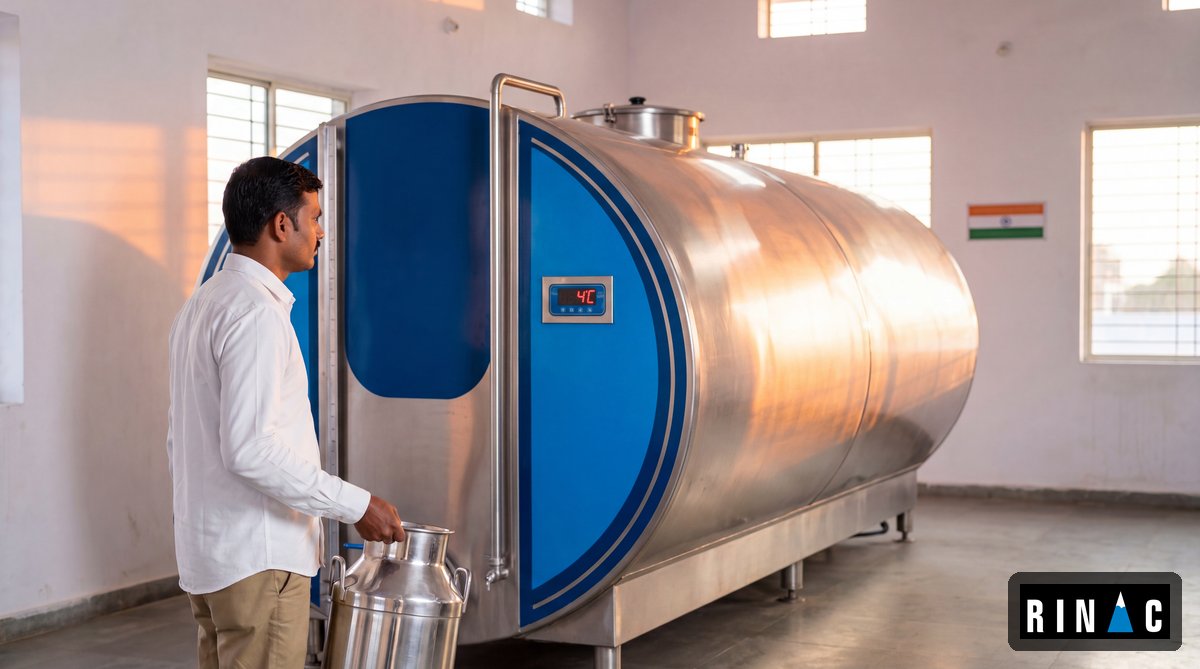
A farm gate pack house is the first controlled environment your produce meets after it leaves the plant. It is a covered, hygienic structure built at or near the field where fruit and vegetables are received, sorted, graded, washed, packed and, in a well-planned unit, cooled within hours of harvest. For a mango grower in Ratnagiri, a grape farmer in Nashik or an FPO aggregating vegetables in Himachal, a good farm gate pack house is often the difference between selling at the mandi price of the day and selling to an exporter or organised retailer at a premium.
Most produce in India is still harvested, heaped on a tractor trolley and sold the same day. The hidden cost in that chain is field heat: the warmth fruit carries from sun and air at the moment of picking. Until that heat is removed, the produce keeps ripening and losing moisture, and every hour of delay shortens what is left of its shelf life. A pack house design that puts sorting, packing and a pre-cooling chamber under one roof attacks that problem at the earliest possible point.
4.58% to 15.88%
Range of post-harvest losses reported for fruits and vegetables in the ICAR-CIPHET study [1]
Range of post-harvest losses reported for fruits and vegetables in the ICAR-CIPHET study [1]
That range is based on a study reported in 2015, so treat it as an order of magnitude and not a current audit. Even so, the arithmetic is useful. On a season’s throughput of 100 tonnes, a loss between 4.58% and 15.88% means 4.6 to 15.9 tonnes of produce that never reaches a buyer. This guide explains how a farm gate pack house is laid out, where the cold chain fits in, what a fruit and vegetable pack house or a mango pack house needs on top of the basics, and how the NHB and MIDH cost norms translate into a realistic budget. If you are still deciding between a pack house and bulk storage, our guide on cold storage for agriculture and horticulture is a good companion read.
Indian Market Context: Losses, Cold Storage Gaps and Government Support
India produced an estimated 367.72 million tonnes of horticultural crops in 2024-25 according to the second advance estimates, including about 114.51 million tonnes of fruit and 219.67 million tonnes of vegetables [2]. A crop base of that size needs infrastructure at the first mile, not only at the terminal market.
On the storage side, PIB data cited by the International Institute of Refrigeration shows 8,815 cold storages with a combined capacity of 402.18 lakh tonnes (about 40.22 million tonnes) as of 30 June 2025. The National Centre for Cold-chain Development (NCCD) projects capacity to reach almost 440 lakh tonnes by 2031 at roughly 2.2% compound annual growth, and the same source notes only about 10,000 reefer vehicles in operation against an estimated need of at least 62,000 [3]. Those totals count storage and transport, not first-mile cooling. A grower who has no pre-cooling chamber at the farm gate cannot make full use of a cold store 80 km away, because the produce arrives already warm.
Central schemes that fund pack houses and pre-cooling
Two central routes matter most. The first is the Mission for Integrated Development of Horticulture (MIDH), where the National Horticulture Board (NHB) publishes cost norms for pack houses, integrated pack houses, pre-cooling units, cold rooms and ripening chambers, with a credit-linked, back-ended subsidy of 35% of project cost in general areas and 50% in hilly and scheduled areas [4]. The second is the Integrated Cold Chain and Value Addition Infrastructure component of PMKSY (PM Kisan SAMPADA Yojana), run by the Ministry of Food Processing Industries. It offers grant-in-aid of 35% in general areas and 50% in difficult areas, up to Rs. 10 crore per project, under operational guidelines dated 22 May 2025. As of June 2025 the scheme had 395 approved projects, of which 291 were completed and operational, creating 25.52 lakh tonnes per year of preservation capacity [5]. Applicants under its general scheme must also set up farm-level infrastructure, which can include pre-cooling, linked to a distribution hub or refrigerated transport [5].
State governments add their own windows. In Maharashtra, for example, the pack house component is applied for through the MahaDBT portal and is summarised at 50% of a Rs. 4 lakh project cost, or Rs. 2 lakh [6]. Rules, eligibility and funding vary by state and by year, so check your state horticulture department before you finalise a design. Our explainer on how to access the 35% to 50% cold chain grants walks through the application sequence.
Check before you build: Subsidy schemes generally pay only for projects that follow the approved cost norms and sequence. Starting construction before your application is accepted can make a project ineligible under some schemes. Confirm the rule for your scheme and state in writing.
Farm Gate Pack House Design: Layout, Zones and Product Flow
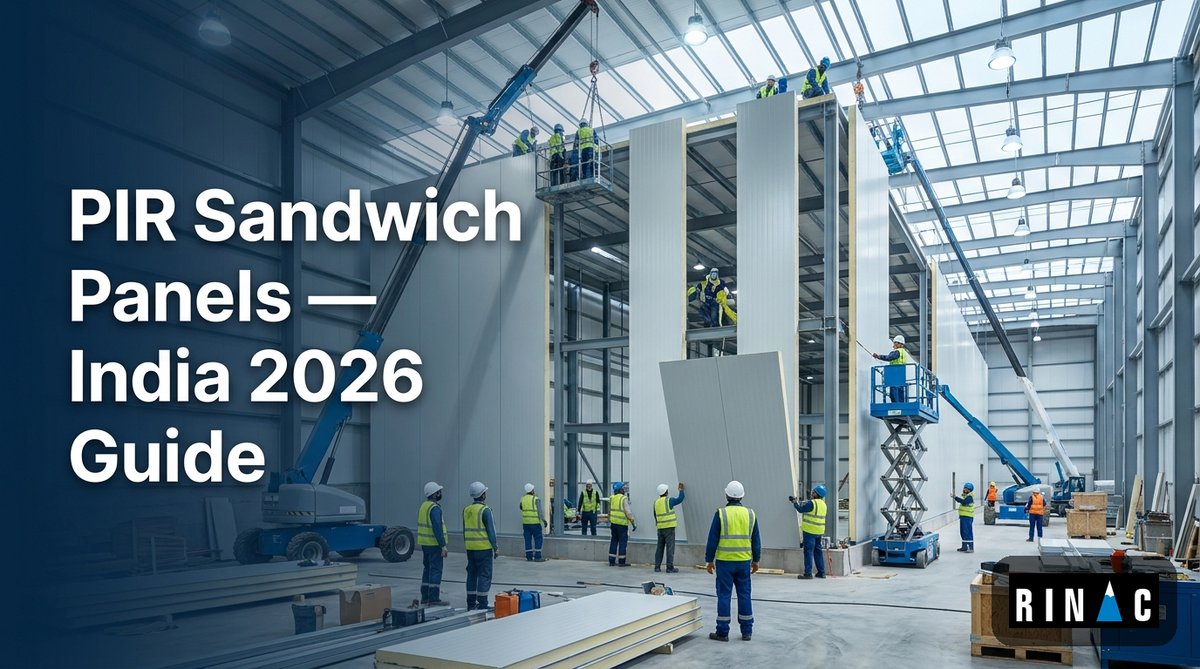
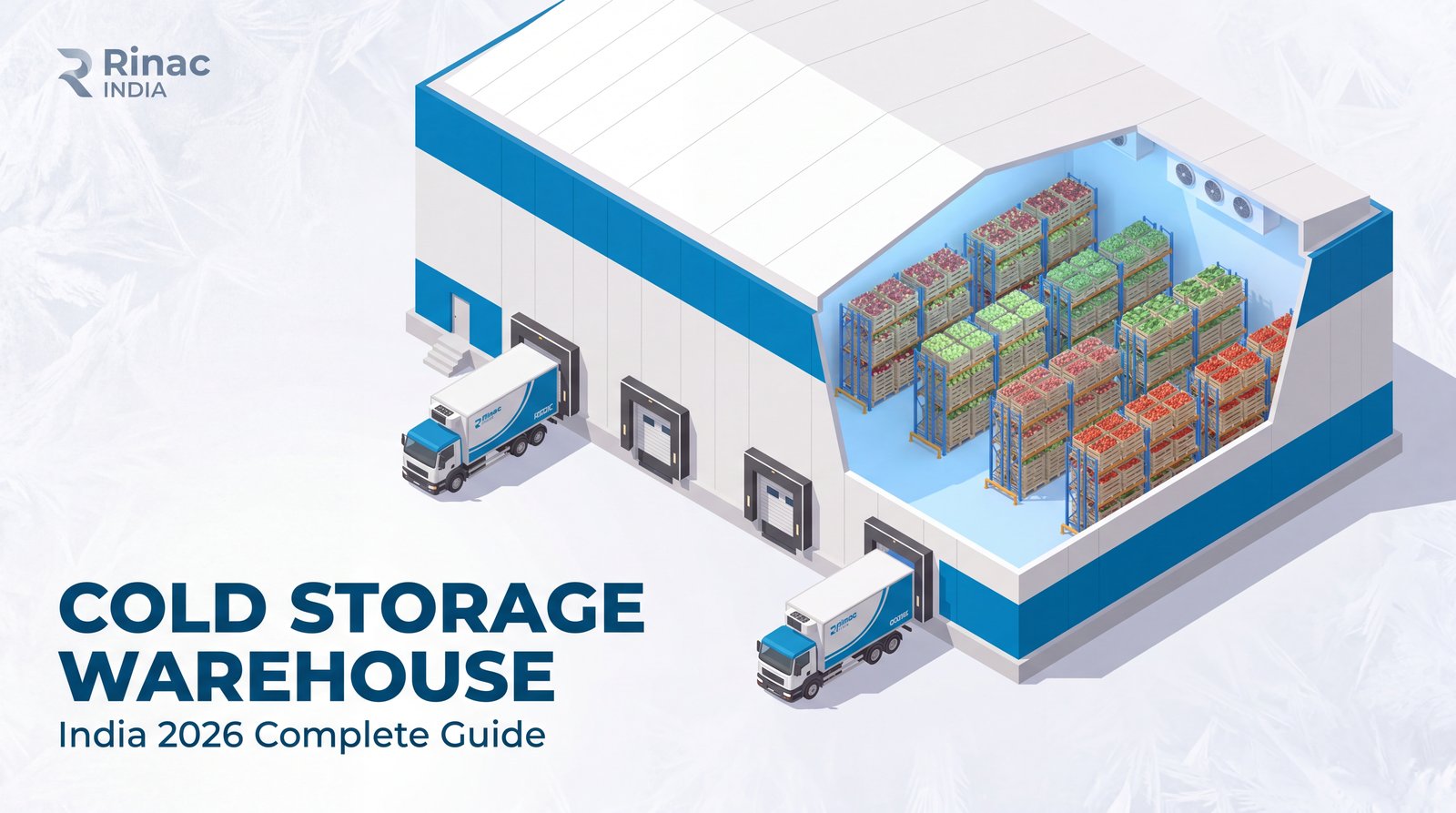
Good pack house design starts with the produce path, not the building. Produce should move in one direction, from a shaded receiving bay to sorting, washing, packing, cooling and finally dispatch, without crossing back over itself. The NHB cost norms size the on-farm pack house at 9 m by 6 m (54 square metres) and the integrated pack house, which adds conveyor, sorting, grading, washing, drying and weighing, at 9 m by 18 m (162 square metres) [7]. Those footprints are a useful starting point for a single-crop grower or a small FPO.
| Zone | What happens here | Design points to settle early |
|---|---|---|
| Receiving and shade bay | Produce is weighed, tagged by lot and kept out of the sun | Roof overhang, level floor, a lot-tagging system that survives the whole flow |
| Sorting and grading | Defects removed, fruit graded by size, colour or weight | Even lighting, food-grade tables or a conveyor, separate bins for rejects |
| Washing and treatment | Potable-water wash, drying, any required dip | Floor slope to drains, clean water source, separate waste stream |
| Packing | Crates, cartons, sleeves and labels applied | Packaging store kept apart from the wet area, labelling that carries lot codes |
| Pre-cooling chamber | Field heat is removed before holding or dispatch | Engineered airflow, insulated envelope, enough capacity for the peak harvest day |
| Cold room or holding room | Buffer between packing and the vehicle | Temperature set by crop, door and dock sequence that limits warm-air entry |
| Dispatch dock | Loading into refrigerated or insulated vehicles | Level or dock-height access, shade, a short route from the cold room |
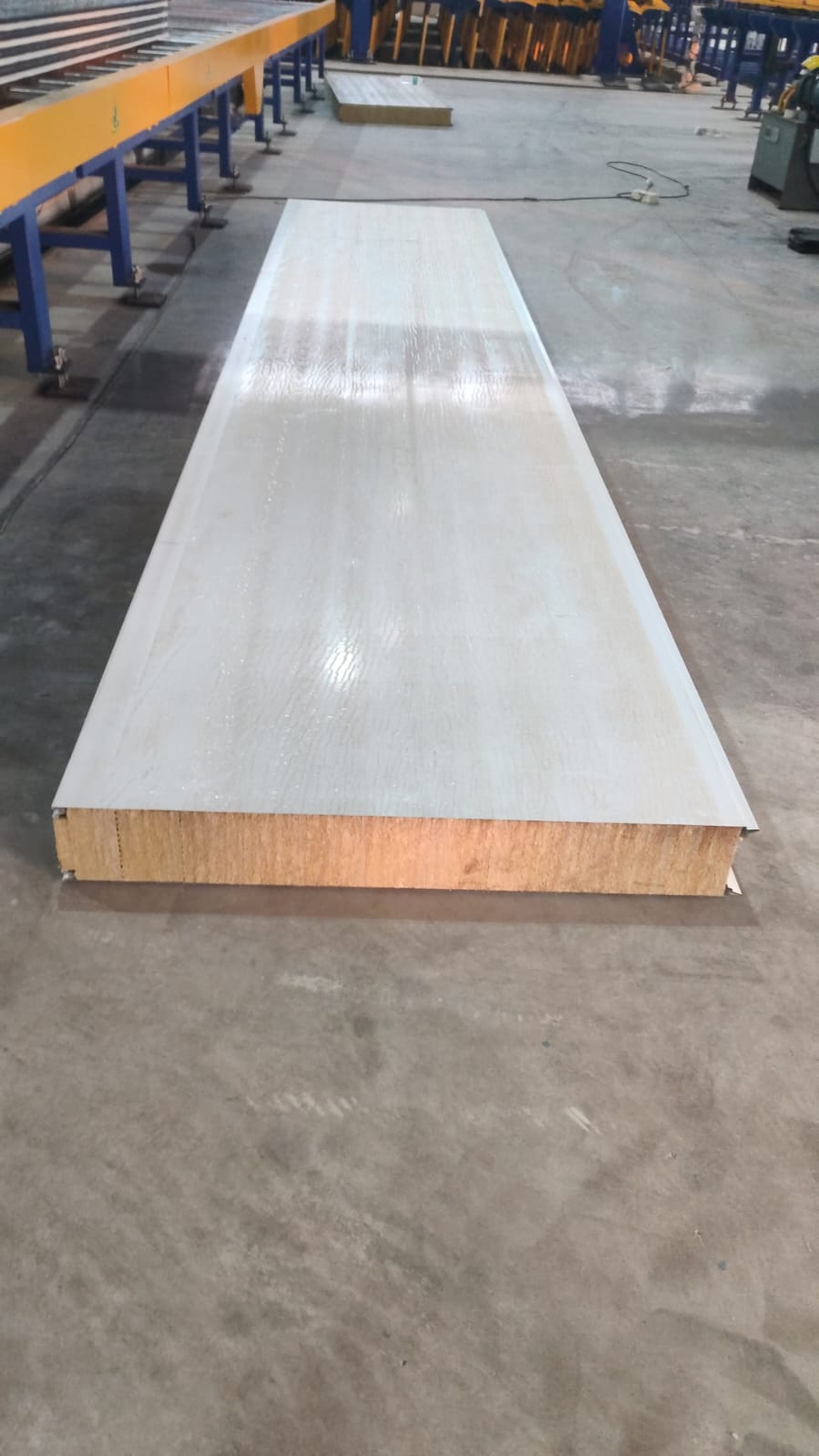
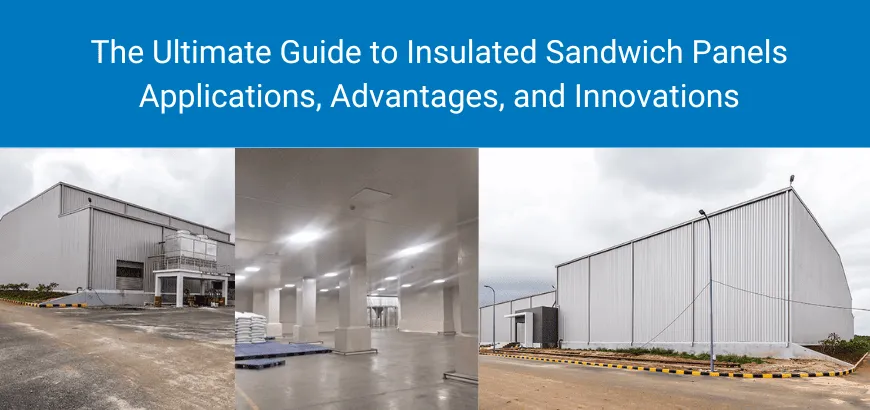
Three design rules save money later. First, separate clean and dirty work so that wash water and rejects never travel back toward packed cartons. Second, insulate the envelope properly from day one. Insulated sandwich panels shorten construction time and double as the shell for the cooling zones; our guide to choosing sandwich panel thickness explains how to match thickness to the temperature you need. Third, leave room to expand. A pack house that handles 5 tonnes a day in year one often handles twice that by year three, and bolting a second pre-cooling chamber onto a cramped site is expensive. Rinac supplies the insulated structure through its prefabricated buildings and patented HPCC construction systems, so the building and the cooling equipment can come from one source.
Pre-Cooling in a Pack House: Removing Field Heat Fast
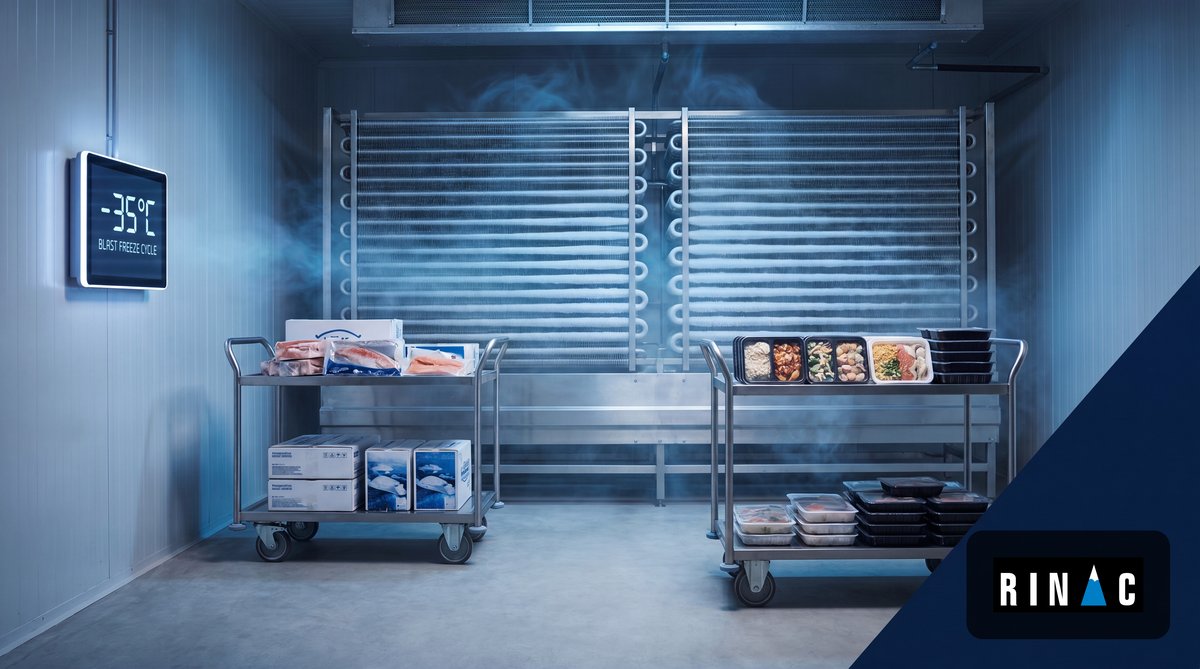
Pre-cooling is the step that separates a pack house from a simple packing shed. A pre cooling unit pulls the temperature of freshly harvested produce down quickly, which slows ripening and reduces spoilage. The common methods are forced air cooling, hydro-cooling and chilled-water dipping. An ICAR-published study on Neelam mangoes compared all three against a control at 5 °C and 8 °C. Chilled-water dipping at 5 °C for 26 minutes gave the longest shelf life in the trial, 36 days, with 9.98% physiological weight loss and 10.47% spoilage when the fruit was then held at 13 °C and 85 to 90% relative humidity [8]. The study covered one variety and one season, so it shows that method and temperature matter, not that every crop should be dipped.
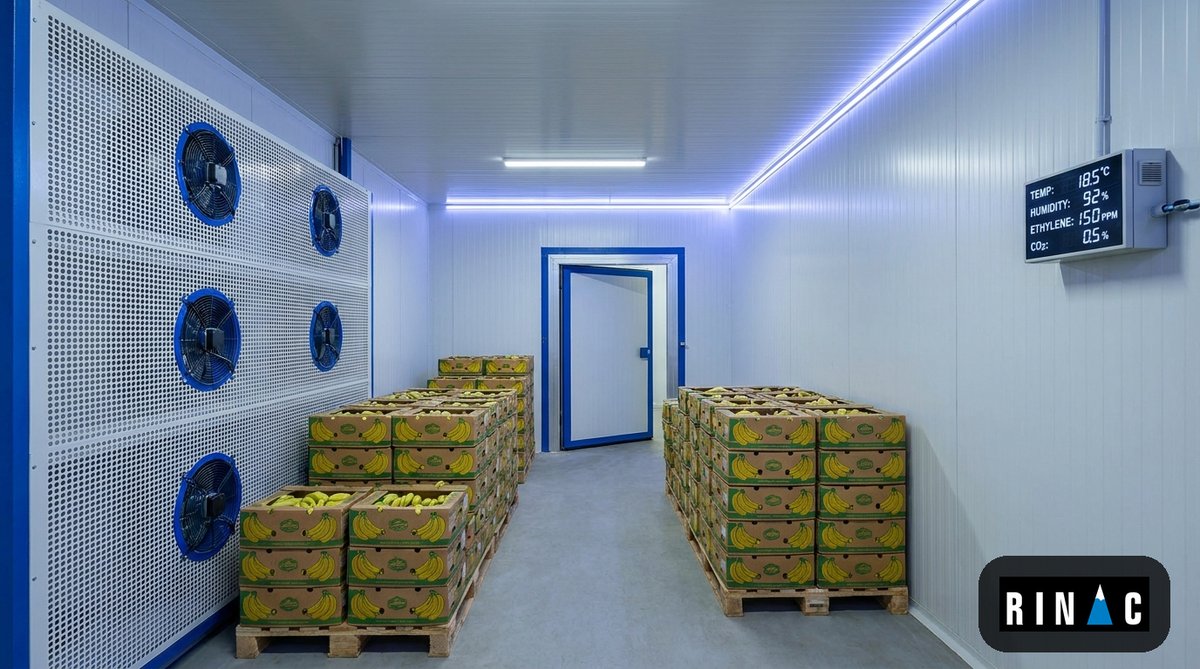
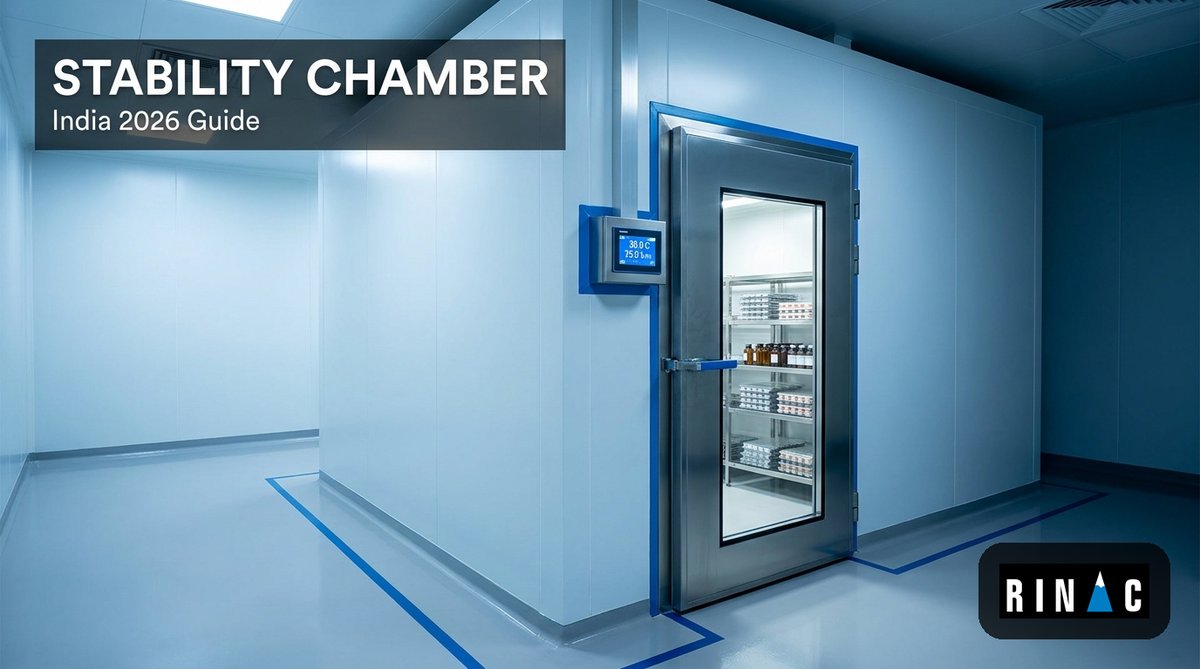
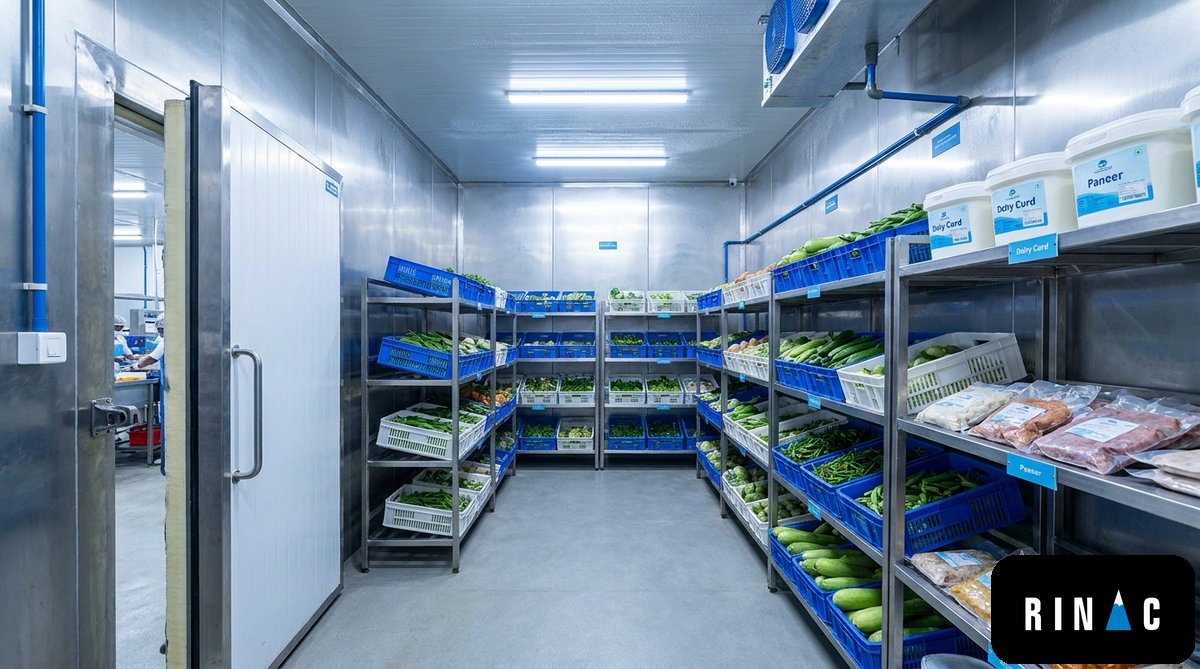
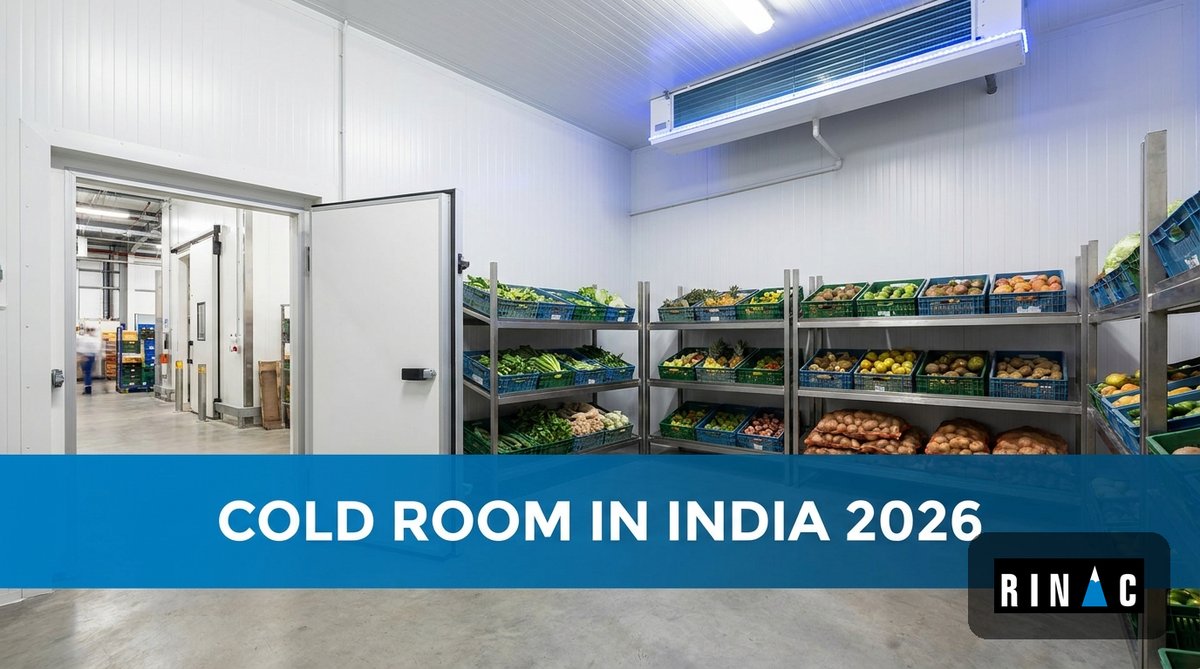
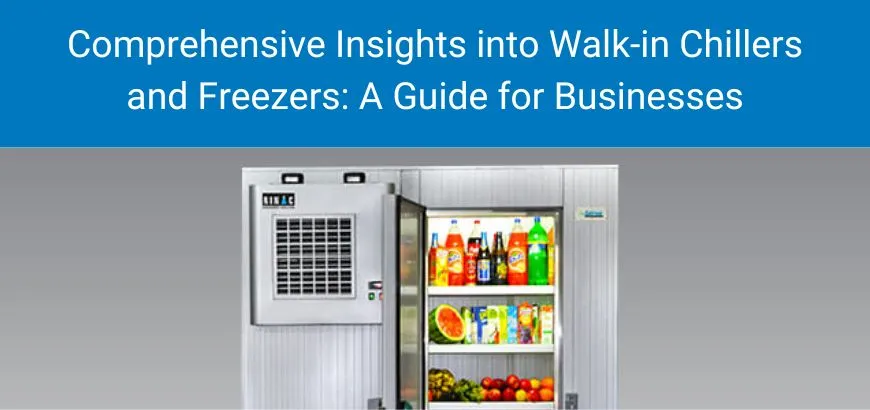
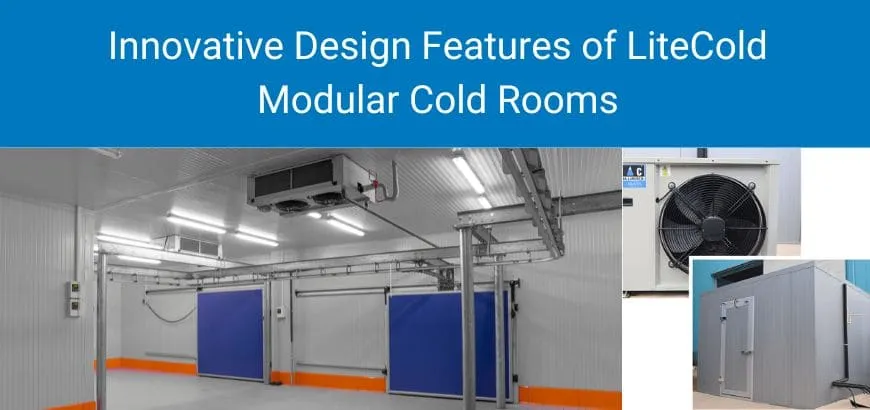
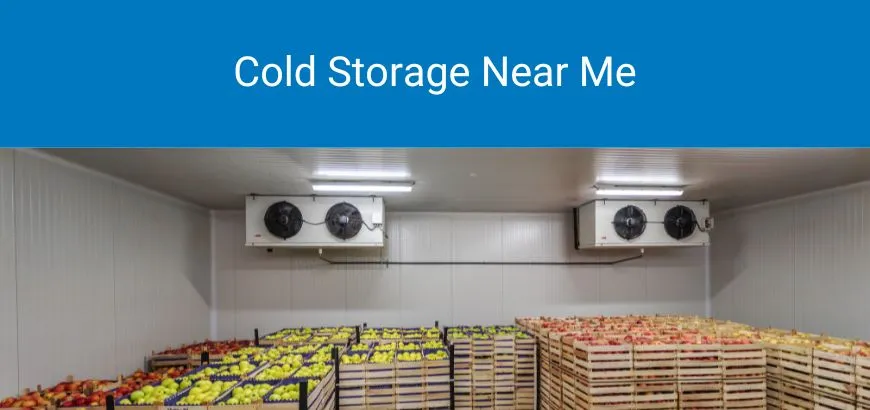
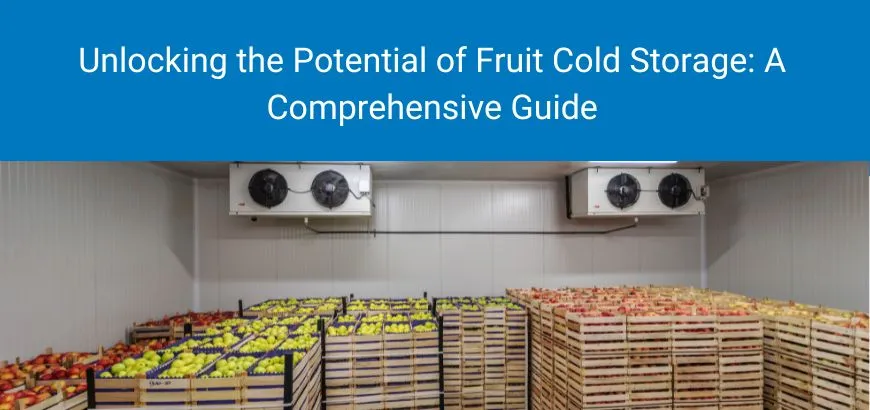
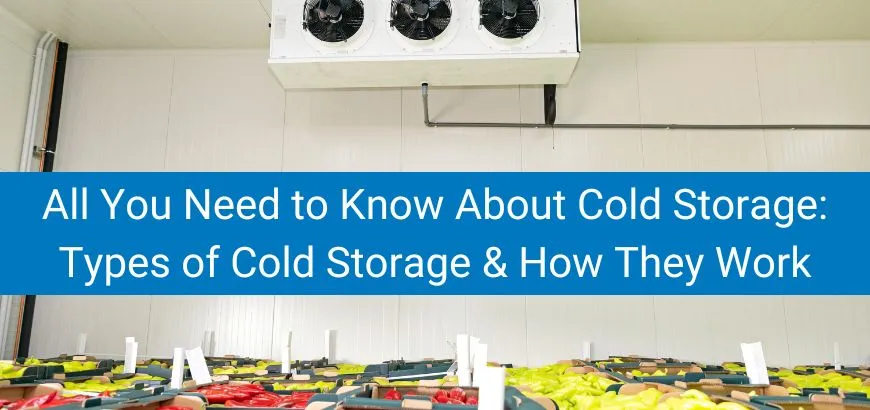
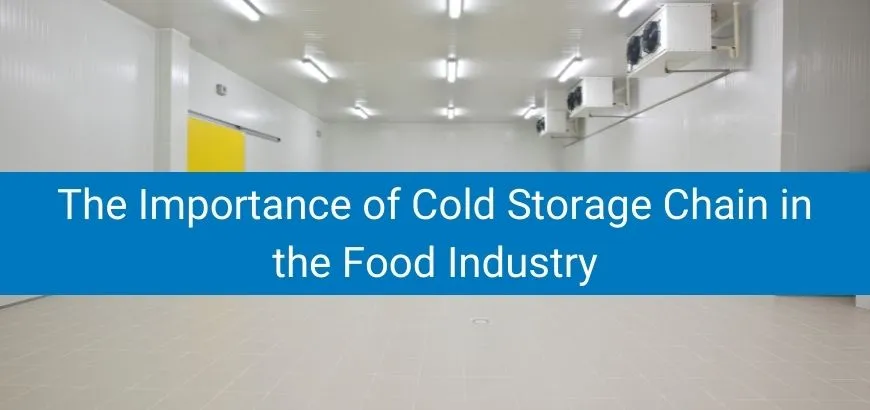
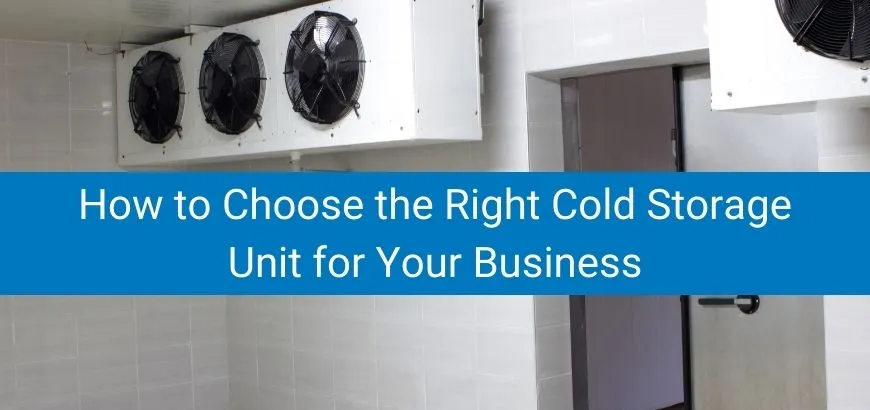
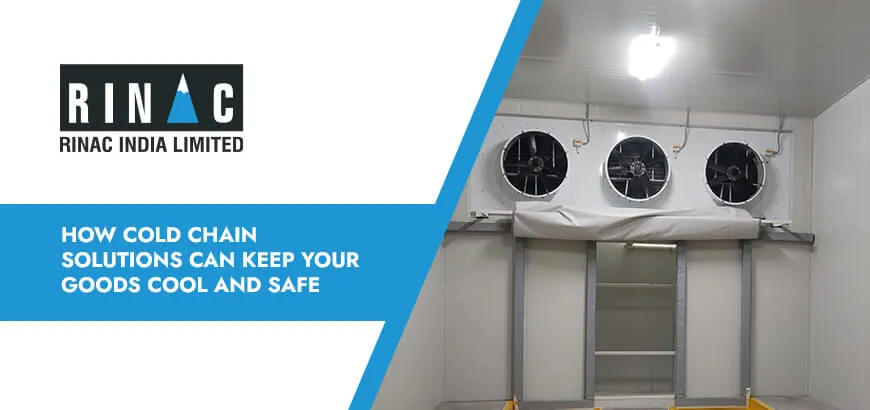
For most Indian farm gate pack houses, a room-type pre cooling chamber is the practical choice because it handles many crops, needs no process water and can double as a holding room. Rinac’s pre-cooling rooms are described as operating between 0 °C and 5 °C, with an engineered airflow path for uniform cooling, a high-humidity evaporator, air-cooled condensers and powder-coated galvanised iron laminated walls and ceilings in a compact, robust structure. They are designed for post-harvest cooling of fruits, vegetables and other horticultural produce.
Capacity is the question buyers get wrong most often. The NHB norm for a pre-cooling unit assumes 6 tonnes at Rs. 25 lakh [4], which implies roughly Rs. 4.2 lakh per tonne of capacity. If your peak harvest day brings in 18 tonnes, you need either three such units or a staggered batch plan that your designer has checked against real cycle times. Ask any supplier for the cycle time at your loading temperature and your product, not a generic brochure figure.
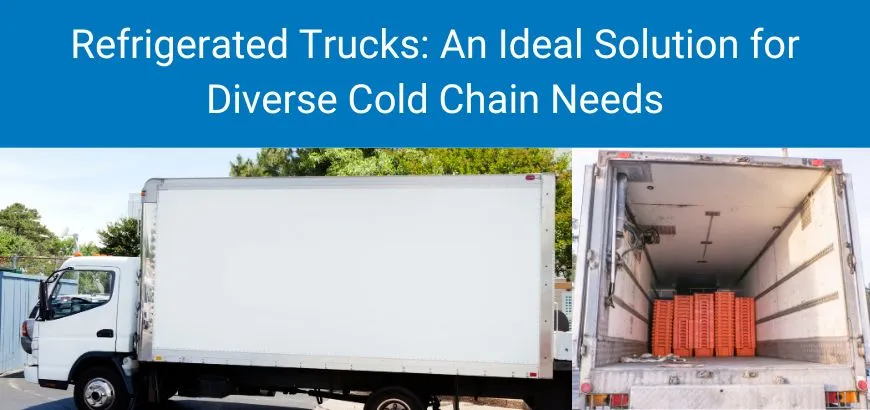
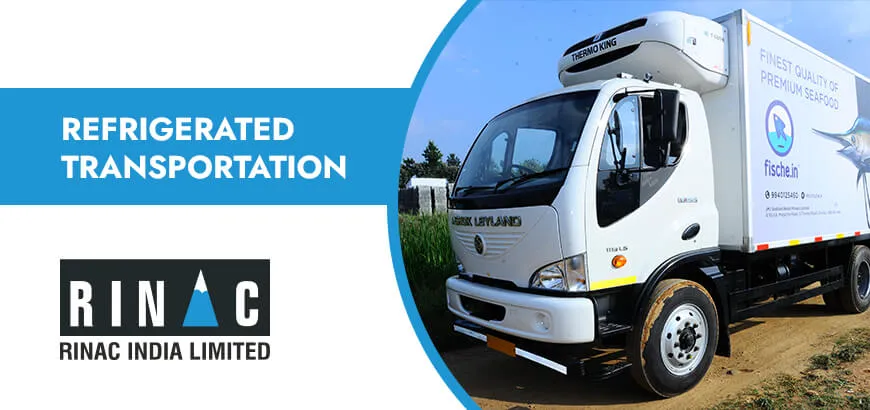
Pre-cooling only works if the chain stays cold afterwards. Produce cooled at the farm gate and then loaded into an unrefrigerated truck loses much of the benefit. Plan the cold room, the dock and the vehicle together. Rinac’s refrigerated transportation range and our guide to reefer containers cover the last leg.
Mango Pack House Requirements for Export
A mango pack house carries extra obligations because export markets inspect the process, not only the fruit. APEDA notes that state-of-the-art pack houses have been set up in major production zones, along with hot water treatment, vapour heat treatment and irradiation facilities across the production belt to meet different country requirements, and that traceability and a residue monitoring plan support recall readiness [9].
The US programme shows how detailed the rules get. Under the published guidelines, the packinghouse registers with APEDA as a cooperator, works to SOPs approved by the Directorate of Plant Protection, Quarantine and Storage covering desapping, washing, hot-water dipping, grading, handling, packing and labelling, and processes no other fruit or vegetable while mangoes are on the line. Fruit from unregistered orchards is refused and stored separately. The hot-water dip is specified at 52 °C for 3 to 4 minutes, irradiation requires a minimum absorbed dose of 400 Gray from a Cobalt-60 source at an approved facility, and every package carries production unit, packinghouse, date and lot codes [10]. Protocols differ by destination and change over time, so use the current APEDA and NPPO notification for your target country.
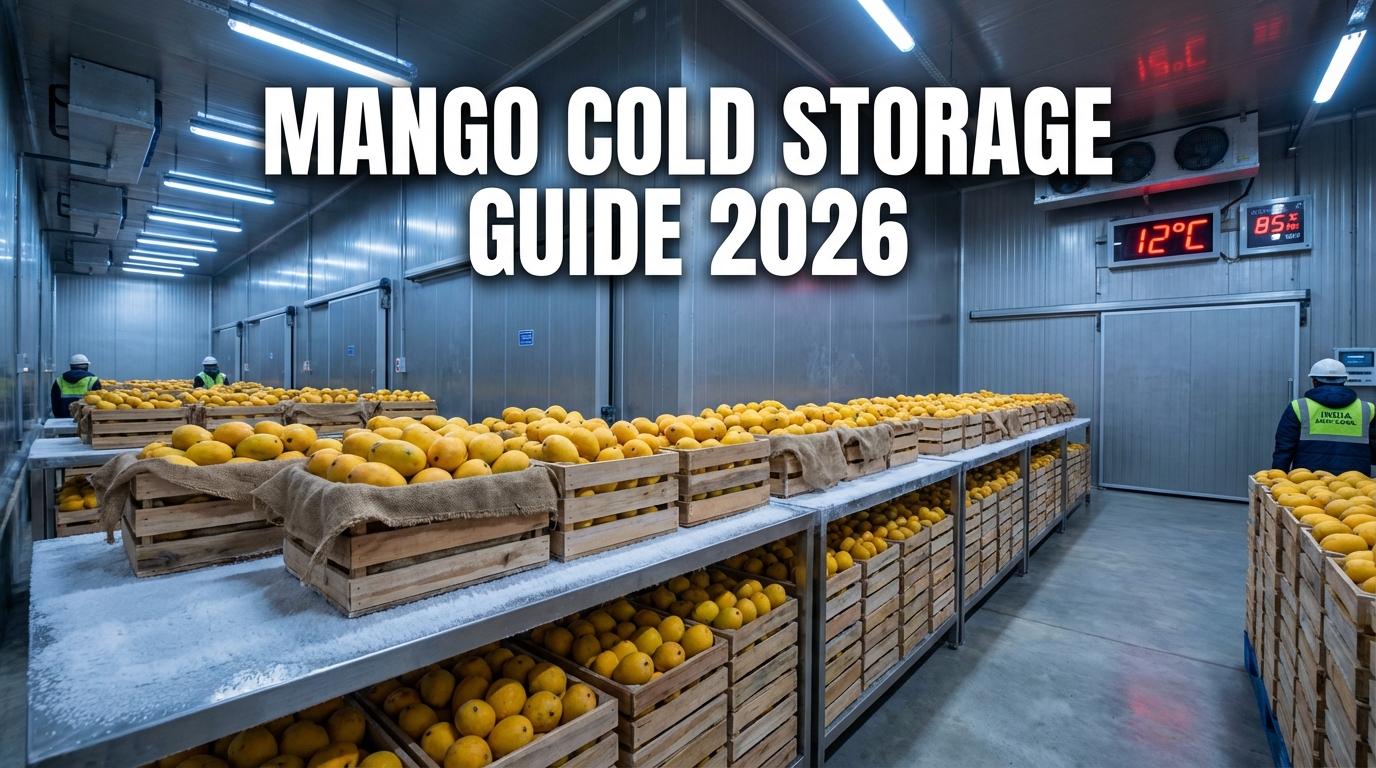
What does this mean for the building? You need a dedicated, easily cleaned line with its own drainage, a logical traceability point at receiving, and cold holding that protects packed fruit between treatment and loading. If you also sell domestically, a ripening chamber lets you control colour and timing for retail buyers; our ripening chamber guide and mango cold storage guide cover the details. Rinac’s ripening chambers and cold rooms sit naturally at the end of this line.
Fruit and Vegetable Pack House: Matching the Cold Chain to Your Crop
A fruit and vegetable pack house for mixed produce is harder to design than a single-crop mango unit because each commodity wants different handling. Rather than copying a layout from another region, settle five decisions in this order and let the answers drive the equipment list.
| Decision | What to size or specify | Why it matters |
|---|---|---|
| Peak daily arrival | Tonnes on the busiest harvest day, not the average | Pre-cooling and holding capacity are set by the peak, and undersizing creates a queue of warm produce |
| Dwell time | How long produce stays before dispatch | Decides whether a pre-cooling chamber is enough or a separate cold room is needed |
| Crop temperature needs | Set points per commodity, from a reliable crop reference | Mixing chill-sensitive and chill-tolerant produce in one room causes damage |
| Ripening needs | Whether you sell ripe fruit | Banana, mango and papaya buyers often want controlled ripening, which is a separate chamber |
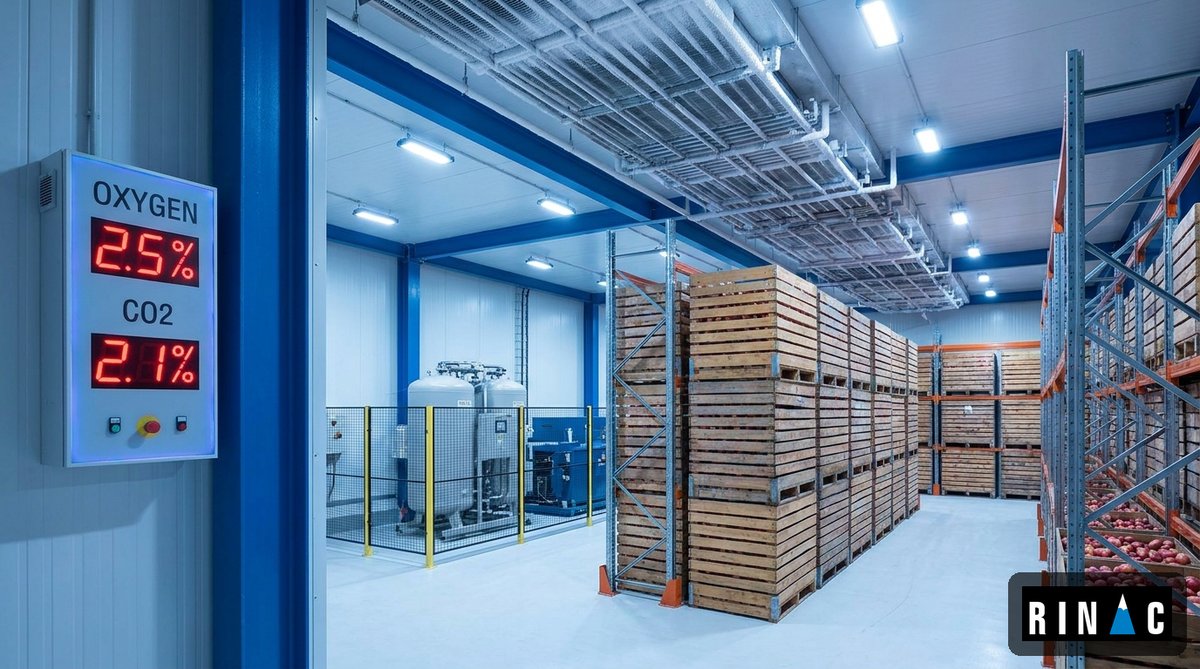
| Storage beyond a few days | Cold storage, or controlled and modified atmosphere | Long holding needs more than a pre-cooling room; see our CA and MA storage guide |
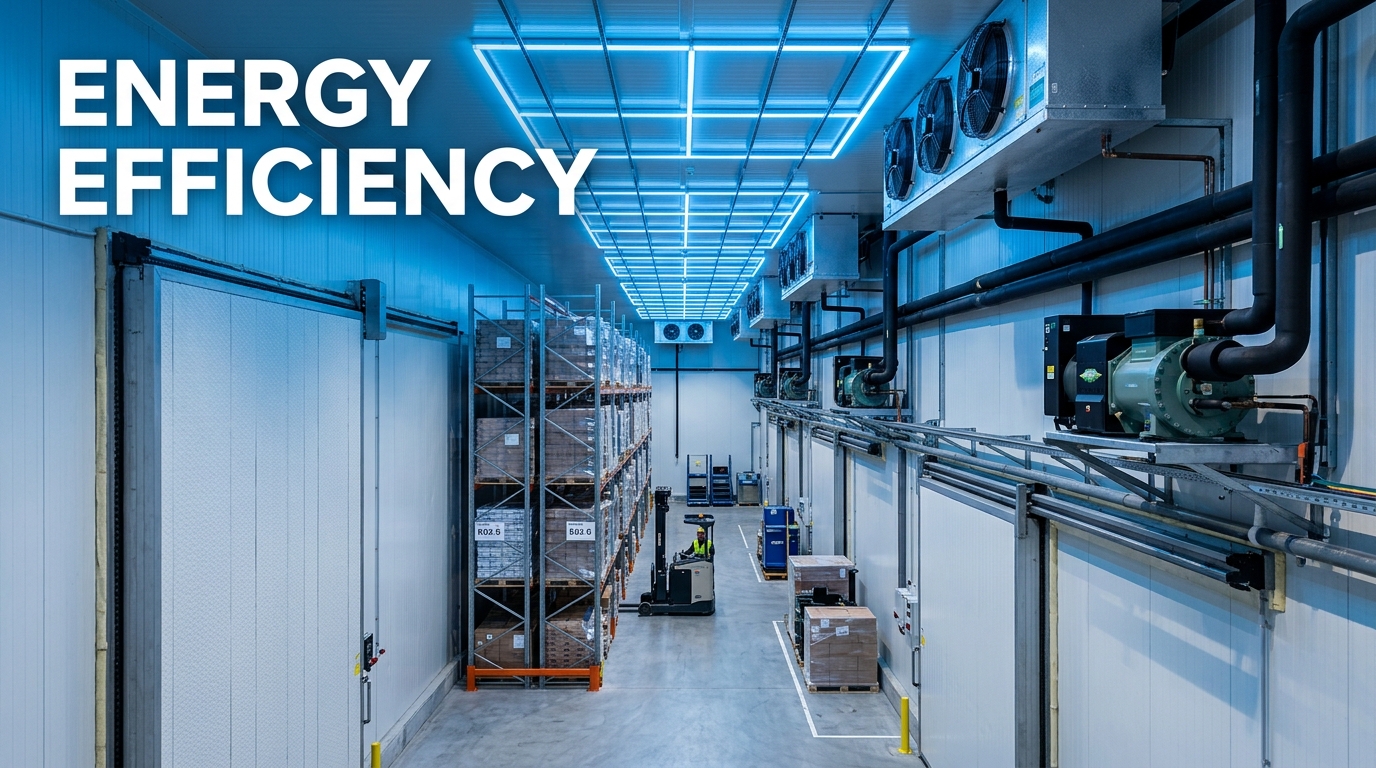
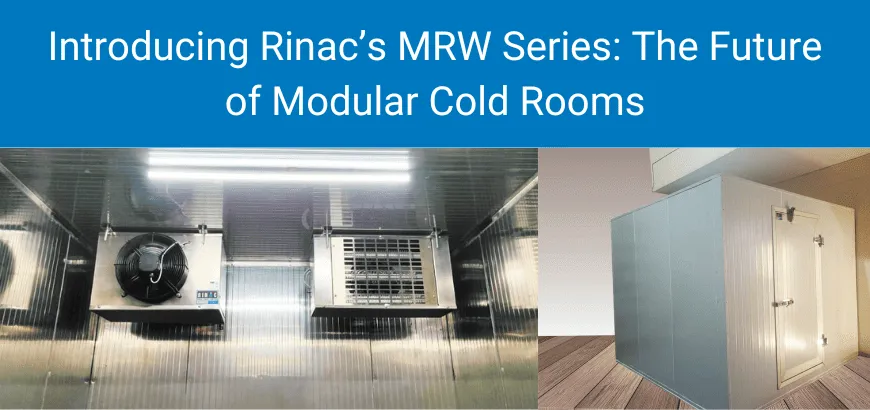
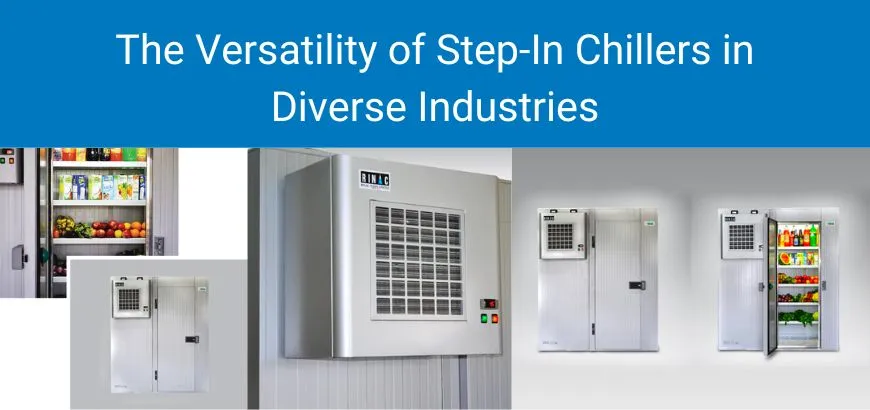
Energy cost deserves attention here as well. A pack house runs hard for a few months and sits idle for the rest, so equipment that handles part-load efficiently and a well-insulated envelope matter more than the headline compressor size. Our notes on cold storage energy efficiency and choosing a cold room apply directly. For growers who need a modular holding room next to the pack house, Rinac’s MRW series walk-in cold rooms are built for exactly that scale.
Pack House Cost and Subsidy: What the NHB and MIDH Cost Norms Mean
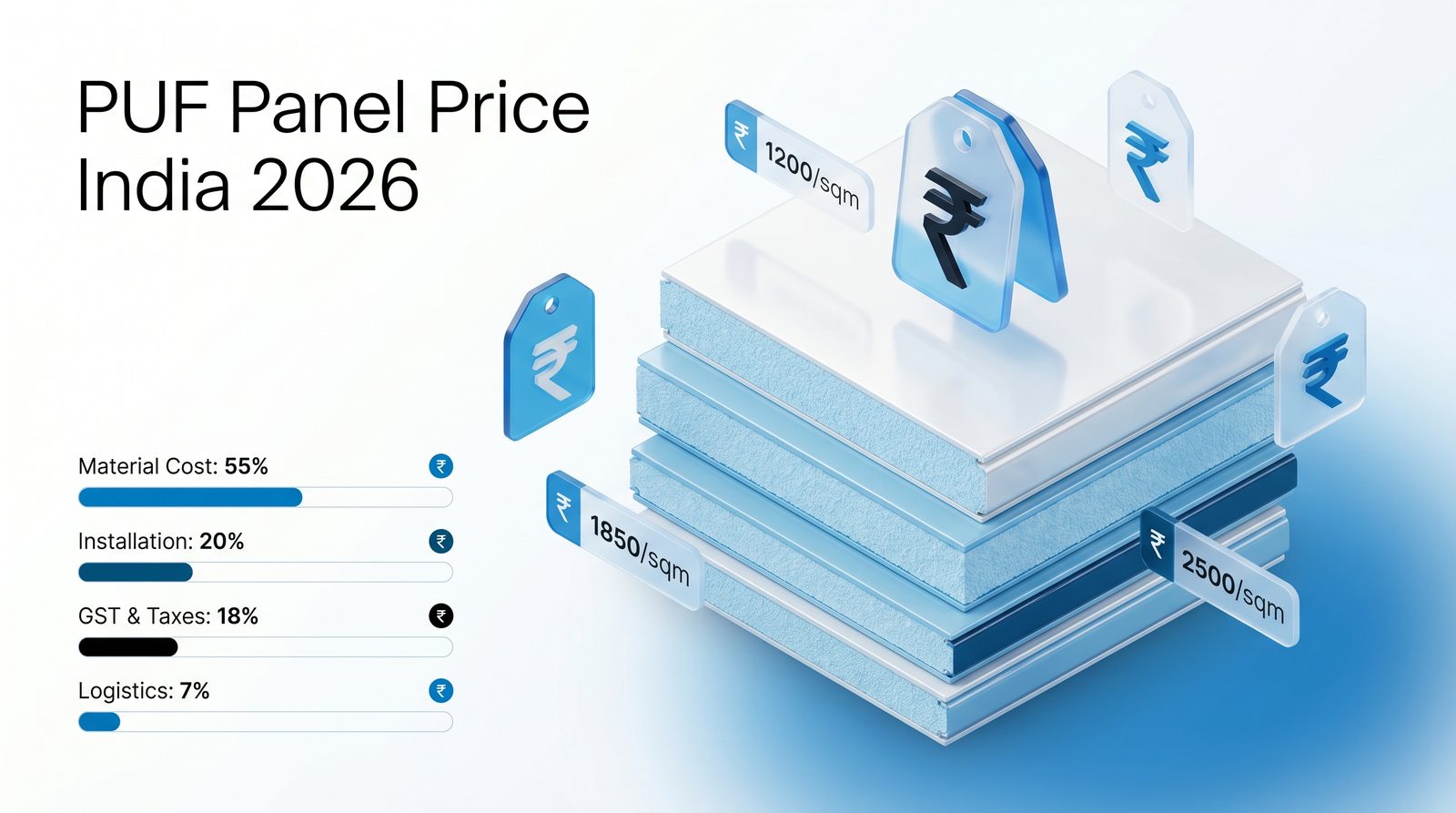
The pack house horticulture subsidy under MIDH is calculated on the NHB cost norms, not on your actual invoice. The table below lists the norms and the maximum assistance they imply. The subsidy columns are our own arithmetic on the published percentages [4][7].
| Component | Cost norm (NHB) | Assistance, general areas | Assistance, hilly and scheduled areas |
|---|---|---|---|
| On-farm pack house, 9 m x 6 m | Rs. 4.00 lakh per unit | 50%: up to Rs. 2.00 lakh | Same row, 50% |
| Integrated pack house, 9 m x 18 m | Rs. 50.00 lakh per unit | 35%: up to Rs. 17.50 lakh | 50%: up to Rs. 25.00 lakh |
| Pre-cooling unit, 6 tonnes | Rs. 25.00 lakh per unit | 35%: up to Rs. 8.75 lakh | 50%: up to Rs. 12.50 lakh |
| Cold room (staging), 30 tonnes | Rs. 15.00 lakh per unit | 35%: up to Rs. 5.25 lakh | 50%: up to Rs. 7.50 lakh |
| Ripening chamber | Rs. 1.00 lakh per tonne | 35%: Rs. 35,000 per tonne | 50%: Rs. 50,000 per tonne |
As an illustration of the arithmetic only, an integrated pack house (Rs. 50 lakh), a pre-cooling unit (Rs. 25 lakh) and a staging cold room (Rs. 15 lakh) add up to Rs. 90 lakh at the norm rates. At 35% the maximum assistance would be Rs. 31.5 lakh. NHB also caps an integrated post-harvest management project at a Rs. 145 lakh cost norm, with assistance limited to Rs. 50.75 lakh in general areas and Rs. 72.50 lakh in hilly and scheduled areas [7].
Three details trip up applicants. The subsidy is credit-linked and back-ended, which means it is released after the project is completed and the bank loan is in place, although the NHB footnote says release need not be credit-linked for PSUs, panchayats, cooperatives, registered societies, trusts and public limited companies that can fund the balance themselves [4]. The norms are indicative upper limits for the subsidy calculation, and the document we reviewed is undated and from the XII Plan period, so confirm the current MIDH figures with NHB or your state horticulture department. And real project cost depends on the site, the insulation, the refrigeration system and the finish, so use the norm for planning and a firm quotation for the budget.
Practical tip: Ask your designer to prepare the bill of quantities against the same line items the scheme uses (pack house, pre-cooling, cold room, ripening). Mapping your invoice to the scheme heads before you apply avoids rework when the bank and the assessing agency review the project.
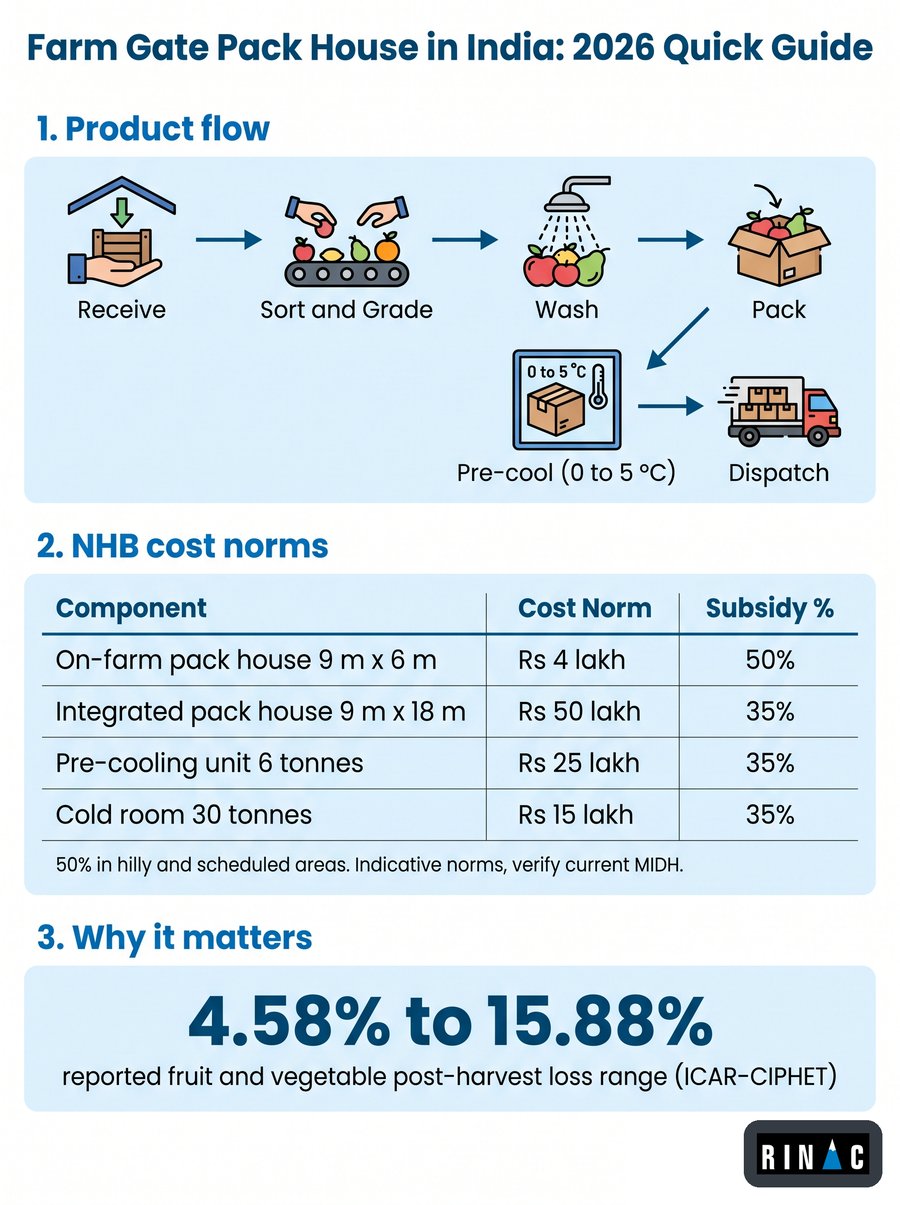
Farm gate pack house flow and NHB cost norms at a glance. Figures: NHB cost norms; see Sources & References.
Compliance & Standards: FSSAI, HACCP, ISO and Export Rules
Compliance in a pack house sits on three layers. The first is food safety law. If your facility stores, packs or processes food as a food business, FSSAI licensing or registration under the Food Safety and Standards (Licensing and Registration of Food Businesses) Regulations may apply, depending on the activity and scale [11]. Confirm the correct category with your Food Safety Officer before you commission.
The second layer is the buyer’s or export market’s requirement. Exporters register with APEDA, follow the destination country’s treatment and traceability protocol, and often need audited food safety systems such as HACCP or ISO-aligned management systems before a retailer will list them [10]. The third layer is your own building and equipment: hygienic finishes, cleanable insulated panels, temperature logging and a pest-control plan.
Rinac lists ISO, FSSAI, HACCP, GMP, IGBC and WHO-GMP among its certifications. That does not certify your facility, which has to be audited on its own, but it is a useful signal when you compare suppliers. Where a buyer asks for a documented temperature profile or a green-building rating, ask your supplier early what drawings and test records they can provide.
How Rinac Builds the Cold Chain Side of a Pack House
Rinac positions itself as a solution architect and builder, which in a pack house project means one team can take responsibility for the cold chain components and the insulated structure around them. With 30+ years in cold chain and modular construction, 10,000+ projects delivered across 23 countries and 6,000+ clients, the company brings experience of how produce actually behaves under different set points, not only how to size a compressor. Manufacturing runs from Bangalore and Murbad in Maharashtra, with 14 branch offices supporting pan-India installation and after-sales service.
For a typical farm gate pack house the relevant building blocks are the pre-cooling room, a cold room or MRW module for holding, ripening chambers where you sell ripe fruit, CA and MA chambers for longer storage, the insulated building system, and ChillKart refrigerated transport for the first leg to market. For larger or multi-product sites, Rinac also takes on turnkey food processing and engineering and construction scopes, and our cold storage plant EPC guide explains how those projects are organised.
Our rule of thumb: size the pre-cooling chamber for your worst harvest day, insulate the building as if it were a cold store, and keep the cold chain unbroken until the produce is in the buyer’s hands. Most pack house disappointments come from breaking one of those three rules.
Step-by-Step Checklist Before You Apply or Build
- Define the crop and market. Domestic mandi, organised retail or export each set different handling and paperwork.
- Measure the peak day. Record tonnes received on the busiest harvest day over the last two seasons.
- Choose the scheme and map components. Match each item to an NHB, PMKSY or state scheme head and read the eligibility rules.
- Draw the produce flow. Receiving, sorting, washing, packing, pre-cooling, holding and dispatch in one direction.
- Specify the cold chain. Pre-cooling capacity, holding room, set points, back-up power and temperature logging.
- Get a firm quotation and a bill of quantities. Compare it against the scheme’s cost norms.
- Plan compliance. FSSAI category, APEDA registration for exports, and any buyer audit requirements.
- Commission and train. Run a full-load trial, calibrate sensors and train the crew on loading patterns.
If you would like a second pair of eyes on a layout or a capacity calculation, the Rinac contact page is the quickest route to an engineer. You can also read more about the company’s track record on the about us page.
Frequently Asked Questions About the Farm Gate Pack House
Sources & References
- India post-harvest losses study released (ICAR-CIPHET study, fruits and vegetables), FreshPlaza. https://www.freshplaza.com/north-america/article/2144143/india-post-harvest-losses-study-released/. Published/accessed: 12 August 2015.
- India’s production of horticultural crops rises 3.7 per cent in 2024-25 (second advance estimates), IANS. https://ianslive.in/indias-production-of-horticultural-crops-rises-37-per-cent-in-2024-25–20250626110604. Published/accessed: 26 June 2025.
- India: NCCD reports a 2.2% compound annual growth rate in cold storage capacity, IIR (citing NCCD and PIB). https://iifiir.org/en/news/india-nccd-reports-a-2-2-compound-annual-growth-rate-in-cold-storage-capacity. Published/accessed: 24 February 2026.
- Cost norms and pattern of assistance under MIDH for NHB related activities (Appendix 1), National Horticulture Board. https://nhb.gov.in/pdf/Cost%20Norms.pdf. Published/accessed: Undated, XII Plan era; verify the current MIDH guidelines.
- Integrated Cold Chain and Value Addition Infrastructure under PMKSY, Press Information Bureau (Ministry of Food Processing Industries). https://static.pib.gov.in/WriteReadData/specificdocs/documents/2025/oct/doc20251029679501.pdf. Published/accessed: 29 October 2025 (guidelines dated 22 May 2025; project status as of June 2025).
- Integrated Horticulture Development Mission (Pack House), Krushikranti. https://www.krushikranti.com/en/blogs/Integrated-Horticulture-Development-Mission-Pack-House. Published/accessed: Accessed October 2026 (third-party summary of the Maharashtra MahaDBT component).
- Scheme-1 guideline, Integrated Post Harvest Management projects, National Horticulture Board. https://nhb.gov.in/guideline/113.pdf. Published/accessed: Undated; verify the current version with NHB.
- Studies on Pre-cooling of Mango for Extension of Shelf-Life, Journal of Agricultural Engineering (ICAR e-publication). https://epubs.icar.org.in/index.php/JAE/article/view/40115. Published/accessed: Vol. 50, No. 4 (2013/2014).
- Mango, Agricultural and Processed Food Products Export Development Authority (APEDA). https://apeda.gov.in/Mango. Published/accessed: Accessed October 2026.
- Guidelines for export of mangoes to the USA (packinghouse, hot water treatment and irradiation), TNAU Agritech Portal. https://agritech.tnau.ac.in/export_import/GUIDELINES_MANGOES_TO_USA.pdf. Published/accessed: Undated; confirm the current APEDA and NPPO protocol.
- Compendium of Food Safety and Standards (Licensing and Registration of Food Businesses) Regulations, FSSAI. https://www.fssai.gov.in/upload/uploadfiles/files/Compendium_Licensing_Regulations_04_08_2021.pdf. Published/accessed: 4 August 2021.
Important Disclaimer
This article is provided for general information only. It is not a substitute for professional engineering, legal or regulatory consultation. Subsidy rates, cost norms, FSSAI and APEDA requirements, export protocols and prices change over time and differ by state, so verify current figures directly with NHB, the Ministry of Food Processing Industries, FSSAI, APEDA and your state horticulture department before you act. Figures and claims in this article are drawn from the public references listed above as of the publication date, and some of the documents cited are undated. Project-specific design, capacity sizing and return on investment depend on your crop, site, volumes and market, so request a formal consultation through rinac.com/contact-us before you commit to a design or a budget.