TL;DR – Quick Summary
- A ripening chamber is a gas-tight, temperature and humidity controlled room in which measured ethylene triggers uniform ripening of harvested fruit. It is a process room, not a cold store, and the difference shows up in airflow design, sealing and control logic.
- India has the largest documented shortfall of this asset in its entire cold chain. The NCCD study assessed a requirement of 9,131 ripening chambers against 812 created, a gap of 8,319 units or roughly 91% [1].
- Compliance is not optional. Calcium carbide is prohibited under Regulation 2.3.5 of the FSS (Prohibition and Restrictions on Sales) Regulations, 2011, and FSSAI permits ethylene gas only up to 100 ppm, applied to the chamber air and never onto the fruit [2]. FSSAI reiterated this and ordered fresh enforcement drives in an advisory dated 16 April 2026 [3].
- Capacity maths is fixed by scheme rules: 11 cubic metres of chamber space equals one MT of rated capacity, and the MIDH cost norm for a ripening chamber is Rs 1.00 lakh per MT with credit linked back-ended subsidy at 35% in general areas and 50% in North East, Himalayan and scheduled areas [4].
- The economics only work when the chamber sits inside a chain: pre-cooling, a pack house, staging cold rooms and reefer transport. A standalone chamber fed by an uncooled truck ripens unevenly no matter how good the room is.
- Rinac approaches ripening as an engineered process, combining chamber construction with the refrigeration, controls and airflow design that decide whether every pallet in the room turns colour on the same day.
Disclaimer: This guide is published for general information and engineering education. It is not a substitute for professional engineering, legal or regulatory advice. Cost norms, subsidy rates, scheme windows and food safety regulations change; verify current requirements directly with FSSAI, MoFPI, NHB, your State Horticulture Mission or the relevant State Commissioner of Food Safety before committing capital. All external figures are sourced from public references as of the publication date and are listed in the Sources & References section.
What Is a Ripening Chamber, and Why It Is Not Just a Cold Room
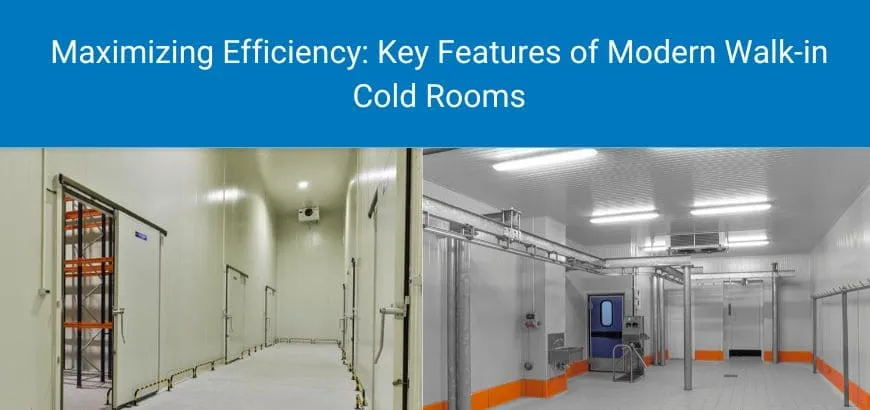
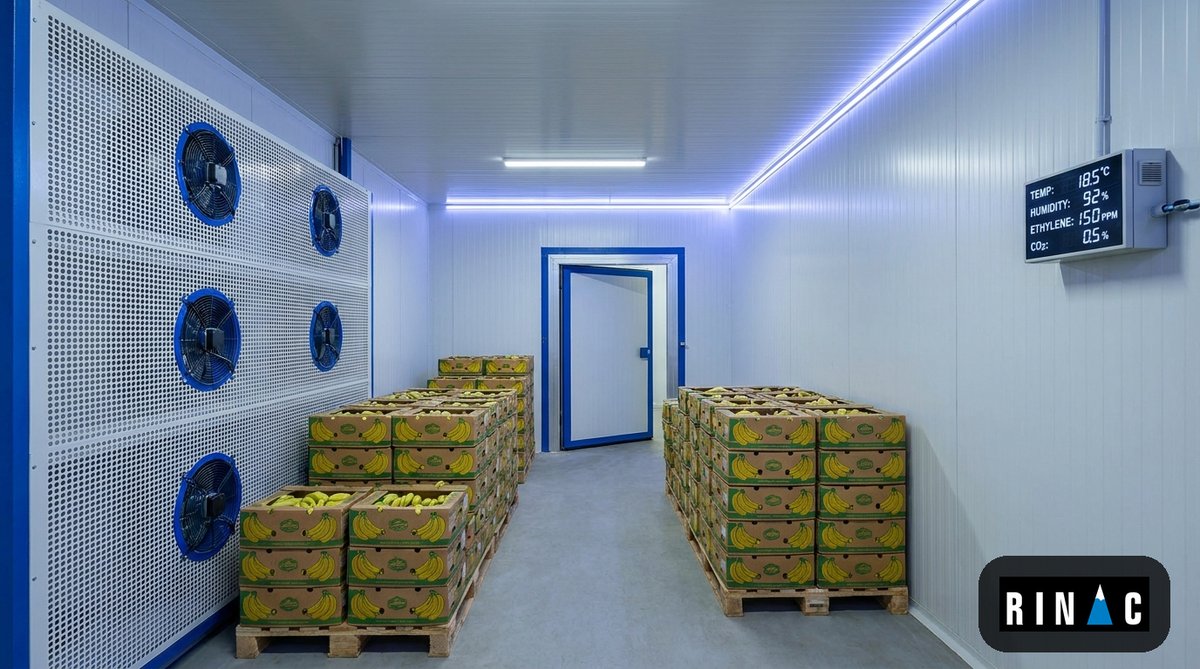
A ripening chamber is an insulated, gas-tight room in which harvested fruit is held at a controlled temperature and relative humidity while a measured dose of ethylene is introduced into the air, triggering the natural ripening cascade so that an entire batch colours and softens together. The NCCD defines the ripening unit as a front-end cold chain facility designed for controlled and hygienic ripening, and notes that modern units contain multiple chambers used extensively for bananas and also for mangoes, avocados, kiwis, tomatoes and pears [1].
The distinction that trips up most first-time buyers is this: a cold room is built to stop biological activity, while a ripening room is built to start it, run it at a chosen speed and then stop it on a scheduled day. Everything downstream of that difference changes. A cold store can tolerate a slightly leaky door gasket; a fruit ripening chamber cannot, because ethylene concentration and carbon dioxide build-up both depend on the room holding its atmosphere. A cold store can live with stratified air; a ripening chamber cannot, because a two degree Celsius spread between the top and bottom pallet becomes a two day spread in ripeness at the retail end.
The same logic separates it from a controlled atmosphere chamber. CA storage suppresses ripening for months by depressing oxygen; the ripening room does the opposite over three to seven days. Facilities that handle apple, kiwi or pomegranate often need both, sited in the same building but engineered to different specifications.
A practical test of a ripening room design: if you cannot state the air change rate, the pressure differential across the pallet stack and the CO2 removal strategy, you have specified an insulated box, not a ripening chamber.
The Indian Market Context: A 91% Ripening Chamber Gap
India’s cold chain conversation is dominated by cold storage tonnage, and that framing hides the real bottleneck. The All India Cold-chain Infrastructure Capacity study conducted by NABARD Consultancy Services for the National Centre for Cold-chain Development assessed a national requirement of 9,131 ripening chambers against just 812 created, leaving a gap of 8,319 units [1]. In percentage terms that is a shortfall of roughly 91%, far wider than the gap in bulk storage.
8,319
Ripening chambers still needed in India, against 812 created (NCCD assessment)
Ripening chambers still needed in India, against 812 created (NCCD assessment)
Compare that with static storage. The same body of work put the national cold storage requirement at about 35 million MT against roughly 32 million MT of capacity at the time [5], and by 31 May 2024 the Department of Agriculture and Farmers Welfare reported 39.6 million MT of cold storage created across the states [6]. Bulk storage has largely caught up in aggregate. Last-mile ripening has not. The NCCD study said as much, calling for urgent focus on pack houses, refrigerated transport and ripening chambers rather than more standalone cold storage [1].
The demand side keeps growing. The Second Advance Estimates for 2025-26 put total horticulture output at 3,777.76 lakh tonnes, with fruit production rising 3.25% to 1,214.75 lakh tonnes, and the department attributes that growth specifically to banana, mango, papaya, apple and guava [7]. Four of those five are climacteric fruits that either require or benefit from a controlled ripening step. More fruit arriving into the same thin ripening capacity is precisely how avoidable losses are created, which is the same structural argument that drives investment in cold storage for agriculture and horticulture.
Where the demand actually sits: NCCD classifies the ripening chamber as a facility located close to consumption and distribution centres, not at the farm gate [1]. That is why ripening capacity clusters around metro mandis, organised retail distribution centres and quick-commerce dark stores, while bulk crop storage clusters around production belts.
How Ethylene Ripening Works Inside the Chamber
Ethylene is a naturally occurring plant hormone. In climacteric fruit, a small trigger dose starts a self-sustaining chain of biochemical changes: starch converts to sugar, chlorophyll degrades and the peel changes colour, cell walls soften, and the fruit itself begins producing ethylene in quantity. FSSAI describes the mechanism plainly: treating unripe fruit with ethylene gas triggers the natural ripening process until the fruit starts producing ethylene in substantial quantities on its own [2].
This is why ethylene ripening is a trigger, not a treatment. You are not gassing the fruit continuously for four days. You are establishing a defined concentration in the chamber air for a defined window, then managing the consequences of the fruit’s own metabolism: heat of respiration, moisture loss and rising carbon dioxide.
Three parameters have to be held simultaneously in the room:
- Ethylene concentration. FSSAI permits up to 100 ppm (100 microlitre per litre), varying with crop, variety and maturity [2]. More is not faster; above the saturation point the fruit is already fully triggered and the extra gas only adds cost and risk.
- Pulp temperature. The control target is the temperature inside the fruit, not the air. Air temperature is the lever; pulp temperature is the outcome, and the lag between them is what separates an experienced operator from a guessing one.
- Carbon dioxide. Respiring fruit floods the room with CO2, which antagonises ethylene action and slows or stalls ripening. FSSAI’s standard operating procedure calls for monitoring CO2 in the chamber and keeping it below 5,000 ppm, holding the temperature, relative humidity, ethylene concentration and CO2 level for 24 to 48 hours [8].
That last point is the one most commonly designed out of Indian ripening rooms to save capital, and it is the most common reason a chamber underperforms. A gas-tight room with no ventilation strategy will hit the CO2 ceiling well inside the first cycle. The fix is straightforward at design stage (timed fresh-air exchange or scrubbing, with the refrigeration load sized for it) and expensive to retrofit.
Compliance and Standards: FSSAI, the Calcium Carbide Ban and the 100 ppm Rule
Any operator running a ripening chamber in India is a Food Business Operator and inherits a specific compliance perimeter. The central prohibition is on calcium carbide, the substance traders call “masala”. It releases acetylene gas carrying traces of arsenic and phosphorus, and can leave residues on fruit it touches directly. Its use is banned under Regulation 2.3.5 of the Food Safety and Standards (Prohibition and Restrictions on Sales) Regulations, 2011, which states that no person shall sell, offer or expose for sale, or hold on premises for sale, fruit artificially ripened by acetylene gas [2].
Enforcement is active, not theoretical. In an advisory dated 16 April 2026, FSSAI again directed Commissioners of Food Safety across all states and union territories, along with its own regional directors, to run special enforcement drives against non-permitted ripening agents and against synthetic colouring and non-permitted waxing of fruit [3]. Anyone investing in ripening infrastructure this season should assume inspection, and should be able to produce gas source records, dosing logs and chamber data on demand.
What is permitted is ethylene, at up to 100 ppm, released into the chamber atmosphere. Compliant sources include ethylene gas cylinders, compressed ethylene in spray form and catalytic generators that convert ethanol to ethylene. The Central Insecticides Board and Registration Committee has separately approved Ethephon 39% SL for uniform ripening of mangoes and other fruits [2]. FSSAI’s guidance note, “Artificial Ripening of Fruits: Ethylene gas a safe fruit ripener”, sets out the full standard operating procedure covering restrictions, chamber requirements, handling conditions, gas sources, dosing protocol, post-treatment operations and safety, and it prohibits direct contact between the fruit and ethylene in powder or liquid form [8].
Beyond the ripening-specific rules, the facility around the chamber carries the ordinary obligations of a food handling premises: FSSAI licensing, hygienic design of contact surfaces and drainage, pest exclusion, potable water, staff hygiene and traceability records. Operators supplying organised retail or export channels are usually asked for HACCP and ISO certification on top. Rinac builds to ISO, FSSAI, HACCP, GMP, IGBC and WHO-GMP frameworks across its cold chain and turnkey food processing work, which matters when the ripening hall has to pass the same audit as the packing line next to it.
Ripening Chamber Design: Airflow, Pressure, Insulation and Refrigeration
Ripening rooms fall into two broad families, and the choice drives both capital cost and daily throughput.
Conventional (non-pressurised) chambers circulate air through the room and rely on it finding its way through pallets. They are cheaper, tolerant of mixed pallet configurations, and adequate where cycle time is not critical. Their weakness is ripening spread across the stack, since the pallets nearest the coil see different conditions from those in the corners.
Pressurised (forced-air) chambers use a plenum and a pressure differential to push air through the vent holes of every carton rather than around the stack. Fruit pulp reaches target temperature faster and far more uniformly, cycle times shorten, and batch consistency improves enough to matter commercially when you are supplying a retailer with a fixed shelf-life specification. The trade-off is higher fan energy, tighter requirements on carton vent alignment and pallet discipline, and a higher build cost.
| Design element | Why it matters in the room | What goes wrong if it is compromised |
|---|---|---|
| Envelope air-tightness | Ethylene concentration and CO2 control both depend on a sealed room | Gas consumption rises, dosing becomes guesswork, ripening is uneven |
| Insulated panel thickness and joint quality | Holds a narrow temperature band against Indian ambient swings | Thermal bridging, condensation at joints, compressor short cycling |
| Airflow and plenum design | Determines whether every carton sees the same conditions | Ripeness spread across the batch, rejections at the retail end |
| Humidification and coil selection | High relative humidity prevents weight loss and shrivel | Saleable weight loss, dull peel colour, crown rot risk in banana |
| Fresh air exchange or CO2 scrubbing | Keeps CO2 below the 5,000 ppm operating ceiling | Ripening stalls mid-cycle and the batch misses its delivery date |
| Controls, sensors and data logging | Repeatable recipes plus an audit trail for FSSAI inspection | No process control, no evidence of compliance during inspection |
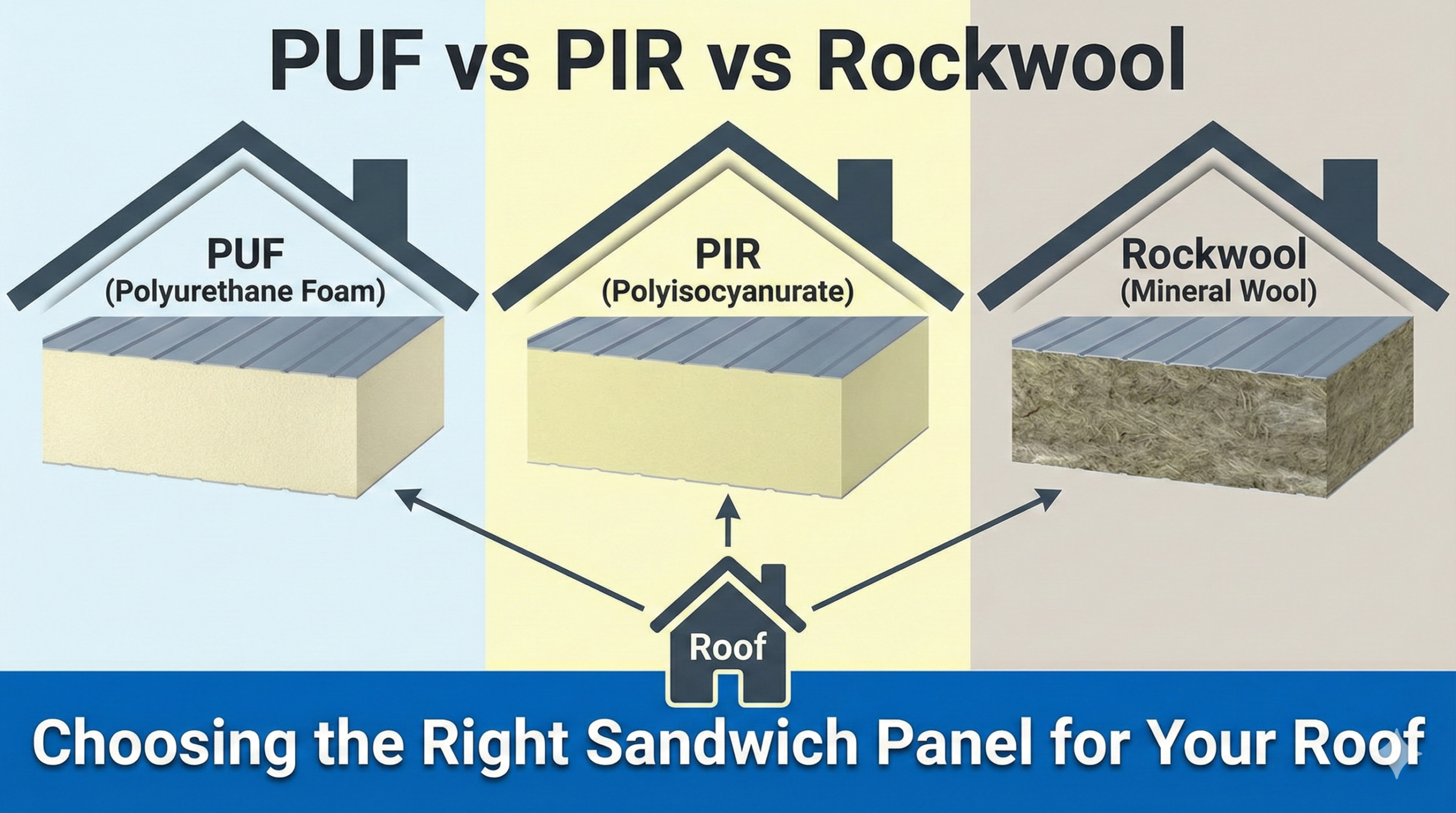
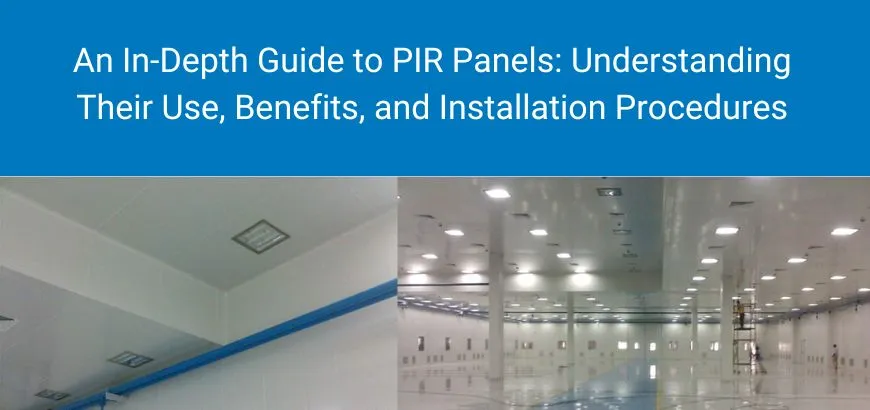
Panel selection deserves specific attention. These rooms hold high humidity for days at a time, so joint sealing and panel skin quality matter as much as declared thermal conductivity. The economics of PUF panel pricing and the fire performance case for PIR sandwich panels both apply here, and where the ripening hall sits inside a larger food facility, fire-rated Firearmet panels are the sensible specification for the compartment walls. The chamber doors, being opened and closed daily under load, are a wear point that cheap builds under-specify almost every time.
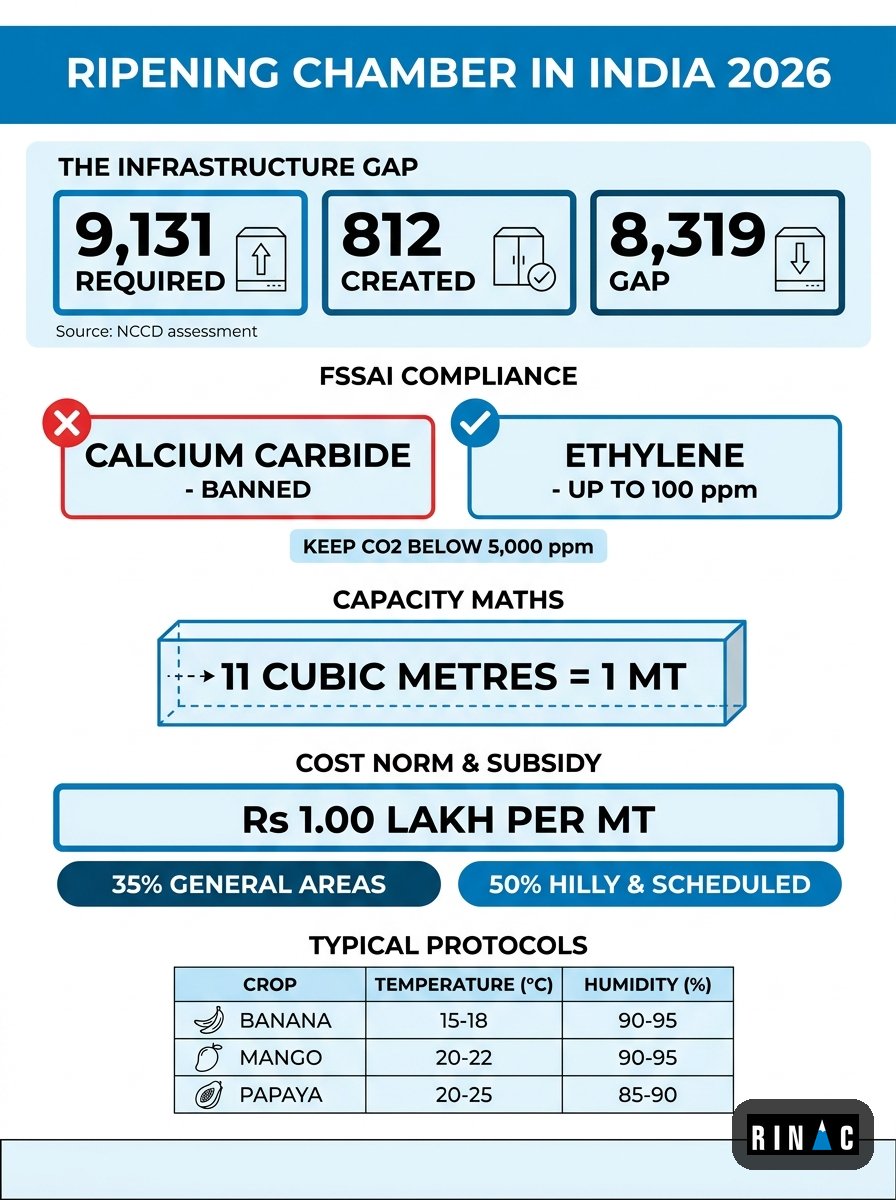
Ripening chamber essentials for Indian operators: the infrastructure gap, the compliance limits, the capacity conversion and the subsidy route.
Ripening Protocols by Commodity: Banana, Mango, Papaya, Tomato and Avocado
Every climacteric fruit has its own window, and running two commodities on one recipe is a reliable way to lose a batch. The parameters below reflect the operating windows referenced against the FSSAI guidance note and standard Indian practice. Treat them as a starting point for a variety-specific and maturity-specific protocol, not as a substitute for the guidance note itself.
| Commodity | Indicative air temperature | Relative humidity | Operating notes |
|---|---|---|---|
| Banana | 15 to 18 degrees Celsius | 90 to 95% | Ethylene held 24 to 48 hours, then colour stages managed by temperature; the highest-volume application in India |
| Mango | 20 to 22 degrees Celsius | 90 to 95% | Variety sensitive; the season is also the peak enforcement window for carbide misuse |
| Papaya | 20 to 25 degrees Celsius | 85 to 90% | Short cycle, high sensitivity to chilling injury below about 10 degrees Celsius |
| Tomato | 18 to 22 degrees Celsius | 85 to 90% | Colour development is temperature limited at the upper end; overheating gives poor colour |
| Avocado | 18 to 20 degrees Celsius | 90 to 95% | Firmness-graded despatch; a growing premium retail application in Indian metros |
For banana specifically, the depth is worth its own read: our practical guide to banana ripening chambers in India covers colour staging, crown rot control and the commercial mechanics of a ripening chamber for banana in far more detail than a multi-commodity overview can, and our note on advanced banana ripening technologies covers the equipment side. Rinac’s BanaBarn line is built specifically around this application.
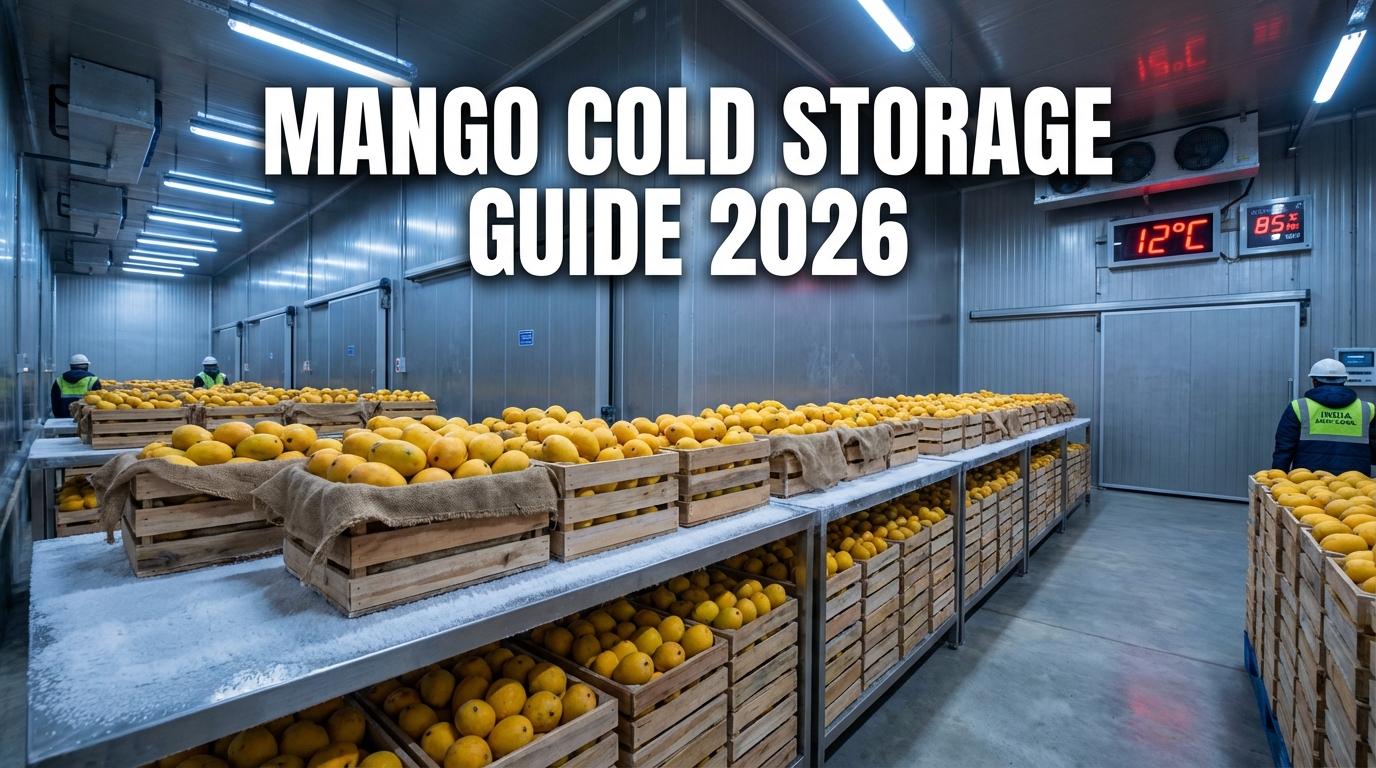
Mango deserves its own caution. A mango ripening chamber operates during the same weeks in which FSSAI concentrates its carbide enforcement, and mango is variety-sensitive in a way banana is not: Alphonso, Kesar, Banganapalli and Dasheri do not behave identically at the same setpoint. Pre-cooling on arrival matters more here than in almost any other commodity, which is why mango operations usually pair the ripening hall with pre-cooling rooms and a staging cold room. Our mango cold storage guide covers the storage side of the same season.
Ripening Chamber Capacity and Sizing: From Daily Throughput to Chamber Volume
Sizing this asset is one of the few areas of Indian cold chain design where the government has fixed the arithmetic for you, and it is worth using because it is also the basis on which subsidy is calculated.
Under the MIDH Operational Guidelines, 11 cubic metres of chamber space is equivalent to one MT of storage capacity for this asset class, against 3.4 cubic metres per MT for a conventional cold store and 4.5 cubic metres per MT for apple storage [9]. The much larger volume per tonne is not waste. It is the air path, the plenum and the clearance the process requires.
The NCCD study’s own modelling gives you the throughput logic. It assumes an average four day ripening cycle and a standard unit size of 40 MT, which yields a daily throughput of 10 MT per unit [1]. Work backwards from that and the sizing exercise becomes concrete.
Worked example. A distributor needs to release 20 MT of ripe banana per day. At a four day cycle, that implies about 80 MT of fruit under process at any time. Applying the MIDH conversion of 11 cubic metres per MT, the chamber volume required is roughly 880 cubic metres. Split into four chambers of 20 MT each, you gain something more valuable than the equivalent single room: the ability to stagger batches so one chamber is loading while another is discharging, and to run two commodities on different recipes at the same time.
That staggering point is the single most useful design decision available to a first-time buyer. Multiple smaller chambers almost always beat one large chamber of equal total capacity, because ripening is a batch process on a fixed clock and a single room forces every pallet onto the same schedule. It also gives you redundancy: a compressor fault in a four-chamber facility costs you a quarter of your throughput, not all of it.
Ripening Chamber Cost in India and the MIDH and PMKSY Subsidy Route
Published government cost norms are the most reliable public anchor for what a ripening chamber should cost, because they are the number against which lenders and appraising agencies work.
Under the NHB and MIDH cost norms, the ripening chamber norm is Rs 1.00 lakh per MT, with the 11 cubic metre to 1 MT conversion applied, and assistance is provided as credit linked back-ended subsidy at 35% of project cost in general areas and 50% in North East, Himalayan and scheduled areas [4]. Cost norms are indicative upper limits used for calculating subsidy rather than a price list, so actual quotations vary with specification, site and the balance of plant around the chamber.
A chamber is rarely bought alone. The same NHB schedule sets norms for the components that surround it, which is how a realistic project budget gets built:
| Component | Published cost norm | Assistance |
|---|---|---|
| Ripening chamber | Rs 1.00 lakh per MT (11 CuM = 1 MT) | 35% general, 50% hilly and scheduled areas |
| Pack house (9m x 6m) | Rs 4.00 lakh per unit | 50% of capital cost |
| Integrated pack house (9m x 18m) | Rs 50.00 lakh per unit | 35% general, 50% hilly and scheduled areas |
| Pre-cooling unit (6 MT) | Rs 25.00 lakh per unit | 35% general, 50% hilly and scheduled areas |
| Staging cold room (30 MT) | Rs 15.00 lakh per unit | 35% general, 50% hilly and scheduled areas |
| Refrigerated transport (15 MT) | Rs 30.00 lakh | 35% general, 50% hilly and scheduled areas |
| Integrated post-harvest management project | Rs 145.00 lakh per project | 35% capped at Rs 50.75 lakh, or 50% capped at Rs 72.50 lakh |
Source: NHB and MIDH cost norms and pattern of assistance [4]. Cost norms are indicative upper limits for subsidy calculation.
Anyone researching banana ripening chamber project cost should read those two columns together. The headline number people quote is usually just the chamber. The bankable project cost includes the pre-cooling and staging capacity that lets the chamber run to a schedule, the material handling, the standby power, and the civil work.
The second route is MoFPI’s Integrated Cold Chain and Value Addition Infrastructure component of the Pradhan Mantri Kisan Sampada Yojana. It offers grants-in-aid at 35% of eligible project cost in general areas and 50% in difficult areas as well as for SC/ST promoters, FPOs and SHGs, subject to a maximum of Rs 10 crore per project, released in three equal instalments. Eligibility requires promoter equity of at least 20% in general areas, a detailed appraisal note from a scheduled commercial bank, a term loan of at least 20% of project cost, and a combined net worth of at least 1.5 times the grant sought [6]. As of 13 December 2024, 399 cold chain projects had been approved since 2008, with total project cost of Rs 11,682.83 crore, approved grants of Rs 3,009.71 crore and leveraged private investment of Rs 8,673.12 crore [6].
Two rules that decide whether the subsidy actually lands. First, most of this assistance is credit linked and back-ended, meaning it arrives after commissioning and through the lending bank, so your cash flow model must fund the full project first. Second, schemes and windows change: the fruit and vegetable sector moved from the Cold Chain component to Operation Greens under PMKSY from 2021-22 [6]. Confirm the live window and the correct component with MoFPI, NHB or your State Horticulture Mission before you finalise the DPR.
For the wider funding picture across cold chain assets, our guide to accessing 35 to 50% government cold chain grants in India walks through the application mechanics, and the cold storage cost guide covers the capital modelling for the storage side of the same facility.
Running a Ripening Chamber: Energy, Maintenance and the Failures That Cost Money
A ripening room has an unusual thermal profile. Unlike a freezer, it spends much of the cycle removing heat the fruit itself generates through respiration, and that load peaks partway through the cycle rather than at loading. Fan energy is significant because air movement is the whole mechanism, particularly in a pressurised room. The practical consequence: oversized refrigeration with crude on/off control wastes money and destabilises the temperature band, while properly matched capacity with variable-speed control holds the band and cuts the bill. The same principles set out in our analysis of cold storage energy efficiency apply, with the caveat that here you are controlling to a warm setpoint rather than a cold one.
The failure modes that cost operators real money are consistent across facilities:
- Fruit arriving warm. Field heat that was never removed extends the cycle and produces uneven ripening no matter how well the chamber performs. Pre-cooling is not an optional refinement, it is the input specification.
- CO2 accumulation. The most common cause of a stalled cycle, and almost always traceable to a design that omitted a ventilation strategy.
- Poor pallet and carton discipline. In a pressurised room, misaligned vent holes and stretch-wrapped pallets short-circuit the airflow and defeat the plenum entirely.
- Humidity neglect. Running dry saves nothing. It costs saleable weight, dulls peel colour and shortens shelf life at the retail end.
- No data logging. Without recorded temperature, humidity, ethylene and CO2 traces you cannot troubleshoot a bad batch, and you cannot demonstrate compliance during an FSSAI inspection.
- A broken cold chain downstream. A perfectly ripened pallet loaded into an unrefrigerated truck arrives as a loss. Ripening capacity and reefer transport capacity have to be planned together, which is exactly the point NCCD made when it grouped pack houses, reefer vehicles and ripening chambers as one deficient cluster [1].
Maintenance itself is unglamorous and decisive: door gaskets and seals checked on a schedule, coils cleaned, humidification nozzles descaled, calibration of ethylene and CO2 sensors documented, and gas cylinder handling procedures actually followed rather than filed. Rinac’s after-sales service network exists for precisely this class of asset, where a two day outage during mango season is not a maintenance issue but a commercial one.
Choosing a Ripening Chamber Partner in India
The SERP for this product is dominated by directory listings and single-product vendors, which makes evaluation harder than it should be. A few questions separate a supplier from a solution architect.
Can they engineer the process, not just build the box? Ask for the air change rate, the pressure differential across the stack, the CO2 strategy and the pull-down curve for your specific commodity and pallet configuration. A vendor who answers with panel thickness alone is quoting a room.
Can they deliver the surrounding chain? The ripening hall usually needs pre-cooling, staging cold rooms, refrigeration systems, racking and sometimes refrigerated transportation in the same project. Splitting these across vendors moves integration risk onto you.
Do they have installed evidence in your commodity and your climate? A chamber specified for a coastal humid site behaves differently from one in a dry inland belt.
Will they be there in year five? These rooms are worked daily. Service response time is a genuine selection criterion, not a footnote.
Rinac has operated as a solution architect and builder in this space since 1994, with more than 30 years of experience, 10,000+ projects delivered across 23 countries and 6,000+ clients including ITC, Britannia, Reliance and Haldiram’s. Two manufacturing facilities at Bangalore and Murbad support 14 branch offices for pan-India delivery and service, and the ripening portfolio, including the BanaBarn banana ripening line and ripening chambers, sits alongside CA and MA chambers, high relative humidity cold storage and engineering and construction solutions so the whole facility can be delivered as one accountable scope. More on the company’s approach is on the about us page.
The chambers that pay back fastest are almost never the cheapest to build. They are the ones sized against a real daily despatch schedule, sealed properly, and connected at both ends to a cold chain that does not break.
Frequently Asked Questions About Ripening Chambers
Sources & References
- National Centre for Cold-chain Development (NCCD) and NABARD Consultancy Services, “All India Cold-chain Infrastructure Capacity: Assessment of Status & Gap”, August 2015. Ripening chamber requirement 9,131 units, created 812, gap 8,319; reefer vehicle gap 52,826; ripening unit definition and location; sizing basis of a 40 MT unit on a four day cycle at 10 MT daily throughput.
- Press Information Bureau, Ministry of Health and Family Welfare, “FSSAI Alerts Fruit Traders to Ensure Compliance with Prohibition of Calcium Carbide in Fruit Ripening”, 18 May 2024. Regulation 2.3.5 prohibition, the 100 ppm ethylene limit, CIB&RC approval of Ethephon 39% SL.
- Food Safety and Standards Authority of India, advisory dated 16 April 2026. Reiteration of the calcium carbide prohibition and direction to states and union territories to run enforcement drives against non-permitted ripening agents and coatings.
- National Horticulture Board, “Cost Norms and Pattern of Assistance under MIDH”, Appendix-1. Ripening chamber at Rs 1.00 lakh per MT with 11 CuM equal to 1 MT; pack house, integrated pack house, pre-cooling, staging cold room, reefer and integrated post-harvest management norms; 35% and 50% credit linked back-ended assistance.
- Press Information Bureau, Ministry of Food Processing Industries, “Capacity of Cold Chains”, 2 August 2022. National cold storage requirement of 35 million MT against roughly 32 million MT of capacity, per the NCCD-commissioned NABCONS study.
- Ministry of Food Processing Industries, Rajya Sabha Unstarred Question No. 2954, answered 20 December 2024. PMKSY Integrated Cold Chain scheme grant pattern of 35% and 50% capped at Rs 10 crore, eligibility conditions, 399 approved projects worth Rs 11,682.83 crore, and state-wise cold storage of 39,596,277 MT created as on 31 May 2024.
- Press Information Bureau, Department of Agriculture & Farmers Welfare, “Second Advance Estimates of Horticultural Crop Area and Production for 2025-26”, 11 June 2026. Total horticulture output of 3,777.76 lakh tonnes and fruit production of 1,214.75 lakh tonnes, up 3.25%, led by banana, mango, papaya, apple and guava.
- Food Safety Helpline summary of the FSSAI Guidance Note, “Artificial Ripening of Fruits: Ethylene gas a safe fruit ripener”. Standard operating procedure detail including the requirement to monitor CO2 and hold it below 5,000 ppm, the 24 to 48 hour treatment window, and the prohibition on direct fruit contact with ethylene in powder or liquid form. The primary guidance note is published by FSSAI and linked from reference [2].
- Mission for Integrated Development of Horticulture, Operational Guidelines 2025 (dated 31 December 2024). Capacity conversion of 11 cubic metres per MT for ripening chambers, 3.4 cubic metres per MT for cold storage and 4.5 cubic metres per MT for apple storage; ripening chambers as an eligible credit linked back-ended subsidy component.
Important disclaimer. This article is provided for general information and engineering education only, and does not constitute professional engineering, legal, regulatory or financial advice. Government cost norms, subsidy percentages, eligibility conditions and scheme windows are revised periodically, and food safety regulations and enforcement practice change; every figure quoted here is drawn from the public sources listed above as of the publication date and should be verified directly with FSSAI, MoFPI, NHB, your State Horticulture Mission or your State Commissioner of Food Safety before you act on it. Ripening protocols vary by commodity, variety, maturity at harvest and local climate, and the indicative parameters in this guide are not a substitute for the FSSAI guidance note or for a commodity-specific protocol developed for your facility. For project-specific chamber sizing, process design, capital cost estimation and return on investment analysis, request a formal consultation with Rinac’s engineering team.