TL;DR – Quick Summary
- An ammonia refrigeration system (R717) is the workhorse of large Indian cold storages, freezing plants and dairies because ammonia has zero ozone depletion and zero global warming potential [8].
- India had 8,815 cold storages with 402.18 lakh tonnes of capacity as of 30 June 2025, and NCCD projects close to 440 lakh tonnes by 2031 [2]. Much of that new capacity will need a refrigerant decision that lasts 20 years.
- HFC refrigerants used in Freon systems face a consumption freeze in India from 2028 under the Kigali Amendment [9], which tilts long-life industrial projects towards ammonia and other natural refrigerants.
- Ammonia pays back on scale and running hours, but it demands steel piping, a dedicated machine room, leak detection, ventilation and trained operators. Below a few hundred tonnes of refrigeration load, a well-designed Freon or packaged system is often the better fit.
- Cold chain grants of 35% (general areas) and 50% (difficult areas), capped at Rs 10 crore under PMKSY, apply to eligible project cost [3], so the refrigeration choice should be settled before your DPR is filed.
Quick disclaimer: This guide is for information only and is not engineering, legal or regulatory advice. Figures come from the public sources listed at the end and may have changed since publication. Please verify schemes and rules with FSSAI, MoFPI, NHB and your state agencies before you act, and get a formal Rinac consultation for project-specific design.
Why the Ammonia Refrigeration System Still Runs India’s Big Cold Stores
If you walk into a large multi-chamber potato store in Uttar Pradesh, a seafood freezing plant in Gujarat or a dairy in Maharashtra, the chances are high that an ammonia refrigeration system is doing the work. Ammonia, sold as refrigerant R717, has been used in industrial refrigeration for well over a century, and it remains the default choice for big, long-running plants. It has an ozone depletion potential of zero and a global warming potential of zero [8], it moves a lot of heat per kilogram, and it is cheap to buy and top up.
The other side of the story is safety. Ammonia is toxic, has an occupational exposure limit of 20 ppm and is classified B2L under EN 378-1 [8]. A poorly engineered or poorly maintained plant can become a hazard for workers and neighbours, as the March 2026 cold storage collapse and ammonia leak in Prayagraj, Uttar Pradesh, showed [11]. That is why the real question for investors is not “ammonia or not” in the abstract. It is whether your load, location and operating team suit an ammonia system, and how to engineer it so it stays safe for its full life.
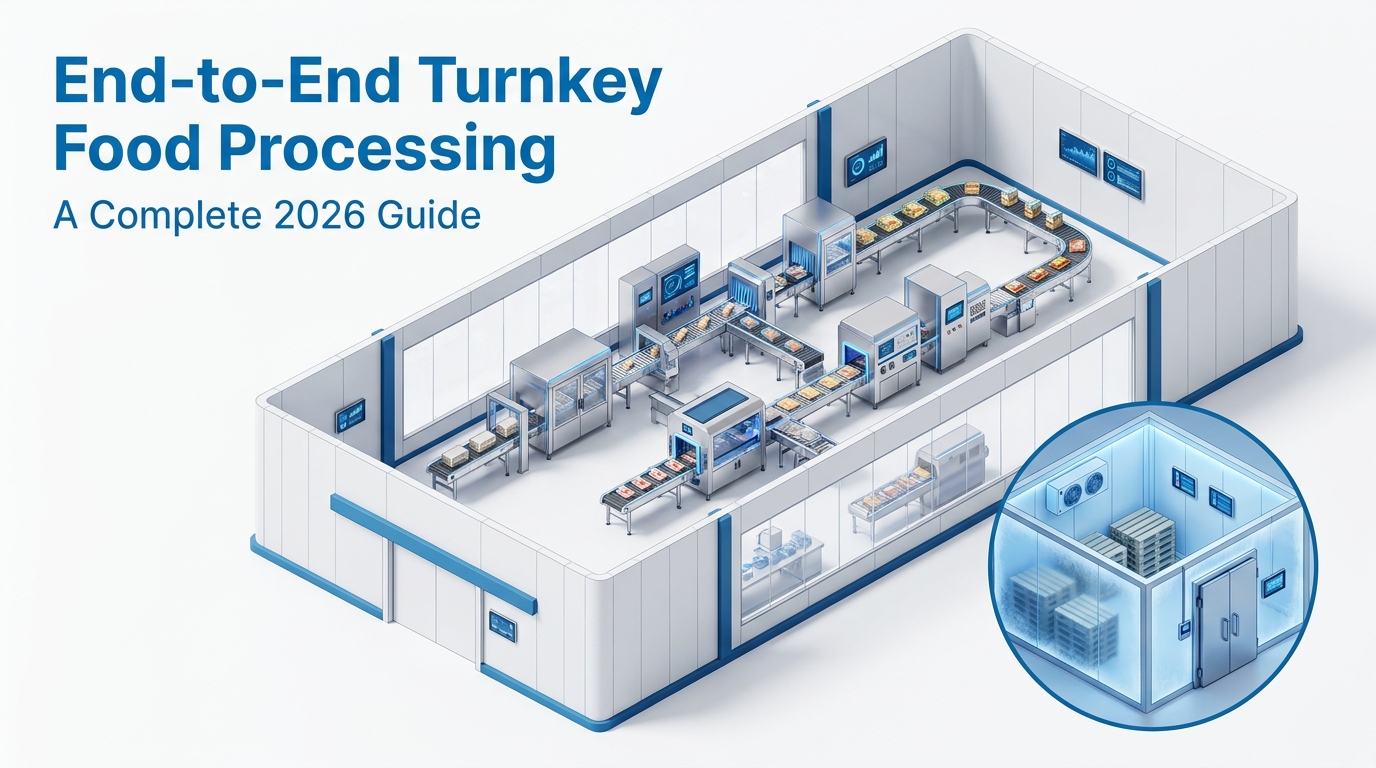
This guide walks through how the ammonia refrigeration cycle works, where an industrial ammonia refrigeration system beats a Freon plant, what Indian schemes and standards apply, and a practical checklist for your project. It is written from the perspective of Rinac’s engineering teams, who have delivered more than 10,000 projects across 23 countries over 30+ years as solution architects and builders of cold chain infrastructure.
How the Ammonia Refrigeration Cycle Works
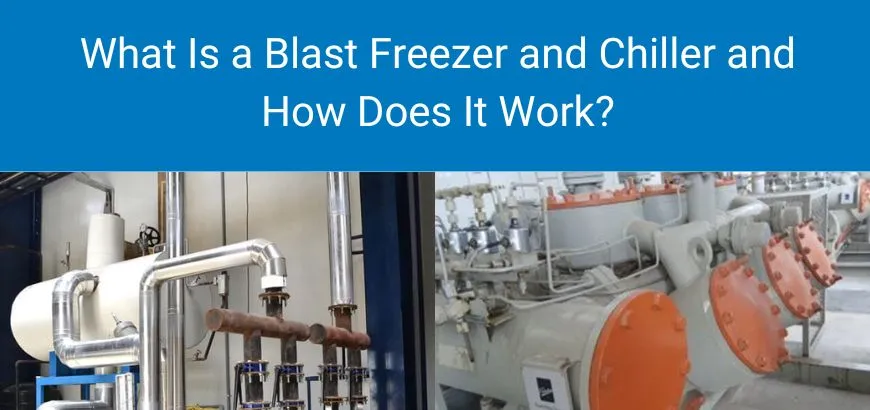
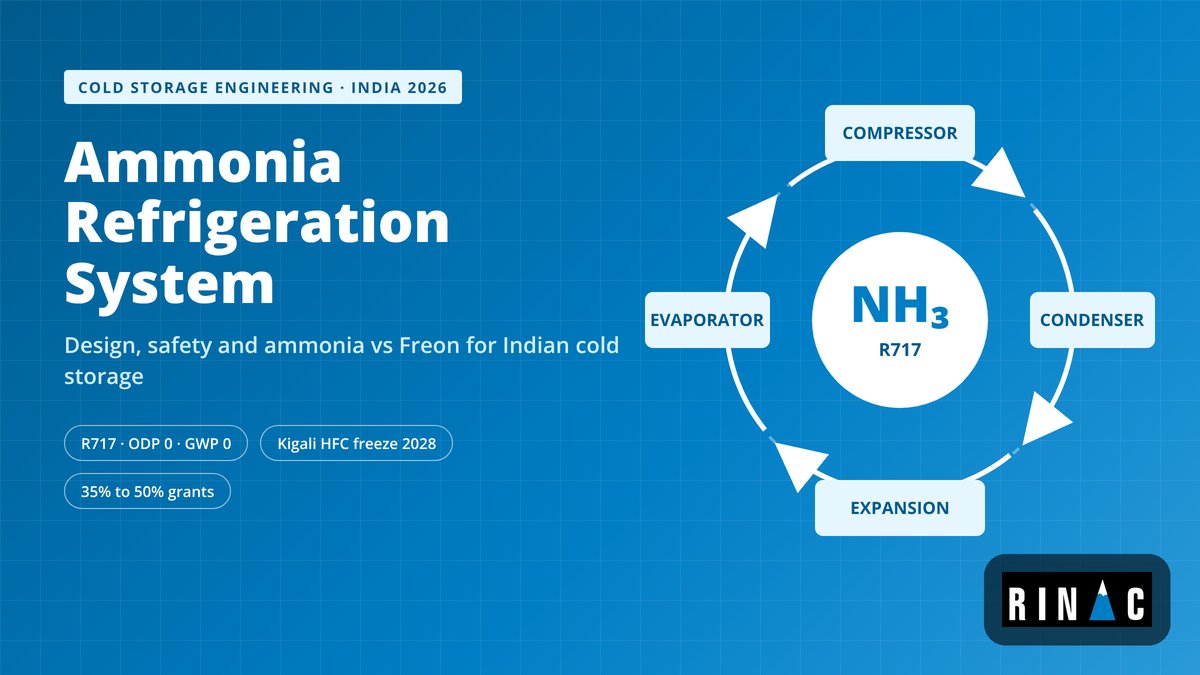
At its core, the ammonia refrigeration cycle is the same vapour compression cycle found in a household fridge, scaled up and built in steel. Ammonia absorbs heat from the cold chamber as it evaporates, a compressor raises its pressure and temperature, a condenser rejects that heat to outside air or water, and an expansion device drops the pressure again so the liquid can boil off at a low temperature inside the evaporator.
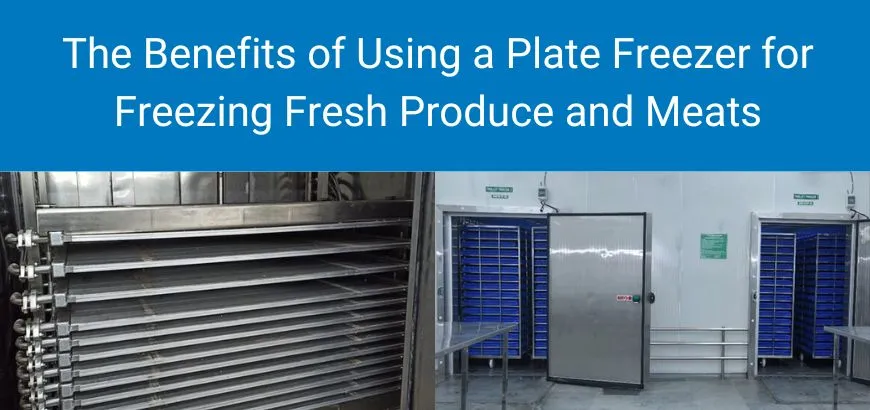
- Evaporation: Low-pressure liquid ammonia boils inside air coolers or plate freezers, pulling heat out of the product and the room air.
- Compression: Reciprocating or screw compressors draw in the vapour and compress it. Very low temperature duties such as blast freezing usually use two-stage compression with an intercooler.
- Condensation: Hot, high-pressure vapour is condensed back to liquid, typically in an evaporative condenser on the roof or a shell-and-tube condenser fed by a cooling tower.
- Storage and expansion: Liquid collects in a high-pressure receiver, then passes through an expansion valve or float system back to the low-pressure side.
Large plants often use a pumped recirculation or flooded arrangement, where a low-pressure receiver and liquid pumps overfeed the evaporators. This keeps coil surfaces fully wetted and improves heat transfer. Smaller plants may use direct expansion, which needs less refrigerant charge but more careful control.
Ammonia Water Refrigeration System: The Absorption Variant
An ammonia water refrigeration system replaces the mechanical compressor with heat. Water absorbs ammonia vapour at low pressure, a pump lifts the solution to a generator, and heat from steam, hot water or exhaust gas drives the ammonia back out at high pressure. These vapour absorption machines make sense where a plant already has spare low-grade heat, such as a dairy with boiler capacity or a processing plant with engine exhaust. For most stand-alone Indian cold stores with grid power, vapour compression remains the practical choice.
Industrial Ammonia Refrigeration System vs Freon: Which Fits Your Cold Storage?
Choosing the refrigeration system for cold storage is a decision about scale, location, skills and the next 20 years of operating cost. The table below summarises how an industrial ammonia refrigeration system compares with a typical HFC (Freon) plant. It is a qualitative engineering comparison, not a quotation.
| Factor | Ammonia (R717) | HFC / Freon systems |
|---|---|---|
| Climate impact | ODP 0, GWP 0 [8] | Most common HFC blends carry high GWP and fall under the Kigali phase-down, with India’s freeze from 2028 [9] |
| Best-fit scale | Large stores, multi-chamber plants, freezing and processing lines with long running hours | Small to mid-size cold rooms, retail, distributed or modular units |
| Piping and materials | Steel or stainless steel only; ammonia attacks copper and brass | Copper piping, lighter and quicker to install |
| Refrigerant cost and top-up | Low cost per kg, widely available | Higher cost per kg, availability expected to tighten as phase-down progresses |
| Safety profile | Toxic, B2L, needs machine room, detection, ventilation and trained operators [8] | Lower toxicity, but still needs leak management and trained service |
| Upfront capital | Higher at small sizes; becomes competitive as plant size rises | Lower at small sizes |
| Operating efficiency | Strong thermodynamic performance, well suited to central plants | Good with modern compressors and VFDs at smaller scale |
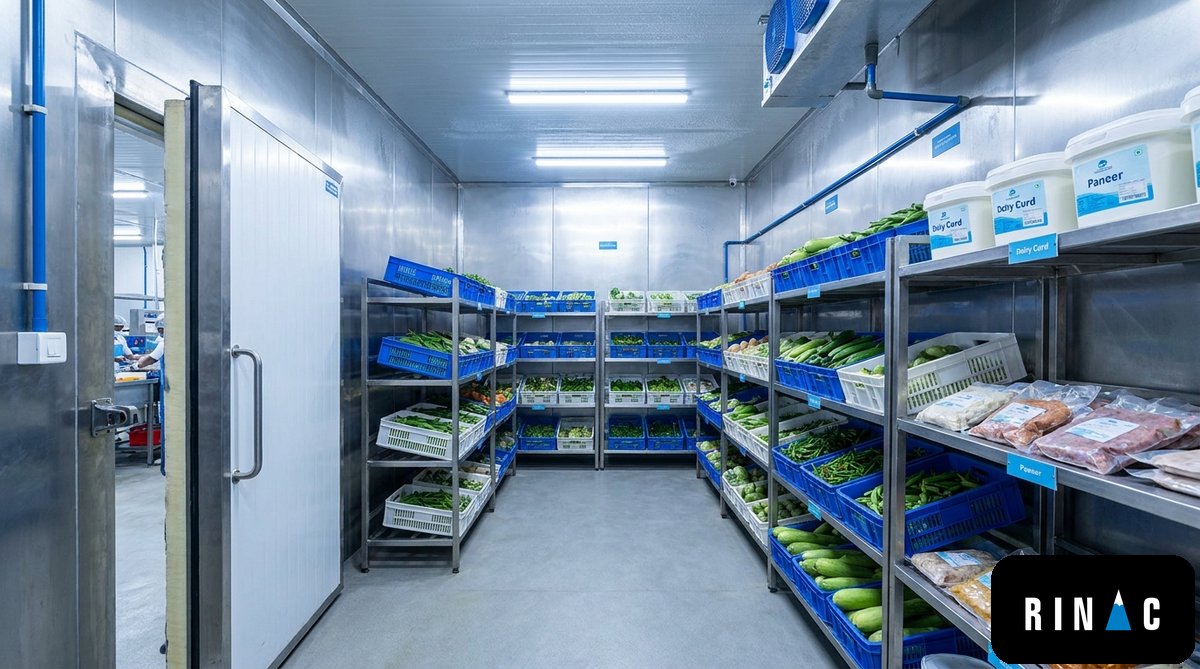
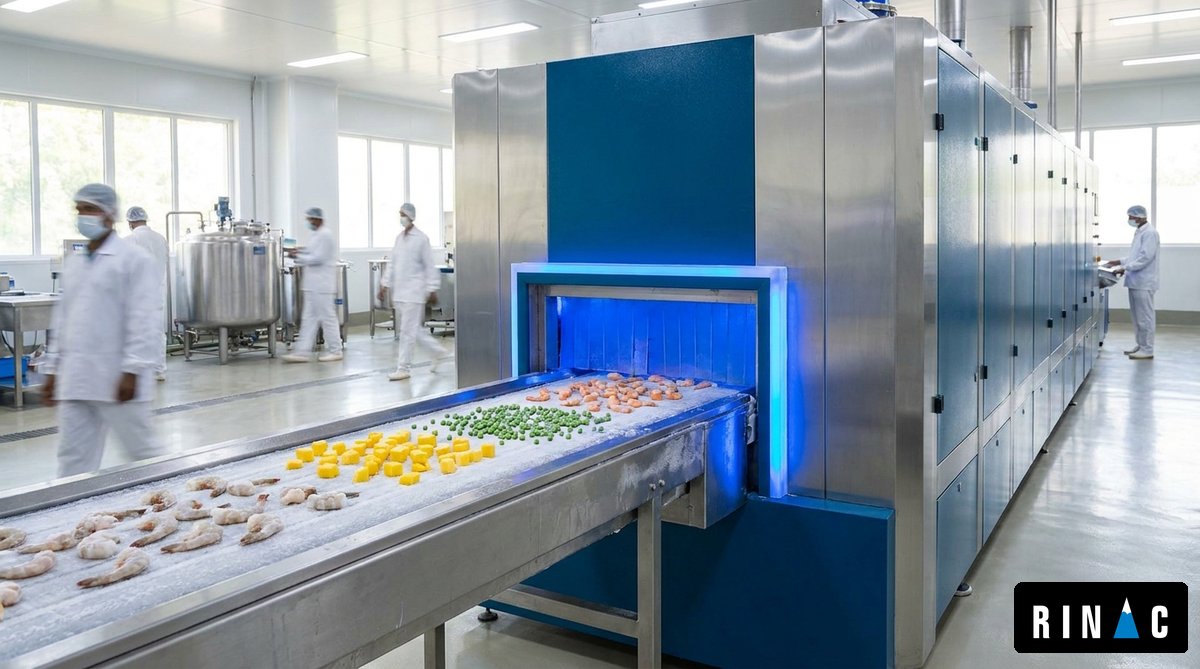
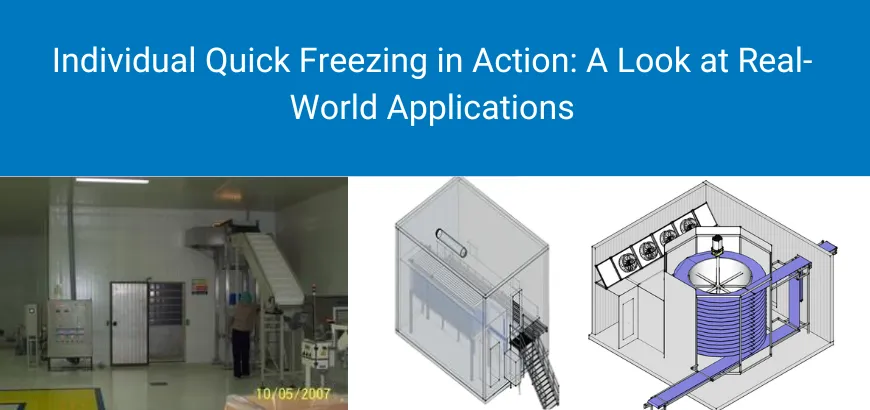
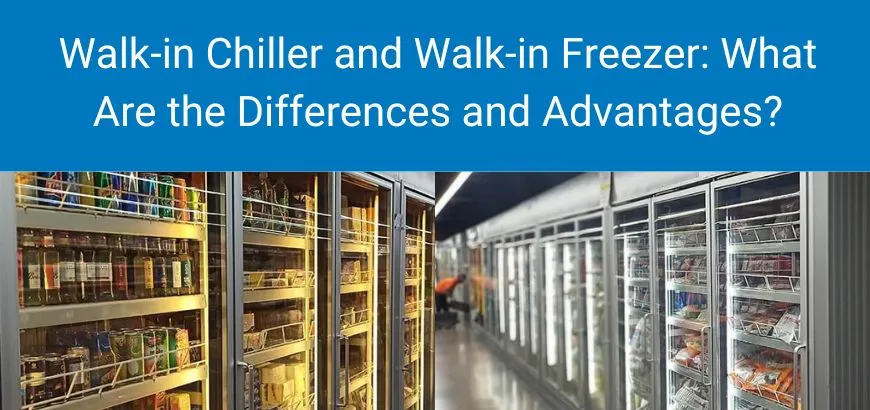
In practice, the cold storage refrigeration system choice usually lands like this. Large bulk stores for potatoes, onions and fruit, frozen warehouses holding seafood or meat, and process plants with blast freezers or IQF tunnels tend to justify ammonia. Compact cold rooms, pharma stores and multi-site distribution often suit Freon or packaged condensing units, sometimes with lower-GWP blends. Our potato cold storage guide and blast freezer buyers guide show how load profile drives that call.
“The refrigerant decision should follow the load study, not the other way round. We size the envelope, the product pull-down and the door traffic first, then decide whether a central ammonia plant or distributed Freon units give the lowest lifetime cost for that client.” Rinac engineering perspective
Designing an Ammonia Refrigeration System for Cold Storage
A safe and efficient ammonia refrigeration system for cold storage is the sum of several design choices. Getting any one wrong shows up later as high power bills, product loss or a safety incident.
1. Start With the Envelope and the Load
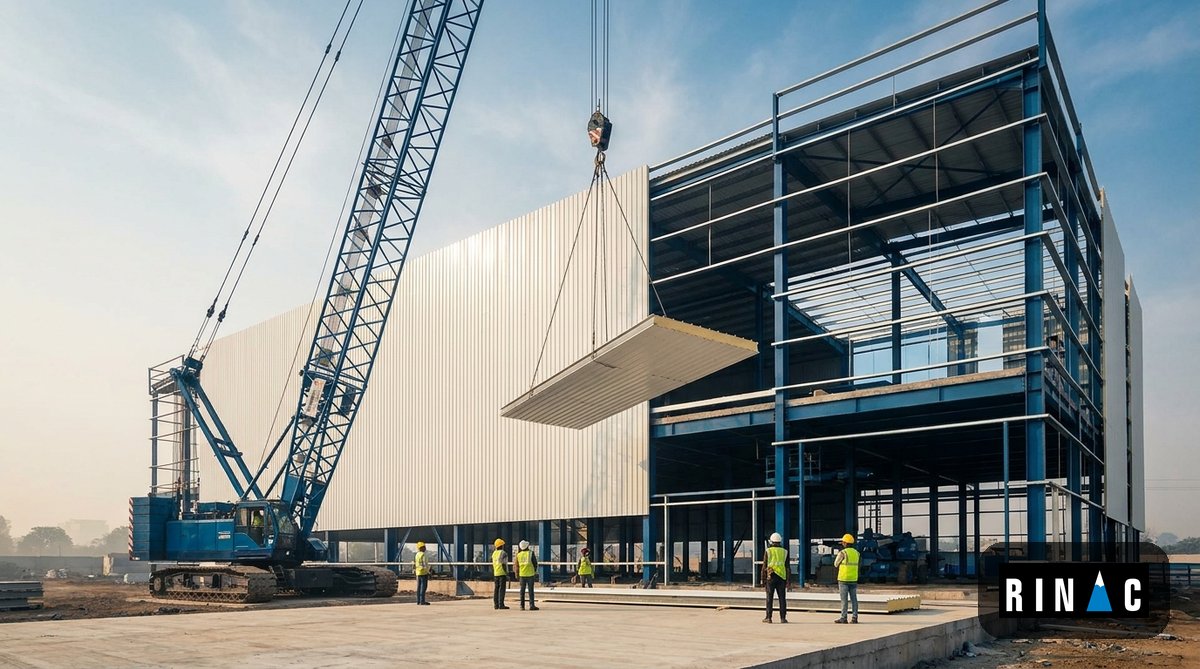
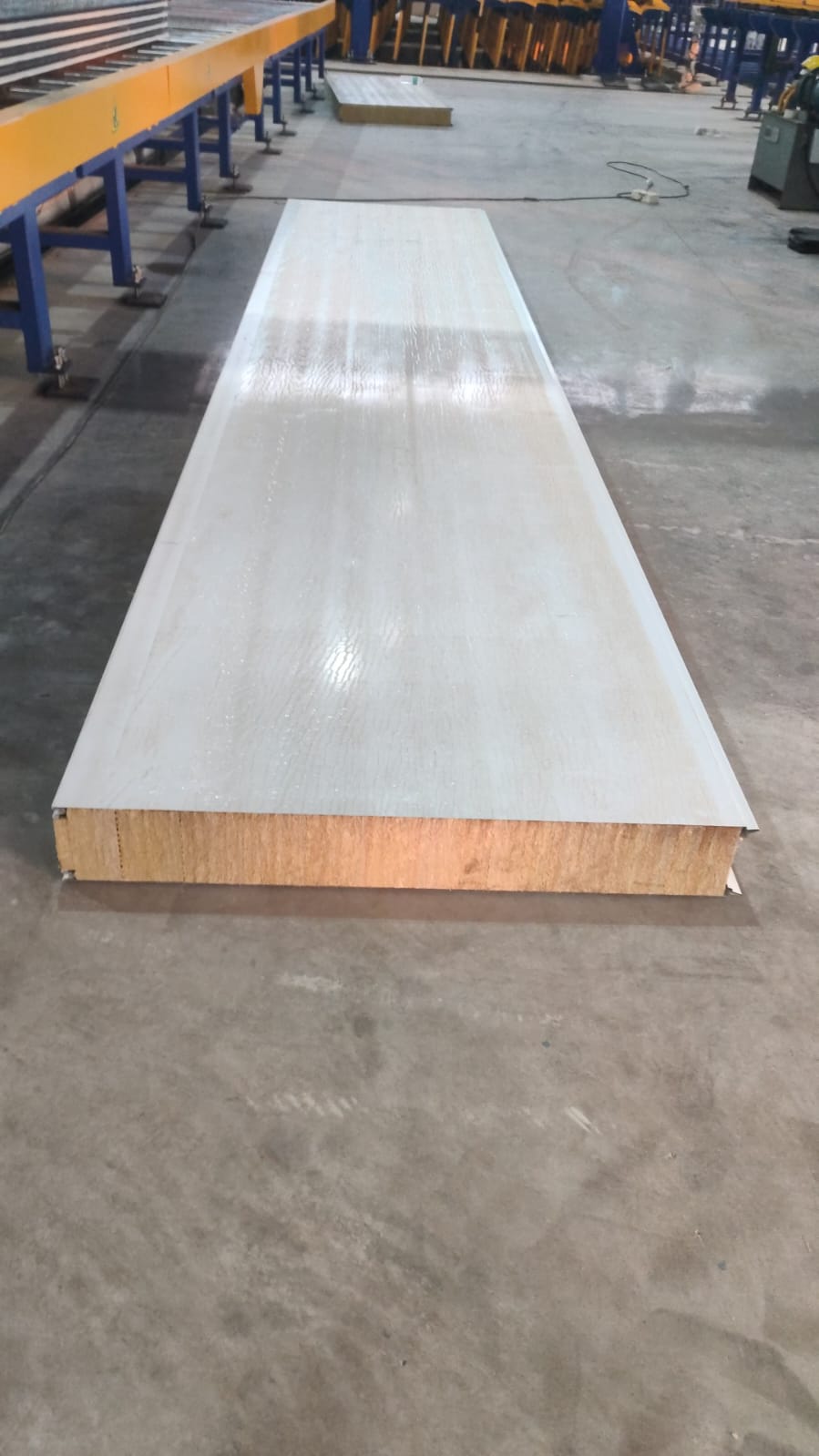
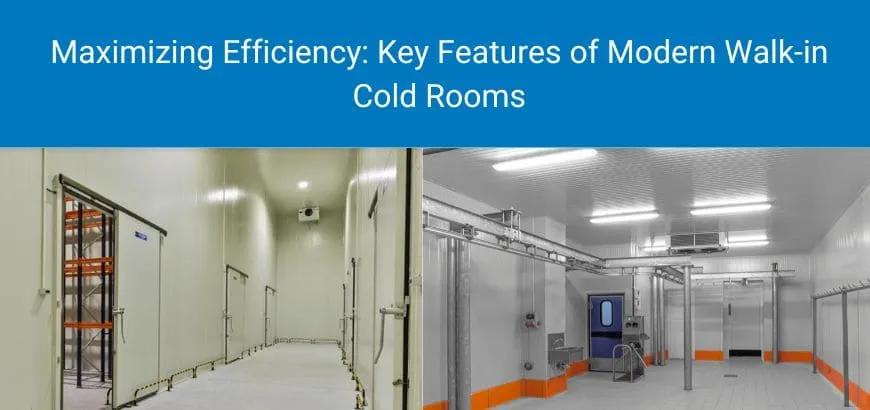
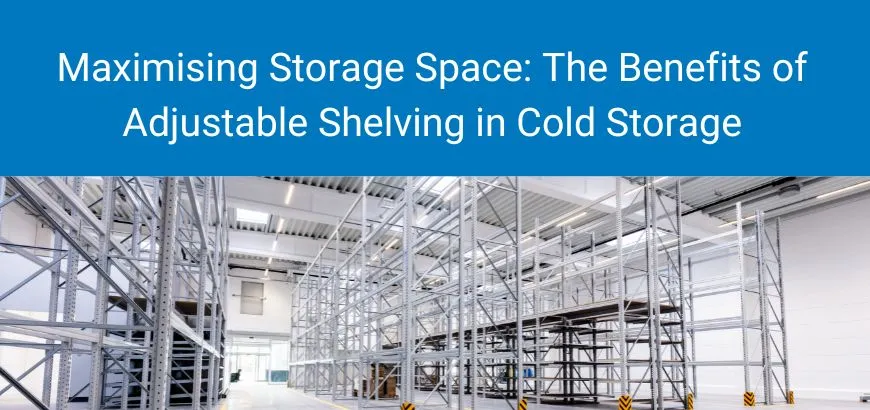
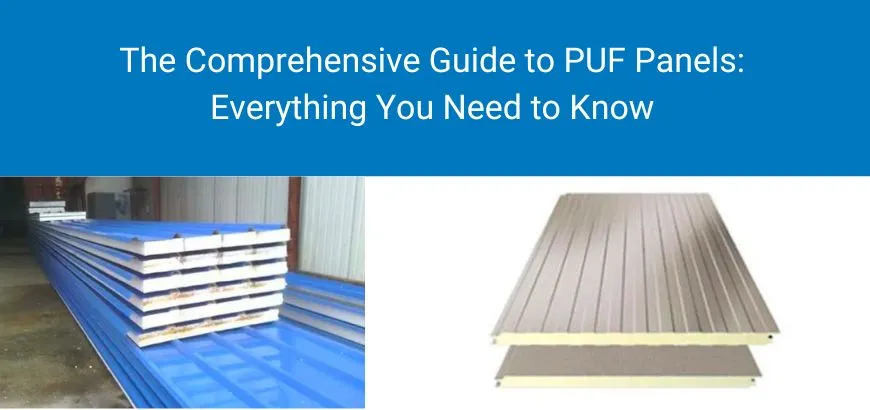
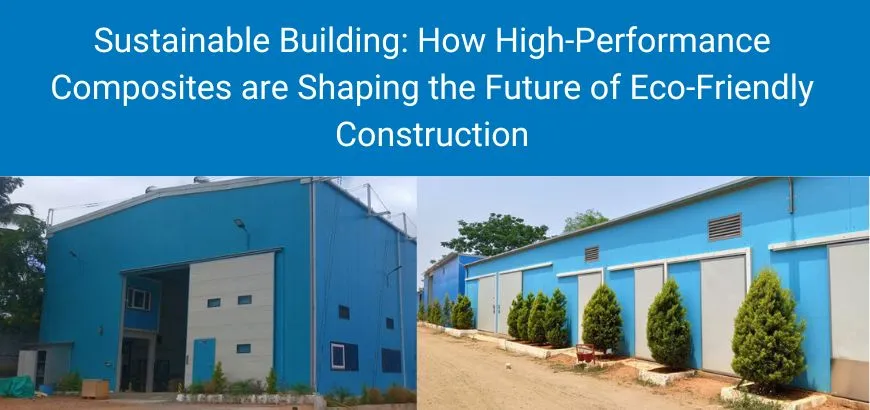
Insulation quality decides how hard the plant has to work every day. Well-sealed PUF or PIR panels, insulated floors with underfloor heating for freezer chambers, and properly sealed doors cut the heat load before a single compressor is chosen. Our cold storage energy efficiency guide covers this in detail, and Rinac’s prefabricated building systems and patented HPCC construction are designed to deliver a tight thermal envelope at speed.
2. Match Temperature Zones to the Product
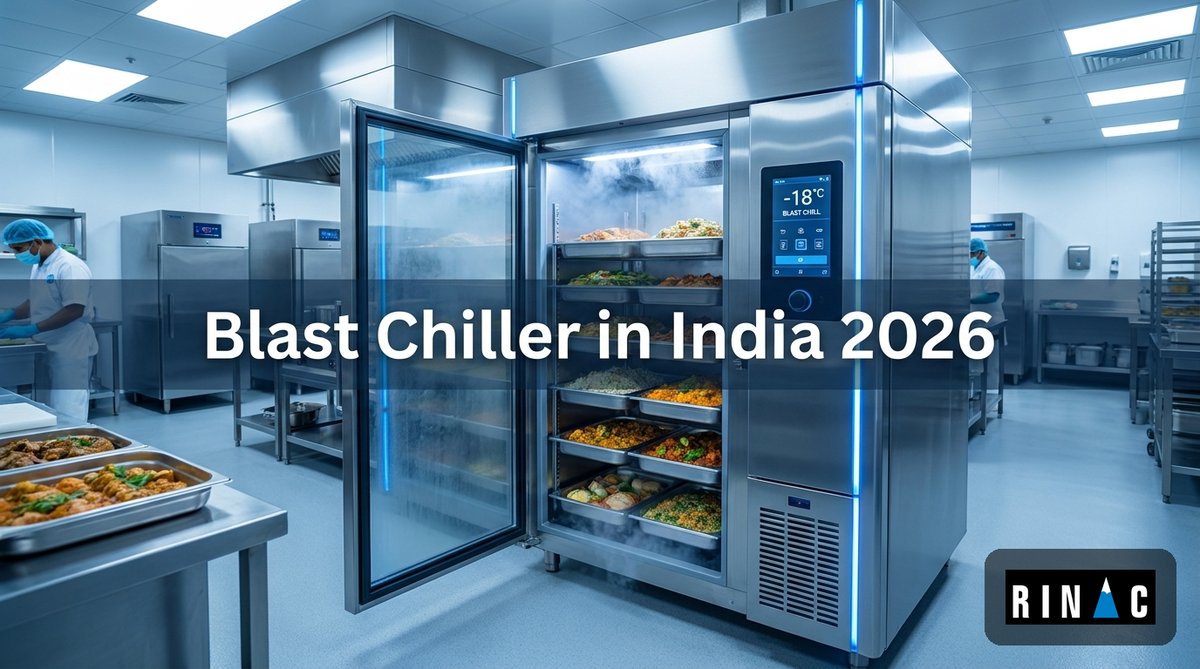
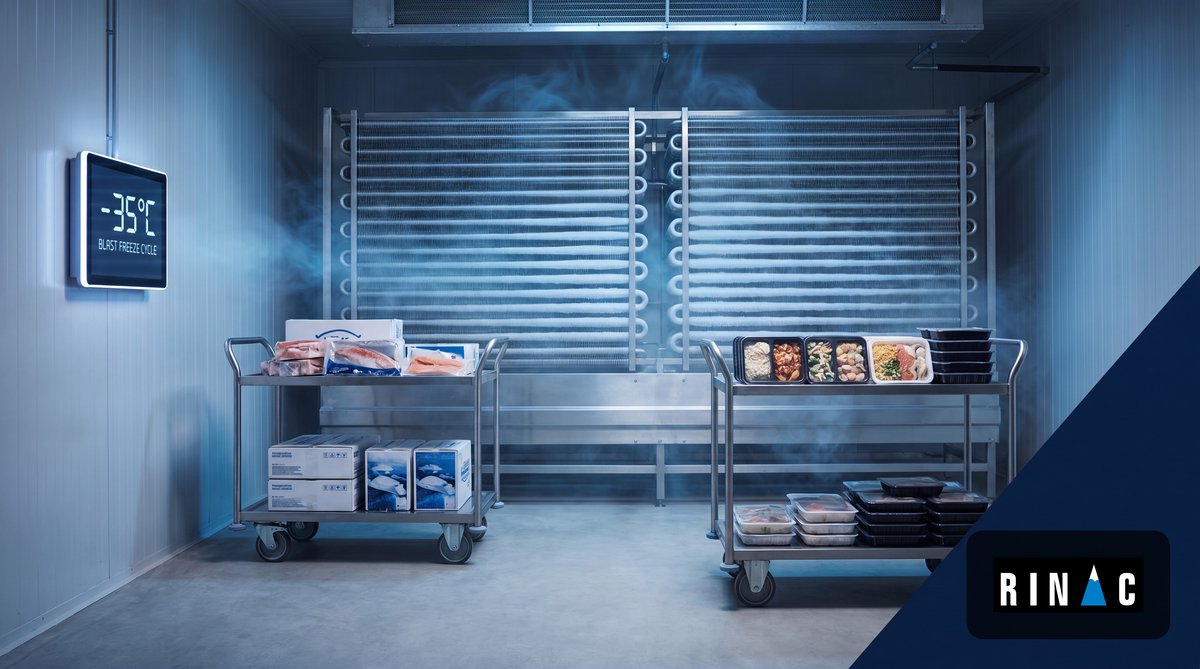
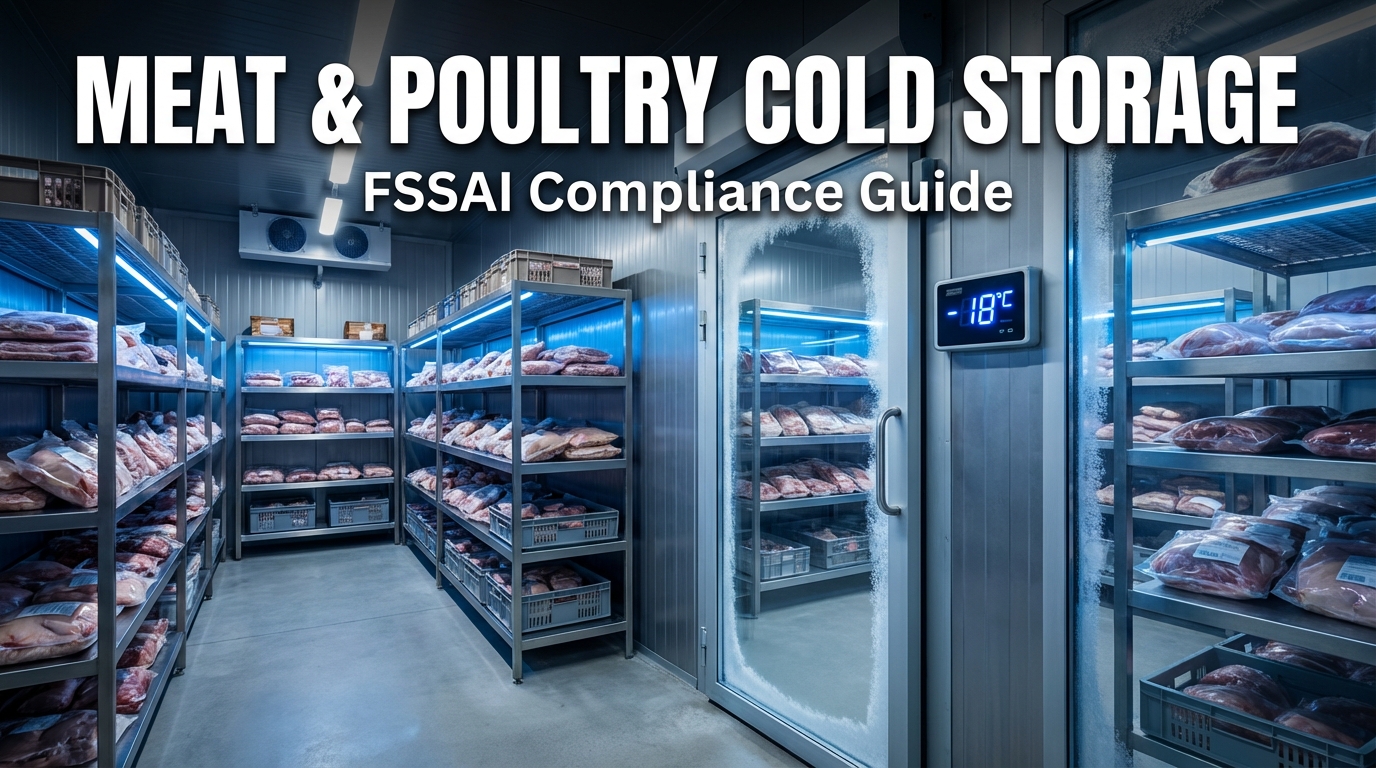
Chilled chambers for fruit and vegetables, frozen stores and blast freezers all run at different suction temperatures. Quick frozen foods should be held at -18°C or colder at all points in the cold chain [7], which means frozen chambers typically operate below that, and blast freezers far below. Grouping chambers with similar suction temperatures on the same compressor stage keeps efficiency high.
3. Keep the Charge Low and the Plant Room Separate
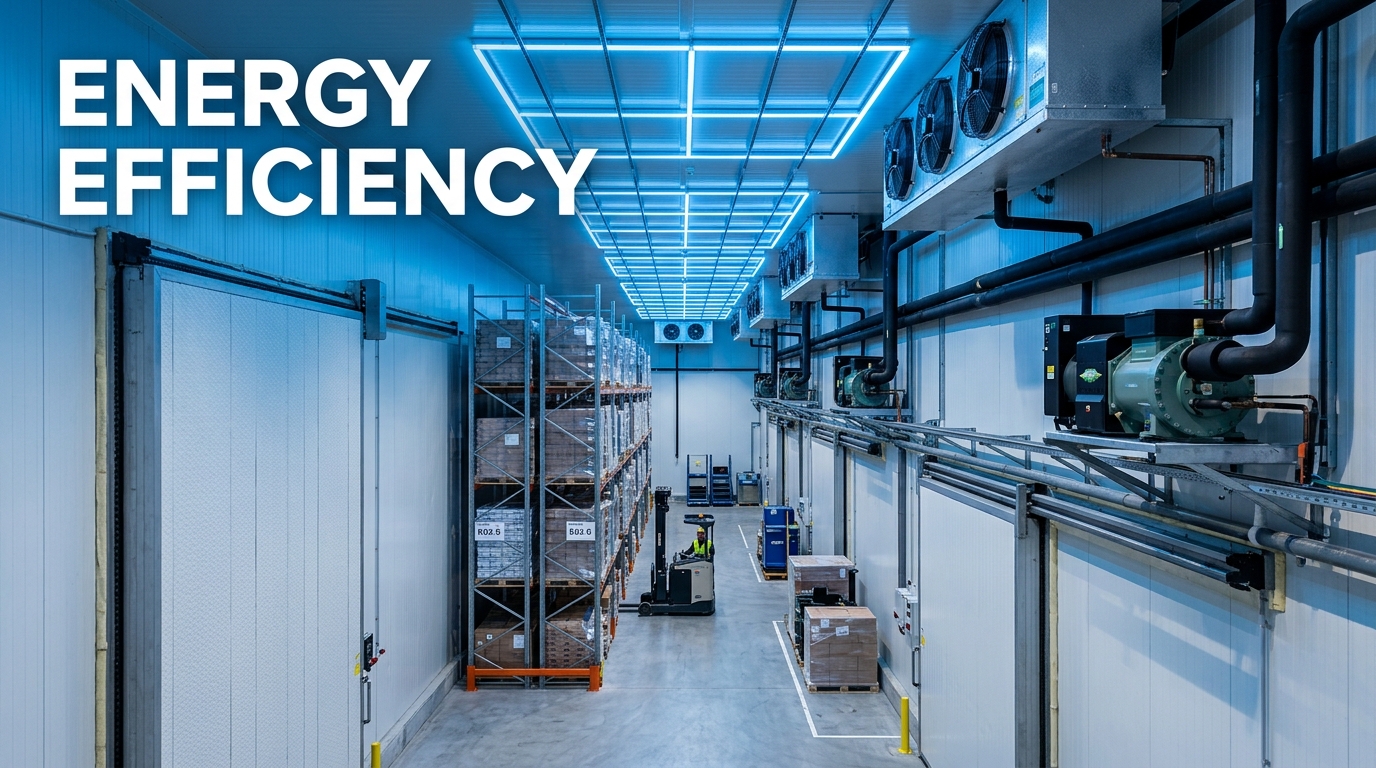
Modern practice is to minimise ammonia charge, place compressors, receivers and vessels in a dedicated, ventilated machine room away from occupied areas, and keep long liquid lines out of product zones. Low-charge packaged ammonia chillers that cool a secondary fluid such as glycol are another option where ammonia should stay out of the chambers entirely.
4. Engineer the Safety Layer From Day One
- Fixed ammonia detectors in the machine room and chambers, linked to alarms, ventilation and automatic shut-off. NCCD’s cold chain guidelines already ask projects to specify leak sensors and alarm systems [10].
- Pressure vessels designed and tested to recognised codes. NCCD guidelines reference ASME Section VIII, Division 1 for pressure vessels [10].
- Exhaust ventilation positioned high, because ammonia is lighter than air [8].
- Emergency isolation valves, relief valves piped to safe discharge, and a written emergency response plan rehearsed with local fire services.
- Breathing apparatus, eye-wash and safety showers at the plant room exit, and annual training for every operator.
Safety first: Ammonia incidents at Indian cold storages, including the March 2026 structural collapse at a Prayagraj facility that was followed by an ammonia leak [11], are a reminder that structural integrity, refrigeration safety and operator training have to be designed together. Never treat leak detection or structural certification as optional extras.
5. Controls, Monitoring and Energy
PLC or SCADA control, variable speed drives on compressors and condenser fans, and continuous temperature logging protect both product and power bills. For regulated products, link the refrigeration controls with your cold chain monitoring system so excursions are recorded and acted on.
Indian Market Context: NCCD Data, MoFPI and NHB Support
India’s cold chain is growing, but slowly relative to need. NCCD projects capacity rising at roughly 2.2% a year to almost 440 lakh tonnes by 2031 [2], while an ASSOCHAM report published in September 2026 puts annual post-harvest losses at about USD 18.5 billion [5]. Demand for frozen capacity is rising faster: IMARC estimates the Indian frozen foods market at INR 216.59 billion in 2025, growing at 12.86% a year to INR 643.64 billion by 2034 [4]. Frozen and processing capacity is exactly where an industrial ammonia refrigeration system is most often specified.
MoFPI: PM Kisan SAMPADA and ICCVAI
Under the Integrated Cold Chain and Value Addition Infrastructure scheme of PM Kisan SAMPADA Yojana, MoFPI provides grant-in-aid of 35% of eligible project cost in general areas and 50% in difficult areas and for SC/ST, FPO and SHG projects, up to Rs 10 crore per project [3]. As of June 2025, 395 integrated cold chain projects had been approved since 2008 and 291 were complete, adding 25.52 lakh MT a year of preservation capacity [1].
NHB and MIDH: Horticulture Cold Storage
For horticulture cold storage up to 5,000 MT, the Mission for Integrated Development of Horticulture offers credit-linked, back-ended subsidy of 35% of project cost in general areas and 50% in North Eastern and hilly states and scheduled areas [1]. Our cold chain subsidy guide explains how to prepare an application, and our cold storage plant EPC guide explains how the refrigeration scope fits into a bankable DPR.
State initiatives: Several states run their own top-up incentives for cold chain and food processing, usually through their agriculture, horticulture or industries departments. Terms change frequently, so confirm current rates with the state nodal agency before finalising your financing plan.
Compliance and Standards for Ammonia Cold Storage
FSSAI and Temperature Control
In an advisory dated 15 October 2026, FSSAI directed food businesses to maintain prescribed temperatures across storage and transport, citing Schedule 4 of the Food Safety and Standards (Licensing and Registration of Food Businesses) Regulations, 2011, and treating temperature abuse as non-compliance with hygiene requirements [6]. A reliable cold storage refrigeration system with redundancy and logged controls is the practical way to meet that expectation.
HACCP, ISO, GMP and WHO-GMP
HACCP plans for frozen and chilled products treat storage temperature as a critical control point, so the refrigeration design should include alarms, standby capacity and documented calibration. Pharma and nutraceutical clients working to GMP or WHO-GMP need validated temperature mapping and audit-ready records. Rinac works to ISO, FSSAI, HACCP, GMP, IGBC and WHO-GMP requirements across its cold chain and clean construction projects.
Pressure Equipment, Fire and Factory Approvals
Pressure vessels should follow recognised design codes such as ASME Section VIII, Division 1, which NCCD’s guidelines reference [10], and projects must comply with applicable BIS, ISO and IS standards [10]. Ammonia plants also need local fire and factory approvals and a site emergency plan. Requirements vary by state, so engage your consultant and the local authorities early.
Refrigerants and the HFC Phase-Down
Under the Kigali Amendment, India freezes HFC consumption in 2028 against a 2024 to 2026 baseline, then cuts it by 10% in 2032, 20% in 2037, 30% in 2042 and 85% by 2047 [9]. A cold store commissioned today will still be running in the 2040s, so refrigerant availability and service cost over that period belong in the investment case. Natural refrigerants such as ammonia sit outside the HFC schedule.
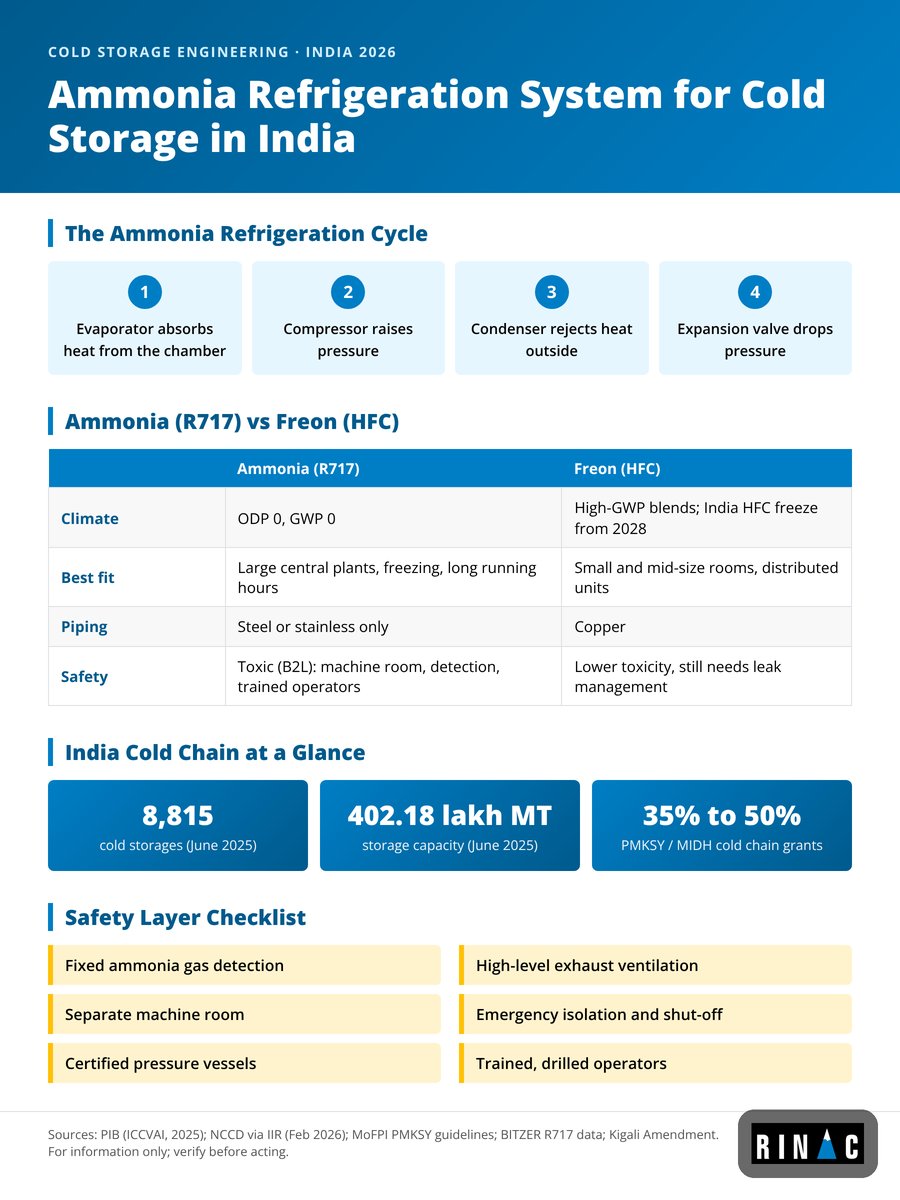
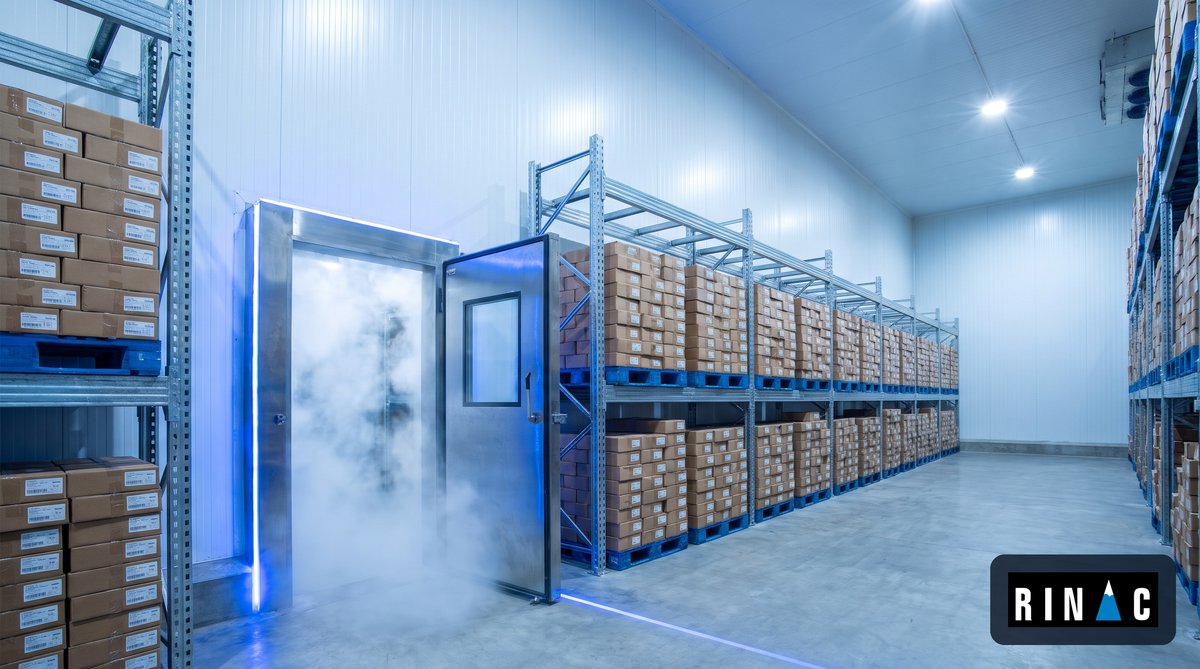
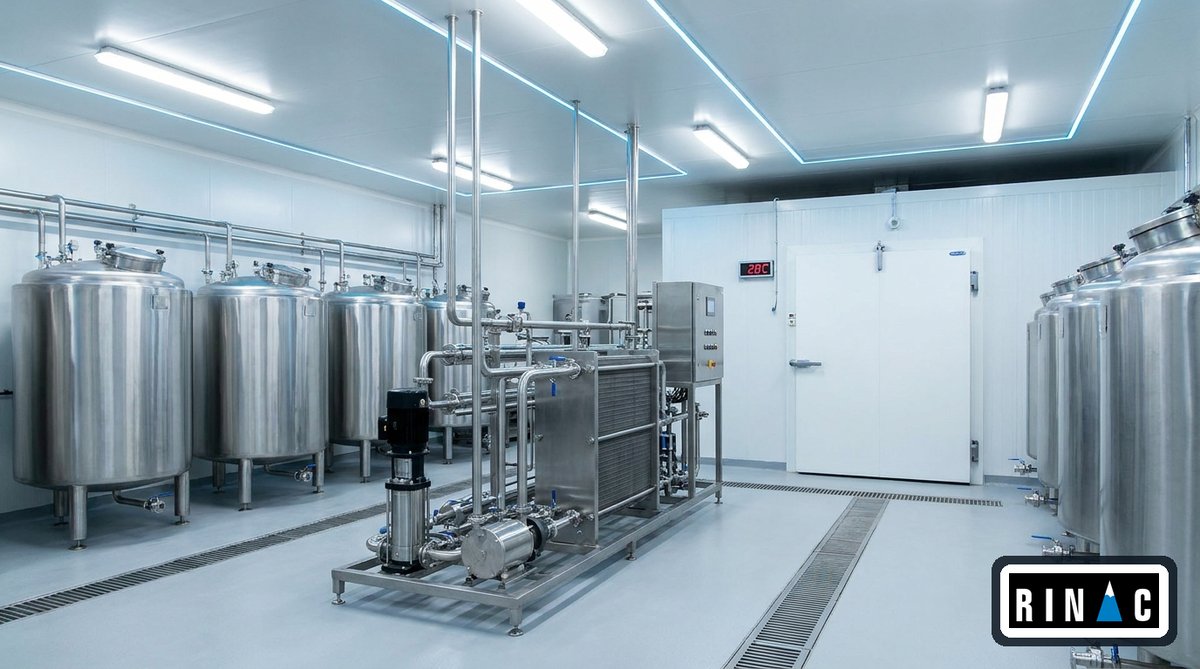
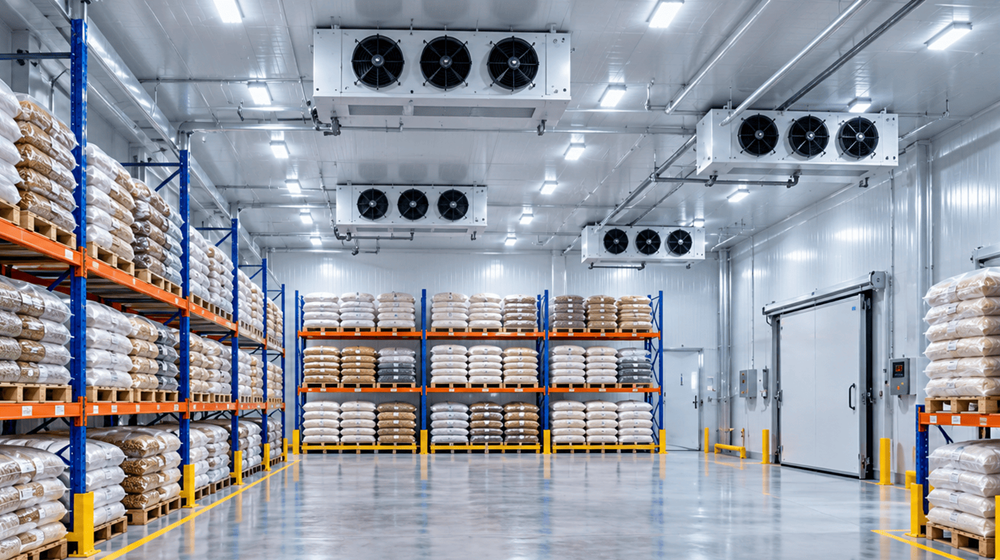
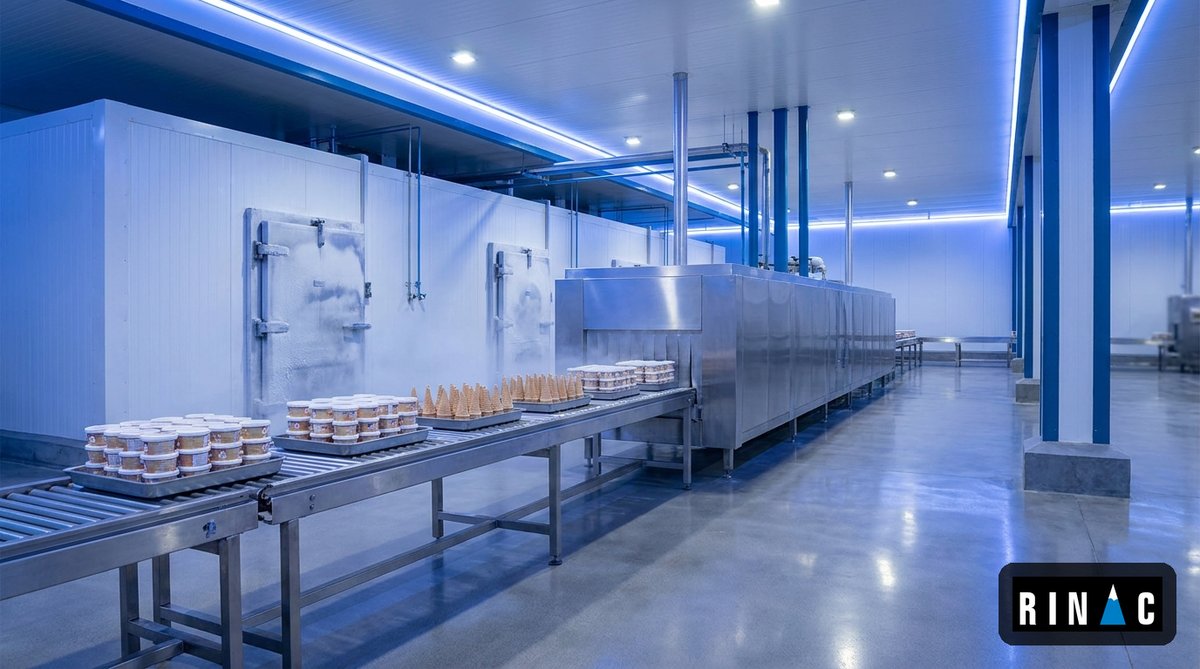
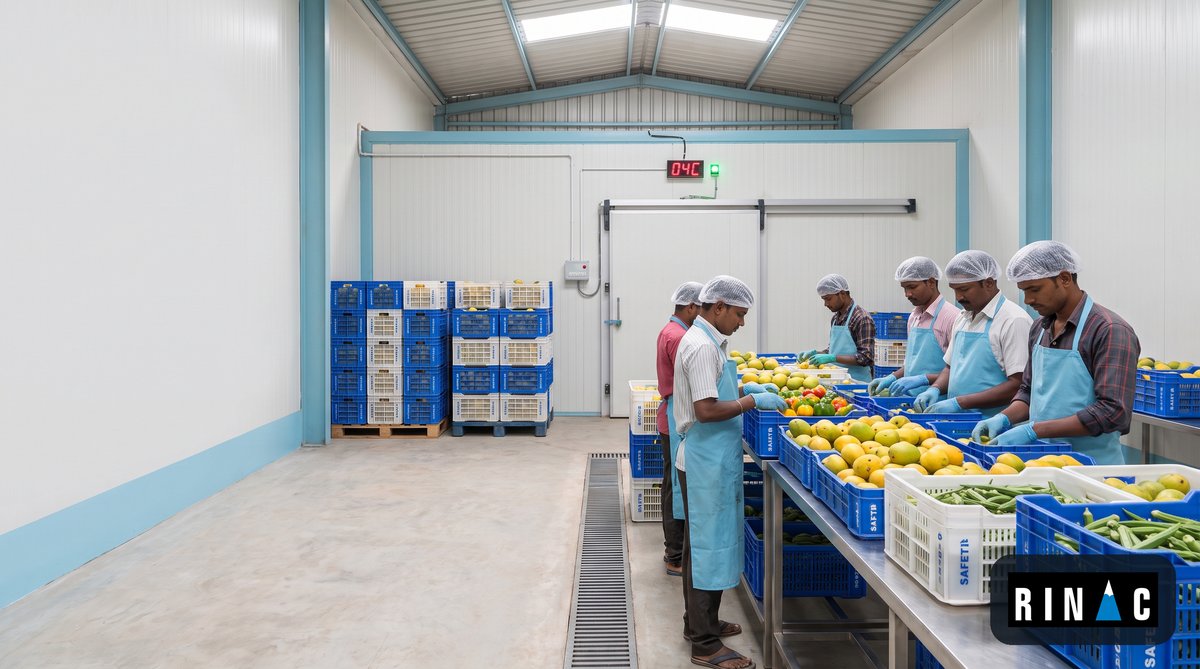
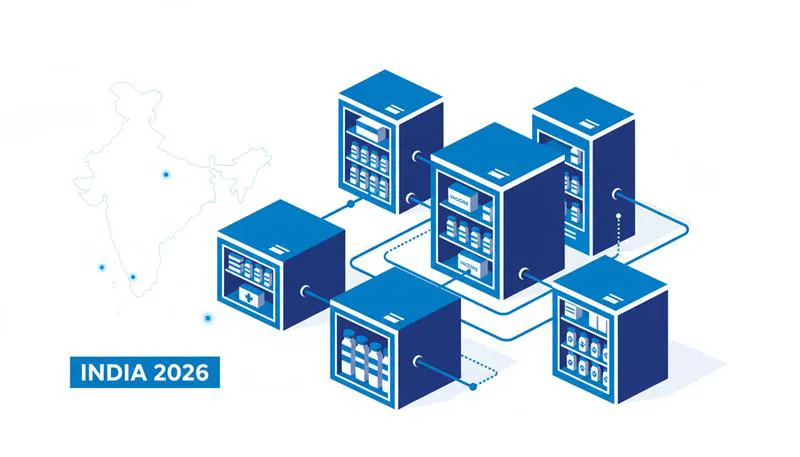
Ammonia refrigeration system at a glance: cycle, where it fits and the safety layer every Indian cold store needs.
Where Ammonia Works Best Across Indian Sectors
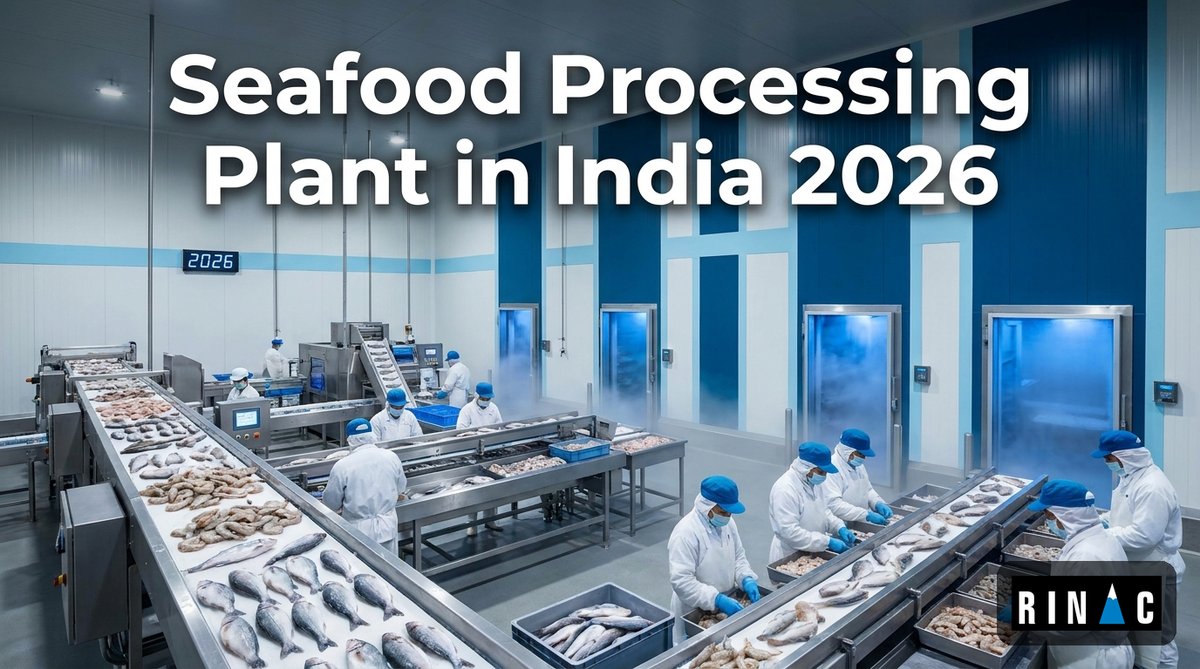
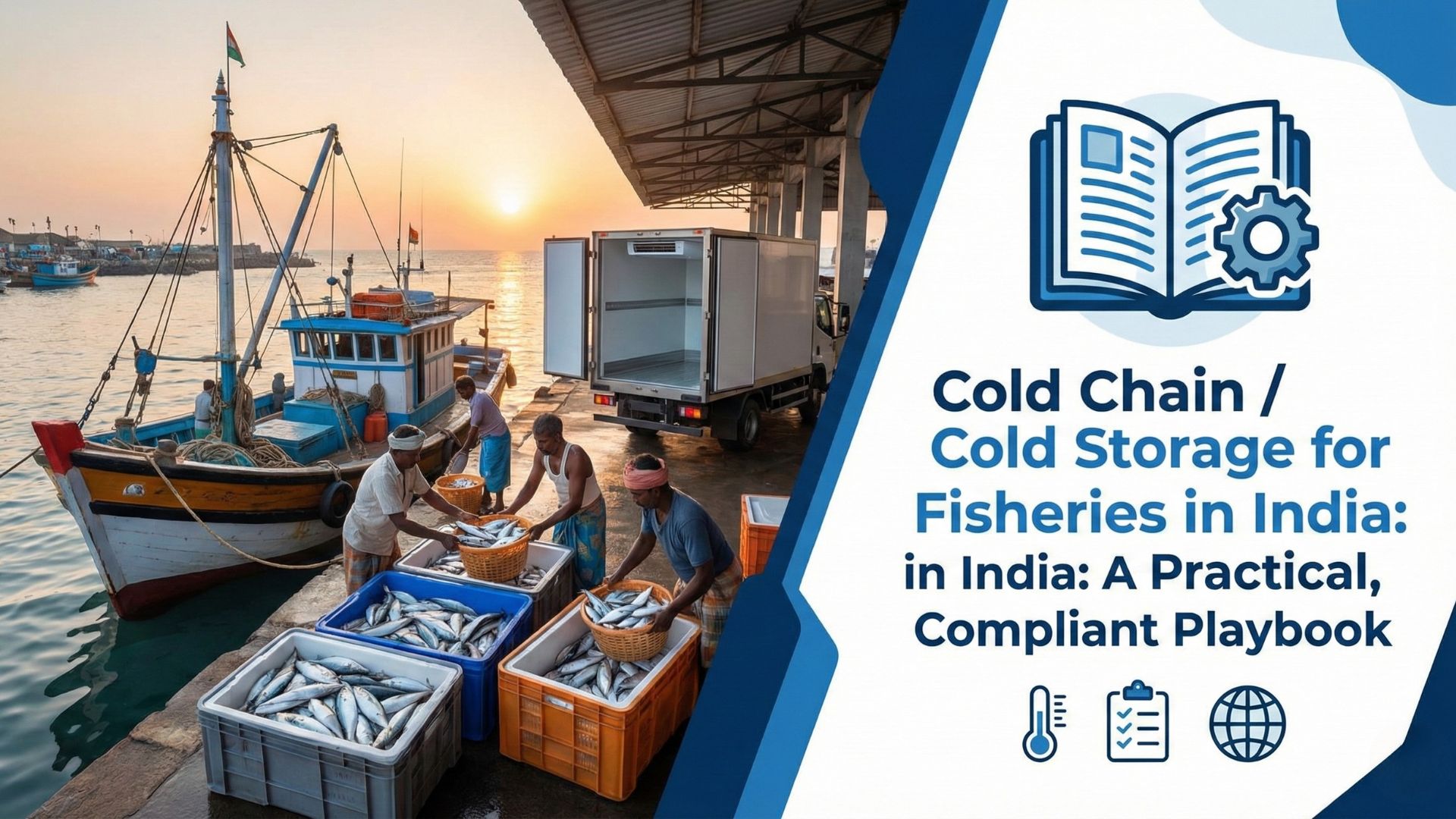
- Fisheries and seafood: Plate freezers, blast freezers and frozen stores at -18°C or below run long hours, which suits central ammonia plants. Our seafood processing guides cover the plant layout side.
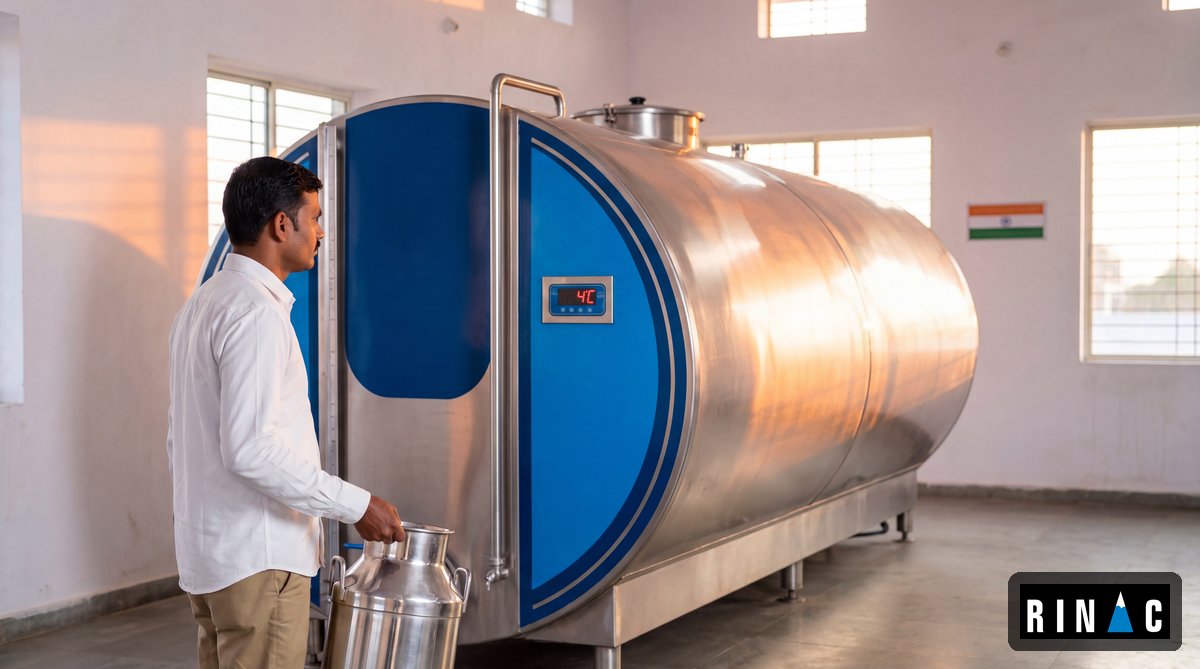
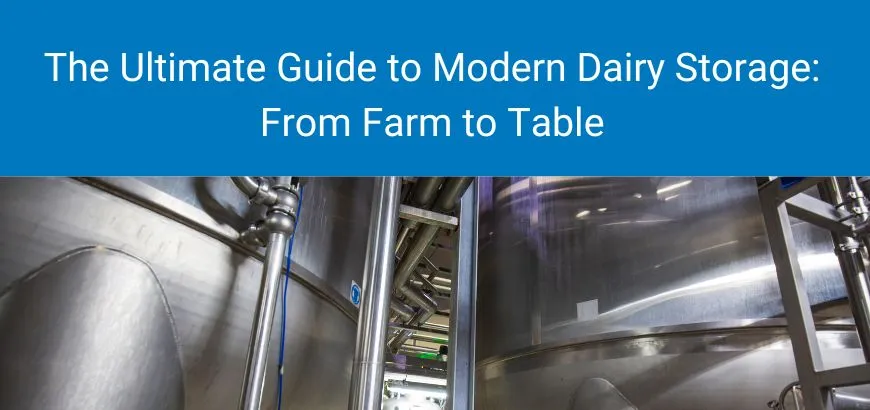
- Dairy and ice cream: Ice bank tanks, milk chilling and hardening rooms often share an ammonia plant. Dairy plant design should size the ammonia plant around peak milk intake.
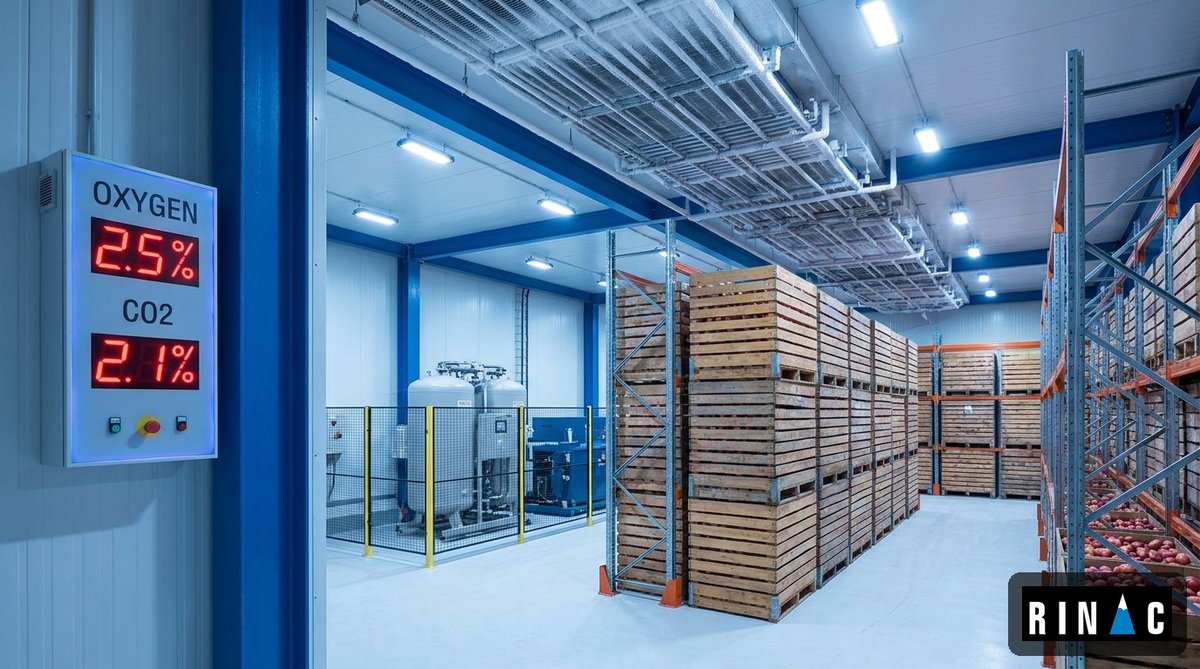
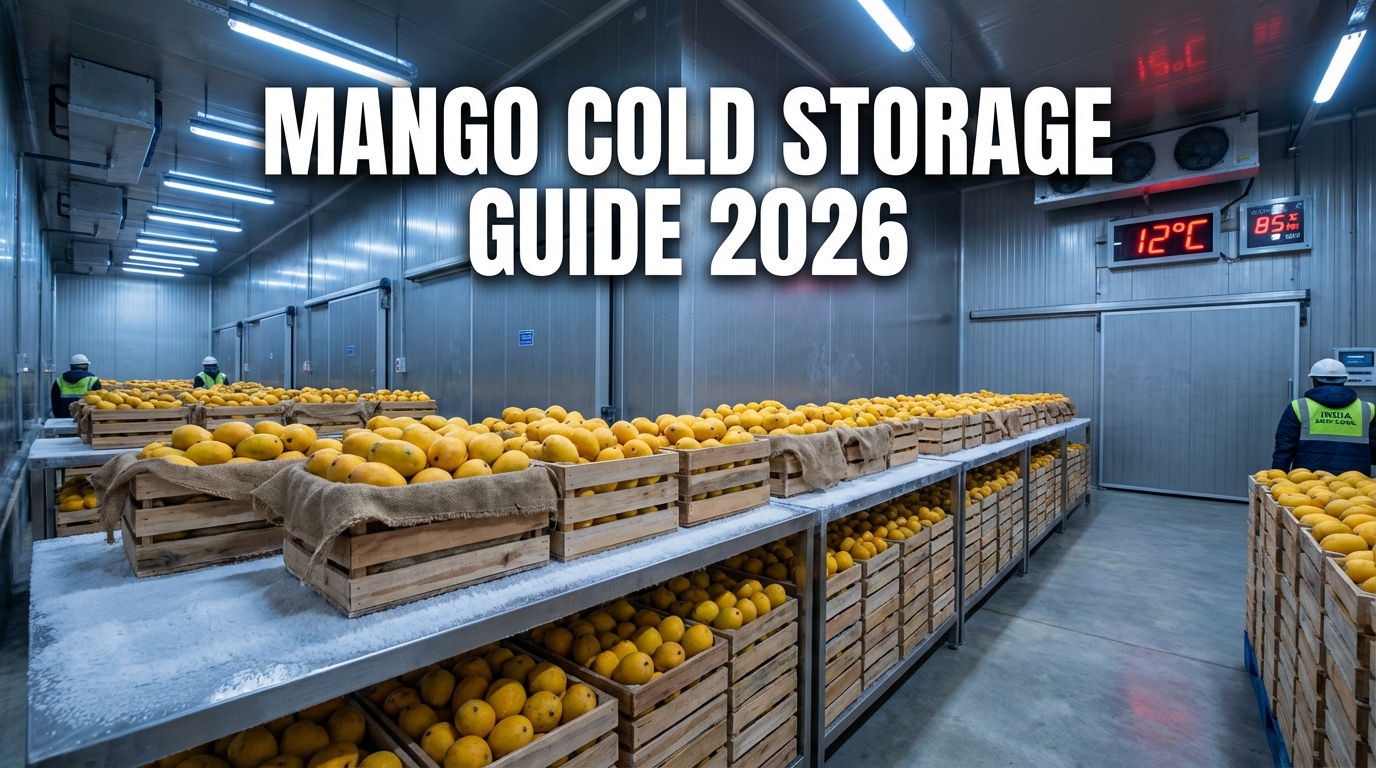
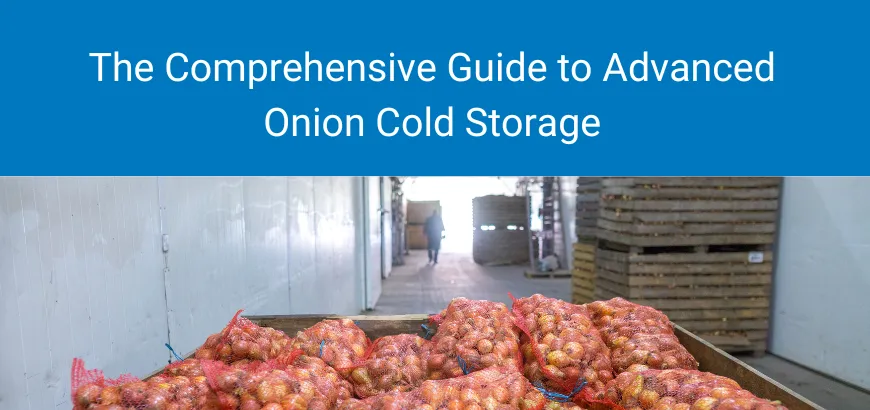
- Agriculture and horticulture: Bulk potato, onion and fruit stores with many chambers at similar temperatures benefit from ammonia’s economics.
- Meat, poultry and ready-to-eat: Processing plants with multiple temperature zones and freezing lines, often delivered as turnkey food processing projects.
- Pharma and retail distribution: Smaller, distributed or validated rooms more often use Freon or secondary-loop systems that keep ammonia away from occupied spaces.
Practical Checklist Before You Choose an Ammonia Refrigeration System
- Complete a heat load study for every chamber: product type, daily intake, pull-down time, door openings and ambient design conditions for your district.
- Group chambers by suction temperature and decide single-stage, two-stage or secondary-loop design.
- Compare lifetime cost, not just capital: power, refrigerant top-up, maintenance and operator cost over 15 to 20 years.
- Check site constraints: distance to habitation, space for a separate machine room, water availability for evaporative condensers and access for emergency services.
- Lock in the safety layer: detection, ventilation, isolation valves, relief piping, PPE and an emergency plan.
- Plan operator training and an annual maintenance contract before commissioning.
- Confirm subsidy eligibility and include the refrigeration scope clearly in your DPR.
- Use one accountable partner for envelope, refrigeration and controls to avoid interface gaps. Our cold chain equipment EPC guide explains why this matters.
How Rinac helps: Rinac designs and builds complete cold chain facilities, from insulated envelopes and refrigeration systems to blast chillers and freezers, with two manufacturing facilities, 14 branch offices and pan-India after-sales service. Our engineers assess refrigerant choice project by project so the system matches your load, site and team.
Frequently Asked Questions About Ammonia Refrigeration Systems
Sources and References
- Integrated Cold Chain and Value Addition Infrastructure (ICCVAI): India’s Post-Harvest Supply Chain from Farm Gate to Consumer, Press Information Bureau, Government of India. Published: 2025. https://static.pib.gov.in/WriteReadData/specificdocs/documents/2025/nov/doc2025114684601.pdf
- India: NCCD reports a 2.2% compound annual growth rate in cold storage capacity, International Institute of Refrigeration (citing PIB and NCCD, September 2025). Published: 24 February 2026. https://iifiir.org/en/news/india-nccd-reports-a-2-2-compound-annual-growth-rate-in-cold-storage-capacity
- Pradhan Mantri Kisan SAMPADA Yojana: revised operational guidelines for cold chain scheme, Vision IAS (summary of MoFPI guidelines). Published: 28 May 2025. https://visionias.in/current-affairs/news-today/2025-05-28/schemes-in-news/pradhan-mantri-kisan-sampada-yojana-pmksy-revised-operational-guidelines-for-cold-chain-scheme
- Indian Frozen Foods Market Size, Share, Trends and Forecast 2026-2034, IMARC Group. Published: Updated 26 October 2026. https://imarcgroup.com/indian-frozen-foods-market
- ASSOCHAM report flags $18.5 Bn annual post-harvest loss, calls for shift from capacity to capability, AgroSpectrum India. Published: 11 September 2026. https://agrospectrumindia.com/index.php/news/13/34785/assocham-report-flags-18-5-bn-annual-post-harvest-loss-calls-for-shift-from-capacity-to-capability.html
- FSSAI directs strict temperature control for perishable foods in storage and transport, Maritime Gateway. Published: 22 October 2026. https://www.maritimegateway.com/fssai-directs-strict-temperature-control-for-perishable-foods-in-storage-and-transport-railways-brought-into-enforcement/
- Proposed Draft Revised Code of Practice for the Processing and Handling of Quick Frozen Foods (Codex), Food and Agriculture Organization of the United Nations. Published: Undated FAO document. https://www.fao.org/4/Y0681E/y0681e07.htm
- General chemical and physical properties of R717 (ammonia), BITZER refrigerant technical documentation. Published: Accessed 13 November 2026. https://www.bitzer.de/shared_media/html/at-640/en-GB/103563787103609611.html
- Countries adopt Kigali Amendment to phase down HFCs, Down To Earth. Published: 16 October 2016. https://www.downtoearth.org.in/climate-change/countries-adopt-kigali-amendment-to-phase-down-hfcs-56008
- Guidelines and Minimum System Standards for Implementation in Cold-chain Components, National Centre for Cold-chain Development (hosted by NHB). Published: May 2015. https://www.nhb.gov.in/pdf/NCCDGuidelines2014-15.pdf
- Four labourers killed, 12 injured after cold storage collapses in Prayagraj, ETV Bharat. Published: 23 March 2026. https://www.etvbharat.com/en/state/four-labourers-killed-12-injured-after-cold-storage-collapses-in-prayagraj-enn26032305354
Important notice: This article is provided for general information only and does not replace professional engineering, legal or regulatory consultation. Prices, subsidies, norms and regulations change, so verify current details directly with FSSAI, MoFPI, NHB, NCCD and your state agencies before you act. All figures and claims are drawn from the public references listed above as of the publication date. Refrigeration design involving ammonia must be carried out by qualified engineers in line with applicable codes and local approvals. For project-specific design, sizing and return-on-investment analysis, request a formal Rinac consultation through the Rinac contact page.