TL;DR – Quick Summary
- An ice cream manufacturing plant is two plants in one: a process hall (mix preparation, heat treatment, freezing, filling) and a cold chain (hardening, deep-freeze storage, dispatch). Buyers focus on the process machines, but the cold chain decides texture, wastage and running cost.
- Market size estimates differ widely. The Indian Ice Cream Manufacturing Association expects Rs 45,000 crore within three years [1], while IMARC puts 2025 at INR 243.50 billion [2]. Build your plan on your own channel and city mix, not on a headline number.
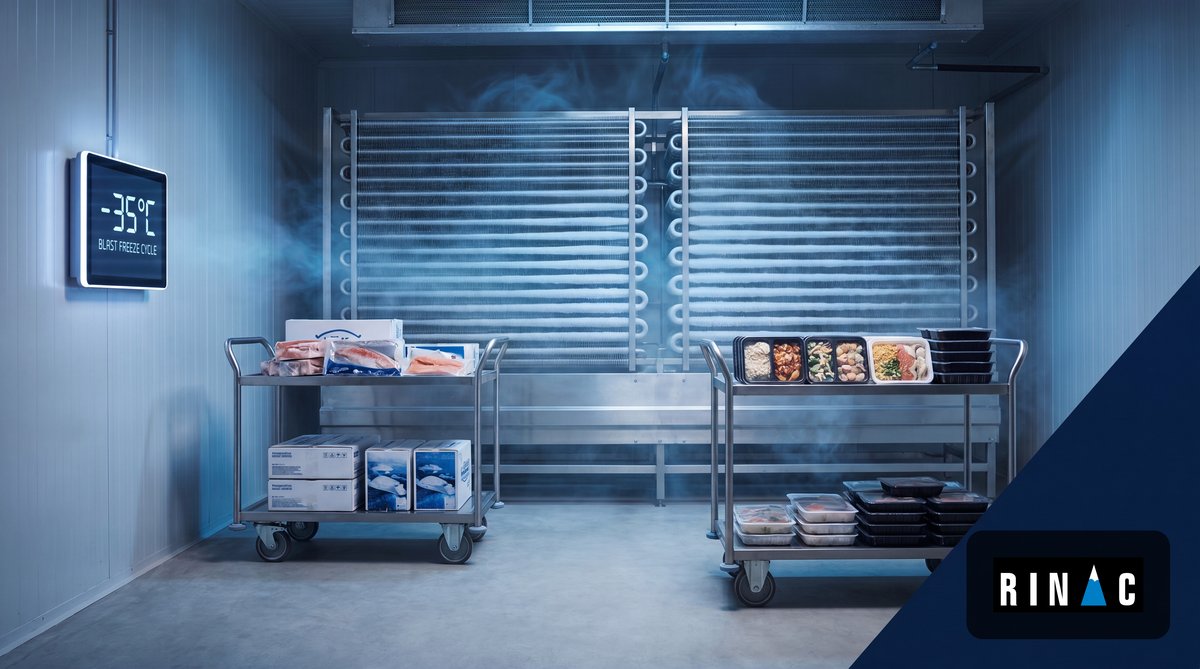
- Hardening runs in a blast freezer at -30 to -40 °C, and ice crystals can start growing in storage above about -25 °C [6].
- FSSAI sets ice cream at a minimum of 10% milk fat and 36% total solids, and frozen dessert is a separate category [5].
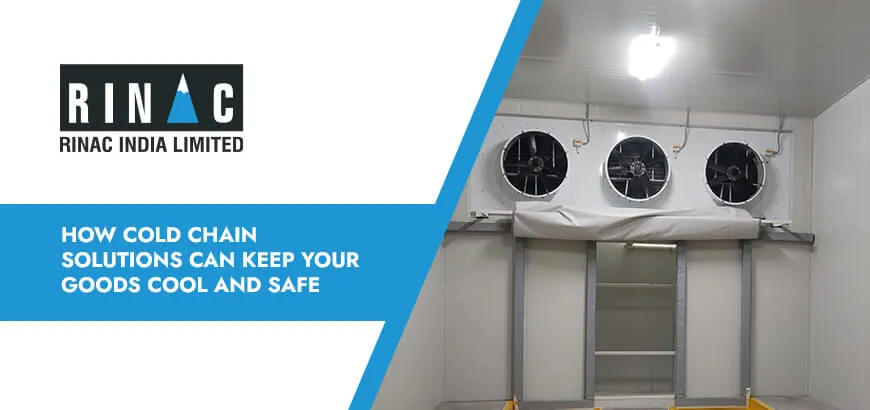
- Rinac designs and builds the cold side of the plant, from blast freezers and cold rooms to insulated buildings, backed by 30+ years and 10,000+ projects.
Quick note: This guide is for general information only. It is not a substitute for professional engineering, legal or regulatory advice. Schemes, standards, licence rules and prices change, so verify current details with FSSAI, MoFPI, DAHD and your state authorities before you commit to a design or a budget. A fuller disclaimer sits near the end of this article.
What an Ice Cream Manufacturing Plant Actually Includes
If you are planning an ice cream manufacturing plant in India, the first useful step is to stop thinking of it as a single machine line. A working plant has a process side and a cold side, and the two have to be sized together. The process side takes milk, cream, sugar, stabilisers and flavours through blending, heat treatment, ageing, freezing and filling. The cold side takes that soft product, hardens it fast, holds it deep frozen and gets it onto a refrigerated truck without a single warm minute.
Most first-time promoters spend their time comparing freezers and fillers and treat the rooms as an afterthought. That is backwards. A pasteuriser or a continuous freezer is a catalogue item you can replace. A hardening room that is too small, a storage room that cannot hold temperature when the dock door opens, or an insulated shell that sweats and ices up are expensive mistakes to fix after the building is up. This guide walks through the full ice cream manufacturing plant, with extra attention on the cold chain, because that is the part where Rinac works.
It also covers the practical questions behind the search terms owners actually use, such as ice cream plant cost, ice cream factory setup cost and ice cream factory equipment. Where the public data does not support a firm rupee figure, we say so instead of guessing.
Indian Market Context: Demand, Cold Chain Capacity and Government Support
Demand is the easy part of the story. The Indian Ice Cream Manufacturing Association (IICMA) said in March 2025 that the market could reach Rs 45,000 crore within three years and more than Rs 90,000 crore within eight, noting that consumption has quadrupled over the past decade [1]. IMARC gives a more conservative base: INR 243.50 billion in 2025, growing at about 11.29% a year from 2026 to 2034, with impulse formats holding 60.60% of the market and Maharashtra, Uttar Pradesh and Karnataka the leading states [2]. A separate IMARC projection reported in September 2026 reaches INR 575.33 billion by 2033 [3].
1.6 litres
Estimated annual per capita ice cream consumption in India in 2023, up from about 400 ml in 2011 [2]
Estimated annual per capita ice cream consumption in India in 2023, up from about 400 ml in 2011 [2]
The two market estimates are far apart because they define the category differently, and that gap is worth respecting. Use them to confirm that demand is growing, not to size your ice cream manufacturing plant in India. Your own sizing should start from the outlets, cities and formats you can actually reach in your first two years. IMARC splits the 2025 market into cones at 27.30%, sticks at 24.50%, bricks at 20.70% and cups at 10.80% [2], and each format puts different demands on filling, hardening tunnels and pack-out.
Raw material supply is not the constraint. India produced 247.87 million tonnes of milk in 2024-25, up 3.58% from 239.30 million tonnes the year before, and per capita availability reached 485 grams a day [4]. The tighter constraint is cold chain capacity at the right temperature.
What NCCD data tells an ice cream investor
The National Centre for Cold-chain Development (NCCD) reported that India had 8,698 cold storage facilities with about 395 lakh metric tonnes of capacity as of May 2024, and projects about 436.5 lakh tonnes by 2031 [7]. That base was built largely around bulk storage. The same report notes that facilities more than 20 years old make up about 70% of bulk cold storage, that many use older insulation such as thermocol, rice husk or glass wool, and that reefer vehicles account for about 21% of cold chain energy use [7]. The figures I reviewed do not break out deep-frozen capacity at -25 °C, so an ice cream plant should assume it must build and control its own frozen store and not count on renting space in a nearby facility.
Schemes that may apply
Support depends on who you are and what you build, so treat the following as a starting list to verify and not as a promise of funding.
- PMKSY integrated cold chain. The scheme offers grant-in-aid of 35% of eligible project cost in general areas and 50% in difficult areas, capped at Rs 10 crore per project. By June 2025 it had approved 395 projects since 2008, of which 291 were operational [8]. Whether an ice cream plant’s cold chain components qualify depends on the current guidelines, so confirm with MoFPI first.
- PM Formalisation of Micro Food Processing Enterprises (PMFME). It gives a 35% credit-linked capital subsidy up to Rs 10 lakh per unit for individual and group micro enterprises [10]. This suits small, local manufacturers and not a large plant.
- Dairy Processing and Infrastructure Development Fund (DIDF). It covers milk processing, value addition and chilling for dairy cooperatives, milk producer companies, SHGs and FPOs, with a 2.5% interest subvention from the Government of India to NABARD [9]. A dairy cooperative adding ice cream as a value-added product is the natural fit.
For a wider view of how grants work on cold chain projects, see our guide to cold chain subsidies in India.
Ice Cream Manufacturing Process: How Ice Cream Is Made in a Factory
The ice cream manufacturing process follows the same logical order in almost every factory, whether the line makes 500 litres an hour or 5,000. Knowing the sequence helps you see where refrigeration load, floor space and hygiene zoning come from.
- Mix preparation. Milk, cream, milk solids, sugar and stabilisers are weighed and blended. Ingredient storage needs its own chilled and dry areas, kept apart from finished product.
- Heat treatment and homogenisation. The mix is pasteurised and homogenised so it is safe and smooth. This is where hygiene zoning starts: raw side and processed side should not share air or traffic.
- Ageing. The mix rests in chilled tanks before freezing, which needs chilled water or glycol capacity from your refrigeration plant.
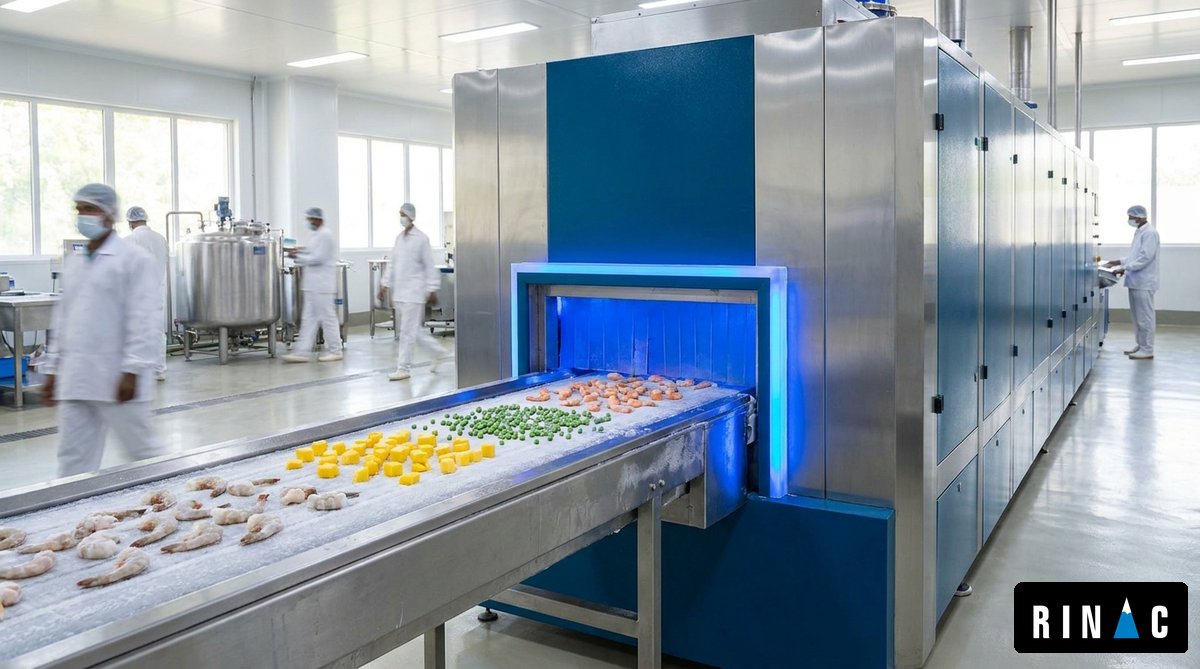
- Freezing and aeration. A continuous freezer cools the mix while whipping in air. The product leaves as a soft, semi-frozen mass. A colder draw speeds up the next step, as food science references note [6].
- Filling and forming. Cones, cups, sticks and bricks are filled or moulded. Format drives line design.
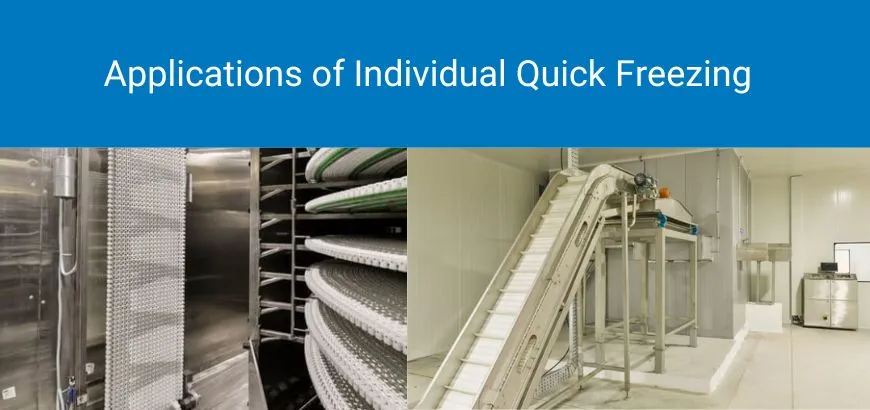
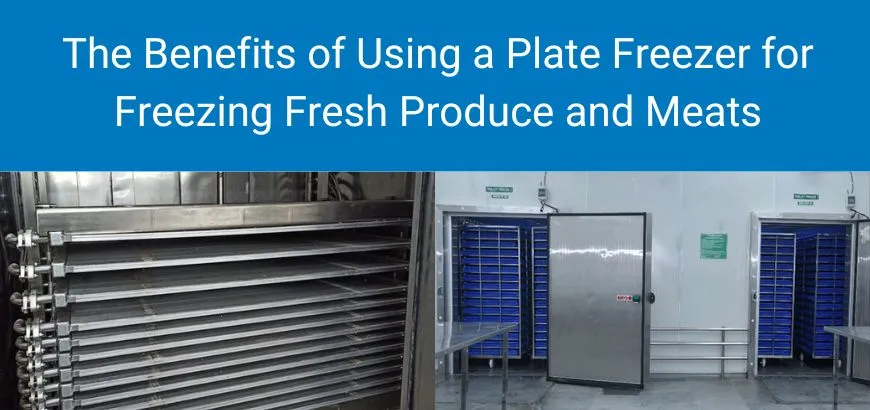
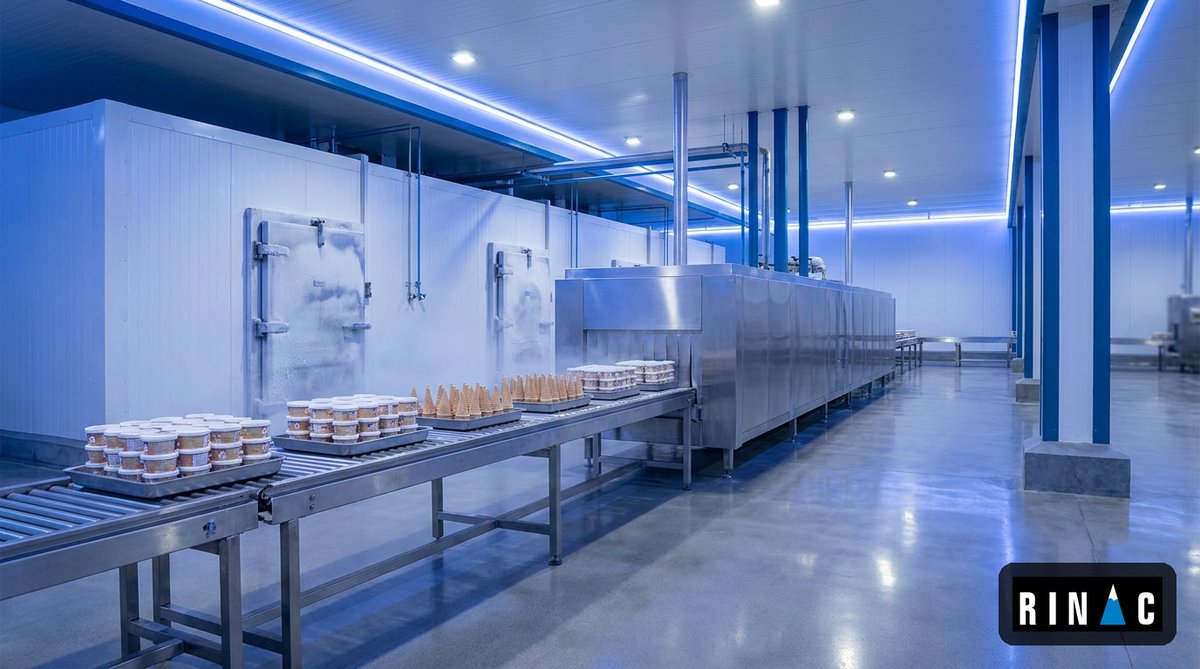
- Hardening. The soft product goes straight into a blast freezer or hardening tunnel. This is the step that sets the texture and is the biggest single refrigeration load in the plant.
- Frozen storage and dispatch. Hardened product is held in a deep-freeze store and loaded onto refrigerated vehicles.
Steps 1 to 5 are the world of dairy process machinery. Steps 6 and 7 are pure cold chain engineering. They are also where product is most at risk, because every minute of delay between filling and hardening is a minute for large ice crystals to form.
Hardening and Frozen Storage: Where an Ice Cream Plant Wins or Loses Quality
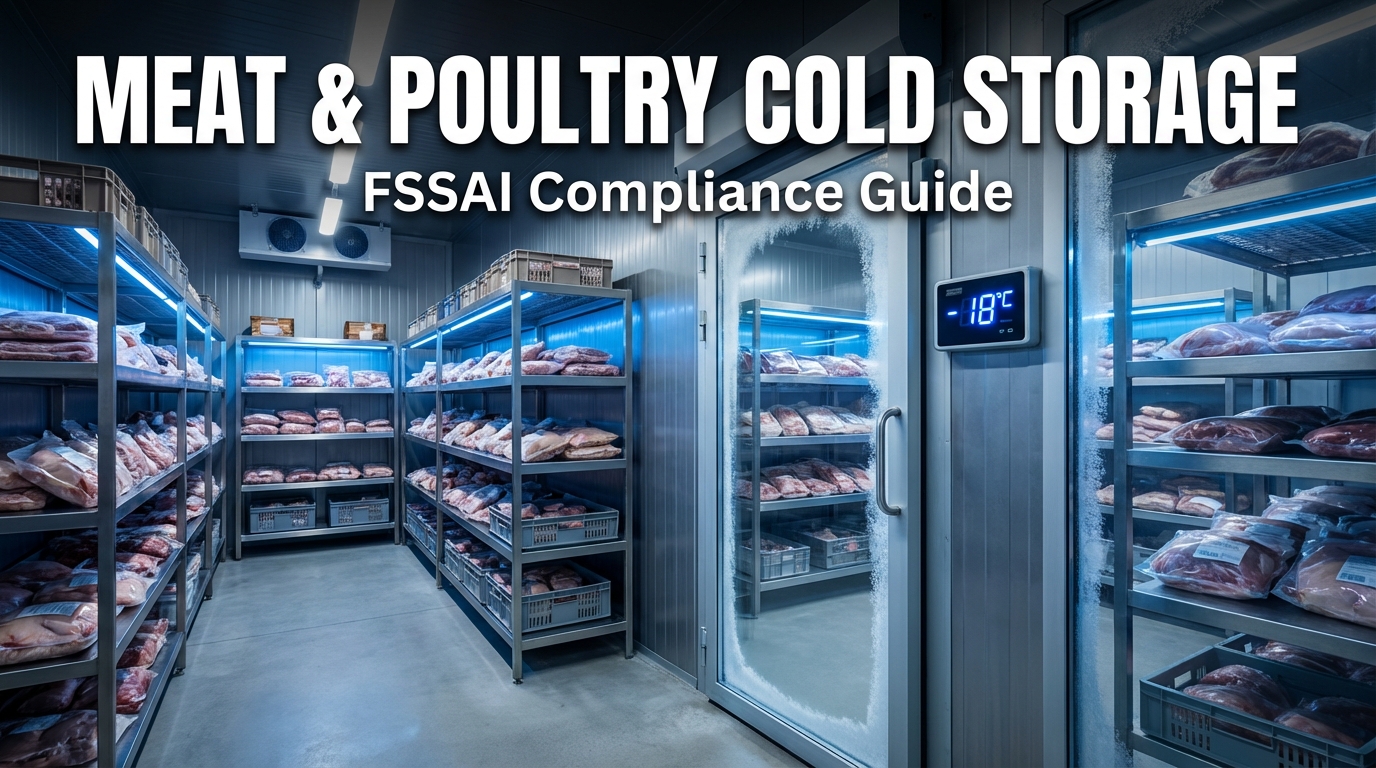
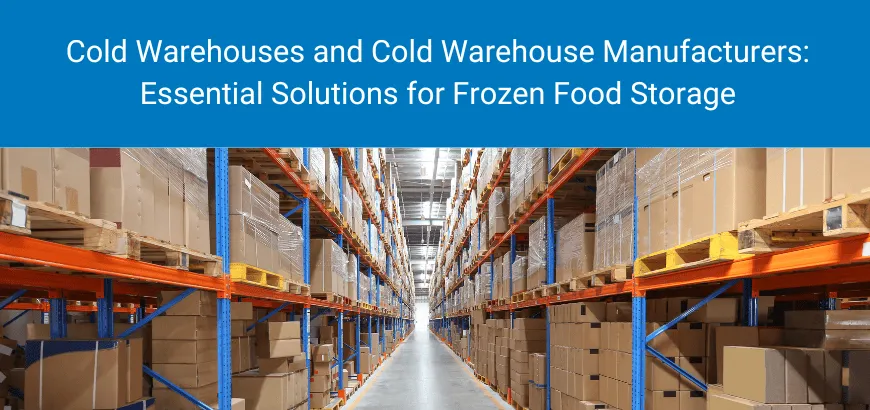
Of all the decisions in an ice cream manufacturing plant, hardening and storage have the most direct effect on what the customer eats. The University of Guelph ice cream technology text gives the working numbers: blast freezers for hardening run at -30 to -40 °C, and ice crystals can grow in stored product above about -25 °C, at a rate that depends on the storage temperature [6]. Below that point the product is stable.
-30 to -40 °C
Typical blast freezer range for hardening ice cream, with storage held at or below about -25 °C [6]
Typical blast freezer range for hardening ice cream, with storage held at or below about -25 °C [6]
Two details from the same source are worth planning for. First, container size matters: larger containers hold more mass relative to their surface area and harden more slowly, and shrink-wrapped bundles become a much larger mass to freeze, so bundling should happen after hardening [6]. Second, protective liners or corrugated cardboard can shield product from heat shock after hardening, but they also slow heat transfer during freezing [6]. In practice this means your pack-out sequence and your hardening layout have to be designed together, not by two different contractors.
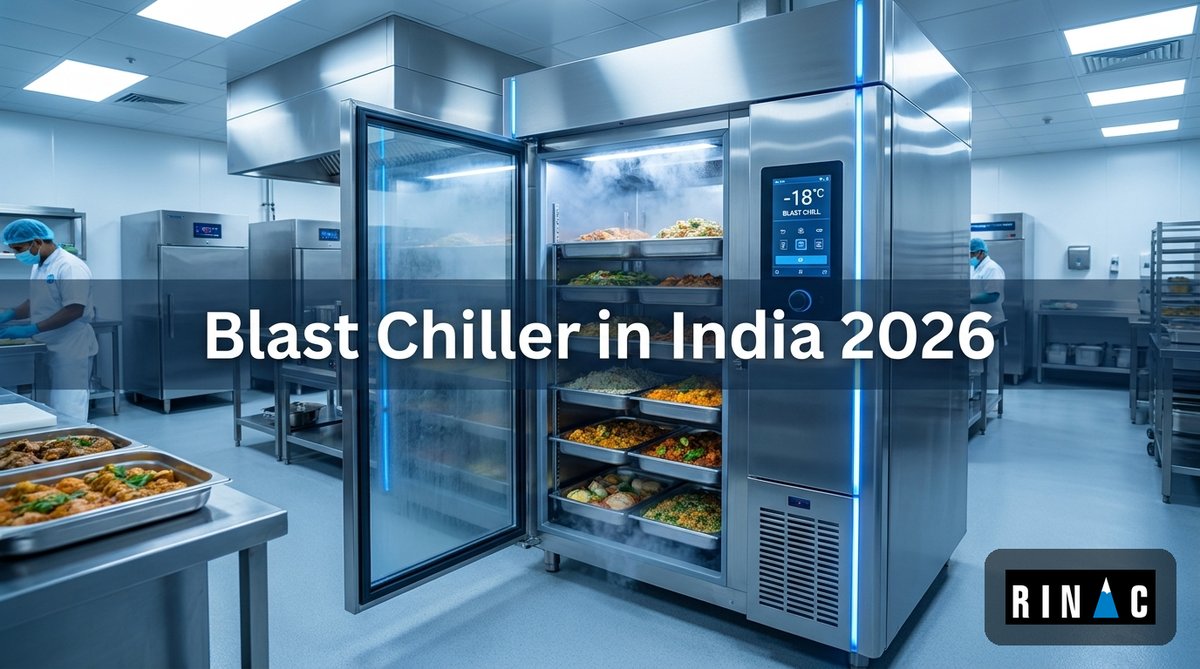
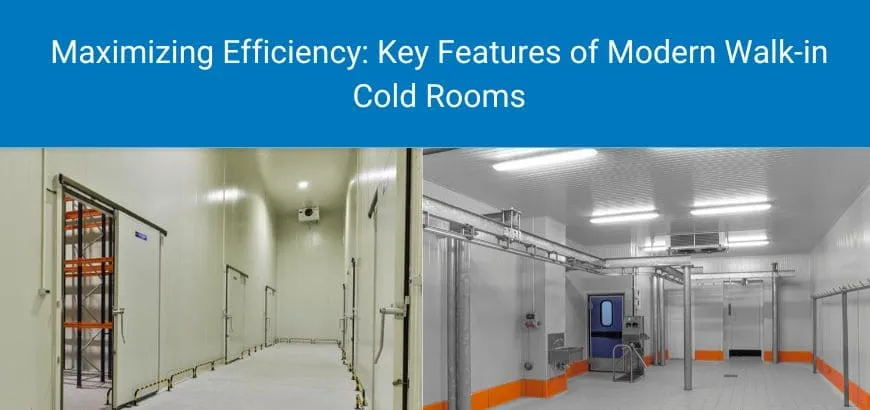
This is the work our blast chillers and freezers do. If you want the technical background on sizing and airflow, our blast freezer buyer’s guide and blast chiller guide cover it in detail.
Hardening is a race against ice crystal growth. Fill, pack and move to the blast freezer in one continuous flow, and keep the deep-freeze store door discipline as strict as the process hall.
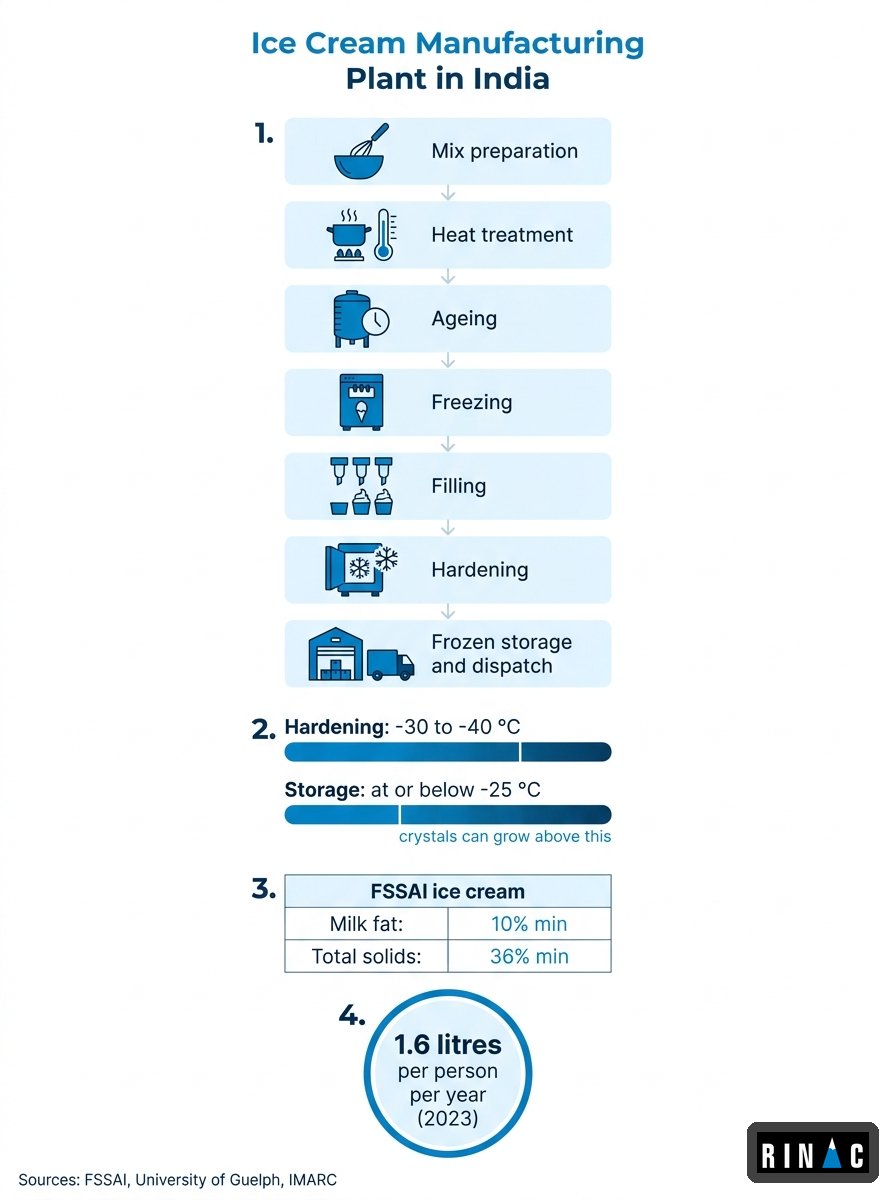
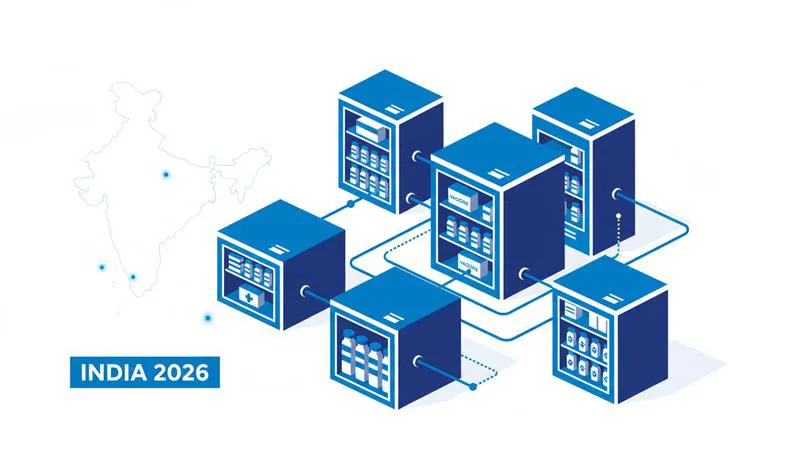
Ice cream manufacturing plant at a glance: process flow, hardening and frozen storage, and what to verify.
Cold Chain Zones and Rinac Solutions at a Glance
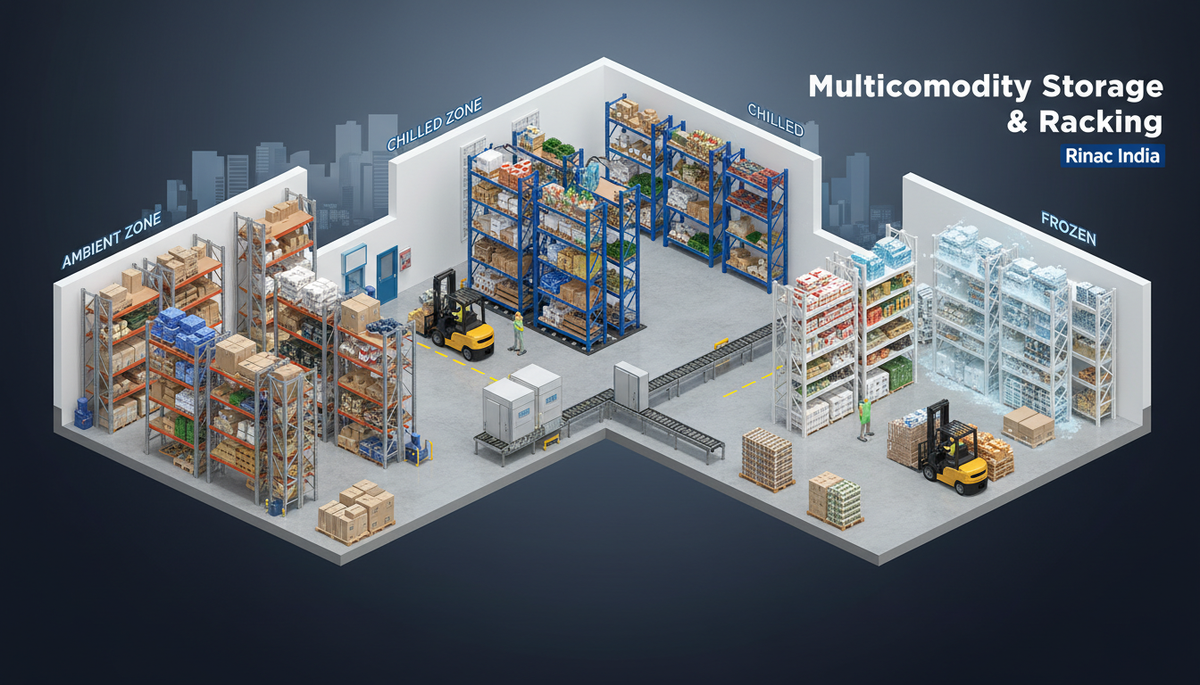
The table below maps each part of the cold side of the plant to a typical duty and to the Rinac product family that addresses it. Temperatures marked with a source come from the references in this article. Other design set points should be fixed by your process engineer and refrigeration designer for your own product and formats.
| Plant zone | Duty and temperature basis | Rinac product family |
|---|---|---|
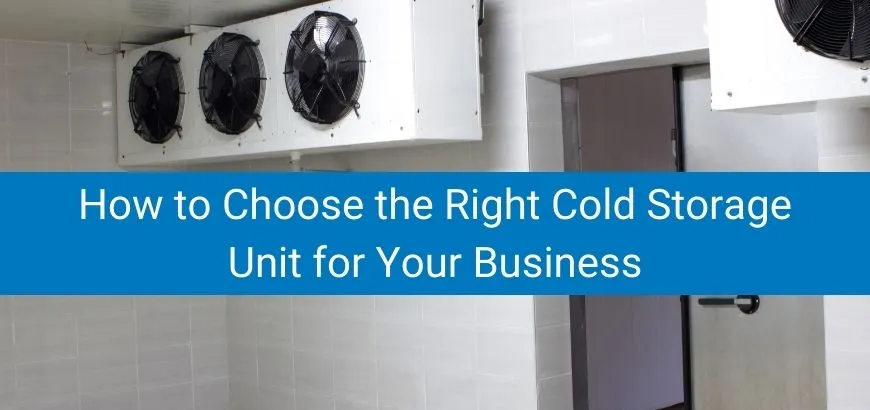
| Hardening room or tunnel | Fast freezing of filled product, blast freezer range -30 to -40 °C [6] | Blast chillers and freezers |
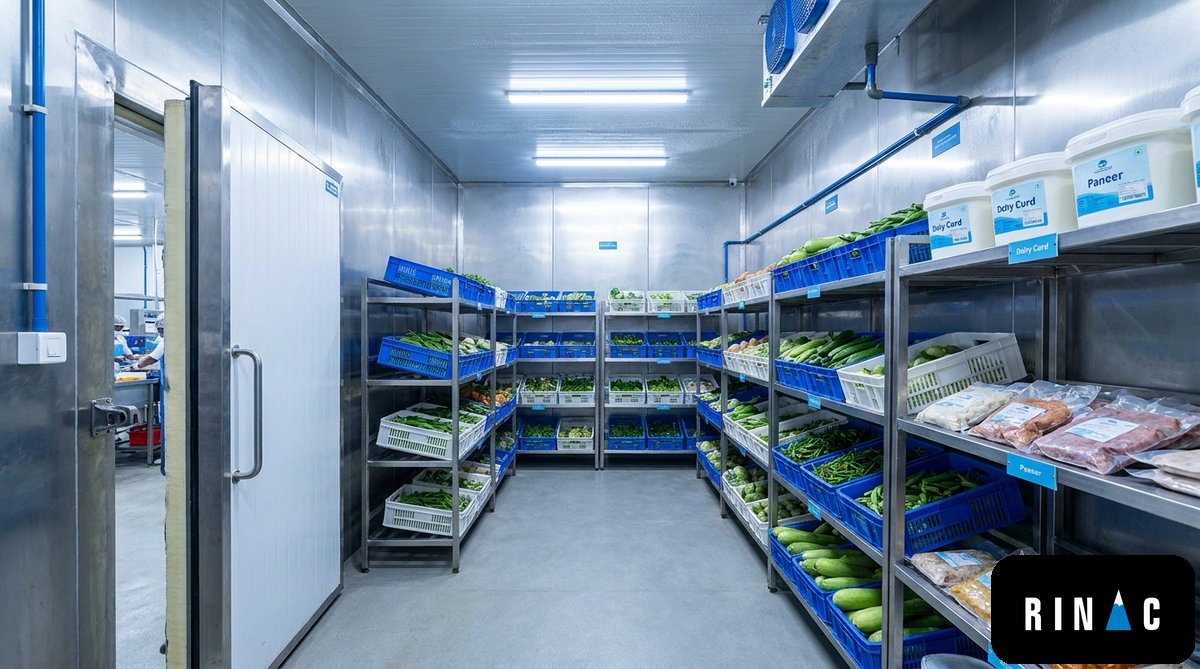
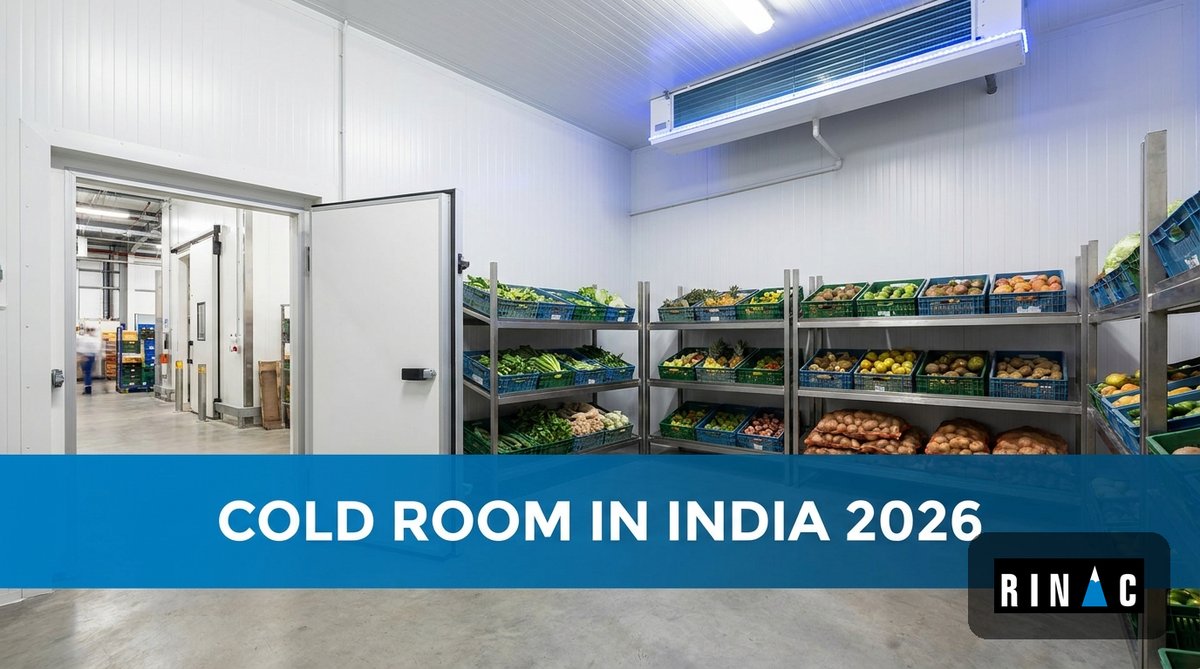
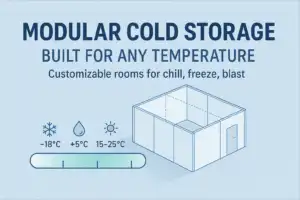
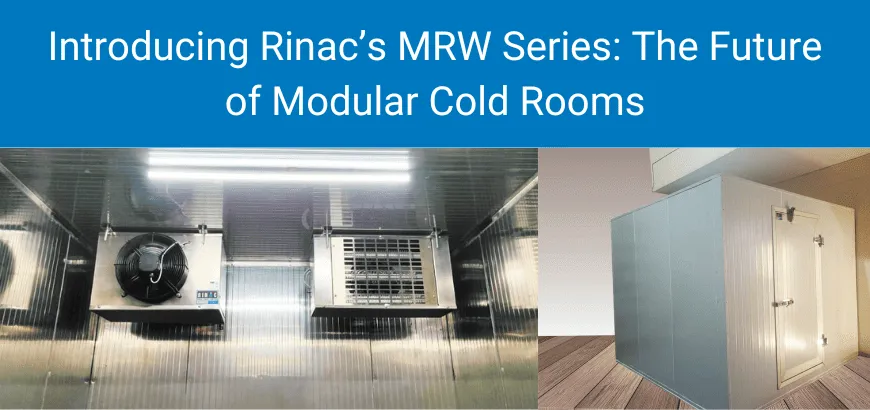
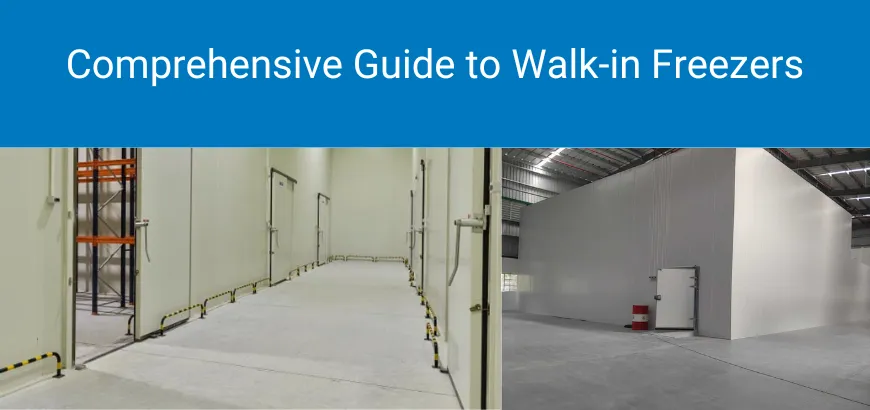
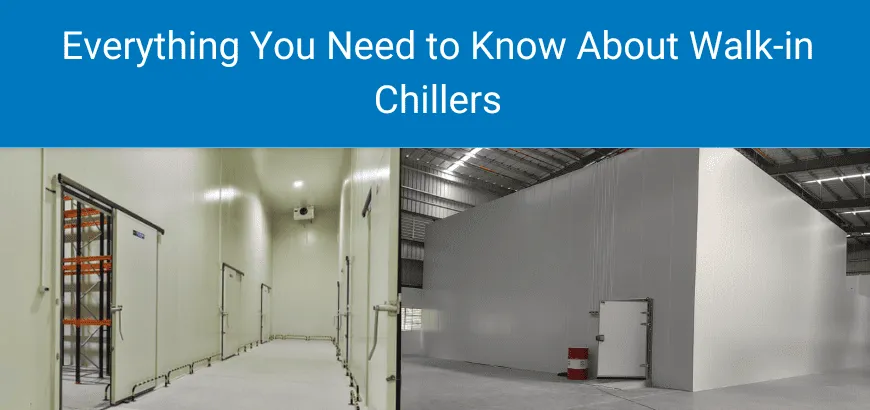
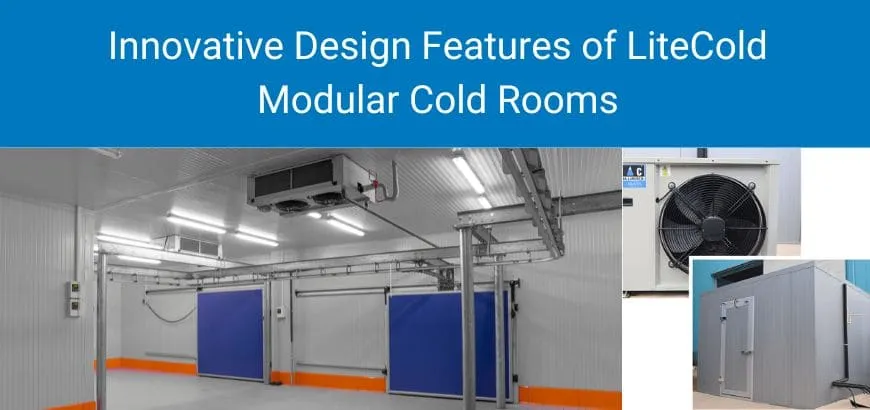
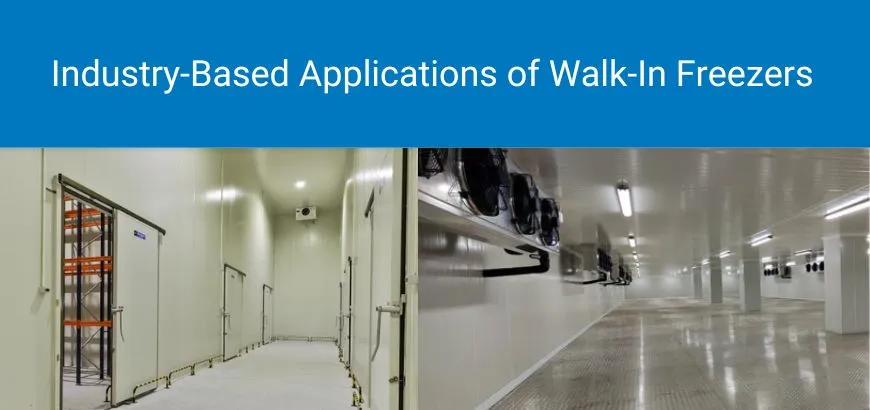
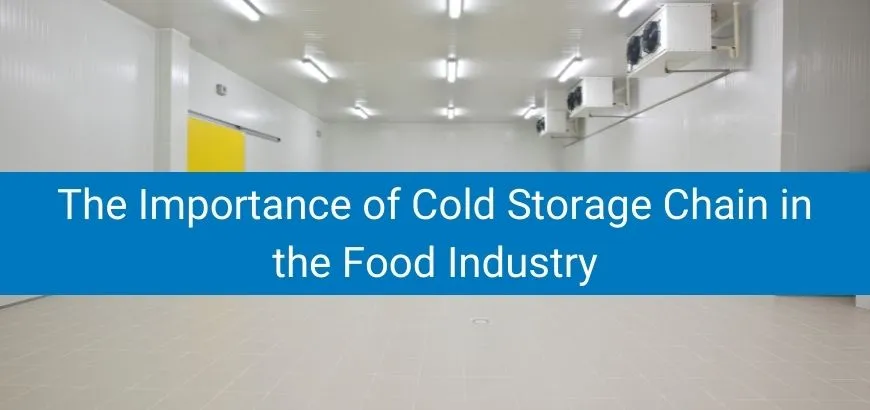
| Deep-freeze store | Holding hardened product at or below about -25 °C, the crystal stability point [6] | Cold rooms and MRW Series modular walk-in cold rooms |
| Ingredient and mix chilled store | Dairy ingredients and aged mix, set point fixed by your process design | Cold rooms |
| Refrigeration plant | Central or packaged systems serving hardening, storage and process chilling | Refrigeration systems |
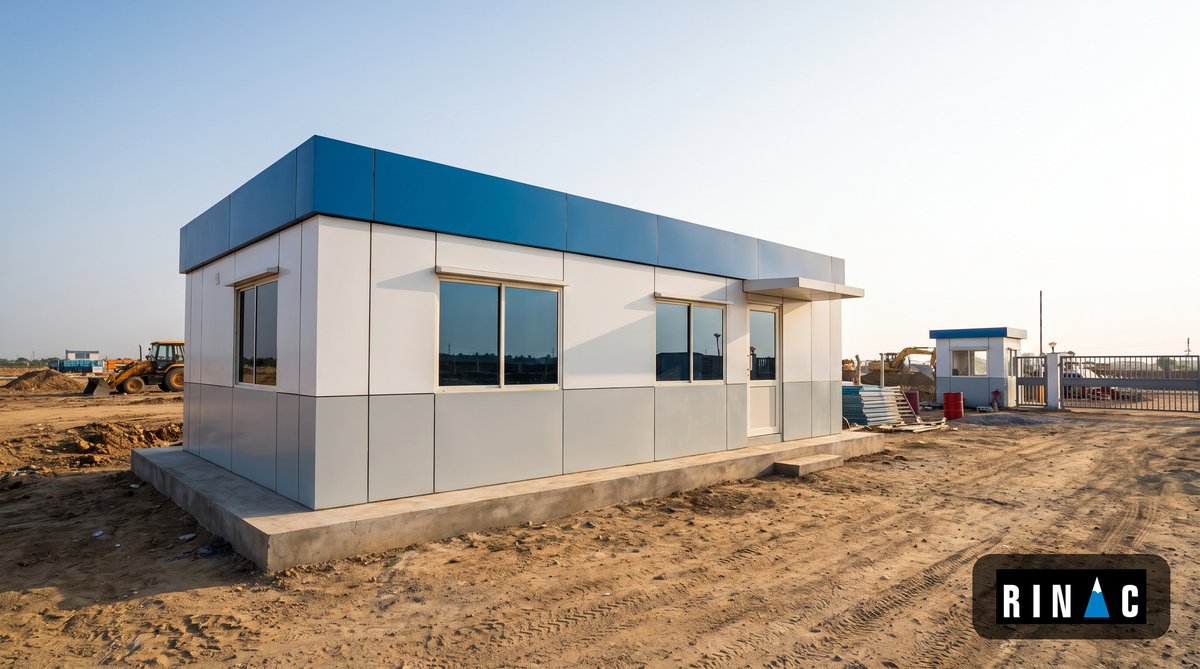
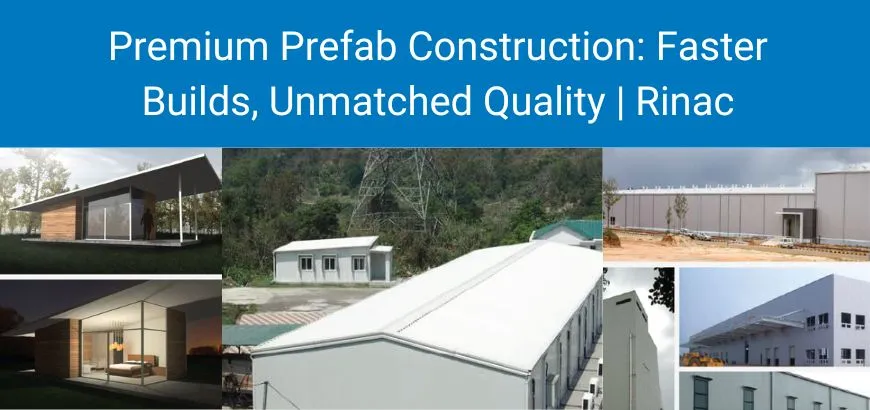
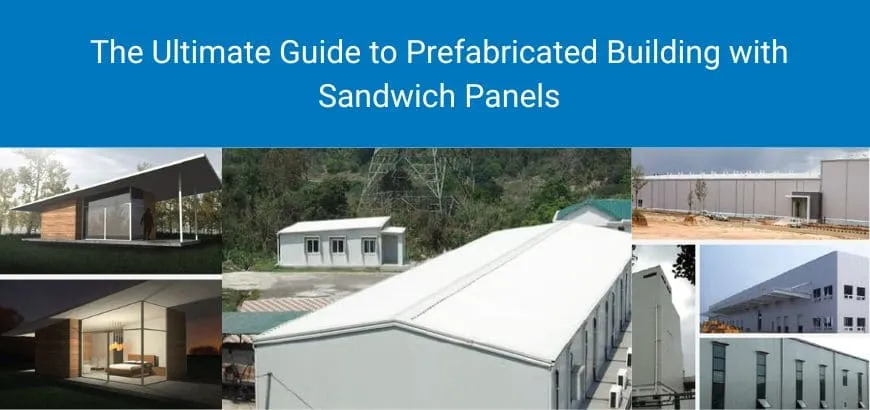
| Building envelope | Insulated shell, partitions and roof for process and cold zones | Prefabricated buildings and HPCC |
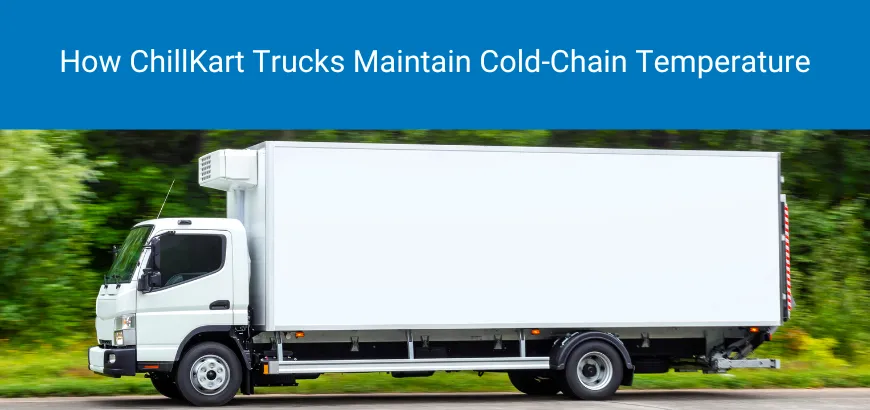
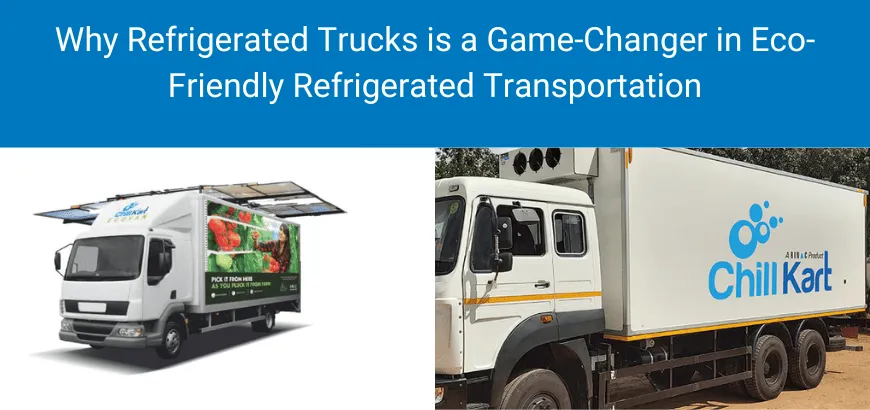
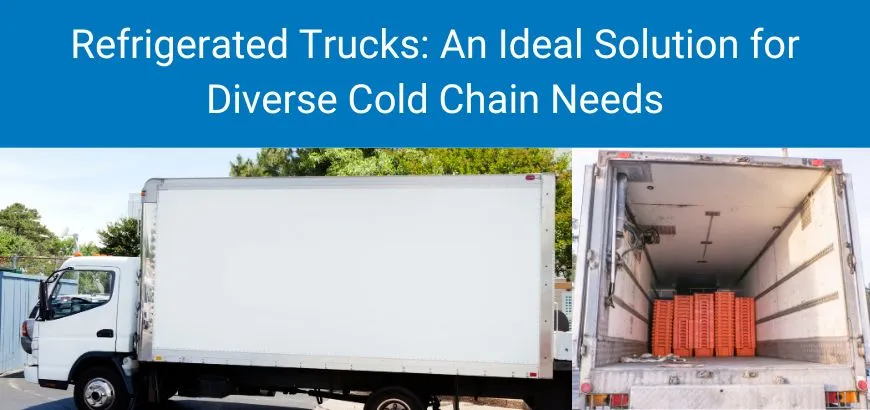
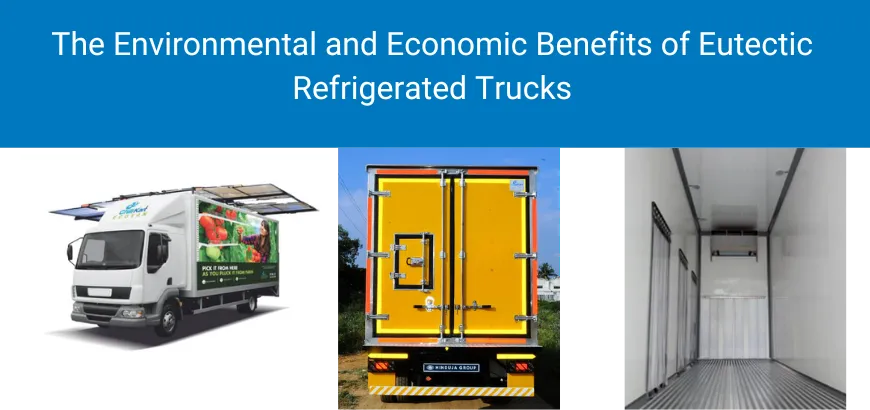
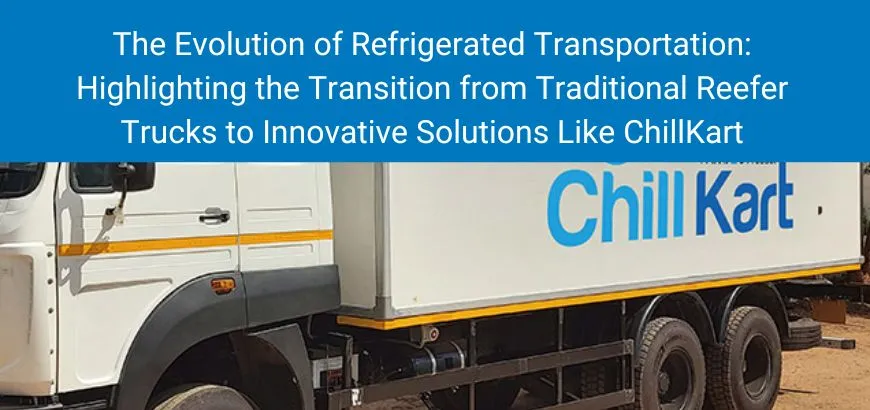
| Distribution | Refrigerated vehicles from plant to depot and outlet | Refrigerated transportation (ChillKart) |
Ice Cream Factory Equipment: What Goes on the Equipment List
When owners ask about ice cream factory equipment, they usually mean the process machines. A realistic list covers five groups, and only some of them come from specialist dairy machinery makers.
- Mix preparation and heat treatment: blending and ingredient handling, pasteurisation and homogenisation. These come from dairy process equipment suppliers.
- Freezing and filling: the continuous freezer and the filling or moulding line for your chosen formats. Also from specialist suppliers.
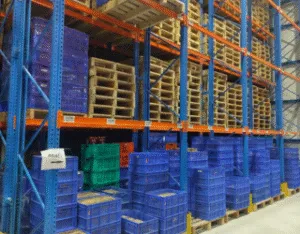
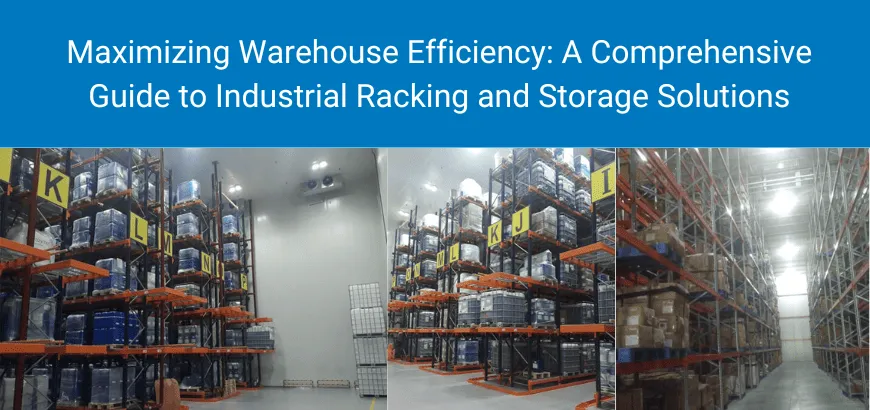
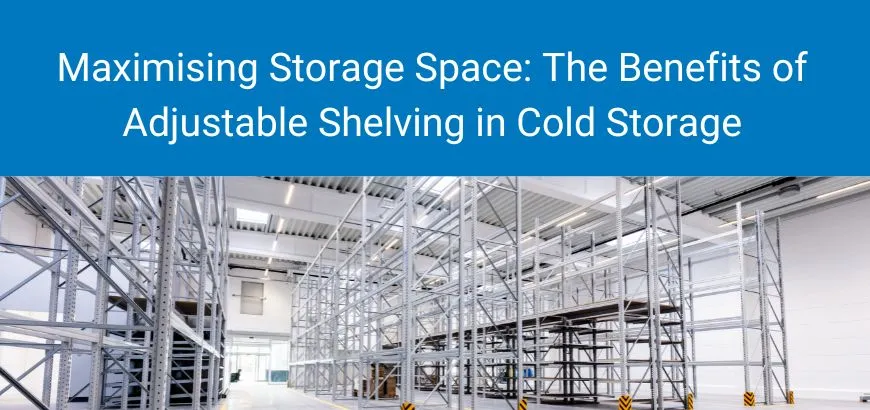
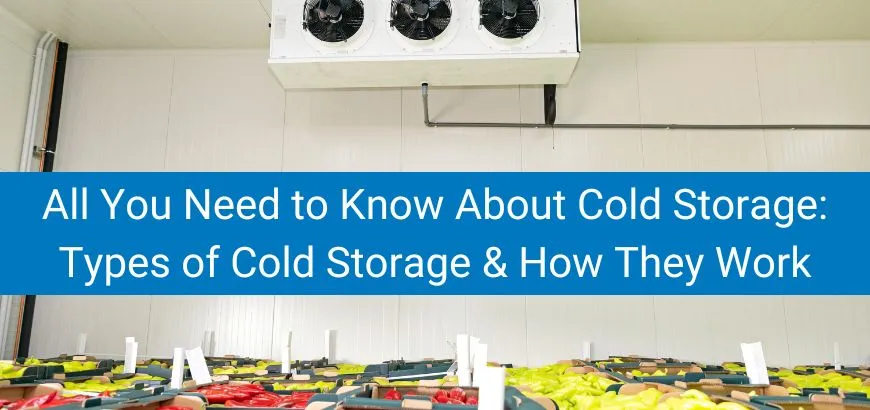
- Hardening and frozen storage: blast freezers or tunnels, deep-freeze rooms, racking and pallet handling. This is the cold chain group, and it includes storage racking planned around your pallet flow.
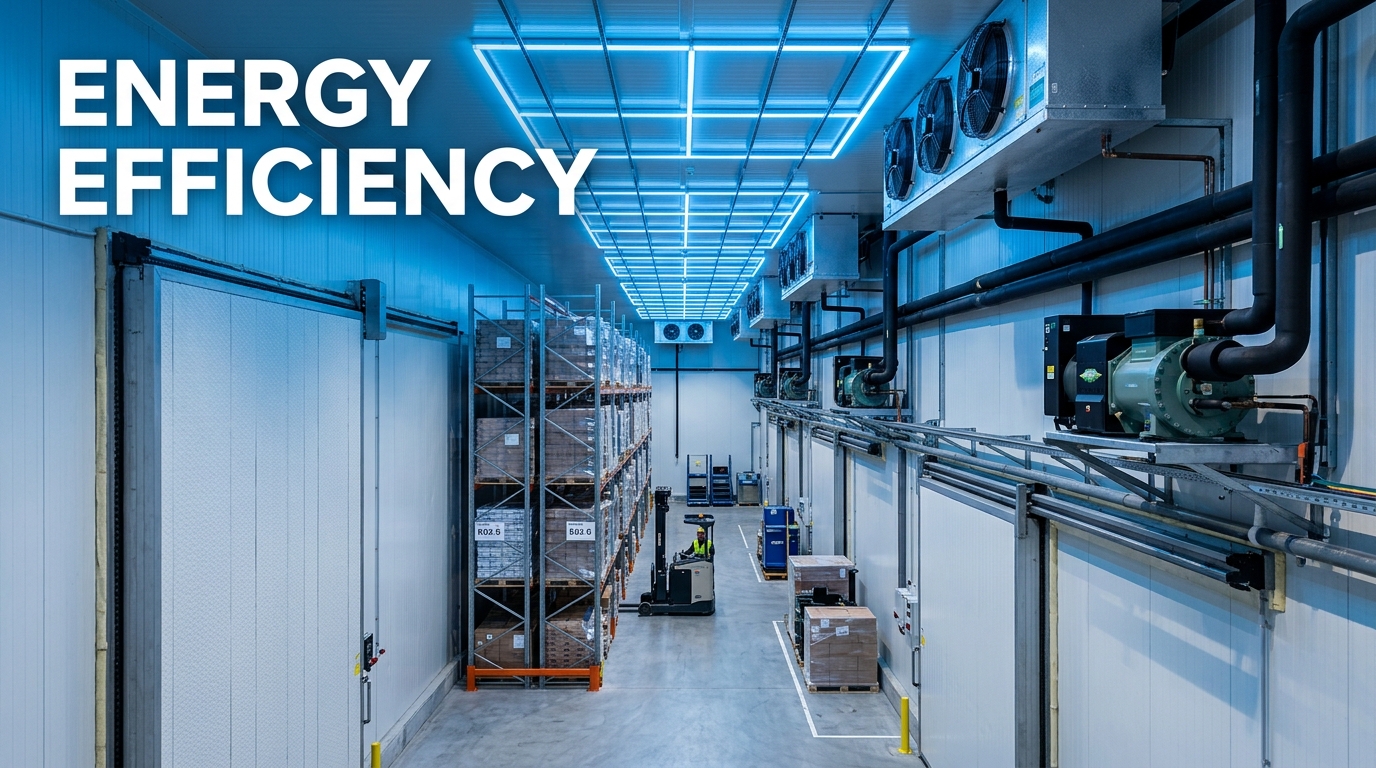
- Refrigeration and utilities: compressors, condensers, chilled water or glycol, power backup and water treatment. See refrigeration systems and our guide to cold storage energy efficiency.
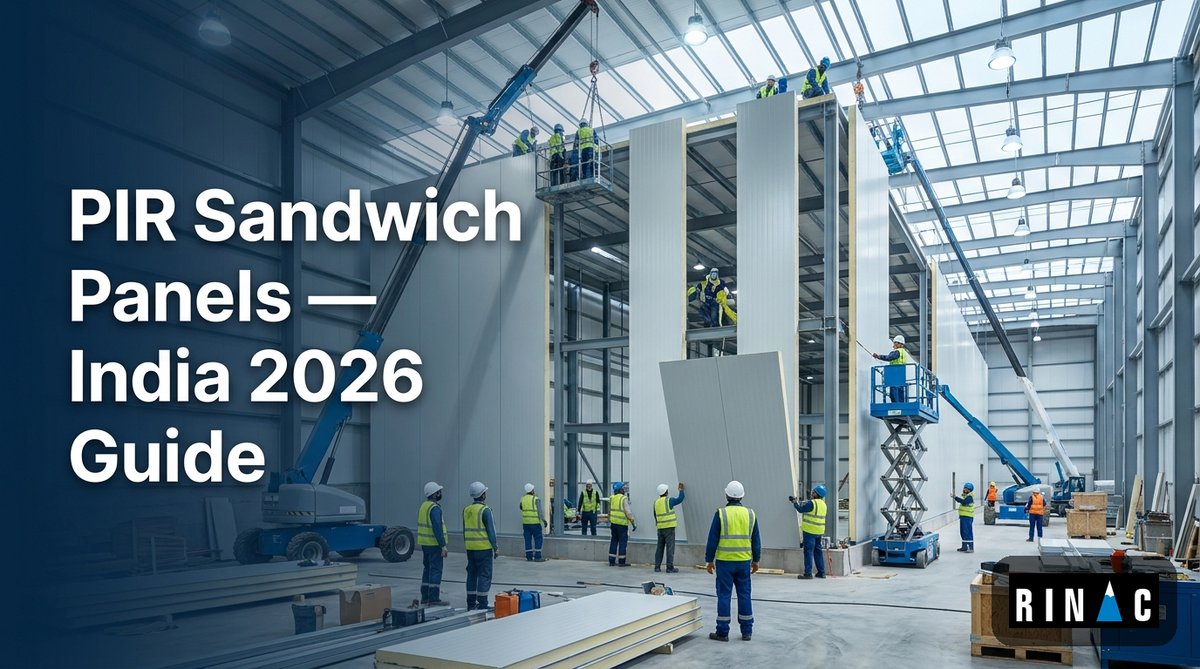
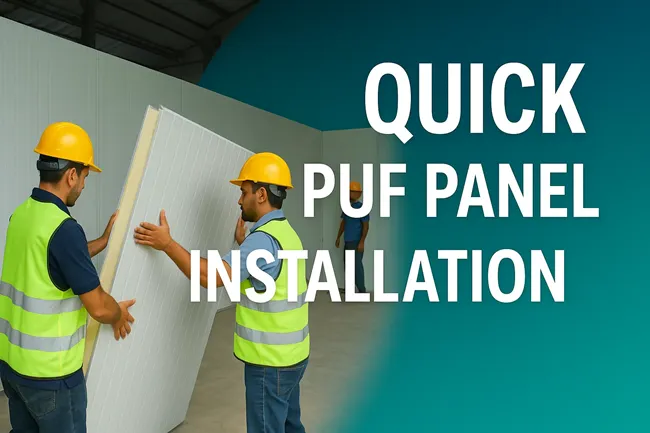
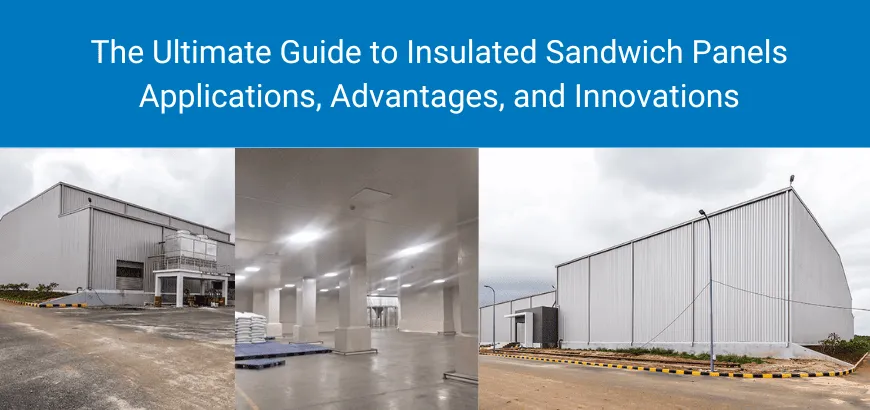
- Building and services: insulated panels, partitions, doors, floors and drainage, often delivered as prefabricated buildings.
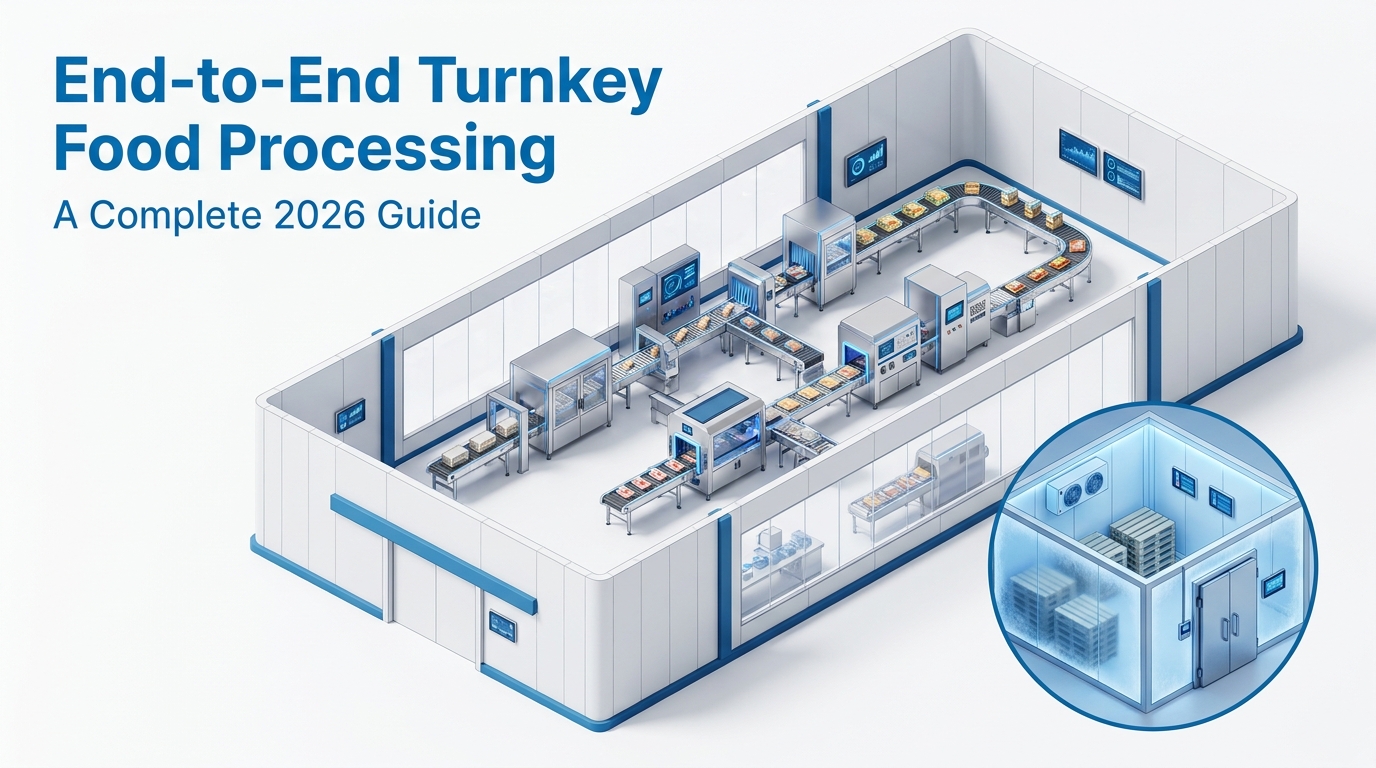
Rinac’s strength sits in the third, fourth and fifth groups and in coordinating the whole job through its turnkey food processing approach. For the process machines in the first two groups, we work alongside the equipment suppliers you select. Our guide to end-to-end turnkey food processing in India explains how that coordination works on a real project.
Ice Cream Plant Cost and Factory Setup Cost: What Drives the Budget
Every owner wants a single number for ice cream plant cost. The honest answer is that a credible figure only exists after you fix capacity, formats and site. Published rupee ranges on the internet vary enormously because they assume different scopes, and many are old. We have not quoted a rupee total here for that reason. What we can give you is the structure that your detailed project report (DPR) and your supplier quotations should follow.
| Cost block | What moves the number | Question to ask your suppliers |
|---|---|---|
| Process equipment | Litres per hour, number of formats, automation level | Can the line change formats without a long changeover? |
| Hardening and frozen storage | Throughput per hour, pack size, pallet positions required | How many hours of hardening load and how many pallets at -25 °C? |
| Refrigeration plant | Total peak load, redundancy, choice of system | What is the connected load and what happens if one compressor trips? |
| Building and insulation | Floor area, panel type and thickness, hygiene zoning | What insulation and fire rating does each zone need? |
| Utilities and power | Power, water, steam or hot water, backup generator | What is the sanctioned load and the monthly energy estimate? |
| Approvals and commissioning | FSSAI licence, consents, trials, training | Who owns commissioning and performance guarantees? |
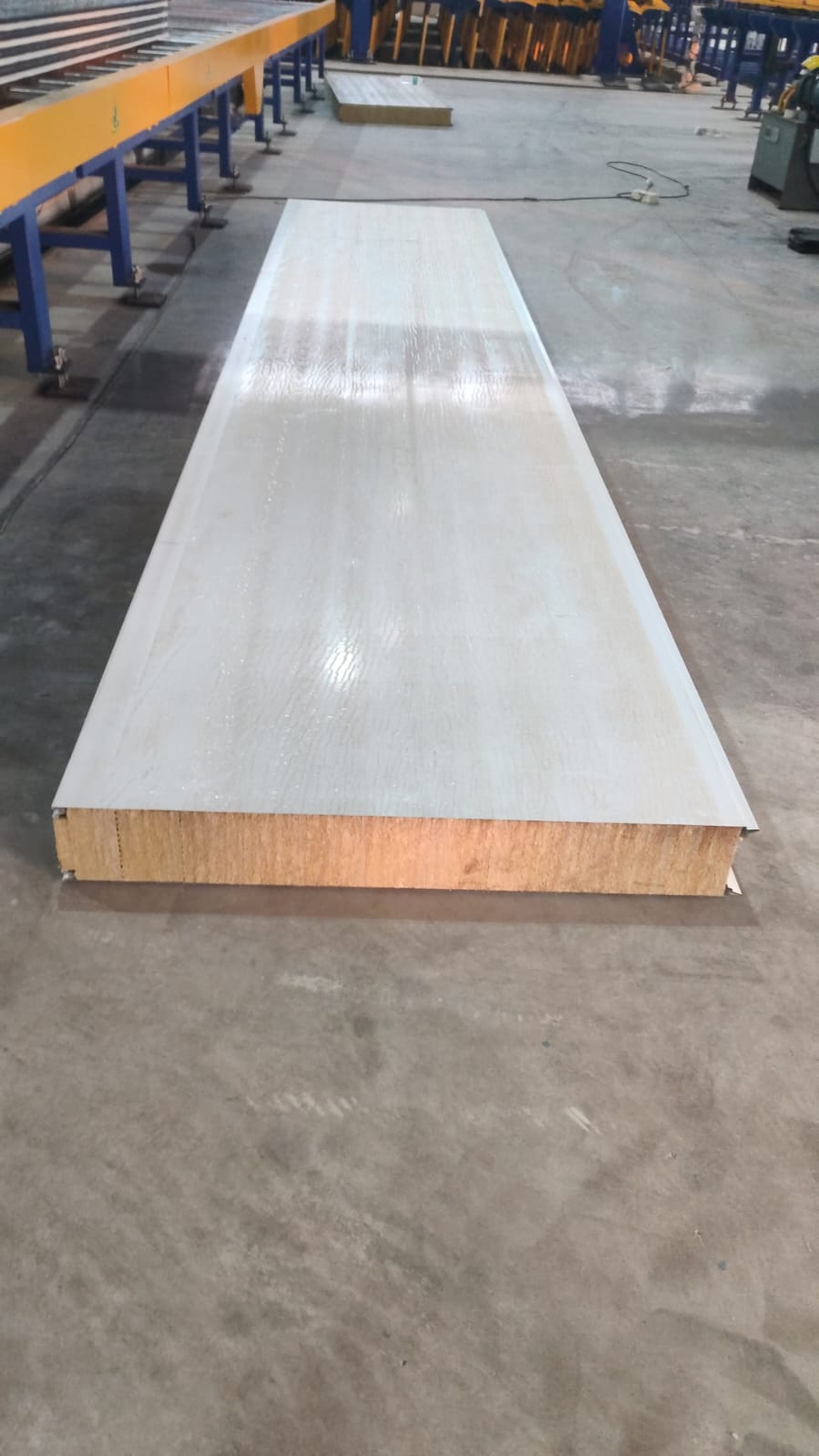
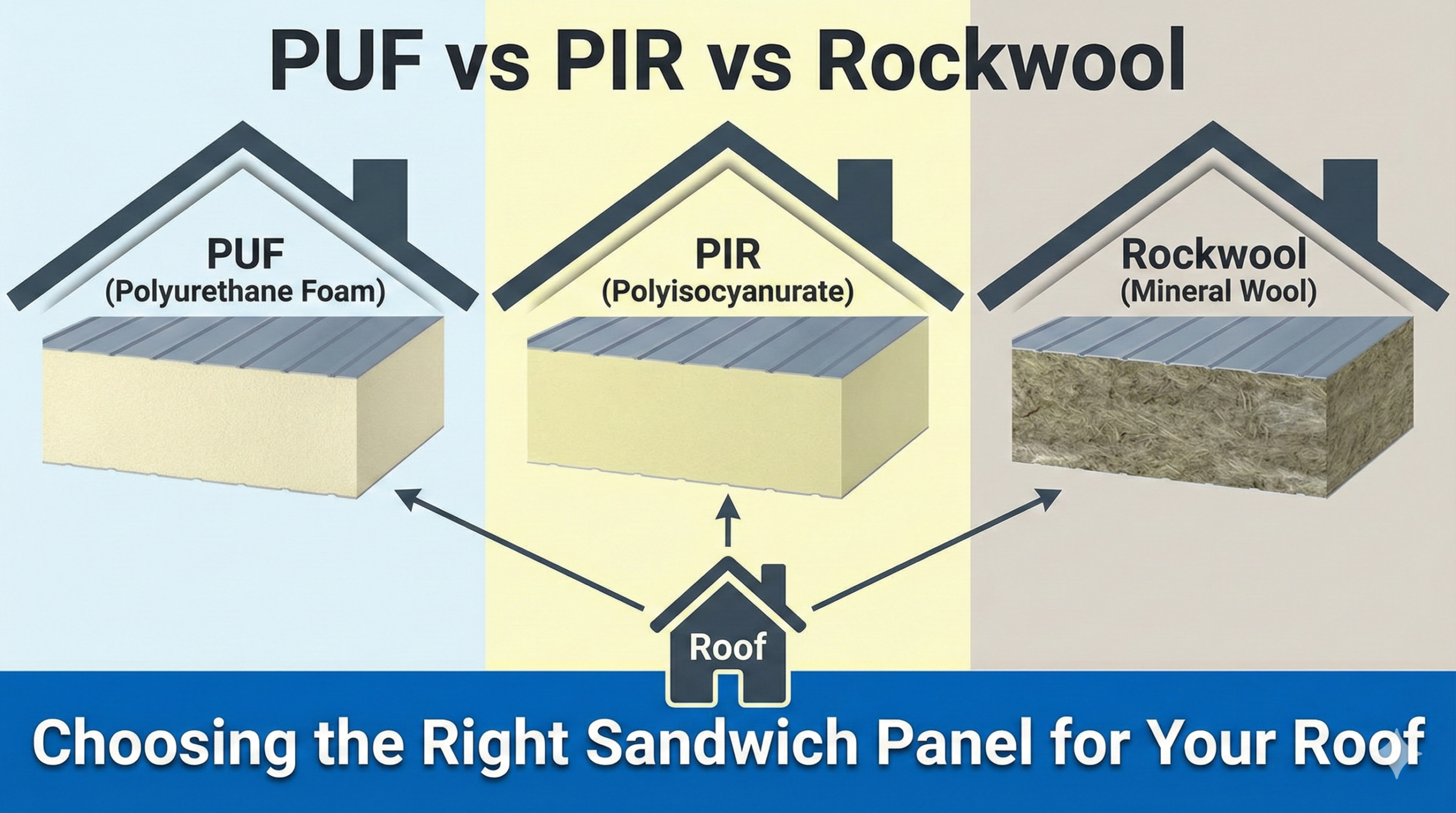
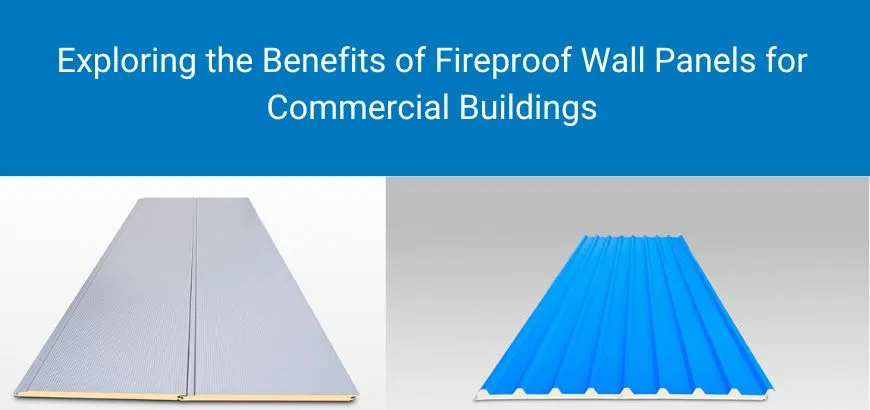
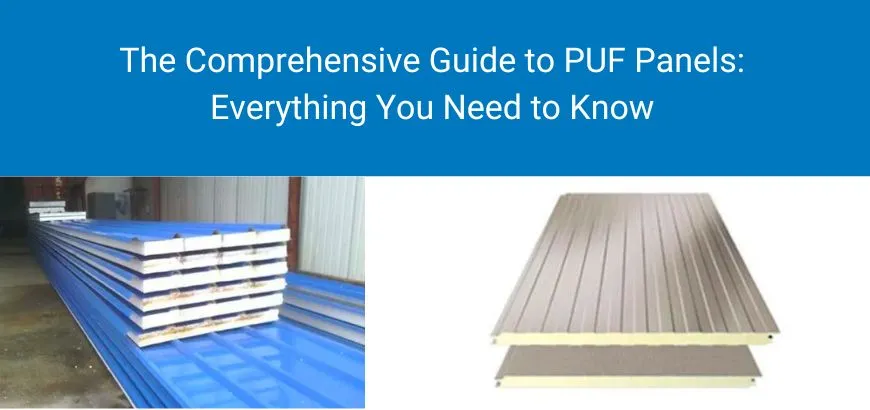
For ice cream plant setup cost and ice cream factory setup cost, the single biggest planning error is under-sizing hardening and storage to save money in year one, then paying for it in rejected stock and a second construction phase. Panels are another place where false economy shows up. Thickness and core type should follow the temperature in each room, and our guide to sandwich panel thickness selection and the comparison in our PIR sandwich panel guide will help you ask the right questions.
Plan for energy, not only capex. NCCD data shows that bulk stores more than 20 years old account for about 33% of cold chain energy use, and many of them rely on less efficient insulation [7]. Good insulation and a well-sized refrigeration plant show up in the power bill every month.
Compliance and Standards for an Ice Cream Manufacturing Plant: FSSAI, HACCP, ISO and Licensing
An ice cream manufacturing plant in India is a regulated food business from day one. The standards decide what you may call your product, and the licence rules decide which authority you answer to. Both feed back into your plant design.
FSSAI composition standards
FSSAI defines ice cream and frozen dessert separately. The figures below come from FSSAI’s own guidance [5].
| Category | Total solids (min %) | Weight (min g/l) | Milk fat | Milk protein (min %) |
|---|---|---|---|---|
| Ice cream, kulfi, chocolate ice cream, softy | 36.0 | 525.0 | 10.0% minimum | 3.5 |
| Medium fat ice cream | 30.0 | 475.0 | More than 2.5% and less than 10.0% | 3.5 |
| Low fat ice cream | 26.0 | 475.0 | 2.5% maximum | 3.0 |
| Milk ice or milk lolly | 20.0 | Not specified | 2.0% maximum | 3.5 |
The difference between ice cream and frozen dessert is the fat source. Ice cream comes from milk or milk products, while frozen dessert uses edible vegetable oils or fats with a melting point not above 37 °C, vegetable protein, or both, and may also contain milk fat [5]. The label must carry the correct name and type, and your formulation, laboratory checks and labelling all follow from that choice.
Licensing
FSSAI licence tiers depend on the business category and capacity or turnover. For dairy units, the published tiers are registration up to 500 litres of milk a day, a state licence from 501 to 50,000 litres, and a central licence above 50,000 litres a day [11]. Confirm in FoSCoS which category your ice cream plant falls under, because the category decides the threshold that applies.
Quality systems and building design
Most buyers of ice cream, whether modern trade, quick commerce platforms or institutional customers, expect a HACCP-based food safety system and often ISO certification from their suppliers. Design for it from the start: separated raw and processed zones, cleanable surfaces, controlled personnel flow, temperature monitoring in hardening and storage, and documented cleaning. Rinac’s own certifications include ISO, FSSAI, HACCP and GMP, and our teams build to these expectations. For a wider look at food safety obligations in cold storage, read our guide on cold storage compliance with food safety regulations.
Site, Building and Distribution Planning for an Ice Cream Manufacturing Plant in India
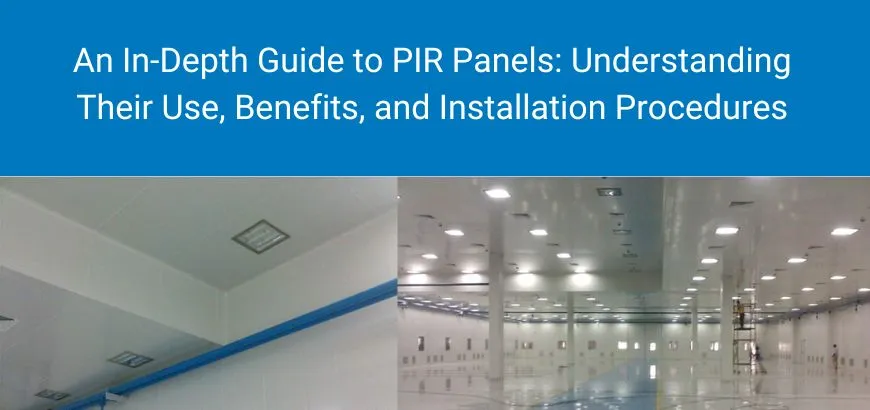
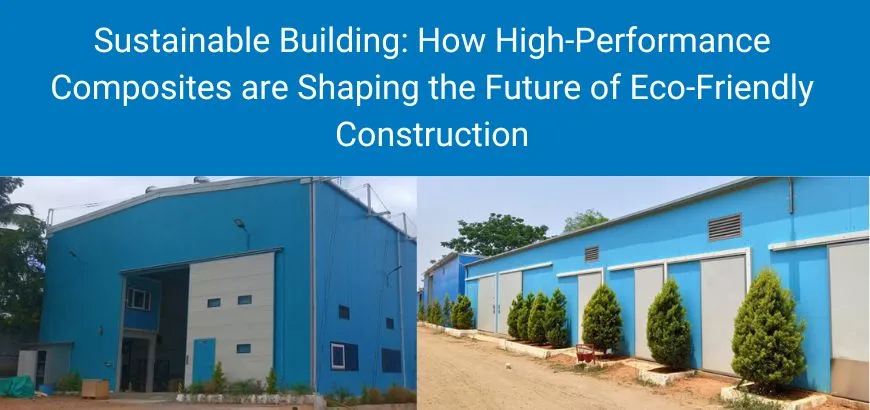
Plan the building of your ice cream manufacturing plant around product flow. Ingredients enter at one end, hardened product leaves at the other, and people and waste follow separate paths. A prefabricated insulated building is a good fit because panels give you a smooth, cleanable, well-insulated surface and a faster build than conventional masonry. Rinac’s prefabricated buildings and patented HPCC system are built for this kind of food and cold chain construction. Our guide to cold storage warehouse construction in India covers layout principles that also apply to your deep-freeze store.
Distribution deserves the same rigour. IMARC’s reporting links growth to expanding cold chain and to quick commerce making ice cream available year-round [3]. Impulse formats, which hold 60.60% of the market [2], depend on a depot and freezer network that never breaks the chain. Plan your dispatch dock so vehicles load without exposing the store, and review refrigerated transportation options early. Our posts on storing and transporting ice cream and reefer containers in India are useful companions. Dairy-linked operators will also find value in our overview of modern dairy storage.
A Practical Planning Checklist Before You Invest
Use this checklist before you sign any order for an ice cream manufacturing plant.
- Define formats and volumes. Decide on cones, sticks, bricks or cups and your first-year litres per day, then size hardening for peak hour, not average.
- Choose the cold chain partner early. Hardening, storage, refrigeration and building should be designed as one system.
- Fix FSSAI category and product type. Ice cream and frozen dessert have different composition and labelling rules [5].
- Screen schemes before you sign orders. Check PMKSY, PMFME and DIDF eligibility, because some schemes expect approvals before purchase [8].
- Model energy and downtime. Ask for connected load, redundancy and backup power in writing.
- Plan distribution at the same time. A depot network and reefer fleet are part of the plant, not an add-on.
Where Rinac fits: Rinac works as a solution architect and builder for the cold side of food plants, with 30+ years in the field, 10,000+ projects delivered across 23 countries and 14 branch offices in India. Our two manufacturing facilities in Bangalore and Murbad support build quality and delivery.
If you are comparing options now, you can read about our company and track record or go straight to a project conversation through our contact page.
Frequently Asked Questions
Sources & References
- India ice-cream market expected to touch Rs 45,000 crore in next three years: IICMA, The Hitavada. https://www.thehitavada.com/Encyc/2025/3/31/India-ice-cream-market-expected-to-touch-Rs-45-000-crore-in-next-three-years-IICMA.html. Published/accessed: 31 March 2025.
- India ice cream market size, share and forecast, IMARC Group. https://www.imarcgroup.com/ice-cream-market-india. Published/accessed: Accessed October 2026 (2025 base year, 2026 to 2034 forecast).
- India’s ice cream market set for strong growth as premiumisation and quick commerce reshape demand, Rural Voice (citing IMARC research for Tetra Pak). https://eng.ruralvoice.in/india-ice-cream-market-set-for-strong-growth-as-premiumisation-and-quick-commerce-reshape-demand. Published/accessed: 9 September 2026.
- Release of Basic Animal Husbandry Statistics 2025 on the occasion of National Milk Day 2025, Press Information Bureau. https://www.pib.gov.in/PressReleasePage.aspx?PRID=2195049®=3&lang=2. Published/accessed: 26 November 2025.
- Myth buster on ice cream and frozen dessert, FSSAI. https://www.fssai.gov.in/upload/uploadfiles/files/Myth%20buster%20on%20Ice%20cream%20and%20frozen%20dessert%20.pdf. Published/accessed: Undated; verify current FSSAI standards.
- Hardening, Ice Cream Technology, University of Guelph. https://books.lib.uoguelph.ca/icecreamtechnologyebook/chapter/hardening/. Published/accessed: Undated.
- Energy Transition in Cold Chain Infrastructure, National Centre for Cold-chain Development (NCCD). https://nccd.gov.in/uploads/ET_in_cold_chain_sector_in_India_v8_3bfe3b8148.pdf. Published/accessed: September 2025.
- Integrated Cold Chain and Value Addition Infrastructure under PMKSY, Press Information Bureau (Ministry of Food Processing Industries). https://static.pib.gov.in/WriteReadData/specificdocs/documents/2025/nov/doc2025114684601.pdf. Published/accessed: November 2025 (guidelines dated 22 May 2025; project status as of June 2025).
- Lok Sabha reply on the Dairy Processing and Infrastructure Development Fund (DIDF), Department of Animal Husbandry and Dairying. https://dahd.gov.in/sites/default/files/2024-10/LS917.pdf. Published/accessed: October 2024.
- Pradhan Mantri Formalisation of Micro Food Processing Enterprises (PMFME) Scheme, Press Information Bureau. https://www.pib.gov.in/PressReleasePage.aspx?PRID=2199453®=48&lang=2. Published/accessed: 5 December 2025 (data to 31 October 2025).
- Kind of business criteria, licence and registration, FoSCoS, FSSAI. https://foscos.fssai.gov.in/assets/docs/KindofBusinessEligibilityLatest.pdf. Published/accessed: Undated; verify current criteria on FoSCoS.
Important Disclaimer
This article is provided for general information only. It is not a substitute for professional engineering, legal or regulatory consultation. Prices, subsidy terms, FSSAI standards, licence thresholds and market estimates change over time and differ by state, so verify current figures directly with FSSAI, the Ministry of Food Processing Industries, the Department of Animal Husbandry and Dairying, NABARD and your state authorities before you act. Figures and claims in this article are drawn from the public references listed above as of the publication date, and some of the documents cited are undated. Market size estimates from different organisations use different definitions and should not be added or compared directly. Project-specific design, capacity sizing, energy use and return on investment depend on your product, site, volumes and market, so request a formal consultation through rinac.com/contact-us before you commit to a design or a budget.