TL;DR – Quick Summary
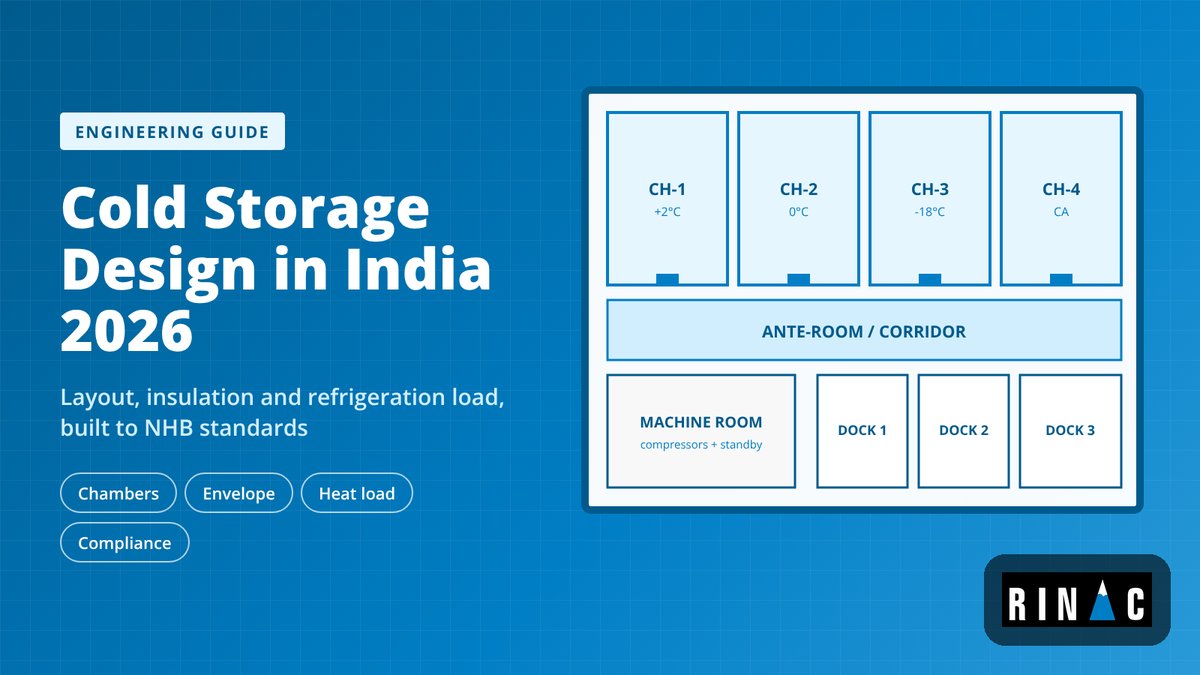
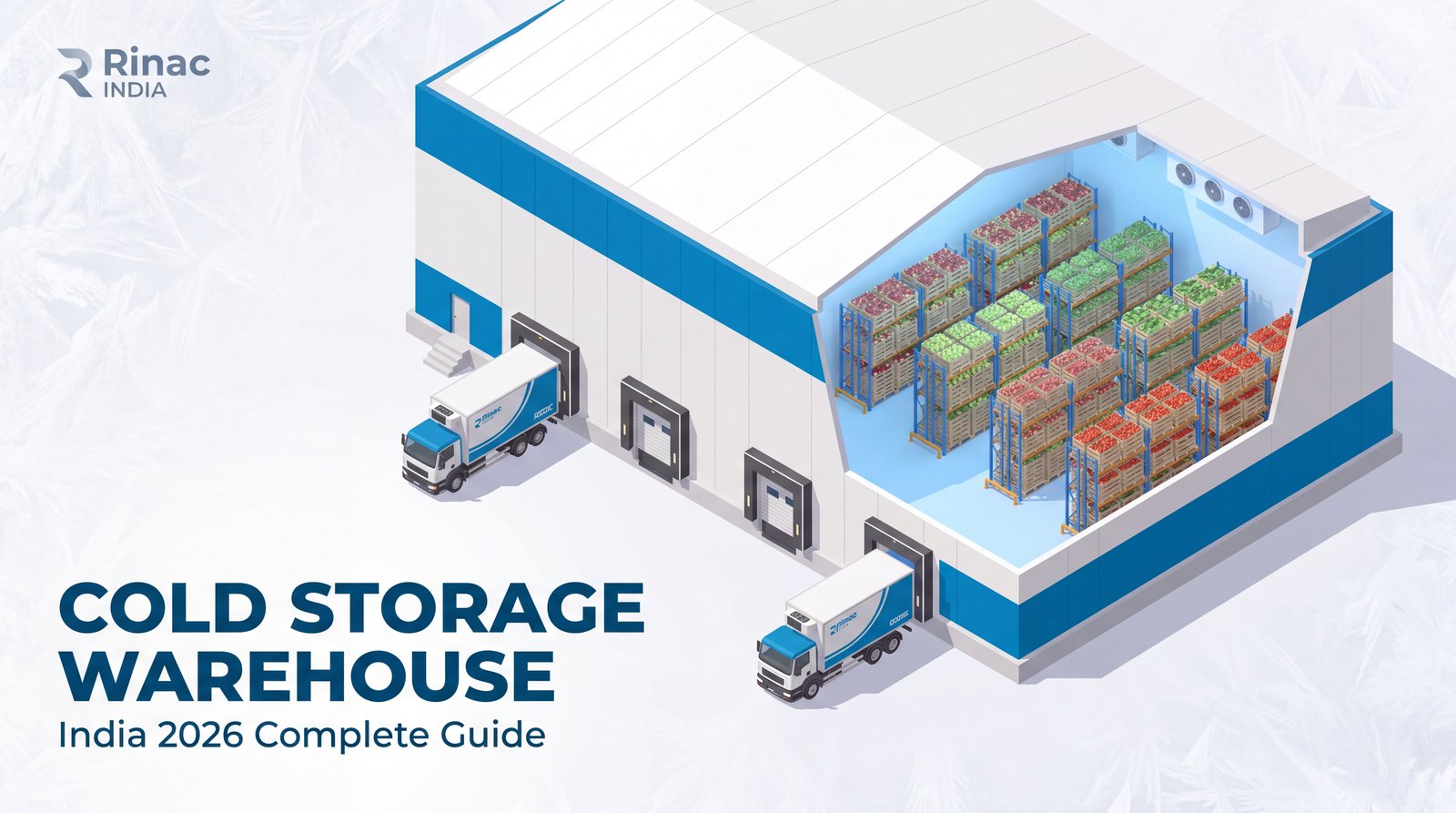
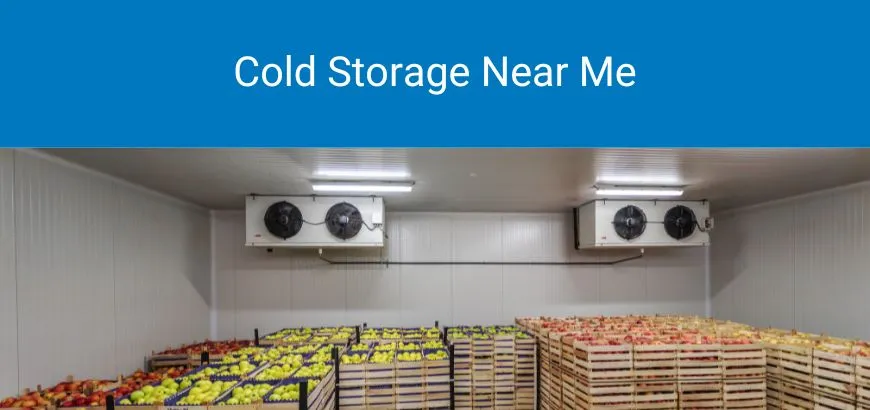
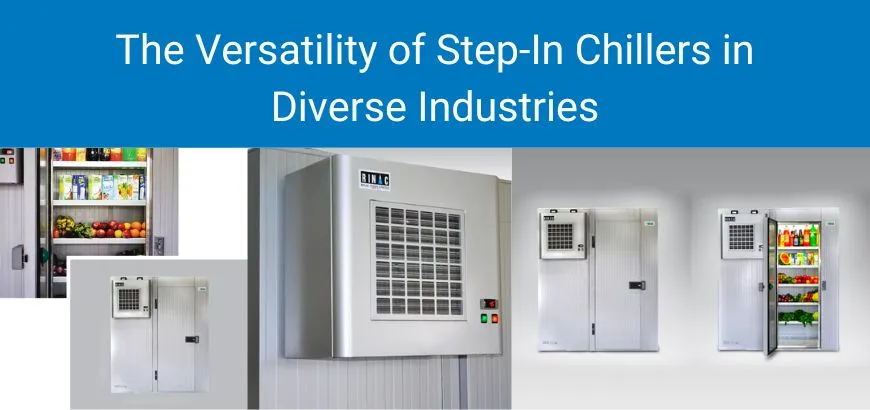
- A mini cold storage is a small refrigerated store, typically a single or twin chamber modular cold room, used by farmers, FPOs, traders and food businesses that need dependable temperature control without building a large warehouse.
- Size it by volume, not guesswork: MIDH treats 3.4 cubic metres (120 cubic feet) of chamber volume as one MT of storage capacity [4].
- India had 8,815 cold storages with 402.18 lakh MT capacity as of 30 June 2025 [1], yet farm-level losses remain high, for example 15.05% for guava and 11.62% for tomato [6].
- Funding routes include MIDH credit-linked back-ended subsidy at 35% (general) and 50% (hilly and scheduled areas) for stores up to 5,000 MT [3], and the Agriculture Infrastructure Fund with 3% interest subvention on loans up to Rs 2 crore [5].
- Rinac has engineered 10,000+ projects over 30+ years and supplies modular cold rooms such as the MRW Series and LiteCold range, with installation and service through 14 branch offices across India.
Disclaimer: This article is for general information only and is not a substitute for professional engineering, legal, financial or regulatory advice. Subsidy rates, scheme rules and regulations change, so confirm current terms directly with MIDH / your State Horticulture Mission, NHB, MoFPI, FSSAI or your lender before acting. All figures are taken from the public sources cited, as of 27 November 2026.
What Is a Mini Cold Storage and Who Needs One in India
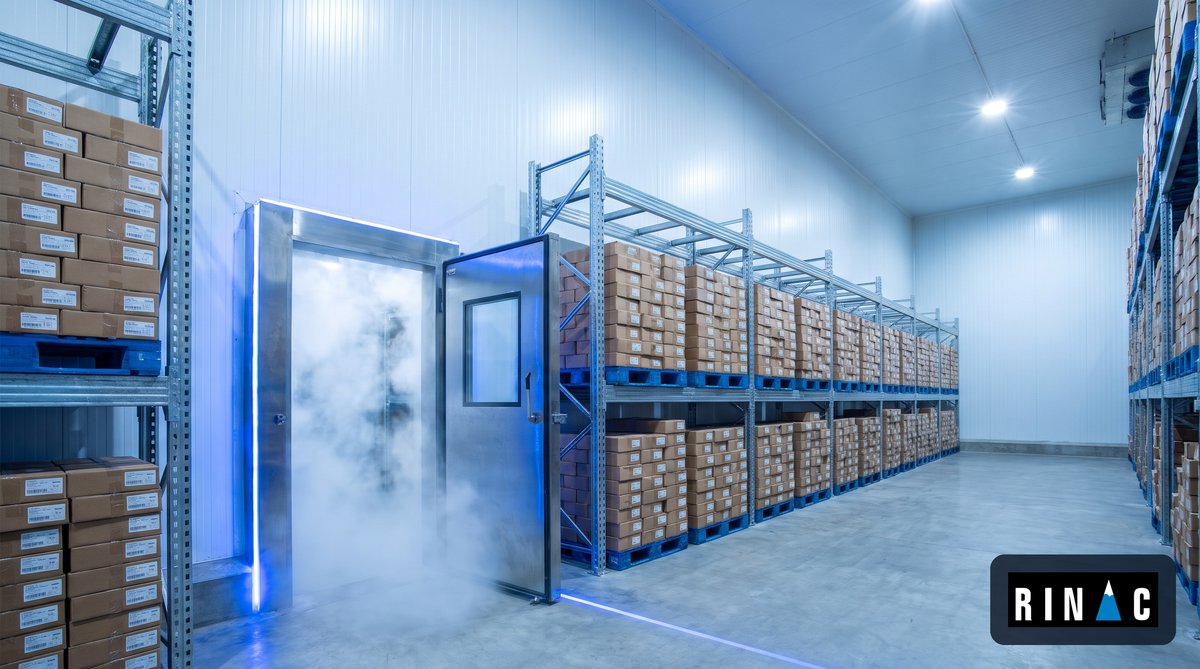
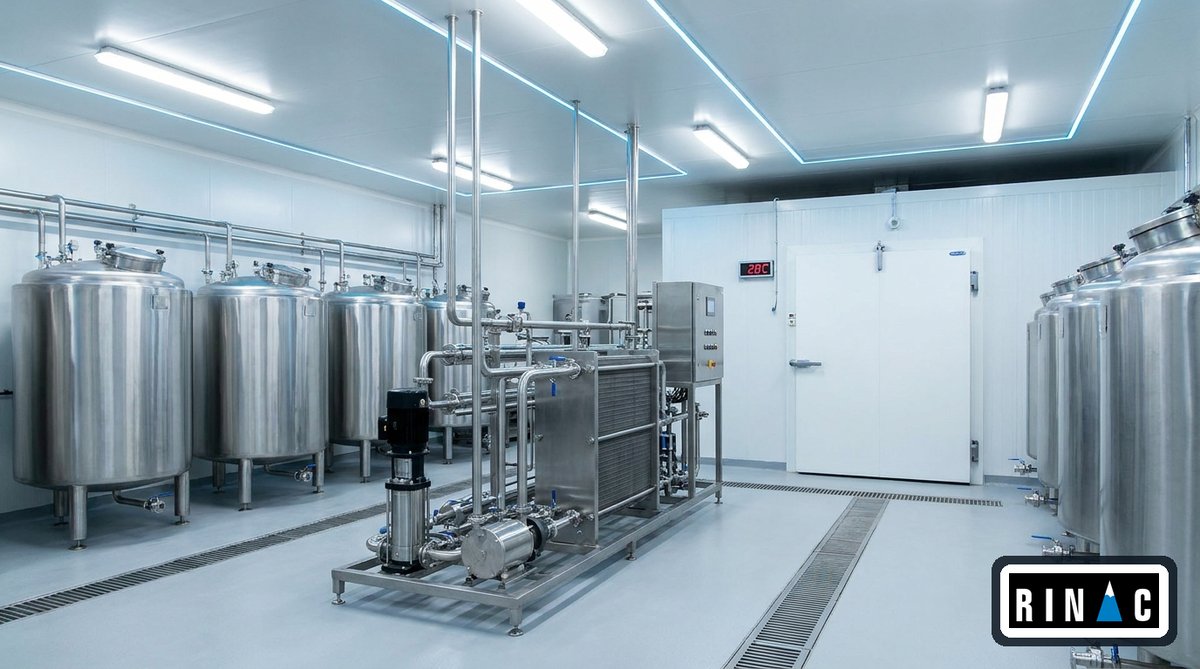
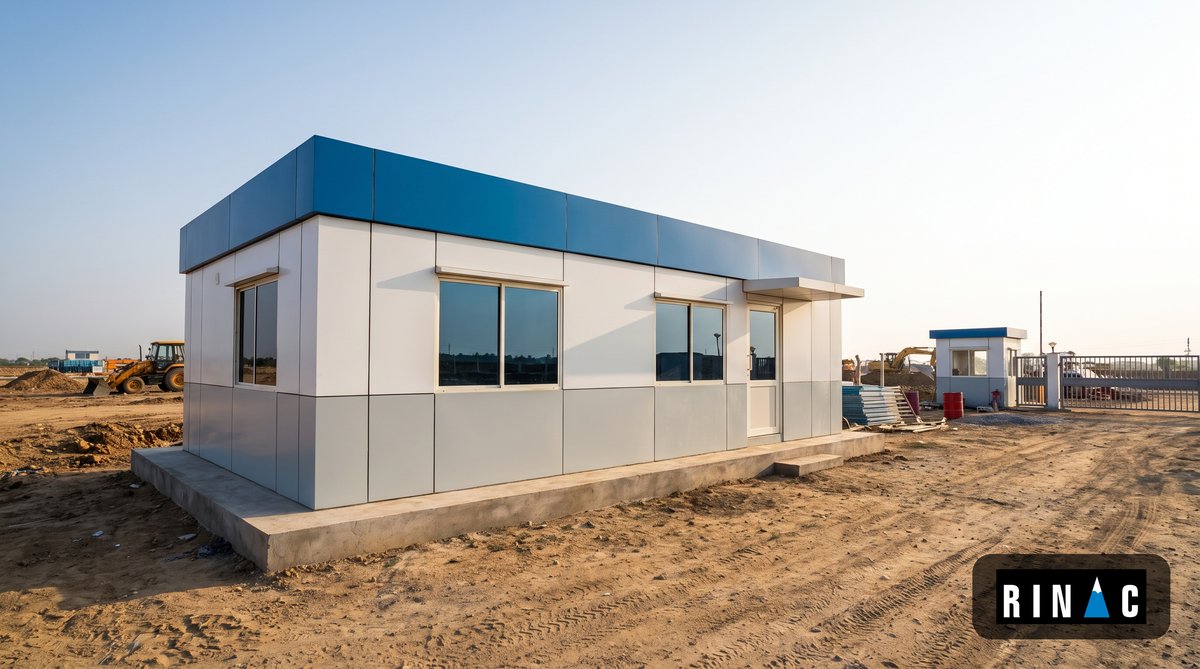
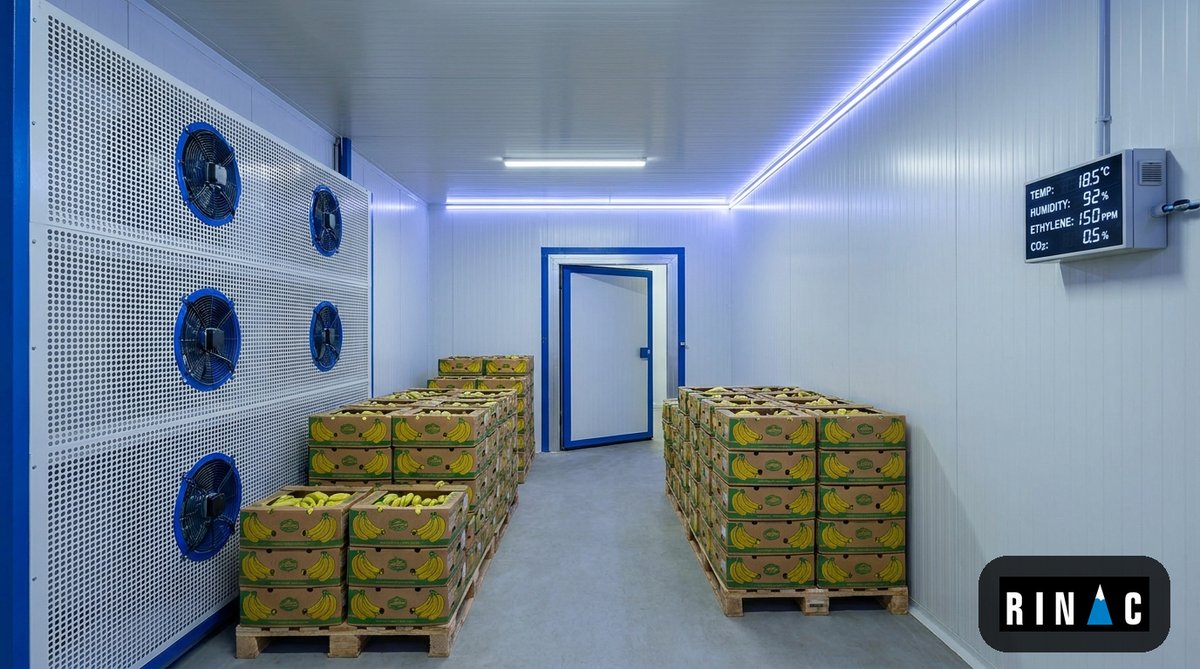
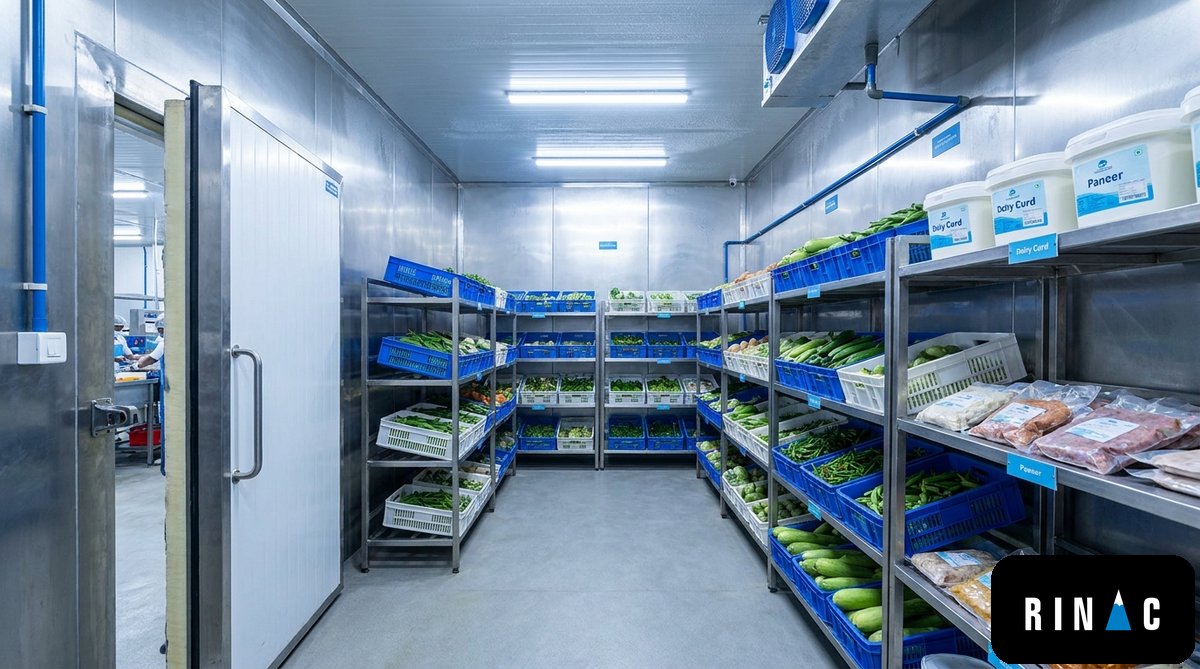
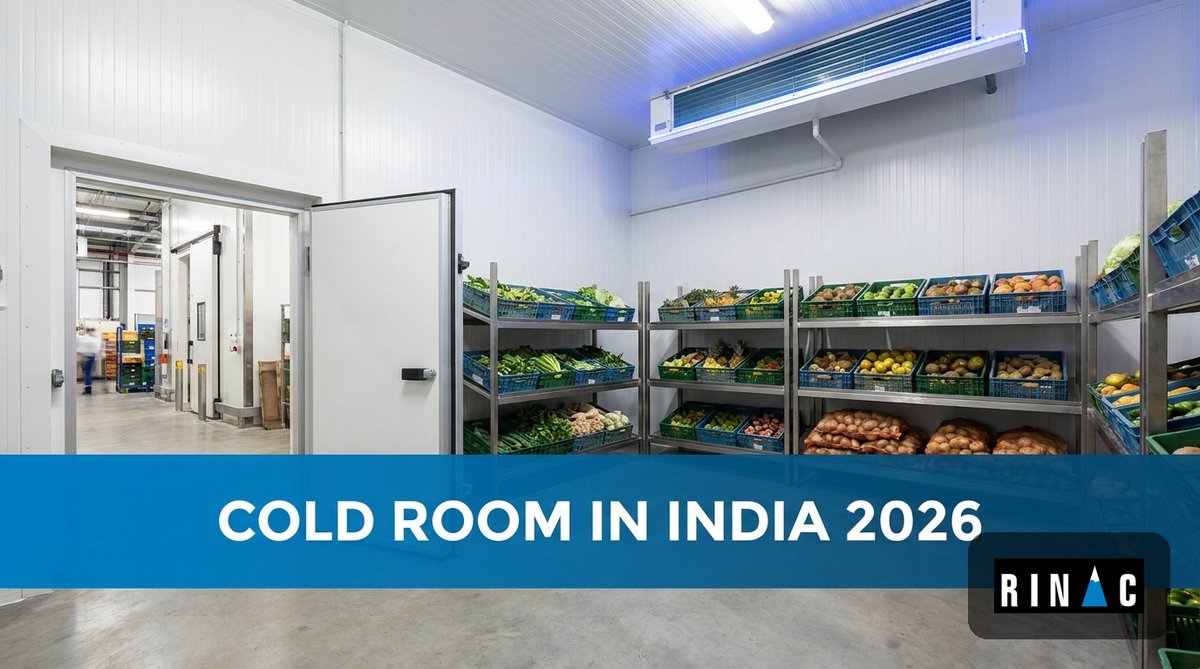
A mini cold storage is a compact, insulated and refrigerated room that holds perishables at a controlled temperature and humidity, usually somewhere between a few tonnes and a few hundred tonnes of capacity. In practice most mini cold storage units in India today are modular cold rooms built from PUF or PIR sandwich panels, fitted with a packaged refrigeration system, and installed on a simple plinth at a farm, pack house, market yard, dairy collection centre or factory. Search data reflects this: buyers type both “mini cold storage” and “cold storage mini” when they shop for these units.
The appeal is easy to see. A large multi-commodity facility is a multi-crore EPC project with long approvals (we cover that route in our cold storage design guide). A small cold storage, by contrast, can be sized to one farmer group’s harvest or one shop’s daily stock, built in weeks, and expanded later by adding chambers.
Typical users
- Farmers and FPOs storing fruits, vegetables, flowers or seed close to the farm gate. Cold storage for farmers at this scale lets them sell when prices recover instead of on harvest day.
- Traders and aggregators at mandis who need a short-term holding store for staging and dispatch.
- Dairy, sweets and ice cream businesses holding finished stock at chilled or frozen temperatures.
- Hotels, cloud kitchens, meat and seafood retailers who need a walk-in store larger than a reach-in freezer.
- Pharmacies, clinics and distributors holding temperature-sensitive medicines in a controlled room.
For a broader look at walk-in rooms in commercial kitchens and retail, see our cold room buyer’s guide. This article stays focused on the small, standalone store and the decisions that decide whether it pays back.
Mini Cold Storage Capacity: How to Size a Small Cold Storage in MT
Capacity is where most small cold storage projects go wrong. Sellers quote “5 ton” or “10 ton” units, but tonnes of what, stacked how? The official yardstick used for horticulture subsidy is volumetric. The MIDH Operational Guidelines state that 3.4 cubic metres, or 120 cubic feet, of chamber volume is equivalent to one MT of storage capacity [4].
That rule gives you a quick first estimate. Multiply the internal length, width and usable height of the chamber, then divide by 3.4. A chamber of 6 m x 4 m x 3 m internal works out to 72 cubic metres, or roughly 21 MT on the MIDH basis. Your real holding will vary with crate size, product density and the aisle and air gaps you must leave for airflow.
| Internal chamber size (L x W x H) | Volume (m³) | Indicative capacity at 3.4 m³/MT |
|---|---|---|
| 3 m x 3 m x 2.5 m | 22.5 | about 6.6 MT |
| 4 m x 4 m x 3 m | 48 | about 14 MT |
| 6 m x 4 m x 3 m | 72 | about 21 MT |
| 8 m x 6 m x 3.5 m | 168 | about 49 MT |
| 12 m x 8 m x 4 m | 384 | about 113 MT |
Capacities above are arithmetic on the MIDH volume rule, not product specifications. Actual net storage depends on packaging, stacking pattern and airflow clearances.
Three sizing questions to answer first
- Peak load, not average load. Size for the busiest fortnight of the season, then decide whether a second chamber is better than one oversized room.
- Daily loading rate. How many tonnes enter per day, and at what temperature? Warm produce straight from the field is the biggest single load on the refrigeration system.
- Holding period. A staging store held for 2 to 5 days is engineered differently from a store holding produce for months.
Rule of thumb from the field: if more than one commodity is involved, plan more than one chamber. Different products need different temperatures and humidity, and mixing them in one room usually compromises both. Our potato cold storage guide shows how commodity-specific the settings can get.
Configurations: Single Chamber, Multi-Chamber, Pre-Cooling and Solar Powered Cold Storage
Once capacity is fixed, choose the configuration. The right answer depends on how many products you store, how warm they arrive and how reliable your power supply is.
| Configuration | Best suited to | Watch-outs |
|---|---|---|
| Single chamber mini cold storage | One commodity or one temperature band; shops, kitchens, small dairies | No redundancy; a breakdown affects the whole stock |
| Twin or multi-chamber small cold storage | FPOs and traders with several crops; chilled plus frozen needs | Higher cost per MT, but better utilisation and risk spread |
| Pre-cooling room plus holding chamber | Field-fresh fruits, vegetables and flowers that must be cooled fast | Pre-cooling demands more refrigeration capacity per tonne |
| Solar powered cold storage | Sites with weak or no grid supply | Needs strong insulation and some form of thermal or battery backup |
Pre-cooling: the step most small stores skip
Pre-cooling removes field heat within hours of harvest, before produce goes into the holding chamber. The MIDH 2025 guidelines tie assistance for pre-cooling to a pack house and cold room staging [4], which reflects how these pieces are meant to work together at the farm gate. Rinac builds dedicated pre-cooling rooms, and our farm gate pack house guide explains how grading, pre-cooling and staging fit in one building.
Solar powered cold storage: what the engineering demands
Solar powered cold storage is attracting interest in villages where grid power is unreliable. Whatever the power source, the physics stays the same: every watt of heat that leaks through the walls has to be removed again by the compressor. On solar, that wasted energy is far more expensive, because it translates directly into extra panels, batteries or thermal storage. A well-sealed envelope with adequate panel thickness, tight door seals and minimal thermal bridges matters even more for a solar build than for a grid-connected one. Evaluate solar systems on independently verified performance data from the supplier, and size the backup for at least the longest power gap you expect.
Engineering a Mini Cold Storage: Panels, Refrigeration and Controls
Two units that look identical from outside can perform very differently. These are the specifications worth checking line by line on any quotation.
1. Insulated envelope
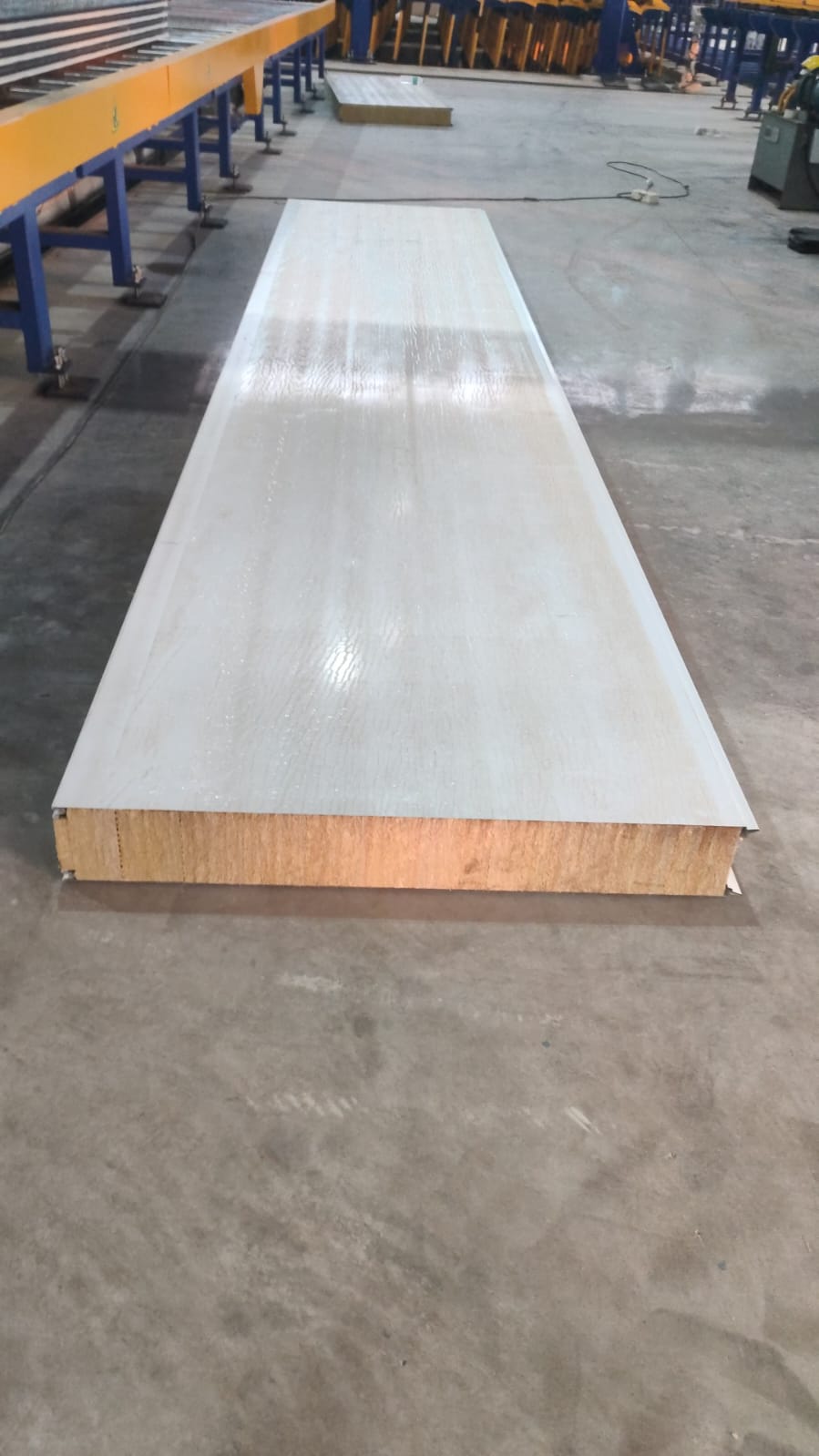
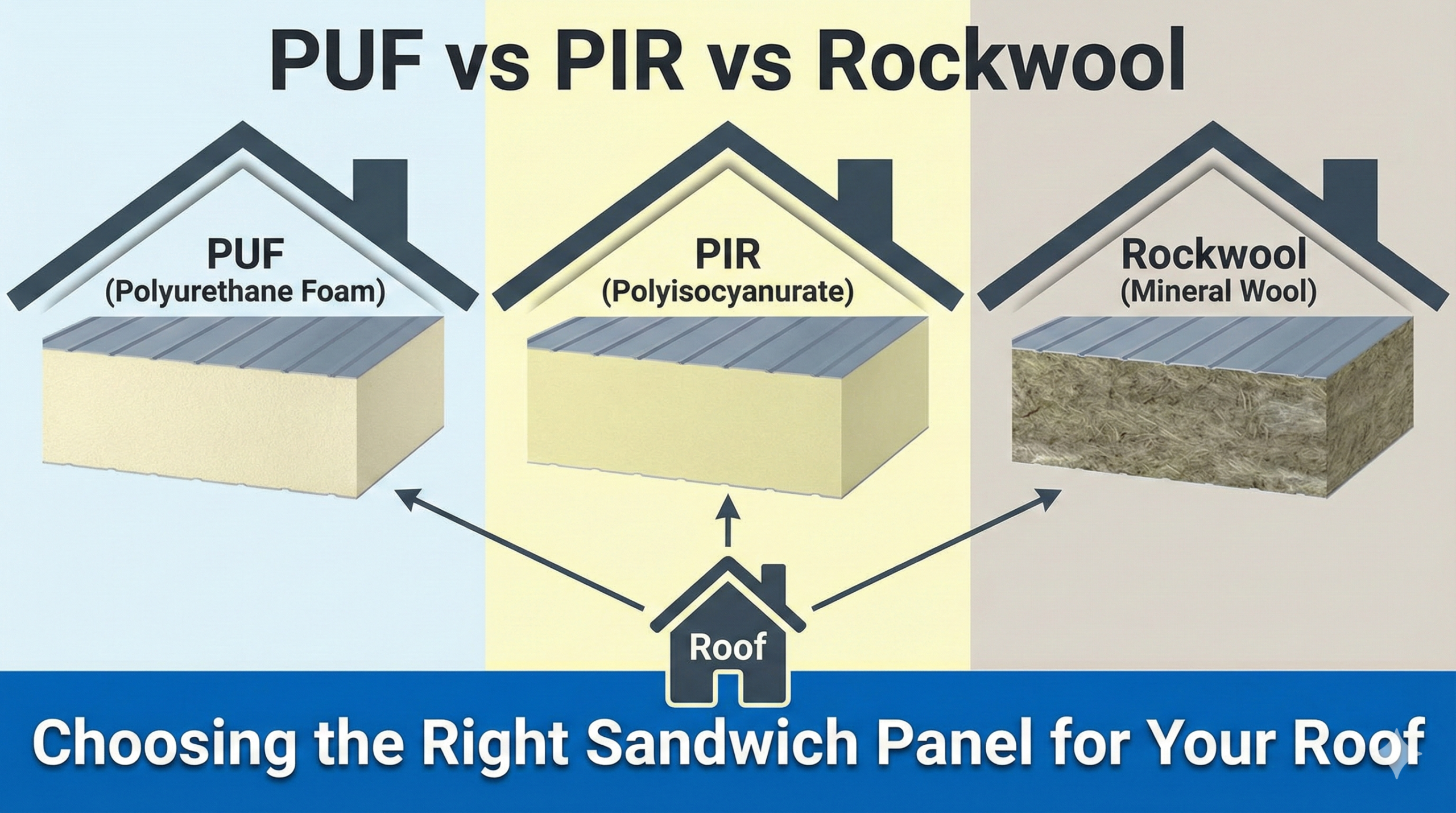
The walls, ceiling and floor carry the load. For new cold storages assisted under MIDH, the 2025 guidelines specify insulation in the range of 60 mm to 200 mm and require energy-efficient technology [4]. Thickness should follow the temperature: chilled rooms sit at the lower end, frozen rooms at the higher end. Our sandwich panel thickness guide walks through the selection. Rinac manufactures PUF and PIR panels in-house at its Bangalore and Murbad factories, and its Firearmet FM-approved fire-rated panels are an option where fire safety is a priority.
2. Refrigeration system
Most small cold storages use a packaged condensing unit with an evaporator inside the room. Check the design ambient temperature (Indian summers can push condensers hard), the refrigeration capacity at your actual room temperature, defrost method for freezer rooms, and whether a standby unit is included for critical stock. Rinac designs and supplies refrigeration systems matched to the room load rather than a catalogue size.
3. Doors, floors and air curtains
The door is the largest single opening in the envelope. Specify heated door frames for freezer rooms, strip or air curtains for busy stores, and an insulated floor for sub-zero rooms to prevent frost heave.
4. Controls and monitoring
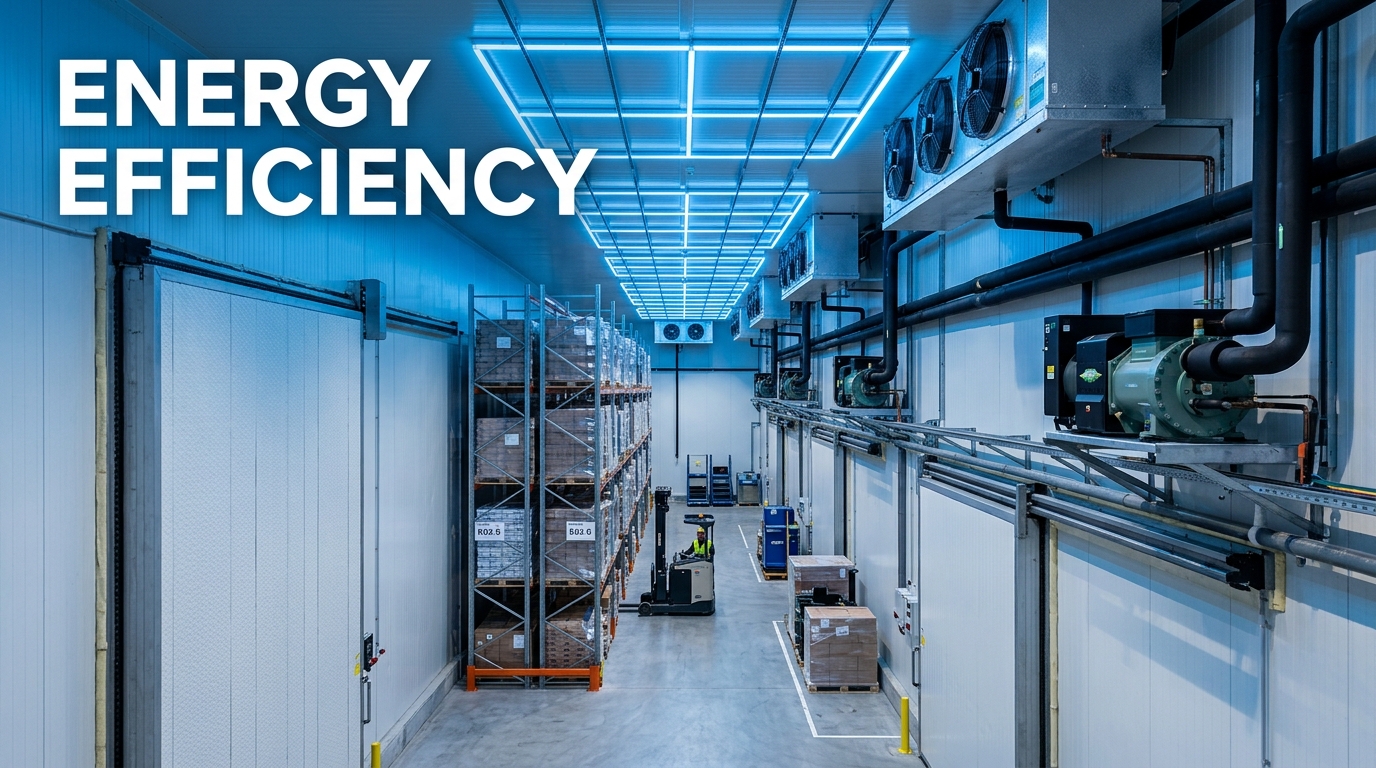
A digital controller with alarms is the minimum. Remote temperature logging lets an owner see the room from a phone and gives auditors a record. For energy savings, look at efficient compressors, defrost scheduling and door discipline.
Engineering note: the cheapest mini cold storage is rarely the cheapest to own. Insulation thickness, refrigeration sizing and door design decide the power bill for years, so compare quotations on those lines, not only on the headline price.
Indian Market Context: Capacity, Losses and Government Schemes
India has been adding cold storage capacity steadily. A Lok Sabha reply recorded 8,760 cold storages with a capacity of 397.08 lakh MT as on 30 January 2025 [2], and by 30 June 2025 the count stood at 8,815 units with 402.18 lakh MT [1]. NCCD projects total capacity of almost 440 lakh MT by 2031, a compound annual growth rate of about 2.2% [1].
Capacity numbers alone hide where the gap really is: close to the farm. The NABCONS study commissioned by MoFPI, covering 2020 to 22, put total losses at 15.05% for guava, 11.62% for tomato, 8.53% for mango, 7.57% for banana and 7.27% for onion, with most of the loss occurring at the farm stage rather than in the market [6]. The same study estimated annual losses of 7.36 million MT of fruits and 11.97 million MT of vegetables [6]. A mini cold storage placed at the farm gate attacks precisely this stage.
Schemes that can fund a mini cold storage
| Scheme | What it offers | Source |
|---|---|---|
| MIDH (via State Horticulture Missions) | Credit-linked back-ended subsidy for cold storages up to 5,000 MT: 35% of project cost in general areas, 50% in hilly and scheduled areas | [3] |
| MIDH for FPOs, cooperatives and SHGs | Groups with at least 25 members can access back-ended subsidy without credit link if they can meet their share of project cost; credit linkage is optional for projects up to Rs 30 lakh | [4] |
| NHB Capital Investment Subsidy | 35% in general areas and 50% in North East, hilly and scheduled areas, for stores above 5,000 MT up to 10,000 MT (relevant if your mini store grows) | [3] |
| Agriculture Infrastructure Fund (AIF) | Rs 1 lakh crore financing facility; 3% per annum interest subvention on loans up to Rs 2 crore for up to 7 years; CGTMSE credit guarantee for loans up to Rs 2 crore; cold stores listed among eligible post-harvest infrastructure | [5] |
| PMKSY Integrated Cold Chain (MoFPI) | Grant-in-aid of 35% in general areas and 50% in difficult areas and for SC/ST, FPO and SHG projects, up to Rs 10 crore per project; usually suits larger integrated chains | [8] |
State Horticulture Missions in several states, including the hill and North Eastern states, may offer higher rates under MIDH because of the 60:40 (and 90:10 for NE and Himalayan states) central-state funding pattern [4]. For a step-by-step on applications, read our guide to cold chain subsidies in India.
Check before you buy: subsidies are back-ended. You build first, the scheme reimburses after inspection. Equipment that does not meet the scheme’s technical conditions (for example insulation thickness and energy efficiency) can be rejected at that inspection, so confirm eligibility with the State Horticulture Mission or your bank before placing the order.
Compliance and Standards for Small Cold Storage Facilities
Small does not mean exempt. The standards that apply depend on what you store and who you sell to.
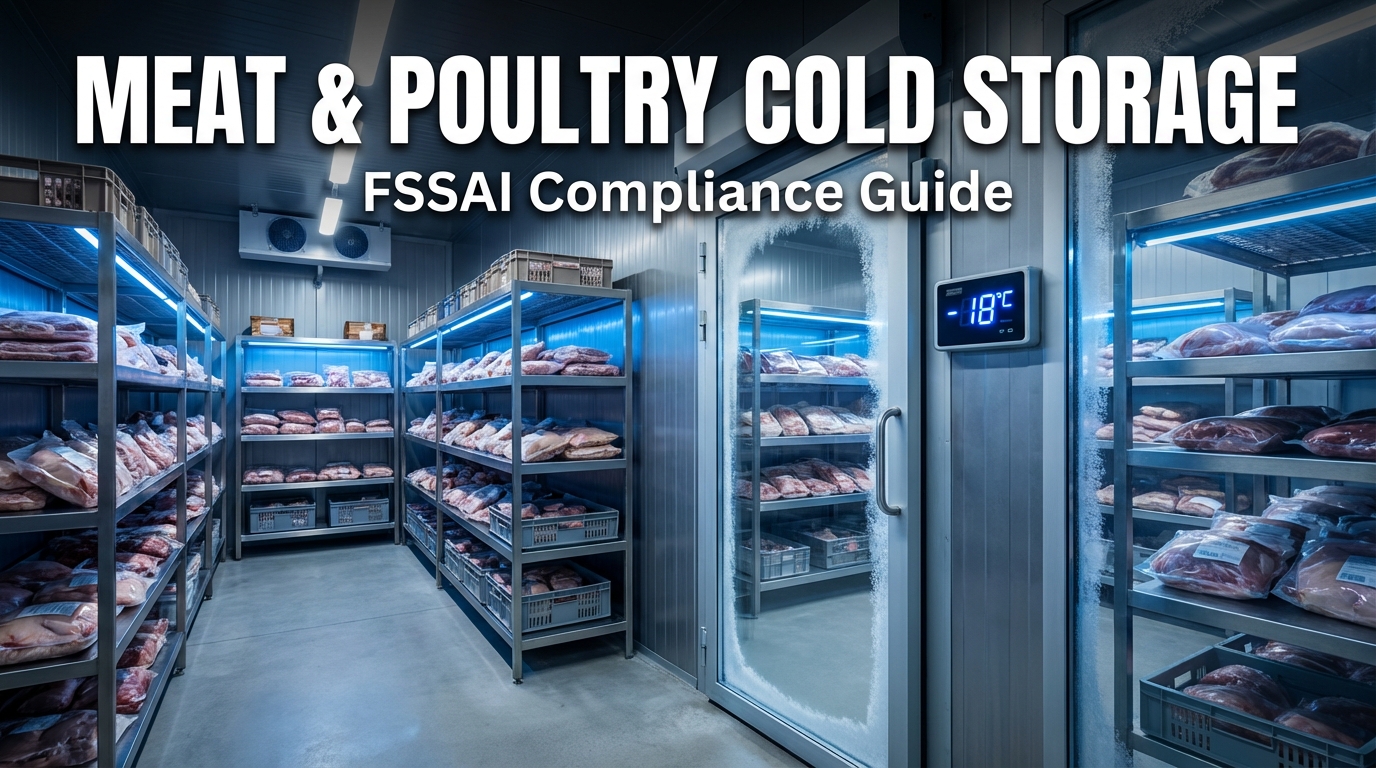
- FSSAI: FSSAI lists ‘Storage (Cold/Refrigerated)’ as its own kind of business, with Registration for annual turnover up to Rs 1.5 crore, a State Licence above Rs 1.5 crore up to Rs 50 crore, and a Central Licence above Rs 50 crore [7]. Keep temperature logs and cleaning records ready for inspection.
- HACCP: export houses and organised retail buyers often expect HACCP-based controls, including documented critical limits for storage temperature.
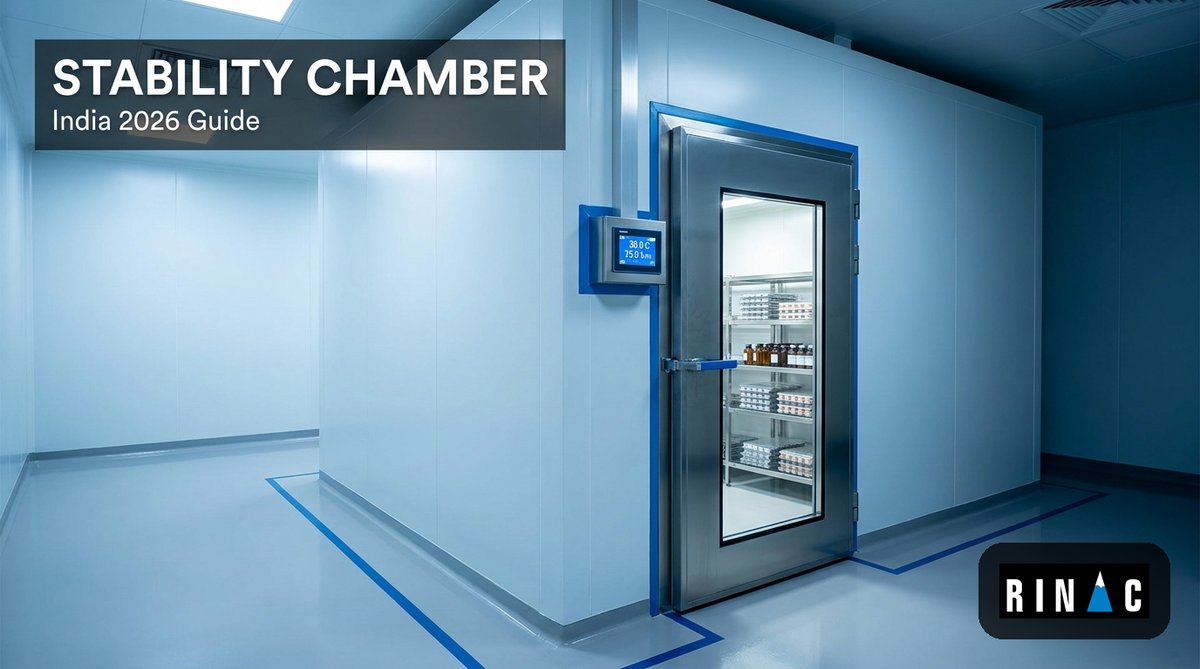
- GMP and WHO-GMP: rooms storing medicines or pharma inputs need validated temperature mapping, calibrated sensors and alarm systems.
- ISO: ISO-certified manufacturing on the supplier side gives assurance on panel and fabrication quality.
- IGBC: where the cold room sits within a green-rated building, panel and refrigerant choices should support the rating.
- Scheme technical norms: MIDH-assisted cold storages must use energy-efficient technology and insulation within the specified range [4].
Rinac is certified to ISO, FSSAI, HACCP, GMP, IGBC and WHO-GMP standards, which helps buyers with audit documentation. Buyers can request copies of the relevant certificates during evaluation.
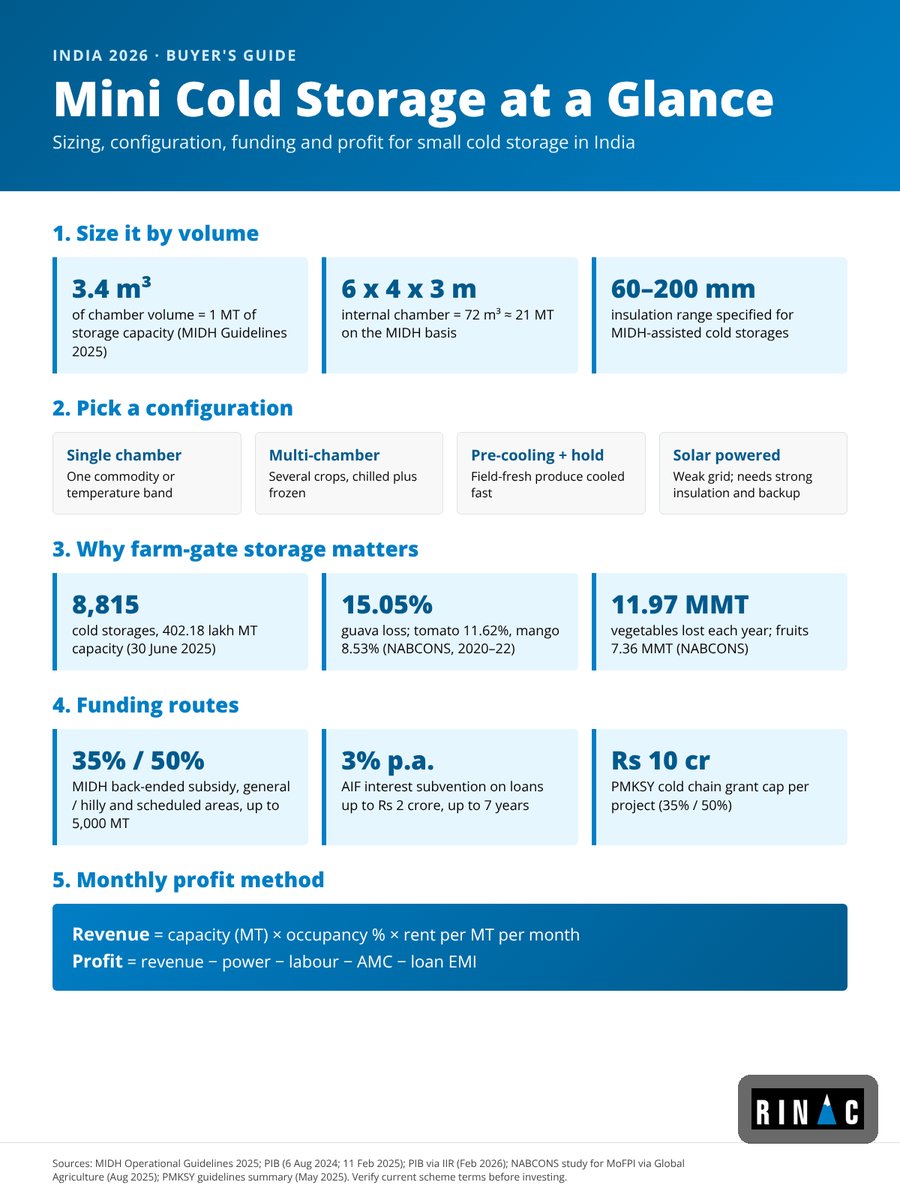
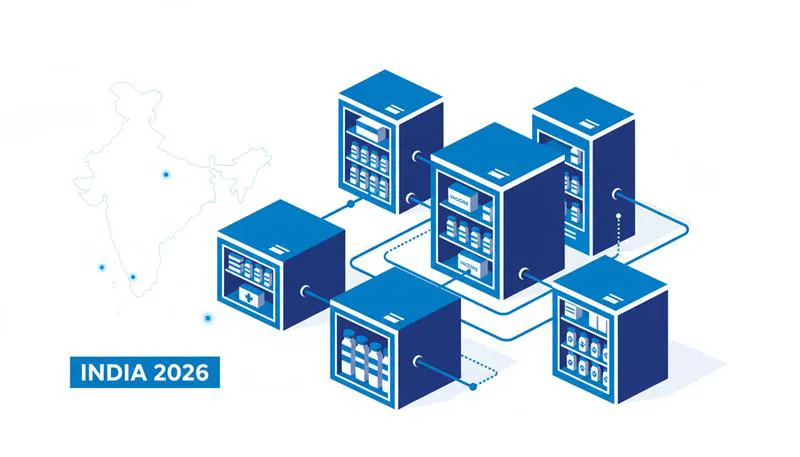
Mini cold storage at a glance: sizing, configuration and funding routes in India (sources cited in article)
Cold Storage Business Profit per Month: A Simple Method
“Cold storage business profit per month” is one of the most searched questions around small stores, and the honest answer is that it depends on four numbers only you can confirm locally. Here is a method you can run on a single sheet before you commit to any mini cold storage business. For deeper investment modelling, use our cold storage cost and investment guide and our guide to starting a cold storage business.
| Line | How to estimate it |
|---|---|
| Revenue | Capacity (MT) x average occupancy (%) x rent per MT per month, or the price gain on your own produce sold off-season |
| Electricity | Connected load (kW) x average running hours x tariff; get the load from the supplier’s design sheet |
| Labour and handling | Loading, unloading and security staff, plus crates or pallets |
| Maintenance and AMC | Annual service contract divided by 12, plus a reserve for parts |
| Finance cost | Loan EMI after any AIF interest subvention and MIDH subsidy |
| Monthly profit | Revenue minus all the above |
Worked example (illustrative only)
Take a 20 MT store, assume 75% average occupancy and, purely for the arithmetic, assume a rent of Rs X per MT per month. Monthly revenue is 20 x 0.75 x X = 15X. If electricity, labour, maintenance and finance together come to Rs Y, monthly profit is 15X minus Y. Replace X and Y with quotes from your local market and supplier; do not rely on numbers you see in marketplace listings, which rarely state the capacity basis or what is included.
Where small stores earn the most: the biggest gains usually come not from rent but from selling your own produce after the harvest glut, and from cutting the farm-stage losses that the NABCONS study measured [6]. Occupancy is the lever to watch; a half-empty store still pays the full power bill.
How to Choose a Mini Cold Storage Supplier
Marketplace listings make every mini cold storage look the same. Whether you are planning a 10 MT room or a multi-chamber mini cold storage project for an FPO, use this checklist to separate a supplier who sells boxes from one who engineers stores.
- Ask for a heat-load calculation based on your commodity, loading rate and the hottest month at your site.
- Confirm panel type (PUF or PIR), density, thickness and fire rating in writing, with test certificates.
- Check that refrigeration capacity is quoted at your room temperature and summer ambient, not at a flattering standard rating.
- Ask who installs, who commissions and where the nearest service team is based. After-sales response time matters more than brochure features.
- Make sure the design meets the technical conditions of the subsidy or loan you plan to use.
- Insist on a single point of responsibility for panels, refrigeration, electricals and civil interfaces.
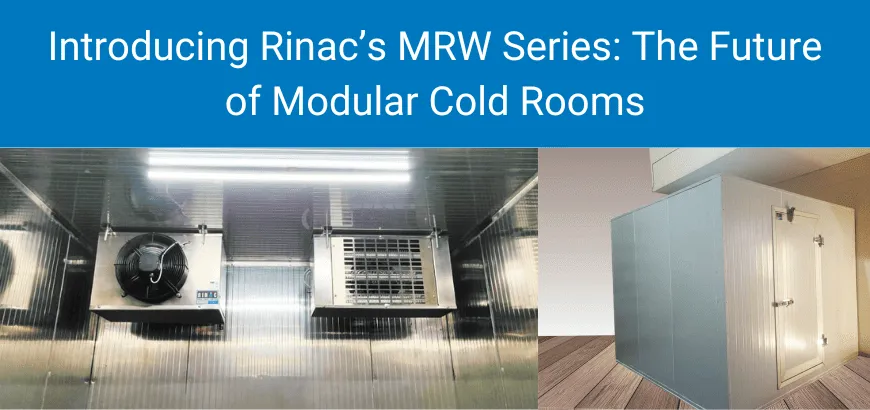
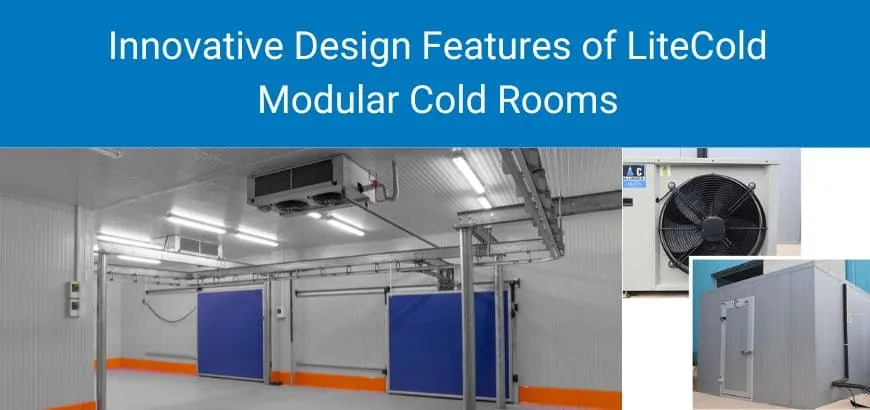
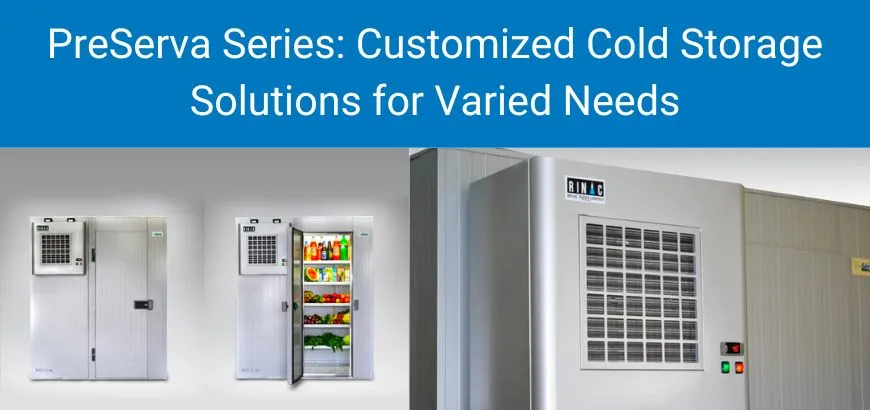
Rinac positions itself as a solution architect and builder rather than a box seller. Our MRW Series walk-in cold rooms and the lightweight LiteCold modular cold rooms cover most small cold storage needs, including the compact small cold room a shop or kitchen needs, while the PreServa series handles customised stores. For produce that needs controlled ripening alongside storage, Rinac also builds ripening chambers. Every installation is backed by Rinac’s after-sales service network across 14 branch offices, and our experience serving 6,000+ clients, including brands such as ITC and Britannia, shapes how we size and specify each room.
Frequently Asked Questions About Mini Cold Storage
Important disclaimer: This guide is provided for informational purposes only and does not constitute professional engineering, legal, financial or regulatory advice. Capacities shown are arithmetic illustrations based on the MIDH volume rule, not product specifications. Prices, subsidy rates, scheme eligibility and regulations change frequently and vary by state; verify all terms directly with FSSAI, MoFPI, MIDH / your State Horticulture Mission, NHB or your lending bank before making any investment decision. All statistics are sourced from the public references listed below as of the publication date (27 November 2026). For project-specific design, sizing, costing and ROI, request a formal consultation through rinac.com/contact-us.
Ready to plan your store? Rinac’s engineers can size your mini cold storage, prepare the heat-load and layout, and align the design with the subsidy route you intend to use. Browse our cold rooms range or speak to the team.
Sources & References
- India: NCCD reports a 2.2% compound annual growth rate in cold storage capacity (summarising PIB ‘From harvest to home’, September 2025, and NCCD ‘Energy transition in cold chain infrastructure’), International Institute of Refrigeration. Published: 24 February 2026. https://iifiir.org/en/news/india-nccd-reports-a-2-2-compound-annual-growth-rate-in-cold-storage-capacity
- Lok Sabha Unstarred Question No. 1338, ‘Cold Storage Facilities’, Ministry of Agriculture and Farmers Welfare. Published: 11 February 2025. https://eparlib.sansad.in/bitstream/123456789/2988580/1/AU1338_qL7sHC.pdf
- Cold Storage Units (Lok Sabha written reply on MIDH and NHB assistance), Press Information Bureau, Ministry of Agriculture and Farmers Welfare. Published: 6 August 2024. https://www.pib.gov.in/PressReleasePage.aspx?PRID=2042243
- MIDH Operational Guidelines 2025 (guidelines dated 31.12.2024), Mission for Integrated Development of Horticulture, hosted by National Horticulture Board. Published: 31 December 2024. https://nhb.gov.in/writereaddata/082825102800MIDH%20Guideline%202025.pdf
- Agriculture Infrastructure Fund (Lok Sabha written reply), Press Information Bureau, Ministry of Agriculture and Farmers Welfare. Published: 11 February 2025. https://pib.gov.in/PressReleasePage.aspx?PRID=2101845
- India’s Highest Post-Harvest Losses: Guava and Tomato Among the Worst Hit (reporting the NABCONS study commissioned by MoFPI, data period 2020 to 22), Global Agriculture. Published: 13 August 2025. https://www.global-agriculture.com/india-region/indias-highest-post-harvest-losses-guava-and-tomato-among-the-worst-hit/
- Kind of Business Criteria: Licence / Registration eligibility and fees (FoSCoS), Food Safety and Standards Authority of India. Published: 1 April 2026. https://foscos.fssai.gov.in/assets/docs/Revised_2ndApril2026KindofBusinessEligibility.pdf
- PMKSY Revised Operational Guidelines for Cold Chain Scheme (summary of MoFPI guidelines), Vision IAS. Published: 28 May 2025. https://visionias.in/current-affairs/news-today/2025-05-28/schemes-in-news/pradhan-mantri-kisan-sampada-yojana-pmksy-revised-operational-guidelines-for-cold-chain-scheme